

 Pošalji
 Podeli
 Detalji o delu

 Преузми
 Slični predmeti
 Slajdovi
Jacobean Arbor


 Pročitaj više
Ručno rađena uljana reprodukcija
Ručno oslikano uljanim bojama na platnu u dimenzijama i okviru po vašem izboru, izrađeno po porudžbini od strane naših umetnika. ( Kupi print Kupi digitalnu sliku)




































Izaberite jednu od naših unapred definisanih veličina koje odgovaraju originalnim proporcijama umetničkog dela.

Можете унети сопствене димензије како бисте прилагодили дело одређеном оквиру или простору. Ако одабрана величина не одговара пропорцијама оригинала, слика ће бити исечена или проширена додатним елементима који се ручно насликавају. Дигитални prikaz ће вам бити послат на одобрење пре почетка производње.
Имајте на уму да преглед на екрану не одражава стварно исецање или проширење. Само приказ (mockup) ће тачно приказати коначну композицију.
Иако су доступне прилагођене величине, препоручујемо да одаберете димензију из дефинисане листе како бисте сачували оригиналне пропорције.
Nakon narudžbine, tim ArtsDot.com će klijentu putem e-pošte poslati uputstva i dostaviti prikaz predloženog rešenja
Isporuka širom sveta () za 3/4 nedelje umesto uobičajenih 5 nedelja. (6 септембар). Bez kompromisa po pitanju kvaliteta.

Besplatna ekspresna dostava širom sveta

Visokokvalitetno laneno platno

Kompletno osiguranje transporta

Garancija povraćaja carine i uvoznih dažbina

Garancija vernosti boja

Politika povrata u roku od 100 dana (samo u slučaju nedostataka)

Garancija povrata novca od 100%

Popust pri grupnoj kupovini
 Opcija sa staklom dostupna je samo za dimenzije manje od 110 cm

Jacobean Arbor
Tehnika reprodukcije
Dimenzije reprodukcije
-


Konačna cena
$ 263
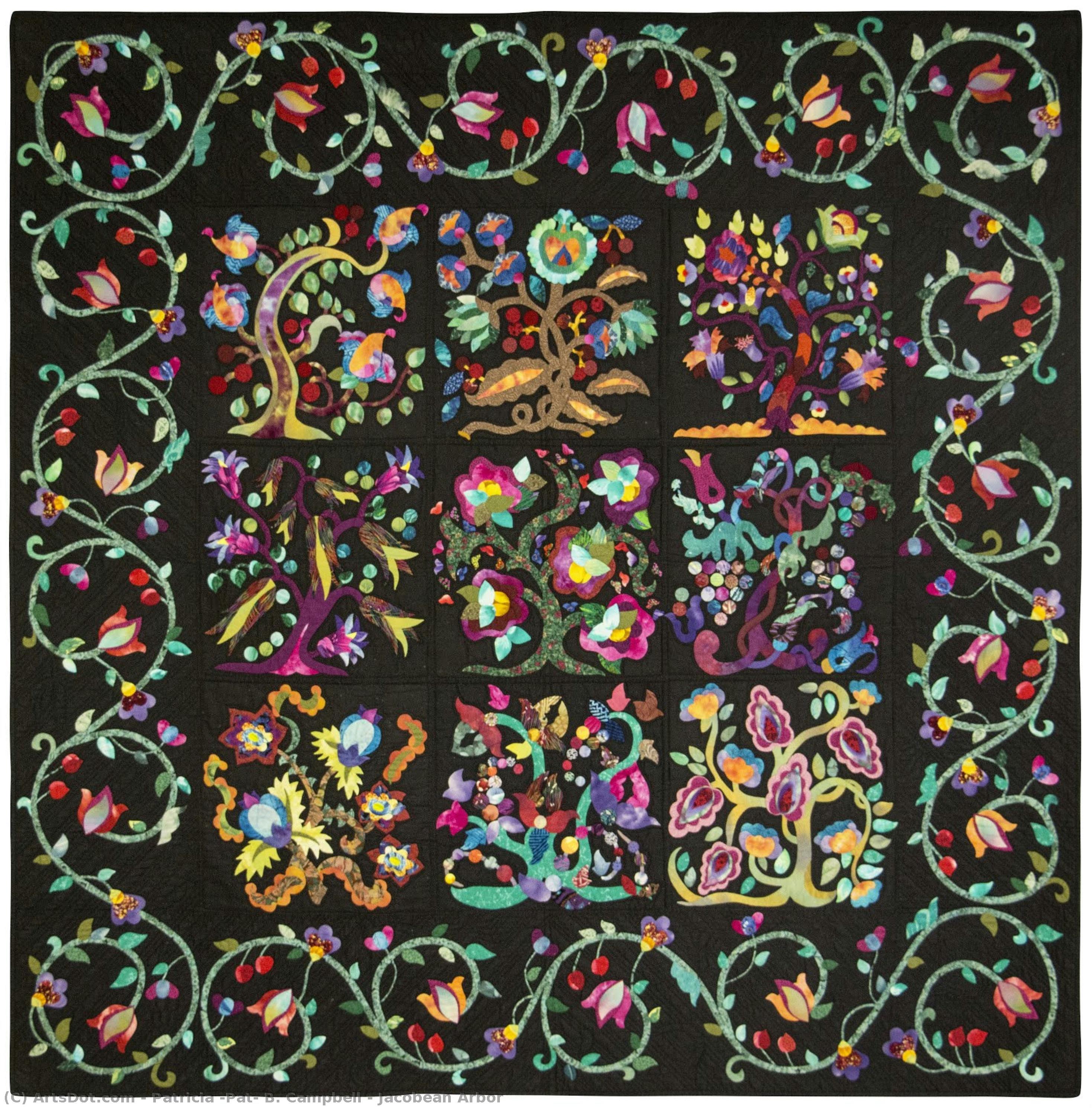
Jacobean Arbor: A Tapestry of Botanical Reverie
Patricia (Pat) B. Campbell’s “Jacobean Arbor” is more than simply a quilt; it's a meticulously crafted meditation on nature, history, and the enduring power of textile art. Created in 1989, this remarkable piece immediately draws the eye with its dramatic interplay of black and white, punctuated by subtle shades of pink and yellow – colors that evoke both the formality of Jacobean design and the delicate beauty of a winter garden.
- Subject Matter: The central focus is undeniably the tree motif, rendered in exquisite Jacobean appliqué. This technique, popular during the reign of James I and Charles I (the Jacobean period), involved layering intricately cut fabric shapes to create three-dimensional effects – a hallmark of aristocratic taste and a testament to unparalleled skill.
- Technique: Campbell’s mastery lies in her flawless execution of this demanding technique. Each leaf, branch, and bird is painstakingly crafted from small pieces of fabric, meticulously stitched together to achieve remarkable depth and realism. The clock subtly integrated into the design adds another layer of complexity, perhaps representing time's passage or a reference to the era’s fascination with horology.
- Color Palette: The predominantly monochrome palette – black, white, pink, and yellow – contributes significantly to the artwork’s mood. Black and white evoke formality, tradition, and the grandeur of the Jacobean period, while the subtle color accents introduce a touch of warmth and elegance.
Historical Context: The Jacobean Aesthetic
“Jacobean Arbor” is deeply rooted in the artistic sensibilities of 17th-century England. The Jacobean era (1603-1625) was a period of immense cultural and artistic flourishing, heavily influenced by classical antiquity and the courtly traditions of James I and Charles I. Appliqué, as seen here, was a favored technique for creating luxurious textiles used in royal palaces, private residences, and even religious settings. The intricate floral and animal motifs prevalent in Jacobean design reflected a deep appreciation for nature and a desire to emulate the beauty of the natural world – themes that resonate powerfully within Campbell’s work.
Symbolism and Narrative
Beyond its technical brilliance, “Jacobean Arbor” is rich in symbolic meaning. The tree itself represents life, growth, and resilience—powerful archetypes found across cultures and throughout history. The scattered birds likely symbolize freedom, hope, or perhaps a connection to the heavens. The clock, a recurring motif in Campbell’s work, could represent time's relentless march or the fleeting nature of beauty. Together, these elements create a layered narrative that invites contemplation and interpretation.
Emotional Impact & Collector’s Value
"Jacobean Arbor" possesses a quiet power that transcends its material form. The meticulous detail, combined with the artwork’s historical context and symbolic richness, creates a deeply engaging experience for the viewer. Patricia Campbell's work is highly sought after by collectors of fine textiles and admirers of traditional craft techniques. A hand-painted reproduction offers an exceptional opportunity to own a piece of this remarkable artistry – a timeless testament to skill, vision, and the enduring beauty of nature.
Srodna umetnička dela
Biografija umetnika
The Weaver of Floral Tapestries: The Artistry of Patricia B. Campbell
Born in the vibrant energy of New York City in 1947, Patricia (Pat) B. Campbell has spent her life cultivating a unique corner of the contemporary art world where textile and nature converge. While many artists seek expression through canvas and oil, Campbell finds her voice within the tactile, rhythmic precision of fabric. Her journey is not merely one of craft, but of a profound dedication to transforming simple cloth into evocative, botanical narratives that breathe with life. As an artist, teacher, and author, she has become a pivotal figure in the quilting community, bridging the gap between traditional domestic arts and fine textile sculpture.
The soul of Campbell’s work lies in her mastery of Jacobean appliqué, a technique that carries the weight of history within every stitch. Drawing inspiration from the opulent embroidery styles of England's Jacobean era, she employs a painstaking process of layering precisely cut fabric pieces onto a background surface. This method allows her to transcend the flat nature of traditional quilting; instead, she creates a textured landscape where petal shapes, leaf veins, and stem textures possess a remarkable, three-dimensional depth. Her compositions often function as floral tapestries, where the interplay of light and shadow is achieved through the physical relief of the fabric itself.
Botanical Reverie and Technical Mastery
Campbell’s artistic vision is deeply rooted in the natural world, particularly in the delicate complexities of wildflowers and ferns. Her palette often reflects the subtle transitions of the seasons, frequently utilizing muted greens and earthy browns to provide a grounded foundation for sudden bursts of vibrant floral hues. This careful balance of color creates an emotional resonance that can shift from the somber elegance of a winter landscape to the exuberant energy of a summer bloom.
Her most celebrated works serve as windows into meticulously crafted ecosystems:
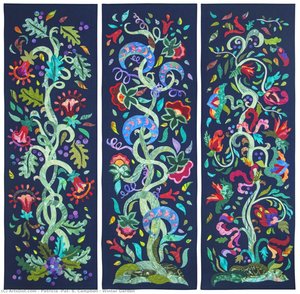
- Winter Garden: A breathtaking three-piece floral tapestry created in 1996, this work showcases an intricate scene of diverse blooms set against a rich, deep blue background, evoking the quiet majesty of nature in repose.
- Jacobean Arbor: Created in 1989, this piece demonstrates her ability to use dramatic contrast, utilizing a striking palette of black and white punctuated by soft pinks and yellows to highlight a central tree motif and delicate birds.
- Grape Arbor: A testament to her ability to capture organic growth and the lushness of vine-based compositions through her signature layered technique.
Legacy and Influence in Textile Art
Beyond the physical beauty of her quilts, Campbell’s significance lies in her role as a custodian of technique and an educator of the next generation. Through her prolific output as a lecturer and author, she has shared the intricate secrets of Jacobean appliqué, ensuring that these labor-intensive, historical methods continue to flourish in a modern context. Her work is not merely decorative; it is a scholarly exploration of texture and botanical accuracy.
The enduring impact of her artistry is reflected in the prestigious institutions that recognize her contribution to the medium. Her pieces have been honored by The National Quilt Museum, standing as permanent testaments to her ability to weave history, nature, and personal passion into a singular, cohesive vision. Through her hands, the ephemeral beauty of a flower is captured forever in the enduring strength of thread and cloth.

patricia (pat) b. campbell
1947 - , United States of America
Osnovne informacije
- Artistic Movement Or Style: Jacobean appliqué
- Date Of Birth: 1947
- Full Name: Patricia B. Campbell
- Nationality: American
- Notable Artworks:
- Winter Garden
- Grape Arbor
- Jacobean Arbor
- Place Of Birth: New York City, United States
Povezani članci
Blossoms of Time: A Historical & Aesthetic Exploration of Floral Painting Across Cultures
Explore the rich history of floral painting! Discover symbolism, techniques & masterpieces from Van Huysum to O'Keeffe. Expert insights for art lovers & collectors at ArtsDot.
Jan van Kessel the Elder: A Baroque Master of Floral Still Life & Miniature Portraiture
Discover the exquisite detail of Jan van Kessel the Elder's Baroque floral still lifes & captivating miniatures. Explore his artistic legacy, scientific precision, and lasting influence on 17th-century Flemish painting.
Jacques Barraband: A Botanical Legacy – Art, Science, and the Pursuit of Floral Precision
Explore the exquisite botanical illustrations of Jacques Barraband (1767-1809). Discover his stunningly accurate bird paintings, commissioned by Napoleon, and learn about his lasting legacy in art & science. Shop museum-quality reproductions at ArtsDot.

Woven Wonders: A Beginner's Guide to Elevating Your New Home with Timeless Textile Art
Discover how to transform your new home with the warmth of textile art. Our expert guide for newlyweds explores handwoven tapestries, tactile fibers, and timeless ways to curate a soulful, sophisticated interior through beautiful woven wonders.
Jan Jansz Wijnants: A Study in Dutch Golden Age Still Life & Floral Transience
Explore the captivating world of Jan Wijnants and Dutch Golden Age still life painting. Discover symbolism, masterful techniques & lasting influence on floral art history. Learn more!