 Pregledaj u prostoru
 Pošalji
 Podeli
 Detalji o delu

 Преузми
 Slični predmeti
 Rendgenski snimak
 Slajdovi
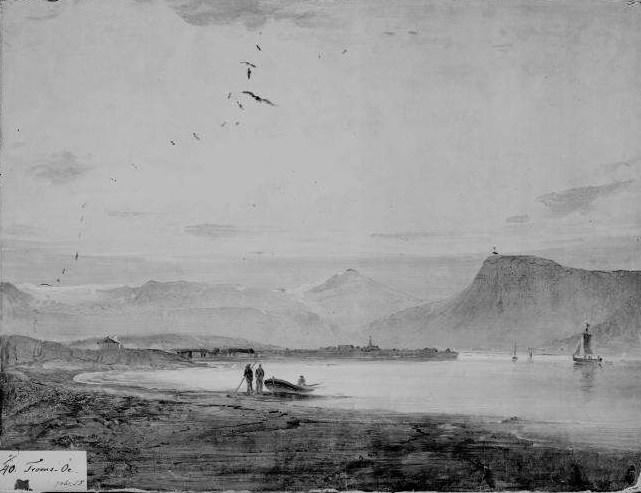
VUE DE TROMS OE (AUJOURD'HUI TROMSO)


 Pročitaj više
Giclee štampa / Umetnički otisak
Giclée štampa ili print na platnu muzejskog kvaliteta uz brzu proizvodnju i fleksibilne opcije završne obrade. ( Kupi ručno naslikanu sliku Kupi digitalnu sliku)




































Izaberite jednu od naših unapred definisanih veličina koje odgovaraju originalnim proporcijama umetničkog dela.

Možete uneti sopstvene dimenzije kako biste umetničko delo prilagodili specifičnom okviru ili prostoru. Ako odabrani format ne odgovara proporcijama originalne slike, mi ćemo ili iscrtati deo dela ili proširiti sliku pomoću ogledane ivice ili jednobojnog popunjavanja. Digitalni prikaz će vam biti poslat na odobrenje pre početka proizvodnje.
Imajte na umu da pregled na ekranu ne odražava stvarno iscrtavanje ili proširivanje. Samo će prikaz (mockup) precizno pokazati finalnu kompoziciju.
Iako su prilagođene dimenzije dostupne, preporučujemo da odaberete dimenziju sa unapred definisane liste kako biste očuvali originalne proporcije.
Dostava širom sveta () za 2 nedelje umesto uobičajenih 4/5 nedelja. (23 август)

Besplatna ekspresna dostava širom sveta

Visokokvalitetno laneno platno

Kompletno osiguranje transporta

Garancija povraćaja carine i uvoznih dažbina

Garancija vernosti boja

Politika povrata u roku od 60 dana (samo u slučaju nedostataka)

Garancija povrata novca od 100%

Popust pri grupnoj kupovini
 Opcija sa staklom dostupna je samo za dimenzije manje od 110 cm

VUE DE TROMS OE (AUJOURD'HUI TROMSO)
Giclee štampa / Umetnički otisak
Dimenzije reprodukcije
-


Konačna cena
$ 62
Opis predmeta
A Sublime Echo of Northern Majesty: Exploring Peder Balke’s “Vue de Troms-Öe”
Peder Andersen Balke (1804 – 1887), born on the humble island of Helgøya in Norway, stands as a singular figure within the landscape tradition of the Romantic era. His life was marked by unwavering artistic dedication amidst challenging circumstances—a testament to the transformative power of passion and perseverance. Growing up immersed in the rugged beauty of the Norwegian countryside instilled in him an enduring fascination with nature’s grandeur, shaping his artistic vision for decades to come. Recognizing his innate talent early on, his community rallied together to secure him a crucial education – a poignant illustration of how creativity can flourish even within modest means. This formative encouragement propelled him toward formal training, initially under Heinrich August Grosch and Jacob Munch, before venturing abroad to hone his skills at the Royal Swedish Academy of Fine Arts in Stockholm alongside Carl Johan Fahlcrantz, ultimately refining his craft through meticulous observation and artistic experimentation.- Subject Matter: “Vue de Troms-Öe” captures a breathtaking panorama of Tromsø (formerly Tromsö), Norway—a coastal city nestled amidst towering mountains and icy fjords. Balke’s depiction isn't merely topographical; it strives to convey the very essence of the region’s dramatic landscape, embodying its austere majesty and captivating atmosphere.
- Style: The artwork firmly anchors itself within the Romantic movement, characterized by an intense emotional response to nature and a preoccupation with sublime beauty—a reaction against Enlightenment rationalism. Balke's style echoes the influence of Caspar David Friedrich and other German landscape painters who sought to evoke spiritual contemplation through meticulously rendered vistas.
- Technique: Executed in oil on canvas, “Vue de Troms-Öe” demonstrates Balke’s mastery of tonal gradation and textural detail. He employs a masterful blend of hatching, crosshatching, and glazing techniques—methods perfected during his time at Stockholm Academy—to achieve remarkable realism and luminosity. The artist's meticulous attention to capturing the subtleties of light and shadow contributes significantly to the painting’s emotive impact.
- Historical Context: Created around 1847, “Vue de Troms-Öe” reflects Balke’s ambition to secure royal patronage—a common aspiration among artists during the Victorian period. As part of a larger series commissioned by Louis Philippe I., it exemplifies the Romantic fascination with portraying dramatic landscapes as expressions of spiritual truth and artistic innovation.
- Symbolic Resonance: Beyond its visual splendor, “Vue de Troms-Öe” speaks to themes of solitude, contemplation, and the grandeur of the natural world—concepts central to Romantic philosophy. The muted palette and atmospheric perspective invite viewers to immerse themselves in a scene that transcends mere representation, fostering a feeling of profound connection with the environment. ## Detailed Analysis: Tromsø’s Silent Majesty The artwork presents a breathtaking panorama of Tromsø, Norway—a city nestled amidst towering mountains and icy fjords—captured with unwavering precision by Peder Balke. More than just a depiction of scenery, it embodies the Romantic spirit's yearning for transcendence through observation of nature’s sublime power. The artist’s deliberate choice of grayscale reinforces this mood, stripping away distracting color hues to focus solely on form and tonal variation—a technique reminiscent of Caspar David Friedrich’s iconic landscapes.
- Composition: Horizontal orientation dominates the canvas, emphasizing the vastness of Tromsø’s mountainous backdrop against which a small coastal settlement is delicately positioned. The shoreline serves as a visual anchor, guiding the eye upwards towards distant peaks shrouded in atmospheric haze—a compositional strategy designed to heighten the sense of depth and grandeur.
- Color Palette: Strikingly devoid of color, “Vue de Troms-Öe” utilizes subtle tonal shifts to sculpt form and convey mood. The darker hues of the foreground mountains contrast sharply with the paler tones of the distant peaks, simulating the effects of atmospheric perspective—a cornerstone of Romantic landscape painting.
- Technique: Executed in graphite or charcoal on paper, Balke’s method is characterized by meticulous hatching and cross-hatching—skills honed during his formative years at the Royal Swedish Academy of Fine Arts. These techniques imbue the artwork with textural richness, capturing the ruggedness of Tromsø's terrain and conveying a palpable sense of immediacy.
- Romantic Ideals: The painting embodies Romantic ideals of individualism, emotion, and reverence for the natural world—values championed by writers like Wordsworth and Coleridge during the same period.
- Peder Balke's Style: Balke’s distinctive style—characterized by bold lines and expressive shading—represents a departure from academic conventions prevalent in his time.
- Landscape as Reflection: Tromsø’s landscape serves as a mirror reflecting humanity's relationship with the natural world—a relationship marked by both admiration and apprehension.
- Emotional Impact: The artwork inspires feelings of serenity, wonder, and connection to the sublime—qualities that align perfectly with Romantic artistic aspirations.
Historical Context & Artistic Influences
Peder Balke’s oeuvre reflects the broader Romantic movement’s fascination with dramatic landscapes and its belief in art’s capacity to inspire awe and contemplation. Like Friedrich, he sought to portray nature not merely as an object of observation but as a force capable of elevating the human spirit—a conviction rooted in philosophical currents that questioned Enlightenment rationalism. The artwork's stylistic echoes of Friedrich are particularly evident in its subdued palette and masterful use of atmospheric perspective—elements that underscore Balke’s commitment to capturing the sublime beauty of Tromsø’s environment.Symbolism & Emotional Resonance
Beyond its formal qualities, “Vue de Troms-Öe (esquisse)” conveys profound symbolic meaning. The depiction of Tromsø’s coastline and distant mountains evokes a sense of solitude and remoteness—themes that resonate with the Romantic preoccupation with confronting existential questions. The muted tones contribute to an atmosphere of quiet contemplation, inviting viewers to immerse themselves in the grandeur of nature and reflect on its enduring power.Detailed Analysis & Artistic Merit
The artist’s masterful command of hatching and cross-hatching techniques elevates “Vue de Troms-Öe (esquisse)” beyond mere representation, transforming it into a powerful expression of visual artistry. The subtle gradations of gray capture the atmospheric perspective with remarkable precision—a hallmark of 19th-century landscape painting and particularly associated with Peder Balke’s oeuvre. Furthermore, the composition—horizontal and emphasizing depth—creates an immersive experience for the viewer, transporting them to the rugged beauty of Tromsø's northern Norwegian terrain. The artwork stands as a testament to Balke’s artistic vision and his ability to convey emotion through meticulous observation and skillful execution. Its enduring appeal lies in its capacity to evoke contemplation and inspire appreciation for the sublime grandeur of nature—a legacy that continues to captivate audiences today.Srodna umetnička dela

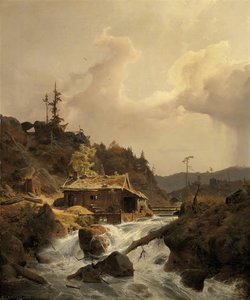
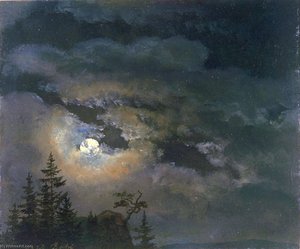
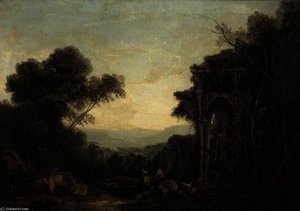
Biografija umetnika
Norveški romantičarski vizionar: Život i umetnost Pedera Balkea
Peder Andersen Balke, rođen 1804. godine na skromnom ostrvu Helgøya u Norveškoj, pojavio se kao izrazito originalan glas unutar pejzažne tradicije 19. veka. Njegova životna priča je priča o odlučnom umetničkom težnji usred okruženja ispunjenog seoskim nedaćama i društvenim ograničenjima. Odrastanje usred surove lepote norveškog polja i šuma u njemu je usadilo duboku povezanost sa prirodom koja će postati presudna karakteristika njegovog dela. Iako je rođen u seljačkoj porodici, Balkeov urođeni talenat prepoznala je njegova zajednica, koja je udružila sredstva kako bi podržala njegovo umetničko obrazovanje – što je svedočanstvo o vrednosti koja se pridavala kreativnosti čak i u najskromnijim uslovima. Ovo rano ohrabrenje pokrenulo ga je ka formalnom školovanju, prvo kod Hajnhriha Avgusta Groša i Jakoba Munča, a zatim ga je odveo dalje, na studije u Kraljevsku švedsku akademiju lepih umetnosti u Stokholmu pod vođstvom Karl Johana Falcranca, nakon čega je svoje veštine usavršavao uz Johana Kristijana Dahla.
Oblikovanje jedinstvenog stila
Balkeov umetnički razvoj obeležila je nemirna istraživanja tehnike i ekspresije. Nije mu bilo dovoljno samo da reprodukuje vizuelni svet; umesto toga, težio je da uhvati njegov emocionalni suštinu, njegov uzvišeni moć. Njegova dela su odmah prepoznatljiva po dramatičnom osvetljenju, često prikazujući scene obavijene eteričnim sjajem ili utopljene u atmosfersku tamu. Ova opsesija svetlom—naročito prolaznim efektima mesečine i sumraka—postala je zaštitni znak njegovog stila. Razvio je specifičan način rada četkicom, karakterisan teksturiranim potezima i nekonvencionalnom upotrebom boje, stvarajući sanjivo stanje koje njegova dela izdvaja od konvencionalnijih romantičarskih pejzaža. Čini se kao da nije slikao samo ono što je video, već ono što je osećao u prisustvu prirode.
Pejzaži Norveške: Nacionalni identitet na platnu
Balke je najpoznatiji po svojim upečatljivim prikazima norveškog pejzaža, teme kojoj se neprestano vraćao tokom čitave karijere. Dela poput Vue de Christiania (današnji Oslo), naslikanog 1872. godine, nude fascinantan uvid u urbani život norveške prestonice, ali čak i ovde prirodni svet dominira, uokvirujući gradski pejzaž i podsećajući posmatrače na njegovu vezu sa okolnom divljinom. Luka u Skjervøyu (1846) prikazuje njegovu pedantnu pažnju posvećenu detaljima, uz sposobnost da uhvati živahnu energiju obalne luke. Stara stabla (1840), sa svojim surovim zimskim prizorom i snažnim osvetljenjem, predstavlja vrhunac njegove majstorije u stvaranju raspoloženja i atmosfere. Morski pejzaž (1845) i Severni vrh pod mesečinom (1848) dodatno potvrđuju njegovu sposobnost da prenese grubost, lepotu i neukrotivog duha norveške obale i severnih krajeva. Ovo nisu bili samo slikoviti prizori; to su bila svedočanstva o nacionalnom identitetu i proslava jedinstvenog prirodnog nasleđa Norveške.
Izvan platna: Društvena savest
Peder Balke je bio mnogo više od običnog umetnika; bio je posvećeni društveni reformator koji se aktivno angažovao u rešavanju gorućih pitanja svog vremena. Verovao je u korišćenje svojih resursa i uticaja kako bi unapredio živote drugih, najpre kroz projekat Balkeby – novo predgrađe Osla osmišljeno da obezbedi dostojne uslove života radničkoj klasi. Odeljivao je pozajmice i sprovodio stroge građevinske propise, pokazujući praktičnu posvećenšću socijalnoj pravdi. Štaviše, Balke je neumorno zastupao finansijsku podršku umetnicima, boreći se za grantove i penzije kako za muškarce, tako i za žene, prepoznajući vitalnu ulogu koju kreativnost igra u društvu. Ova posvećenost društvenim ciljevima otkriva saosećajnu i progresivnu ličnost koja je umetnost videla kao neraskidivo povezanu sa ljudskim blagostanjem.
Ponovno otkriće i nasleđe
Uprkos svom značajnom doprinosu, Balkeova dela su decenijama nakon njegove smrti 1887. godine bila uglavnom zapostavljena. Tek krajem 20. i početkom 21. veka počelo je da se javlja obnovljeni obrasac apreciacije njegovog jedinstvenog vizionarskog duha. Velike izložbe u prestižnim institucijama, kao što su Nacionalna galerija u Londonu (2014–2015) i Metropoliten muzej u Njujorku (2017), približile su njegove slike široj publici, izazivajući kritičko priznanje i naučni interes. Danas je Peder Balke priznat kao ključna figura u istoriji norveške umetnosti, umetnik čiji dramatični pejzaži i emocionalna dubina nastavljaju da odjekuju u srcima posmatrača. Njegov uticaj se može videti u radu kasnijih nordijskih umetnika, učvršćujući njegovo mesto istinskog vizionara koji je dušu Norveške uspeo da zarobiti na platnu.
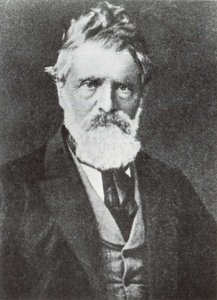
Peder Balke
1804 - 1887 , Norveška
Osnovne informacije
- Artistic Movement Or Style: Romantičarski pejzaž
- Artists Or Movements Influenced By This Artist:
- Nordijska umetnost
- Romantizam
- Artists Who Influenced This Artist:
- Heinrich Grosch
- Jacob Munch
- Carl Fahlcrantz
- Johan Dahl
- Date Of Birth: 1804
- Date Of Death: 1887
- Full Name: Peder Balke
- Nationality: Norveški
- Notable Artworks:
- Vue de Christiania
- Luka u Skjervøyu
- Staro drveće
- Morski pejzaž
- Fredrikshald
- Severni vrh pod mesečinom
- Place Of Birth: Hegøy, Norveška
Povezani članci

Glavna dela koja su definisala Romantični pejzaž: 10 remek-dela za vaš dom
Otkrijte 10 remek-dela romantičnog pejzažnog slikarstva! Uronite u svet Claude Lorraina, Caspara David Friedricha i Turnera. Ispričane priče umetnosti, inspiracija za dekoraciju doma. Kvalitetne reprodukcije na ArtsDot.com – istražite celu kolekciju online!
Johan Christian Dahl: Pioneering Norwegian Romantic Landscape Painting
Explore the life & art of Johan Christian Dahl, Norway's first great Romantic painter. Discover his iconic landscapes, cultural impact, and lasting legacy with ArtsDot.

Evocations of Place: A Historical Journey Through Landscape Art
Explore the rich history of landscape art with ArtsDot. Discover renowned artists, movements like Impressionism & Romanticism, and expert guidance for collecting timeless pieces. Find your perfect serene escape today!
The Sublime and the Picturesque: Exploring Emotion & Nature in Romantic Landscape Painting
Explore the emotional power of Romantic landscape painting! Discover the sublime & picturesque traditions, key artists like Friedrich & Cole, and find your perfect artwork at ArtsDot.

25 Remek-dela Džona Konstebla: Lepota Engleske na Platnu | ArtsDot
Uronite u svet Džona Konstebla! Otkrijte 25 remek-dela engleskog pejzaža, romantizma i seoske idile. Kupite reprodukcije slika vrhunskog kvaliteta za dekoraciju enterijera na ArtsDot.com.