

 Pregledaj u prostoru
 Pošalji
 Podeli
 Detalji o delu

 Преузми
 Slični predmeti
 Rendgenski snimak
 Slajdovi
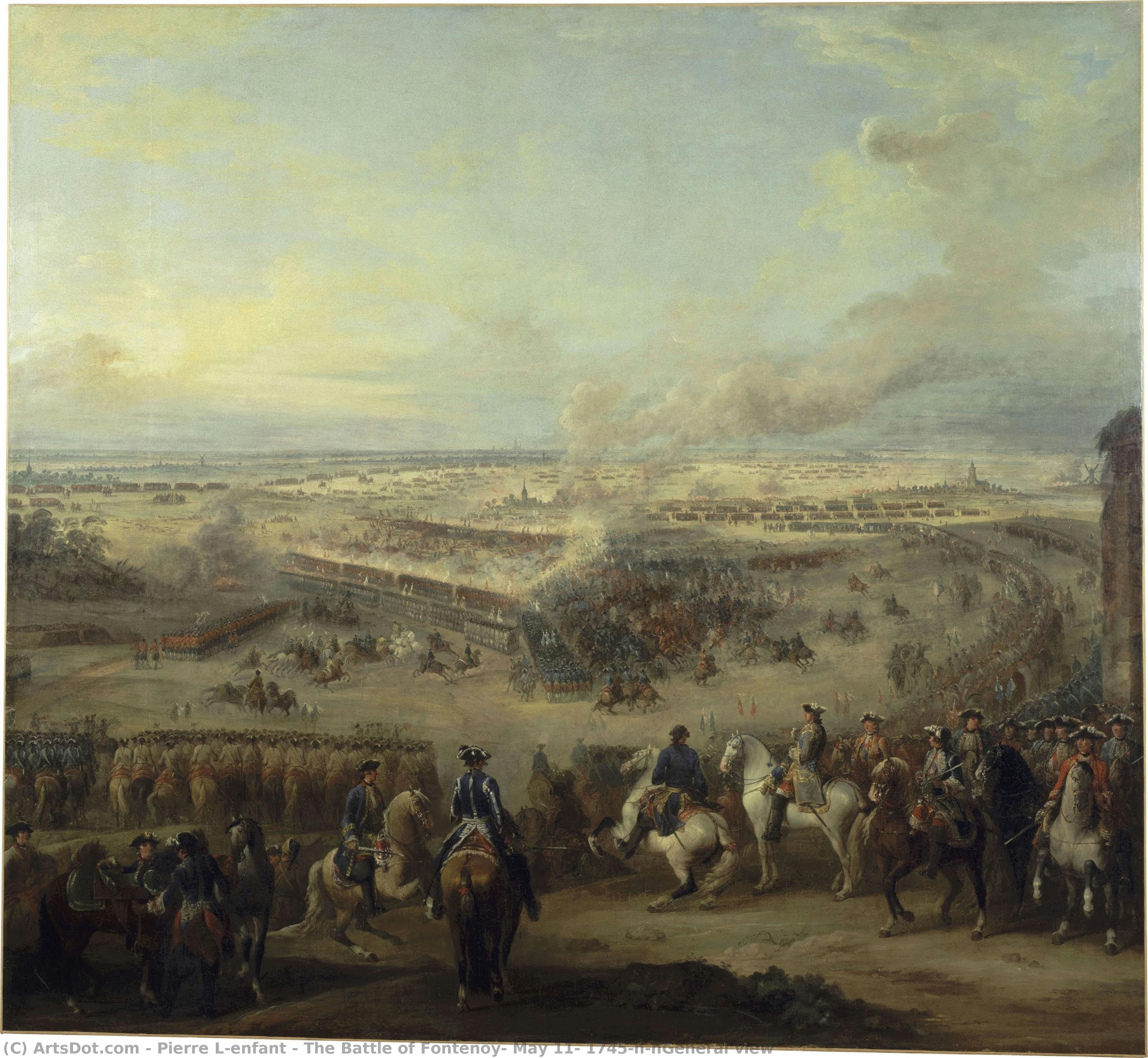
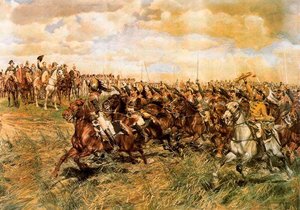
The Battle of Fontenoy, May 11, 1745\n\nGeneral view


 Pročitaj više
Giclee štampa / Umetnički otisak
Giclée štampa ili print na platnu muzejskog kvaliteta uz brzu proizvodnju i fleksibilne opcije završne obrade. ( Kupi ručno naslikanu sliku Kupi digitalnu sliku)




P118B $10

P118H $10

P118W $10

P438Z $10

P508JH $12

P508YH $12

P805H $10

P805Z $10

P919BZ $10

P919G $10

P919XJ $10

P959ZH $10

P968JZ $12

W106C $8

W218G $10

W218JH $8

W218Y $10

W307PJ $10

W316G $10

W316PJ $8

W316Y $10

W398PJ $8

W4111J $10

W500HY $15

W500JH $15

W692G $12

W849H $8

W940BG $15

W953PJ $8




Izaberite jednu od naših unapred definisanih veličina koje odgovaraju originalnim proporcijama umetničkog dela.

Možete uneti sopstvene dimenzije kako biste umetničko delo prilagodili specifičnom okviru ili prostoru. Ako odabrani format ne odgovara proporcijama originalne slike, mi ćemo ili iscrtati deo dela ili proširiti sliku pomoću ogledane ivice ili jednobojnog popunjavanja. Digitalni prikaz će vam biti poslat na odobrenje pre početka proizvodnje.
Imajte na umu da pregled na ekranu ne odražava stvarno iscrtavanje ili proširivanje. Samo će prikaz (mockup) precizno pokazati finalnu kompoziciju.
Iako su prilagođene dimenzije dostupne, preporučujemo da odaberete dimenziju sa unapred definisane liste kako biste očuvali originalne proporcije.
Dostava širom sveta () za 2 nedelje umesto uobičajenih 4/5 nedelja. (5 септембар)

Besplatna ekspresna dostava širom sveta

Visokokvalitetno laneno platno

Kompletno osiguranje transporta

Garancija povraćaja carine i uvoznih dažbina

Garancija vernosti boja

Politika povrata u roku od 60 dana (samo u slučaju nedostataka)

Garancija povrata novca od 100%

Popust pri grupnoj kupovini
 Opcija sa staklom dostupna je samo za dimenzije manje od 110 cm

The Battle of Fontenoy, May 11, 1745\n\nGeneral view
Giclee štampa / Umetnički otisak
Dimenzije reprodukcije
-


Konačna cena
$ 62
A Vision of Conflict: Pierre L'Enfant’s Dramatic Depiction of Fontenoy
The Battle of Fontenoy, May 11th, 1745 – a clash between France and Britain that reverberated across Europe – remains etched in history as a pivotal moment in the War of Austrian Succession. Yet, beyond the political ramifications lay a visceral depiction of warfare captured with remarkable precision by Pierre Charles L’Enfant, a French artist who unexpectedly found his vocation serving the American cause. This monumental canvas transcends mere documentation; it's an immersive experience into the heart of eighteenth-century military strategy and imbued with symbolic resonance that continues to captivate viewers today.- Subject Matter: L’Enfant’s composition centers on a sprawling battlefield panorama, meticulously rendered to convey the scale and intensity of the confrontation. The artist eschewed idealized representations common in his time, opting instead for an unflinching portrayal of soldiers engaged in brutal combat – a deliberate choice reflecting the grim realities faced by both armies.
- Style: Characterized by Neoclassical influences, L’Enfant's style prioritizes clarity and restraint. Lines are crisp and decisive, guiding the viewer’s eye across the canvas with unwavering focus. The artist skillfully employs perspective to create a sense of depth, immersing the audience in the chaotic environment of the battlefield.
- Technique: Employing oil paint on canvas—a technique favored by artists of his era—L'Enfant utilized layering and blending techniques to achieve remarkable tonal accuracy. Careful attention was paid to capturing the textures of uniforms, weaponry, and the ravaged landscape, demonstrating a mastery of artistic craftmanship.
Srodna umetnička dela
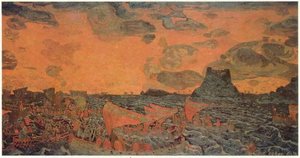
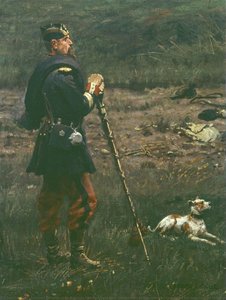
Biografija umetnika
A Life Bridging Worlds: Pierre Charles L'Enfant and the Birth of a Capital
Pierre Charles L’Enfant, a name often synonymous with the grand design of Washington, D.C., was far more than just an architect or city planner. Born in Paris on August 2, 1754, into a family steeped in artistic tradition – his father, Pierre L'Enfant, served as a painter to King Louis XV – young Charles’s early life unfolded amidst the elegance and intellectual ferment of pre-revolutionary France. He received a rigorous education at the Royal Academy in the Louvre, honing his skills not only in painting but also in engraving and architecture under his father’s tutelage. However, destiny beckoned him across the Atlantic, drawn by the burgeoning spirit of rebellion in the American colonies. A pivotal encounter with Pierre Augustin Caron de Beaumarchais, the playwright and secret agent, led to L'Enfant’s enlistment as a military engineer in support of the Continental Army in 1777. This decision marked a dramatic shift, transforming him from a French artist into an active participant in the forging of a new nation. He even adopted the more Americanized name “Peter” upon his arrival, signaling a conscious embrace of his chosen allegiance.From Battlefield Engineer to Portraitist of Revolutionaries
L’Enfant's service during the Revolutionary War was distinguished and multifaceted. He quickly rose through the ranks, becoming a captain in the Corps of Engineers by 1779, serving with Major General Lafayette and even finding himself on General George Washington’s staff at Valley Forge. It was during this period that his artistic talents found renewed expression, though now directed towards capturing the likenesses of key figures and documenting the realities of war. The Marquis de Lafayette commissioned him to paint a portrait of Washington, a testament to L'Enfant’s growing reputation as an artist capable of conveying both physical resemblance and character. Beyond this significant commission, he created numerous pencil portraits of Washington and other Continental Army officers, offering intimate glimpses into the faces that shaped American independence. He also documented scenes of encampments, providing visual records of the hardships and resilience of the soldiers. Wounded at the Siege of Savannah in 1779 and later captured during the surrender of Charleston in 1780, L’Enfant endured the trials of war firsthand before being exchanged in 1780 and continuing his service until the army's disbandment in 1783. His wartime experiences instilled within him a deep admiration for the American ideals of liberty and self-governance, shaping his future endeavors.A Vision for the New Republic: Designing Washington, D.C.
Following the war, L’Enfant established himself as a successful civil engineer in New York City, undertaking projects ranging from furniture design to architectural renovations – notably redesigning New York City Hall for the First Congress of the United States (resulting in Federal Hall). However, his most enduring legacy would be his visionary plan for the nation's capital. In 1791, President George Washington tasked L’Enfant with designing a federal city on the Potomac River, a project born from political compromise between northern and southern states. The “Residence Act” had established the location, but it was L’Enfant who transformed this nascent idea into a breathtaking reality. His plan, presented in 1791 – often referred to as the "L'Enfant Plan" – was revolutionary for its time. It incorporated grand avenues radiating from prominent circles and squares, monumental public buildings strategically positioned to emphasize civic power, and a harmonious blend of natural landscapes with carefully planned urban spaces. He envisioned a city that would not merely function as a seat of government but also inspire awe and embody the ideals of the new republic. The plan drew heavily on European Baroque and Neoclassical principles, reflecting L’Enfant's artistic training, yet adapted them to the American context, creating something uniquely its own.Legacy and Lasting Influence
Though his relationship with the commissioners overseeing the project became strained due to his strong personality and uncompromising vision – leading to his eventual dismissal in 1792 – L’Enfant's fundamental plan for Washington, D.C., remained largely intact. The city that rose from the shores of the Potomac stands as a testament to his genius, a living embodiment of his artistic and engineering prowess. His influence extends beyond the physical layout of the capital; he established principles of urban planning that continue to inform civic design today. L’Enfant also contributed to other aspects of national symbolism, designing the badge for the Society of the Cincinnati, an organization of former Continental Army officers, and even working on designs for American coinage. He spent his later years largely in relative obscurity, struggling financially despite his significant contributions. He died in 1825, but his vision lives on, etched into the very fabric of the nation’s capital. Pierre Charles L'Enfant was a true Renaissance man, seamlessly blending artistic sensibility with engineering expertise and unwavering dedication to the ideals of the American Revolution, leaving an indelible mark on the landscape – and the spirit – of the United States.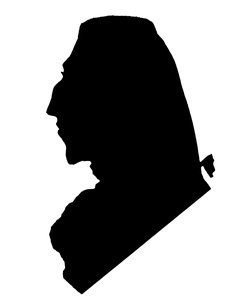
pierre l'enfant
1754 - 1825 , France
Osnovne informacije
- Artistic Movement Or Style: Neoclassical
- Artists Or Movements Influenced By This Artist:
- City planning
- American architecture
- Artists Who Influenced This Artist: ["Pierre L'Enfant (father)"]
- Date Of Birth: August 2, 1754
- Date Of Death: 1825
- Full Name: Pierre Charles L'Enfant
- Nationality: French-American
- Notable Artworks:
- L'Enfant Plan
- Washington portraits
- Federal Hall design
- Place Of Birth: Paris, France
Povezani članci
Pierre-Auguste Renoir: 25 Remek-Dela Impresionizma za Vaš Dom | ArtsDot
Uronite u svet Pierre-Auguste Renoara! Otkrijte 25 remek-dela impresionizma, priče iza slika i tehničke detalje. Reprodukcije vrhunskog kvaliteta za vaš dom dostupne na ArtsDot.com. Istražite celu kolekciju online!

Rokoko: 10 Remek Dela Koja Su Definisala Eleganciju i Ukus
Otkrijte 10 remek dela koja su definisala rokoko umetnost! Uronite u svet Boucher-a, Watteau-a i Fragonarda. Istorija, stil i inspiracija za vaš dom. Kvalitetne reprodukcije i kuratorski odabiri na ArtsDot.com!

The Rococo Aesthetic: Opulence, Rebellion & the Pursuit of Pleasure in 18th-Century Art
Explore the opulent world of Rococo art! Discover its origins, key artists like Watteau & Boucher, and lasting influence on design. Expert insights for collectors & enthusiasts.
25 Remek-dela Žorža Seurea: Putovanje kroz Svet Tačizma i Impresionističke Revolucije
Istražite 25 remek-dela Žorža Seurea i uronite u svet tačizma i impresionističke revolucije. Otkrijte priče iza slika, tehnike i inspiraciju ovog francuskog umetnika. Reprodukcije vrhunskog kvaliteta dostupne na ArtsDot.com!
Charles-André van Loo: A Study in Rococo Portraiture & the French Court's Artistic Dynamics
Explore the elegant world of Charles-André van Loo, a master of Rococo portraiture at the French court. Discover his life, techniques, and enduring influence on 18th-century art. Hand-painted reproductions available.

