 Pregledaj u prostoru
 Pošalji
 Podeli
 Detalji o delu

 Преузми
 Slični predmeti
 Rendgenski snimak
 Slajdovi
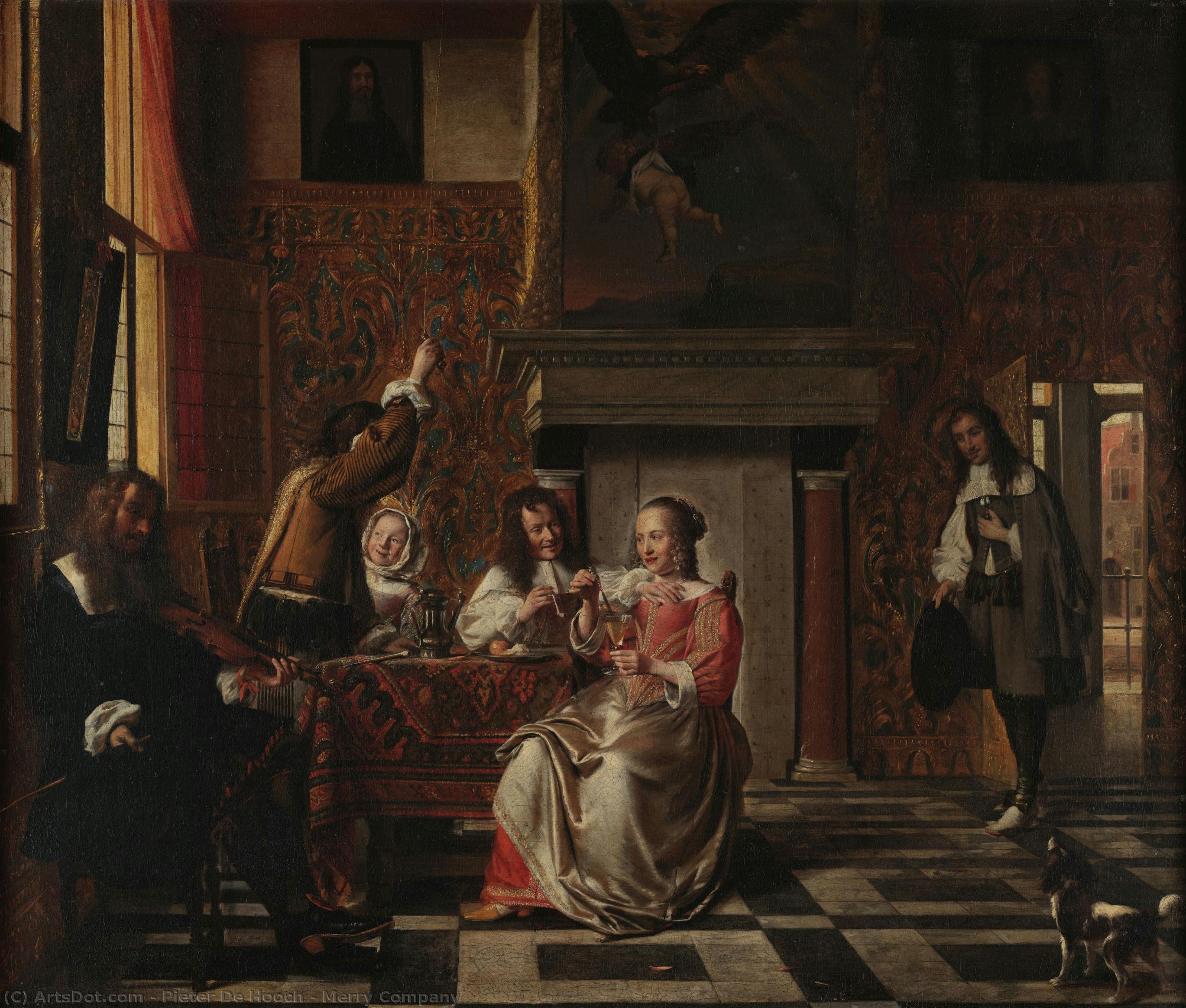
Merry Company
 Oil On Canvas
- WallArt
- Dutch Golden Age
 1600
1600 64.0 x 74.0 cm
 Nacionalni muzej stare umetnosti
 Pročitaj više
Ručno rađena uljana reprodukcija
Ručno oslikano uljanim bojama na platnu u dimenzijama i okviru po vašem izboru, izrađeno po porudžbini od strane naših umetnika. ( Kupi print Kupi digitalnu sliku)




P118B $10

P118H $10

P118W $10

P438Z $10

P508JH $12

P508YH $12

P805H $10

P805Z $10

P919BZ $10

P919G $10

P919XJ $10

P959ZH $10

P968JZ $12

W106C $8

W218G $10

W218JH $8

W218Y $10

W307PJ $10

W316G $10

W316PJ $8

W316Y $10

W398PJ $8

W4111J $10

W500HY $15

W500JH $15

W692G $12

W849H $8

W940BG $15

W953PJ $8




Izaberite jednu od naših unapred definisanih veličina koje odgovaraju originalnim proporcijama umetničkog dela.

Можете унети сопствене димензије како бисте прилагодили дело одређеном оквиру или простору. Ако одабрана величина не одговара пропорцијама оригинала, слика ће бити исечена или проширена додатним елементима који се ручно насликавају. Дигитални prikaz ће вам бити послат на одобрење пре почетка производње.
Имајте на уму да преглед на екрану не одражава стварно исецање или проширење. Само приказ (mockup) ће тачно приказати коначну композицију.
Иако су доступне прилагођене величине, препоручујемо да одаберете димензију из дефинисане листе како бисте сачували оригиналне пропорције.
Nakon narudžbine, tim ArtsDot.com će klijentu putem e-pošte poslati uputstva i dostaviti prikaz predloženog rešenja
Isporuka širom sveta () za 3/4 nedelje umesto uobičajenih 5 nedelja. (21 август). Bez kompromisa po pitanju kvaliteta.

Besplatna ekspresna dostava širom sveta

Visokokvalitetno laneno platno

Kompletno osiguranje transporta

Garancija povraćaja carine i uvoznih dažbina

Garancija vernosti boja

Politika povrata u roku od 60 dana (samo u slučaju nedostataka)

Garancija povrata novca od 100%

Popust pri grupnoj kupovini
 Opcija sa staklom dostupna je samo za dimenzije manje od 110 cm

Merry Company
Tehnika reprodukcije
Dimenzije reprodukcije
-


Konačna cena
$ 263
Opis umetničkog dela
A Moment of Quiet Revelry: Pieter de Hooch’s “Merry Company”
Pieter de Hooch's "Merry Company," painted around 1600, isn’t merely a depiction of a gathering; it’s a carefully constructed tableau brimming with subtle symbolism and the quiet elegance characteristic of Dutch Golden Age art. This remarkable work, now housed within the Museum’s collection, offers a captivating glimpse into the social life of Amsterdam during its burgeoning prosperity – a world where commerce, artistry, and refined leisure intertwined. De Hooch, a master of capturing fleeting moments and intimate interiors, elevates an everyday scene to a level of profound observation, inviting us to contemplate the complexities of human interaction and the nuances of wealth and status. The painting’s enduring appeal lies not just in its technical brilliance but also in its ability to evoke a sense of understated charm and intellectual curiosity.The Composition: A Dance of Light and Gesture
At first glance, “Merry Company” presents a seemingly simple scene: a group of individuals assembled around a richly appointed table within a warmly lit room. However, closer inspection reveals a meticulously orchestrated composition. De Hooch’s masterful use of light is immediately striking – a soft, diffused illumination that washes over the figures and subtly defines their forms. The light source, cleverly positioned to suggest an unseen window, creates a sense of depth and atmosphere, drawing the viewer into the heart of the gathering. Notice how he employs chiaroscuro—the dramatic contrast between light and shadow—to emphasize key elements, such as the faces of those engaged in conversation and the details of the table setting. The figures themselves are rendered with remarkable sensitivity, each exhibiting a unique posture and expression that hints at their individual personalities and relationships. The arrangement isn’t haphazard; it's carefully balanced, creating a harmonious visual experience.Symbolism Within the Scene: Five Senses and Allegory
Beyond its surface beauty, “Merry Company” is rich in symbolic meaning. The painting has been interpreted as a meditation on the five senses – a concept central to Renaissance thought. The presence of food and drink clearly represents taste and touch, while music (implied by the instruments) speaks to hearing. However, the most intriguing element lies above the fireplace: a depiction of Ganymede, the mythological abduction of the beautiful youth by Zeus in the form of an eagle. This scene, often interpreted as a reference to the concept of the Five Senses, is not merely decorative; it adds a layer of complexity and perhaps even a touch of eroticism or theological allegory to the composition. Some critics suggest that Ganymede embodies the human soul, elevated by divine will, while others see a veiled commentary on earthly desires. The inclusion of this mythological episode elevates the scene beyond a simple depiction of social interaction, transforming it into a visual riddle inviting contemplation.Historical Context and Artistic Style
Pieter de Hooch’s work is firmly rooted in the Dutch Golden Age (1600-1700), a period of unprecedented economic prosperity and artistic innovation. His paintings reflect the values and aspirations of the emerging middle class – a society that valued both material wealth and intellectual pursuits. De Hooch was particularly renowned for his “room scenes,” capturing intimate moments within domestic interiors with remarkable realism and psychological insight. Unlike the grand, heroic narratives favored by some of his contemporaries, de Hooch focused on the everyday lives of ordinary people, offering a nuanced portrayal of their social interactions and emotional experiences. His style is characterized by its meticulous attention to detail, naturalism, and use of light – qualities that distinguish him from other artists of his time. The painting’s composition echoes works by earlier masters like Jacob van der Meer, but de Hooch imbues it with a distinctly personal touch, creating a unique and unforgettable image.A Timeless Appeal: Reproduction and Interior Design
“Merry Company” continues to resonate with audiences today, not only for its artistic merit but also for its evocative portrayal of human connection. Reproductions of this masterpiece offer a beautiful addition to any interior space, bringing a touch of Dutch Golden Age elegance and intellectual curiosity into the home. The painting’s subtle color palette, masterful composition, and rich symbolism create a visually stimulating experience that invites contemplation and conversation. Consider pairing a reproduction with warm, inviting furnishings – perhaps a richly upholstered armchair or a vintage wooden table – to further enhance its atmosphere. “Merry Company” is more than just a painting; it's an invitation to slow down, observe, and appreciate the beauty of everyday life.Srodna umetnička dela
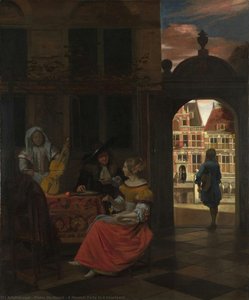
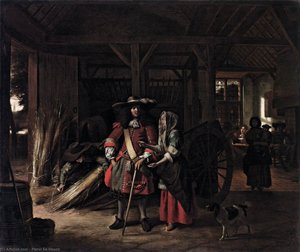
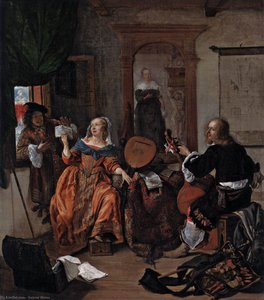
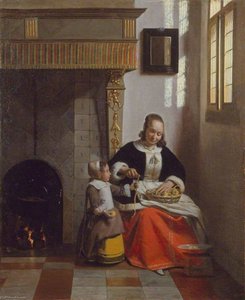
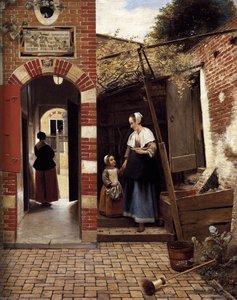

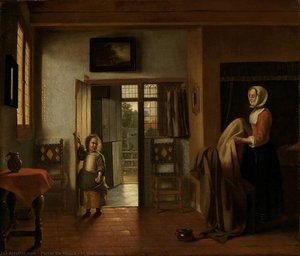
Biografija umetnika
rani život i umetničko obrazovanje
Pieter de Hooch, istaknuta figura holandskog zlatnog doba, rođen je 20. decembra 1629. godine u Roterdamu, u Holandiji. Bio je najstariji od petoro dece Hendrika Hendricksza de Hoocha, zidarа, i Anetge Pieters, koja je bila pratilja pri porođaju. Iako su detalji o njegovom ranom životu retki, veruje se da je stvarao u Rotterdamu, Delftu i Amsterdamu. Njegovo umetničko obrazovanje odvijalo se u Haarlemu pod mentorstvom pejzažnog slikara Nicolaesa Berchema, zajedno sa Jacobom Ochterveltom. Upravo je ovaj period postavio temelje za njegov budući uspeh kao majstora tihih, porodičnih scena koje krase otvorena vrata i prolazi.umetnički stil i teme
De Hoochovo delo prepoznatljivo je po neverovatnoj pažnji posvećenoj detaljima, naturalizmu i virtuoznom korišćenju svetlosti. Njegova slika često su prikazivala svakodnevni život, odražavajući vrednosti i težnje tadašnje uspensvene srednje klase. Izuzetan primer ovog stila je "Dvorište kuće u Delftu" (1658), koje svedoči o njegovoj sposobnosti da uhvati najobičnije detalje svakodnevice. Iako njegovo delo deli teme i kompozicije sa radom umetnika kao što je Emanuel de Witte, fokus na ljude i njihove međusobne odnose izdvaja ga od ostalih. To je jasno vidljivo u delima kao što su "Žena koja doji" (1658) i "Žena sa bebom u krilu" (1658), koja demonstriraju njegov duboki interes za intimne, kućne prizore.značajna dela i nasleđe
Njegov umetnički trag ostao je zabeležen kroz neka od najupečatljivijih dela koja uključuju:- "Vesele piće" (oko 1650.)
- "Igrači karata u sunčano osvetljenoj sobi" (1658)
- "Žena koja priprema hleb i puter za dečaka" (1661)
muzeji i kolekcije
Dela ovog majstora mogu se pronaći u brojnim svetskim muzejima, uključujući Koninklijk Museum voor Schone Kunsten u Antverpenu, Belgija, koji čuva ogromnu kolekciju evropske umetnosti od 15. do 20. veka. Otkrijte više o Pieteru de Hoochu i njegovim delima na ArtsDot: [https://ArtsDot.com/@/pieter-de-hooch](https://ArtsDot.com/@/pieter-de-hooch) /sr/art/show/art-d3b4kt-sr/ (istražite remek-dela iz Koninklijk Museum voor Schone Kunsten, Belgija)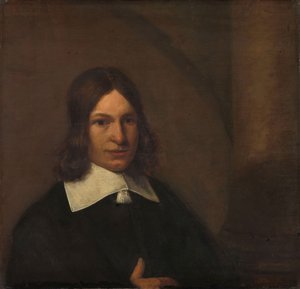
Питер Де Хух
1629 - 1694 , Србија
Osnovne informacije
- Artistic Movement Or Style: Делфтска школа
- Artists Or Movements Influenced By This Artist: ['Јан Вермер']
- Artists Who Influenced This Artist: ['Николас Беркем']
- Date Of Birth: 20. децембар 1629.
- Date Of Death: 1694.
- Full Name: Питер Хендриксзон де Хоох
- Nationality: Холандски
- Notable Artworks:
- Весели пијач
- Карташи у соби
- Жена спрема хлеб
- Place Of Birth (City And Country): Ротердам, Холандија
Povezani članci
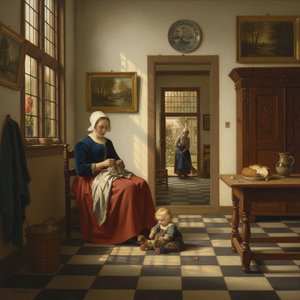
Pieter de Hooch: Illuminating Dutch Domestic Life & Golden Age Charm
Explore the captivating world of Pieter de Hooch, a master of Dutch Golden Age painting. Discover his innovative use of light, intimate domestic scenes, and lasting influence on art history. Learn more at ArtsDot.

Demandes Commerciales
APS ofrece reproducciones de bellas artes y encargos personalizados desde 2004. Confían en nosotros corporaciones, hoteles y coleccionistas selectos para obras de arte de calidad museística, servicio discreto y soluciones artísticas completas. ¡Póngase en contacto con nosotros para obtener un presupuesto personalizado!

Francisco Goya: 25 Remek-dela Španskog Majstora za Vaš Dom | ArtsDot
Istražite 25 remek-dela Francisca Goya, španskog slikara romantizma i impresionizma. Portreti, tamne slike & istorija umetnosti na ArtsDot.com! Kupite reprodukcije slika vrhunskog kvaliteta za dekoraciju enterijera. Otkrijte celu kolekciju online.

A riguardo di noi
Découvrez notre histoire ! Nous apportons l'art de classe mondiale dans votre vie grâce à une sélection experte, des créations personnalisées et des aperçus gratuits. Approuvé par les particuliers et les entreprises depuis 2000.
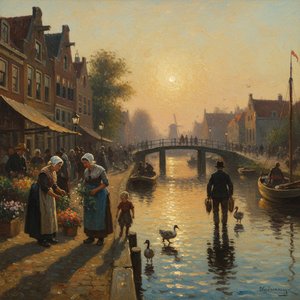
Wilhelmus de Zwart: Capturing Dutch Life Through the Lens of Realism & Impressionism
Explore the captivating world of Wilhelmus de Zwart, a Dutch master bridging Realism & Impressionism. Discover his landscapes, cityscapes, and unique technique – a compelling study for art enthusiasts and collectors.