

 Pregledaj u prostoru
 Pošalji
 Podeli
 Detalji o delu

 Преузми
 Slični predmeti
 Rendgenski snimak
 Slajdovi
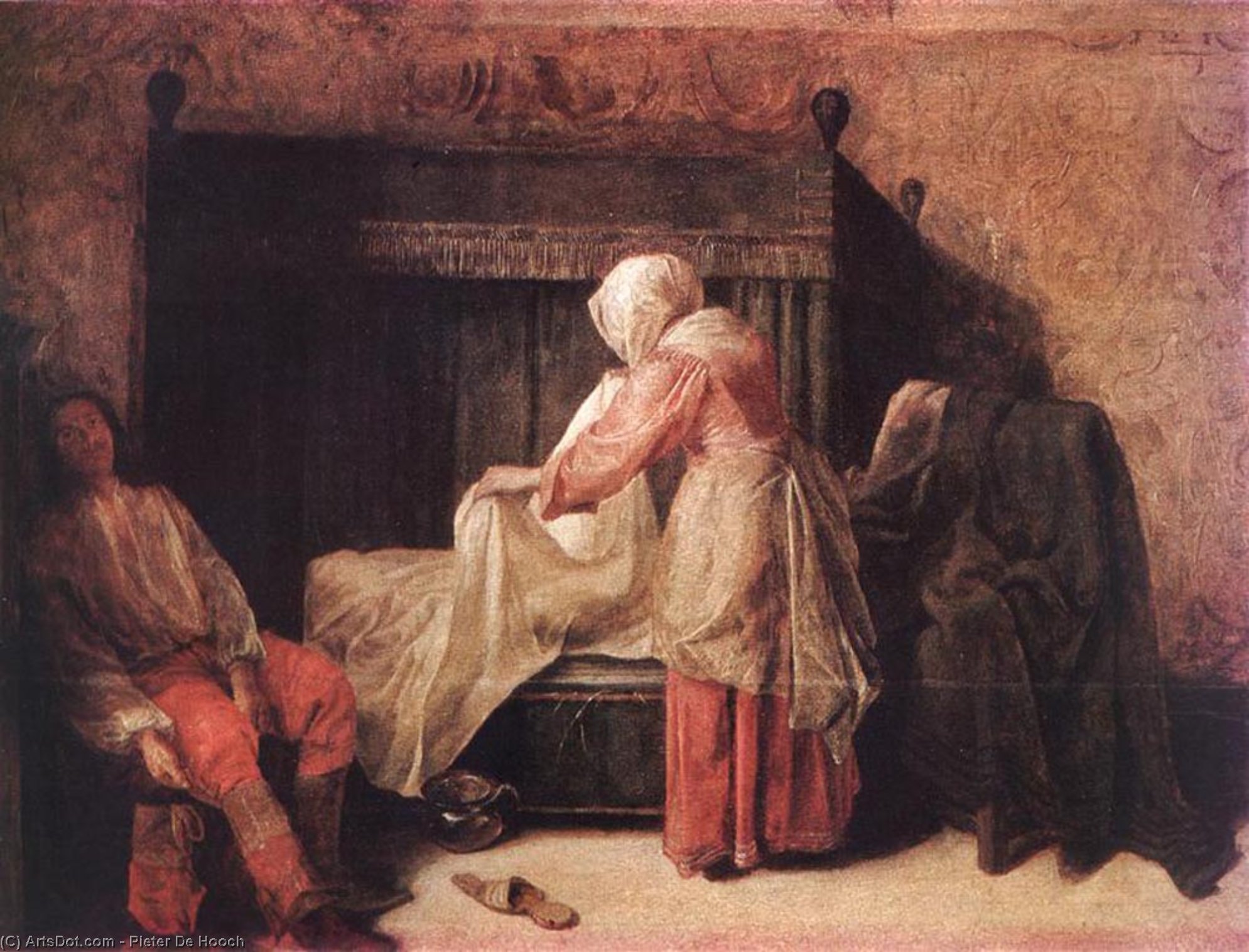
The Morning of a Young Man
 Acrylic On Canvas
- WallArt
- Dutch Golden Age
 40.0 x 53.0 cm
 Pushkin State Museum
 Pročitaj više
Kupite digitalnu sliku visoke rezolucije i poboljšanog kvaliteta, koja je znatno superiornija od onoga što vidite u online prikazu.
Svaka datoteka je pedantno pripremljena od strane naših stručnjaka koristeći napredne alate i profesionalnu ručnu retušu. Osiguravamo da svaka slika ima izuzetnu oštrinu, preciznu reprodukciju boja i fine detalje.
Konačna datoteka se dostavlja putem e-pošte u roku od 72 sata, optimizovana za neposrednu upotrebu u profesionalnim, izdavačkim i štamparskim okruženjima. To je isti kvalitet kojem veruju vrhunski studiji dizajna, izdavači i galerije.
Digitalna slika
Preuzmite datoteku visoke rezolucije za ličnu upotrebu, štampanje i kreativne projekte. ( Kupi print Kupi ručno naslikanu sliku)
Uključeno uz svaku porudžbinu digitalne slike
Profesionalna digitalna isporuka, zagarantovana
Kada odaberete ArtsDot.com, ne dobijate samo sliku – vi primate profesionalno unapređeno digitalno umetničko delo, izrađeno sa najvećom preciznošću i uz garanciju zadovoljstva. Evo svega što automatski dolazi uz vašu porudžbinu:

Brza dostava putem e-pošte
Vaša digitalna slika visoke rezolucije biće vam poslata putem e-pošte u roku od 72 sata od poručivanja – spremna za trenutnu upotrebu.

Digitalna datoteka unapređena veštačkom inteligencijom
Vaše umetničko delo je profesionalno optimizovano korišćenjem naprednih AI alata i ručne obrade, čime se osiguravaju maksimalni detalji, oštrina i preciznost boja.

Besplatna ponovna isporuka doživotno
Slučajno ste obrisali ili izgubili svoju datoteku? Ne brinite – poslaćemo vam je ponovo u bilo kom trenutku, potpuno besplatno.

Bez troškova uvoza – zauvek
Uživajte u svojim umetničkim delima trenutno, bez carine, dažbina ili troškova dostave – digitalni download je uvek bez poreza.

Garancija vernosti boja
Uz pomoć profesionalnih alata i upravljanja bojama, osiguravamo da vaša digitalna slika što vernije odražava originalne boje.

Garancija zadovoljstva u roku od 60 dana
Ako niste zadovoljni svojom digitalnom slikom, revidirat ćemo je ili vratiti 100% novca u roku od 60 dana – bez ikakvih pitanja.

100% garancija povrata novca
Niste zadovoljni? Obezbedite pun povrat novca u roku od 60 dana od trenutka kada ste primili svoju digitalnu datoteku – bez suvišnih pitanja.

Popusti na velike porudžbine
Kupite 3 slike, uštedite 10% - Kupite 5 slika, uštedite 15% - Kupite 10+ slika, uštedite 20%. Odlično za kreativne projekte, galerije i agencije.
The Morning of a Young Man – A Dutch Golden Age Intimacy
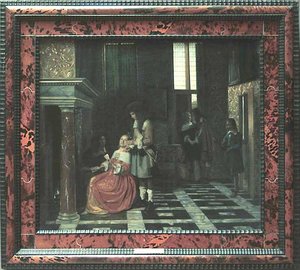
Pieter de Hooch’s “The Morning of a Young Man,” painted circa 1656, isn't merely a portrait; it’s a carefully constructed tableau of domesticity, grief, and the nascent stirrings of consciousness within the burgeoning middle class of 17th-century Delft. This intimate scene, rendered in de Hooch’s signature luminous style, captures a poignant moment – a young woman cradling her companion, likely a deceased brother or lover, amidst the quiet routine of a morning ritual. The painting immediately draws the viewer into its softly lit interior, a space both familiar and subtly unsettling, brimming with details that speak volumes about the lives depicted within. De Hooch’s masterful use of light, filtering through an open doorway and illuminating dust motes dancing in the air, creates a sense of hazy realism—a world observed rather than dramatically staged. The composition is deliberately restrained, focusing on the central figures while subtly hinting at the broader context of their existence.A Study in Light and Shadow – De Hooch’s Technique
De Hooch was renowned for his ability to capture fleeting moments of everyday life with an almost photographic precision, yet he never sacrificed artistic expression. “The Morning of a Young Man” exemplifies this skill perfectly. He employed a technique known as *chiaroscuro*, skillfully manipulating light and shadow to create depth and drama within the confined space. Notice how the light gently caresses the woman’s face and hands, drawing attention to her sorrowful expression, while leaving the background in a softer, more ambiguous state. The brushstrokes are delicate and layered, contributing to the painting's velvety texture and creating an illusion of tangible reality. De Hooch’s meticulous observation of detail—the folds of the fabric, the arrangement of objects on the bed, even the subtle expressions on the faces—demonstrates a deep understanding of his subject matter and a commitment to capturing the essence of human experience. The use of muted colors – predominantly browns, creams, and grays – further enhances the painting’s somber mood, reinforcing the theme of loss and remembrance.Symbolism Within the Domestic Scene
Beyond its immediate depiction of grief, “The Morning of a Young Man” is rich in symbolic meaning. The open doorway acts as a visual threshold, suggesting both closure – the deceased brother’s absence – and transition – the woman's journey through mourning. The bed, a central element of the composition, represents not just rest but also vulnerability and intimacy. The young man’s head resting on her lap is a gesture of comfort and support, highlighting the profound bond between them. The scattered objects—a book, a bowl, a pair of shoes—suggest a disrupted routine, reflecting the disruption caused by death. Even the placement of the figures within the room holds significance; they are positioned in a way that emphasizes their shared sorrow and mutual dependence. The inclusion of a simple, yet elegant chair against the wall speaks to the quiet dignity of mourning, suggesting a space for reflection and remembrance.A Reflection of Delft’s Golden Age – Context and Legacy
Painted during the height of the Dutch Golden Age, “The Morning of a Young Man” offers a glimpse into the social and cultural values of the time. The painting reflects the growing importance of the middle class—a group increasingly concerned with domestic comfort, refinement, and emotional expression. De Hooch’s focus on intimate scenes of everyday life was a departure from the grand historical or mythological subjects that dominated much of 17th-century art. His work captured the nuances of human relationships and the quiet dramas of ordinary lives, making him one of the most beloved artists of his era. His influence can be seen in later generations of Dutch painters, particularly in the development of genre painting and the exploration of domestic interiors. Reproductions of this piece continue to resonate with viewers today, offering a poignant reminder of the enduring power of art to capture human emotion and illuminate the complexities of life’s most profound experiences. The work stands as a testament to de Hooch's ability to transform simple moments into works of lasting beauty and emotional depth.Srodna umetnička dela

Biografija umetnika
rani život i umetničko obrazovanje
Pieter de Hooch, istaknuta figura holandskog zlatnog doba, rođen je 20. decembra 1629. godine u Roterdamu, u Holandiji. Bio je najstariji od petoro dece Hendrika Hendricksza de Hoocha, zidarа, i Anetge Pieters, koja je bila pratilja pri porođaju. Iako su detalji o njegovom ranom životu retki, veruje se da je stvarao u Rotterdamu, Delftu i Amsterdamu. Njegovo umetničko obrazovanje odvijalo se u Haarlemu pod mentorstvom pejzažnog slikara Nicolaesa Berchema, zajedno sa Jacobom Ochterveltom. Upravo je ovaj period postavio temelje za njegov budući uspeh kao majstora tihih, porodičnih scena koje krase otvorena vrata i prolazi.umetnički stil i teme
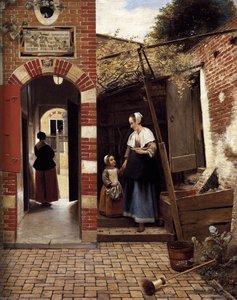
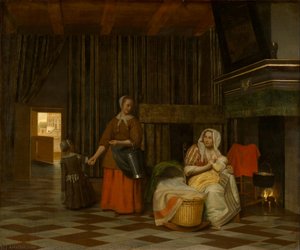
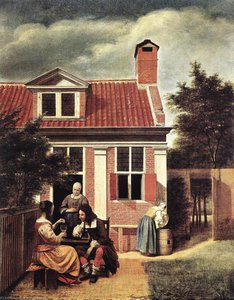
De Hoochovo delo prepoznatljivo je po neverovatnoj pažnji posvećenoj detaljima, naturalizmu i virtuoznom korišćenju svetlosti. Njegova slika često su prikazivala svakodnevni život, odražavajući vrednosti i težnje tadašnje uspensvene srednje klase. Izuzetan primer ovog stila je "Dvorište kuće u Delftu" (1658), koje svedoči o njegovoj sposobnosti da uhvati najobičnije detalje svakodnevice. Iako njegovo delo deli teme i kompozicije sa radom umetnika kao što je Emanuel de Witte, fokus na ljude i njihove međusobne odnose izdvaja ga od ostalih. To je jasno vidljivo u delima kao što su "Žena koja doji" (1658) i "Žena sa bebom u krilu" (1658), koja demonstriraju njegov duboki interes za intimne, kućne prizore.značajna dela i nasleđe
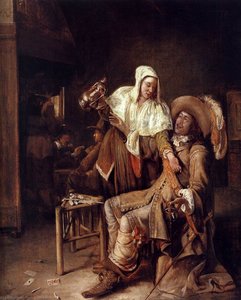
Njegov umetnički trag ostao je zabeležen kroz neka od najupečatljivijih dela koja uključuju:- "Vesele piće" (oko 1650.)
- "Igrači karata u sunčano osvetljenoj sobi" (1658)
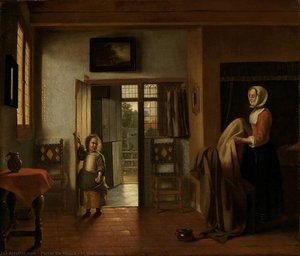
- "Žena koja priprema hleb i puter za dečaka" (1661)
muzeji i kolekcije
Dela ovog majstora mogu se pronaći u brojnim svetskim muzejima, uključujući Koninklijk Museum voor Schone Kunsten u Antverpenu, Belgija, koji čuva ogromnu kolekciju evropske umetnosti od 15. do 20. veka. Otkrijte više o Pieteru de Hoochu i njegovim delima na ArtsDot: [https://ArtsDot.com/@/pieter-de-hooch](https://ArtsDot.com/@/pieter-de-hooch) /sr/art/show/art-d3b4kt-sr/ (istražite remek-dela iz Koninklijk Museum voor Schone Kunsten, Belgija)
Питер Де Хух
1629 - 1694 , Србија
Kratke činjenice
- Artistic Movement Or Style: Делфтска школа
- Artists Or Movements Influenced By This Artist: ['Јан Вермер']
- Artists Who Influenced This Artist: ['Николас Беркем']
- Date Of Birth: 20. децембар 1629.
- Date Of Death: 1694.
- Full Name: Питер Хендриксзон де Хоох
- Nationality: Холандски
- Notable Artworks:
- Весели пијач
- Карташи у соби
- Жена спрема хлеб
- Place Of Birth (City And Country): Ротердам, Холандија

