

 Pregledaj u prostoru
 Pošalji
 Podeli
 Detalji o delu

 Преузми
 Slični predmeti
 Rendgenski snimak
 Slajdovi
The Arrival of Vasco da Gama (after an 1898 painting by Jose Veloso Salgado)


 Pročitaj više
Giclee štampa / Umetnički otisak
Giclée štampa ili print na platnu muzejskog kvaliteta uz brzu proizvodnju i fleksibilne opcije završne obrade. ( Kupi ručno naslikanu sliku Kupi digitalnu sliku)




P118B $10

P118H $10

P118W $10

P438Z $10

P508JH $12

P508YH $12

P805H $10

P805Z $10

P919BZ $10

P919G $10

P919XJ $10

P959ZH $10

P968JZ $12

W106C $8

W218G $10

W218JH $8

W218Y $10

W307PJ $10

W316G $10

W316PJ $8

W316Y $10

W398PJ $8

W4111J $10

W500HY $15

W500JH $15

W692G $12

W849H $8

W940BG $15

W953PJ $8




Izaberite jednu od naših unapred definisanih veličina koje odgovaraju originalnim proporcijama umetničkog dela.

Možete uneti sopstvene dimenzije kako biste umetničko delo prilagodili specifičnom okviru ili prostoru. Ako odabrani format ne odgovara proporcijama originalne slike, mi ćemo ili iscrtati deo dela ili proširiti sliku pomoću ogledane ivice ili jednobojnog popunjavanja. Digitalni prikaz će vam biti poslat na odobrenje pre početka proizvodnje.
Imajte na umu da pregled na ekranu ne odražava stvarno iscrtavanje ili proširivanje. Samo će prikaz (mockup) precizno pokazati finalnu kompoziciju.
Iako su prilagođene dimenzije dostupne, preporučujemo da odaberete dimenziju sa unapred definisane liste kako biste očuvali originalne proporcije.
Dostava širom sveta () za 2 nedelje umesto uobičajenih 4/5 nedelja. (26 август)

Besplatna ekspresna dostava širom sveta

Visokokvalitetno laneno platno

Kompletno osiguranje transporta

Garancija povraćaja carine i uvoznih dažbina

Garancija vernosti boja

Politika povrata u roku od 60 dana (samo u slučaju nedostataka)

Garancija povrata novca od 100%

Popust pri grupnoj kupovini
 Opcija sa staklom dostupna je samo za dimenzije manje od 110 cm

The Arrival of Vasco da Gama (after an 1898 painting by Jose Veloso Salgado)
Giclee štampa / Umetnički otisak
Dimenzije reprodukcije
-


Konačna cena
$ 62
Opis predmeta
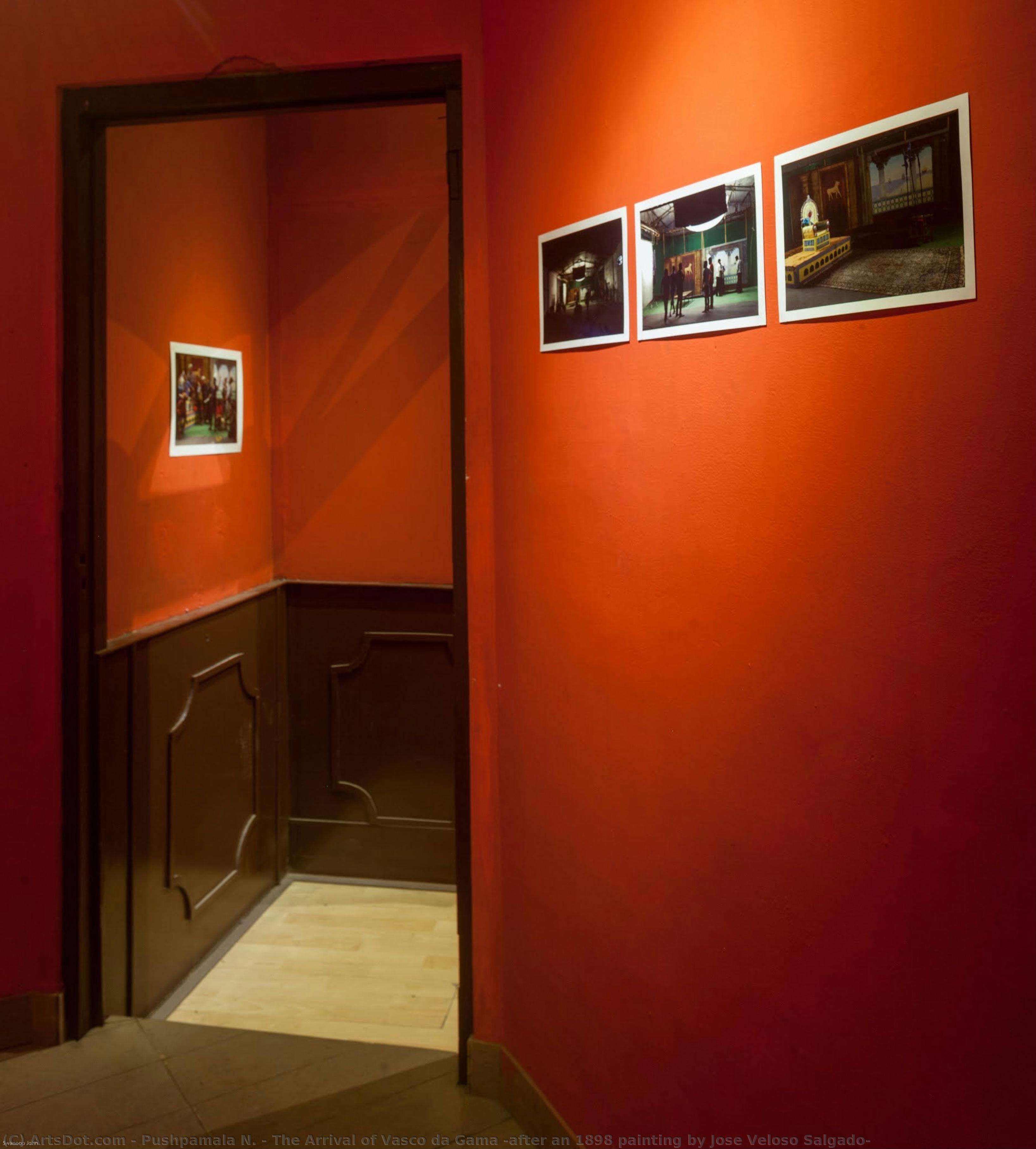
Pushpamala N’s Reimagining of History: ‘The Arrival of Vasco da Gama’
Pushpamala N., born in Bangalore, India, in 1956, stands as a singular voice within contemporary Indian art—an artist who consistently dismantles conventions and reshapes artistic boundaries. Her journey commenced with a grounding in diverse academic pursuits – economics, English, and psychology from Bangalore University in 1977 – a foundation that subtly informs the socio-political nuances often interwoven into her oeuvre. It was under the mentorship of Indian artist Balan Nambiar that her initial artistic inclinations were nurtured, setting the stage for formal training as a sculptor at the Faculty of Fine Arts, Maharaja Sayajirao University of Baroda. This formative period witnessed Pushpamala completing both her Bachelor’s in 1982 and Master’s degree in 1985; influences from artists like Raghav Kaneria, Bhupen Khakhar, and most profoundly, K.G. Subramanyan resonated deeply during these years. Subramanyan's impact was particularly significant, fostering a spirit of experimentation that would characterize her subsequent artistic explorations.- Subject Matter & Historical Context: Pushpamala’s artwork delves into the reimagining of José Veloso Salgado’s 1898 painting ‘Vasco da Gama perante o Samorim,’ a pivotal moment in Portuguese colonial history. The piece meticulously recreates the encounter between Vasco da Gama and Zamorin Manikavacakar, capturing not merely an event but its mythologized representation within Portuguese culture. This deliberate transposition acknowledges Salgado’s original vision—a celebration of Gama's arrival in Calicut—while simultaneously questioning its accepted narrative.
- Style & Technique: Employing archival inkjet printing on canvas, Pushpamala utilizes a contemporary realist style infused with theatrical elements. The installation itself functions as a ‘photo museum,’ layering photographic prints alongside painted sets and written texts to create an immersive experience akin to a staged performance. This technique prioritizes meticulous detail and vibrant color saturation—a deliberate contrast to the muted tones of Salgado’s original painting.
- Composition & Symbolism: The artwork's geometric composition centers around a narrow hallway bathed in dramatic orange light, mirroring the formal structure of Salgado’s canvas. Three framed photographs dominate the space, positioned symmetrically along the central axis—a visual echo of the painting’s compositional balance. The dark wooden door at the far end serves as an enigmatic portal, hinting at hidden depths and inviting contemplation.
- Emotional Impact: Pushpamala's artistic interpretation transcends mere replication; she actively subverts Salgado’s idealized depiction by presenting it within the realm of fiction and masquerade. This gesture underscores a broader critique of historical legitimacy—a desire to expose the biases inherent in dominant narratives and reclaim space for alternative perspectives.
Detailed Examination: Color Palette & Lighting
The striking orange hue dominating the hallway walls isn’t merely decorative; it embodies a calculated decision to amplify Salgado's original painting's grandeur. This bold color choice contributes significantly to the artwork’s dramatic atmosphere, emphasizing depth and creating shadows that heighten visual impact. Furthermore, the directional lighting casts sharp contrasts across the surfaces—a technique mirroring Salgado’s masterful use of chiaroscuro to convey a sense of theatricality and intrigue.Material Considerations & Installation Design
Pushpamala's artistic vision extends beyond the photographic prints themselves. The surrounding painted sets meticulously recreate the ambiance of an oriental court—a deliberate homage to Salgado’s stylistic choices. These elements, combined with accompanying written texts, transform the space into a curated museum experience, prompting viewers to engage actively with the artwork’s conceptual framework.Concluding Reflection: Challenging Narrative Conventions
Ultimately, ‘The Arrival of Vasco da Gama’ represents Pushpamala N.’s unwavering commitment to artistic innovation. By reclaiming Salgado's imaginative vision and presenting it within a theatrical context, she compels us to reconsider accepted histories—to question assumptions about representation and embrace the transformative power of reimagining the past.Srodna umetnička dela

![Test Pattern [n 8]\n\ninstallation Of Test Pattern [n 8] — Ikeda Ryōji, Contemporary Art](/media/artworks/images-thumb/9e/2e/9e2e52cdde87336d2793c5a12f678471.jpg)
Povezani članci
Leonardo da Vinci: 25 Remek-dela Genija za Vaš Dom | ArtsDot
Istražite 25 remek-dela Leonarda da Vince, od Mona Lize do Poslednje večere. Otkrijte priče iza slika renesanse i inspiraciju za dekoraciju enterijera. Kvalitetne reprodukcije na ArtsDot.com!

Monochrome Visions: Exploring the Aesthetic & Historical Significance of Black & White Photography
Explore the rich history & artistic power of black and white photography. From early techniques to iconic masters like Ansel Adams, discover why monochrome continues to captivate art lovers today. Expert insights for collectors.
Beyond the Lens: Photography's Enduring Influence on Modern & Contemporary Art
Explore photography's pivotal role in shaping modern & contemporary art. Discover key movements, influential artists like Stieglitz, and expert collecting advice from ArtsDot.

Pictorialism: A Search for Artistic Photography's Soul – Aesthetics, Techniques & Legacy
Explore the captivating world of Pictorialism – a pivotal movement that transformed photography into fine art. Discover key artists like Stieglitz & Käsebier, techniques, and collecting tips from experts.

Leonardo da Vinci: A Renaissance Master’s Synthesis of Art, Science & Human Observation – Reinterpreted for the Collector
Explore Leonardo da Vinci’s timeless masterpieces with ArtsDot. Discover insights into his art, science, and legacy – trusted expertise for discerning collectors seeking authentic reproductions & investment opportunities.

