

![Stanze Vaticane - The School Of Athens (detail) [08] — Rafael](/media/artworks/images-full/df/dc/dfdc23a7320557b237f038c4d9ebc5ec.jpg)
 Pregledaj u prostoru
 Pošalji
 Podeli
 Detalji o delu

 Преузми
 Slični predmeti
 Rendgenski snimak
 Slajdovi
Stanze Vaticane - The School of Athens (detail) [08]


 Pročitaj više
Kupite digitalnu sliku visoke rezolucije i poboljšanog kvaliteta, koja je znatno superiornija od onoga što vidite u online prikazu.
Svaka datoteka je pedantno pripremljena od strane naših stručnjaka koristeći napredne alate i profesionalnu ručnu retušu. Osiguravamo da svaka slika ima izuzetnu oštrinu, preciznu reprodukciju boja i fine detalje.
Konačna datoteka se dostavlja putem e-pošte u roku od 72 sata, optimizovana za neposrednu upotrebu u profesionalnim, izdavačkim i štamparskim okruženjima. To je isti kvalitet kojem veruju vrhunski studiji dizajna, izdavači i galerije.
Digitalna slika
Preuzmite datoteku visoke rezolucije za ličnu upotrebu, štampanje i kreativne projekte. ( Kupi print Kupi ručno naslikanu sliku)
Uključeno uz svaku porudžbinu digitalne slike
Profesionalna digitalna isporuka, zagarantovana
Kada odaberete ArtsDot.com, ne dobijate samo sliku – vi primate profesionalno unapređeno digitalno umetničko delo, izrađeno sa najvećom preciznošću i uz garanciju zadovoljstva. Evo svega što automatski dolazi uz vašu porudžbinu:

Brza dostava putem e-pošte
Vaša digitalna slika visoke rezolucije biće vam poslata putem e-pošte u roku od 72 sata od poručivanja – spremna za trenutnu upotrebu.

Digitalna datoteka unapređena veštačkom inteligencijom
Vaše umetničko delo je profesionalno optimizovano korišćenjem naprednih AI alata i ručne obrade, čime se osiguravaju maksimalni detalji, oštrina i preciznost boja.

Besplatna ponovna isporuka doživotno
Slučajno ste obrisali ili izgubili svoju datoteku? Ne brinite – poslaćemo vam je ponovo u bilo kom trenutku, potpuno besplatno.

Bez troškova uvoza – zauvek
Uživajte u svojim umetničkim delima trenutno, bez carine, dažbina ili troškova dostave – digitalni download je uvek bez poreza.

Garancija vernosti boja
Uz pomoć profesionalnih alata i upravljanja bojama, osiguravamo da vaša digitalna slika što vernije odražava originalne boje.

Garancija zadovoljstva u roku od 60 dana
Ako niste zadovoljni svojom digitalnom slikom, revidirat ćemo je ili vratiti 100% novca u roku od 60 dana – bez ikakvih pitanja.

100% garancija povrata novca
Niste zadovoljni? Obezbedite pun povrat novca u roku od 60 dana od trenutka kada ste primili svoju digitalnu datoteku – bez suvišnih pitanja.

Popusti na velike porudžbine
Kupite 3 slike, uštedite 10% - Kupite 5 slika, uštedite 15% - Kupite 10+ slika, uštedite 20%. Odlično za kreativne projekte, galerije i agencije.
Opis kolekcionarskog dela
The School of Athens: A Renaissance Dialogue on Wisdom and Beauty
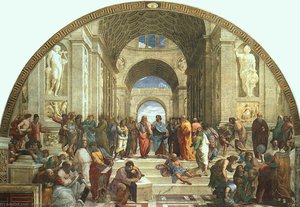
Raphael’s “School of Athens,” a breathtaking fresco residing within the Vatican’s Stanza della Segnatura, isn't merely a depiction of philosophers; it’s a vibrant testament to the humanist ideals that defined the High Renaissance. Completed between 1509 and 1511, this monumental work transcends its physical space, inviting viewers into a timeless conversation about knowledge, reason, and the pursuit of truth. The scene unfolds within an architectural setting subtly inspired by Bramante’s ambitious plans for rebuilding St. Peter's Basilica – a nod to the burgeoning grandeur of Rome itself – creating a backdrop that simultaneously anchors the composition in reality and elevates it towards a realm of intellectual aspiration.
At the heart of the fresco stand Plato and Aristotle, their figures rendered with an exquisite balance of realism and idealized beauty. Plato, gesturing upwards toward the heavens, embodies the pursuit of abstract ideals – his flowing robes and contemplative posture suggesting a detachment from the earthly world. Opposite him, Aristotle, grounded and engaged in a lively debate, represents the emphasis on empirical observation and the study of nature. This dynamic pairing immediately establishes the core tension within Renaissance philosophy: the conflict between idealism and realism, a theme that resonates powerfully throughout the composition. The surrounding figures – Pythagoras, Heraclitus, Euclid, Socrates, and many others – are not simply historical footnotes; they’re carefully chosen representatives of diverse schools of thought, each contributing to a rich tapestry of intellectual discourse.
Raphael's mastery of technique is immediately apparent in the fresco’s astonishing detail. The figures are rendered with remarkable anatomical accuracy, yet imbued with an almost ethereal quality. Note the subtle gradations of color, the delicate modeling of drapery, and the precise rendering of architectural elements – all hallmarks of Raphael’s refined style. The use of *chiaroscuro*, the dramatic interplay of light and shadow, adds depth and volume to the scene, drawing the viewer's eye across the complex arrangement of figures. The perspective is meticulously executed, creating a convincing illusion of space and contributing to the overall sense of realism. It’s important to note that Raphael learned this technique from Leonardo da Vinci, who had been experimenting with linear perspective in his paintings.
Beyond its artistic merits, “The School of Athens” carries profound symbolic weight. The fresco is a celebration of classical Greek philosophy and science, which were experiencing a revival during the Renaissance – a period marked by renewed interest in ancient texts and ideas. By placing these figures within a contemporary setting, Raphael suggests that the wisdom of antiquity remains relevant to modern thought. The inclusion of Euclid, the father of geometry, further emphasizes the importance of reason and logic as tools for understanding the world. The painting’s overall message is one of optimism – a belief in the power of human intellect to unlock the secrets of the universe. It's a powerful statement about the enduring legacy of classical thought and its continued influence on Western civilization.
The Figures: A Dialogue of Ideas
Each figure within “The School of Athens” is carefully chosen not just for their historical significance but also for their symbolic representation of specific philosophical concepts. Plato, with his upward gaze, embodies the realm of Forms – the eternal and unchanging ideas that exist beyond the physical world. His book, "Timaeus," symbolizes his theory of cosmology, suggesting a universe governed by mathematical principles. Aristotle, in contrast, is depicted gesturing downwards, engaging in a more earthly debate about ethics and politics. His book, “Nicomachean Ethics,” represents his focus on practical wisdom and the pursuit of happiness within the human experience.
Observe the details surrounding each figure: Pythagoras, with his geometric diagrams, embodies mathematical knowledge; Euclid, holding a compass and ruler, symbolizes geometry; Heraclitus, depicted as a river, represents the concept of constant change. The inclusion of these specific figures demonstrates Raphael’s deep understanding of classical philosophy and his ability to translate complex ideas into a visually compelling narrative. Even seemingly minor details, such as the scrolls held by each philosopher, are laden with symbolic meaning, further enriching the painting's intellectual depth.
Architectural Setting & Renaissance Influence
The architectural setting of “The School of Athens” is not merely decorative; it’s integral to the composition and serves as a visual metaphor for the pursuit of knowledge. The building behind the philosophers is clearly inspired by Bramante's designs for St. Peter's Basilica, reflecting the Renaissance fascination with classical architecture and its grandeur. However, Raphael subtly transforms this architectural model, incorporating elements from various historical periods – including Roman and Greek styles – to create a harmonious blend of past and present.
The use of columns, arches, and pediments evokes the monumental scale of ancient temples, suggesting that the philosophers are engaged in a dialogue worthy of the gods. The perspective lines converge towards a central vanishing point, drawing the viewer's eye into the heart of the scene. This masterful manipulation of space reinforces the sense of depth and realism, while simultaneously elevating the painting to a realm of timeless beauty. The architectural elements also serve as a reminder of the ambition and innovation that characterized the Renaissance – a period marked by a renewed interest in classical art and architecture.
Owning a Piece of History: A ArtsDot Reproduction
Experience the profound beauty and intellectual depth of Raphael’s “School of Athens” with a meticulously crafted, handmade oil painting reproduction from ArtsDot. Our skilled artists painstakingly recreate every detail of this iconic masterpiece, using traditional techniques and archival-quality materials to ensure lasting vibrancy and authenticity. Each reproduction is created on canvas, capturing the texture and luminosity of the original fresco.
Whether you’re an art collector, a design enthusiast, or simply someone who appreciates timeless beauty, a ArtsDot reproduction of “The School of Athens” offers a unique opportunity to bring this masterpiece into your home or office. Explore our selection of sizes and framing options to find the perfect piece that complements your personal style. Visit ArtsDot.com today to discover how you can own a tangible connection to one of the greatest works of art in history.
Srodna umetnička dela
![Stanze Vaticane - The School Of Athens (detail) [02] — Rafael, High Renaissance](/media/artworks/images-thumb/ff/73/ff7321cc7f1d85f7343079c25e188bce.jpg)
![Stanze Vaticane - The School Of Athens (detail) [03] — Rafael, High Renaissance](/media/artworks/images-thumb/30/f3/30f39c600ce9f8eb336752926431690e.jpg)
![Stanze Vaticane - The School Of Athens (detail) [05] — Rafael, Renaissance](/media/artworks/images-thumb/ca/a9/caa9f9be8f76fbc617e906bfcb543fad.jpg)
![Stanze Vaticane - The School Of Athens (detail) [06] — Rafael, High Renaissance](/media/artworks/images-thumb/a5/aa/a5aa2b9acdb9dbd4f6ab64748f4cc597.jpg)
Biografija umetnika
Рафаело: Легенда Изазване Светлом
Рафаело Санцио да Урбино, познат свету као Рафаело, израстао је из изузетно плодне културне атмосфере. Рођен 1483. године у Урбину, малом али интелектуално живом граду-држави у централној Италији, његове прве године биле су испуњене окружењем које је ценило и умнешко вештине и хуманистичко образовање. Његов отац, Ђовани Санти, није био само сликар запослен код војводе Федерика да Монтефелтра – он је био човек дубоко ангажован у струјама ренесансног мишљења, песник који је хроничарио живот војводе и активно тражио иновативне уметничке идеје из целе Италије и шире. Ово уроњење у дворјански амбијент, који је ценио унапређење и интелектуалан дискурс, дубоко је обликовало Рафаелове чула. Губитак оца са једанаест година на њега је бацио одговорност, али му је такође пружио прилику да усврши своје вештине у породичној радионици, апсорбујући технике и традиције под руководством локалних уметника. Чак и у овим раним делима, нежна грација и детаљна пажња – обележја његовог зрелог стила – почела су да се истичу.
Од Умбрије до Фиренце: Апсорбовање Нових Утицаја
Уметничко путовање Рафаела било је непрекидно еволуирало, обележено периодима интензивног студија и асимилације. Његов први тренинг под Пиетром Перугином у Перуђи поставио је чврст темељ у умбријском стилу – карактеристичном по мекој моделирању, хармоничним композицијама и смиреним религиозним сценама. Међутим, Рафаело је поседовао неугасиву љубопитљивост која га је наводила да тражи нове изазове и проширује своје уметничке хоризонте. 1504. године кренуо је у Фиренцу, град тада пуљак уметничке иновације. Овде се сусрео са делима Леонарда да Винчија и Микеланђела, уметника који су потиснули границе сликања на невиђен начин. Он је пажљиво изучавао њихове технике – Леонардов „сфумато”, његове суптилне градације светлости и сенке, и Микеланђелове моћне анатомијске прецизности и драматичних композиција. Ова фирентинска фаза била је кључала за Рафаела, приморавајући га да се суочи са новим уметничким могућностима и синтетише их у своју сопствену јединствену визију. Утицај је видљив у повећаној динамици и психолошкој дубини његових дела из тог времена, посебно у серији Мадона.
Римски Тријумф: Комисије и Мајсторска Дела
1508. године Рафаело је добио позив који би променио ток његове каријере – позив од папе Јулија II да дође у Рим. Ово је означило почетак његовог најпродуктивнијег и славнијег периода. Вечити град пружио му је незапоређиву прилику да покаже свој таленат у великом обиму, украшавајући папине апартмане у Ватикану задивљујућим фрескама. Школа Атиње, можда његово најчувеније дело, служи као сведочанство о његовом мајсторству композиције, перспективе и филозофске алегорије. У његовом величанственом простору Рафаело је окупио фигуре из класичне антике – Платона, Аристотела, Питагоре, Еуклида – стварајући набој који слави људски разум и потрагу за знањем. Наставио је да ради за касније папе, међу којима је био Лео X, подухватајући монументалне пројекте као што је декорација Стана дела Сегнатура и Стана д'Елиодора. Његове фреске у овим собама нису само декоративне; они су дубоке изјаве о папиној моћи, религиозном веровању и идеалима ренесансе.
Синтеза Грације и Величанства: Рафаелов Уметнички Стил
Рафаелов уметнички стил често се описује као хармонична мешавина грације, јасноће и идеализоване лепоте. Он је поседовао изузетан дар да синтетише различите утицаје – умбријску традицију, флорентинске иновације, класичну антику – у јединствено избалансирану естетику. Његове композиције су пажљиво планиране, показујући осећај реда и пропорција које одражавају његово дубоко разумевање ренесанских принципа. Његова фигуре зраче смирену достојанственост и емоционалну изразитост, оличавајући хуманистички идеал људског савршенства. Био је такође мајстор колориста, користећи богате, лучисте нијансе како би створио дела која су истовремено визуелно задивљујућа и интелектуално стимулативна. За разлику од Микеланђелове често драматичне и немирне стила, Рафаелова дела избијају осећај мира и хармоније – квалитет који је вековима привлачио публику.
Заоставштина и Трајан Утицај
Нечасна смрт Рафаела 1520. године, у доби од само тридесет седам година, прекинула је каријеру која је била испуњена потенцијалом. Ипак, његова заоставштина траје као једна од најзначајнијих фигура у западноевропској историји уметности. Његов рад постао је камен основе ренесанске естетике, служећи за пример генерацијама уметника. Док је Микеланђелов утицај касније доминирао уметничком дискурсу, Рафаелов нагласак на јасноћи, хармонији и идеализованој лепоти искуство ревивалистичке периоде, заступајући критичаре попут Јохана Јоахима Винкелмана. Данас се његове слике и даље дичу својом техничком бриљиантношћу, емоционалном дубином и трајним апелом, задивљујући гледаоце. Његов утицај може се видети у безбројна дела која су следила, што је учврстило његово место као истинског мајстора ренесансе – сликара који није само ухватио физички изглед својих субјеката, већ и саму есенцију људске грације и достојанства.
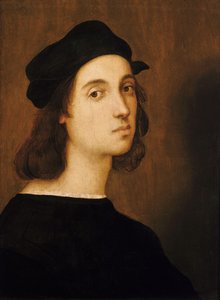
Rafael
1483 - 1520 , Italija
Kratke činjenice
- Datum Rođenja: 28. mart 1483.
- Datum Smrti: 6. april 1520.
- Mesto Rođenja: Urbino, Italija
- Nacionalnost: Italijan
- Pokreti/Umjetnici Uticajem: ['Neoklasna umjetnost']
- Puno Ime: Rafael Sanzio da Urbino
- Umjetnički Pokret: Visoka renesansa
- Uticali Umjetnici:
- Leonardo da Vinci
- Mihajlo Anđelo
- Značajna Djela:
- Škola atine
- Sistinska Madona
- Transfiguracija

