 Pregledaj u prostoru
 Pošalji
 Podeli
 Detalji o delu

 Преузми
 Slični predmeti
 Rendgenski snimak
 Slajdovi
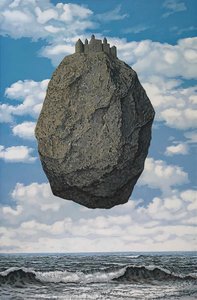
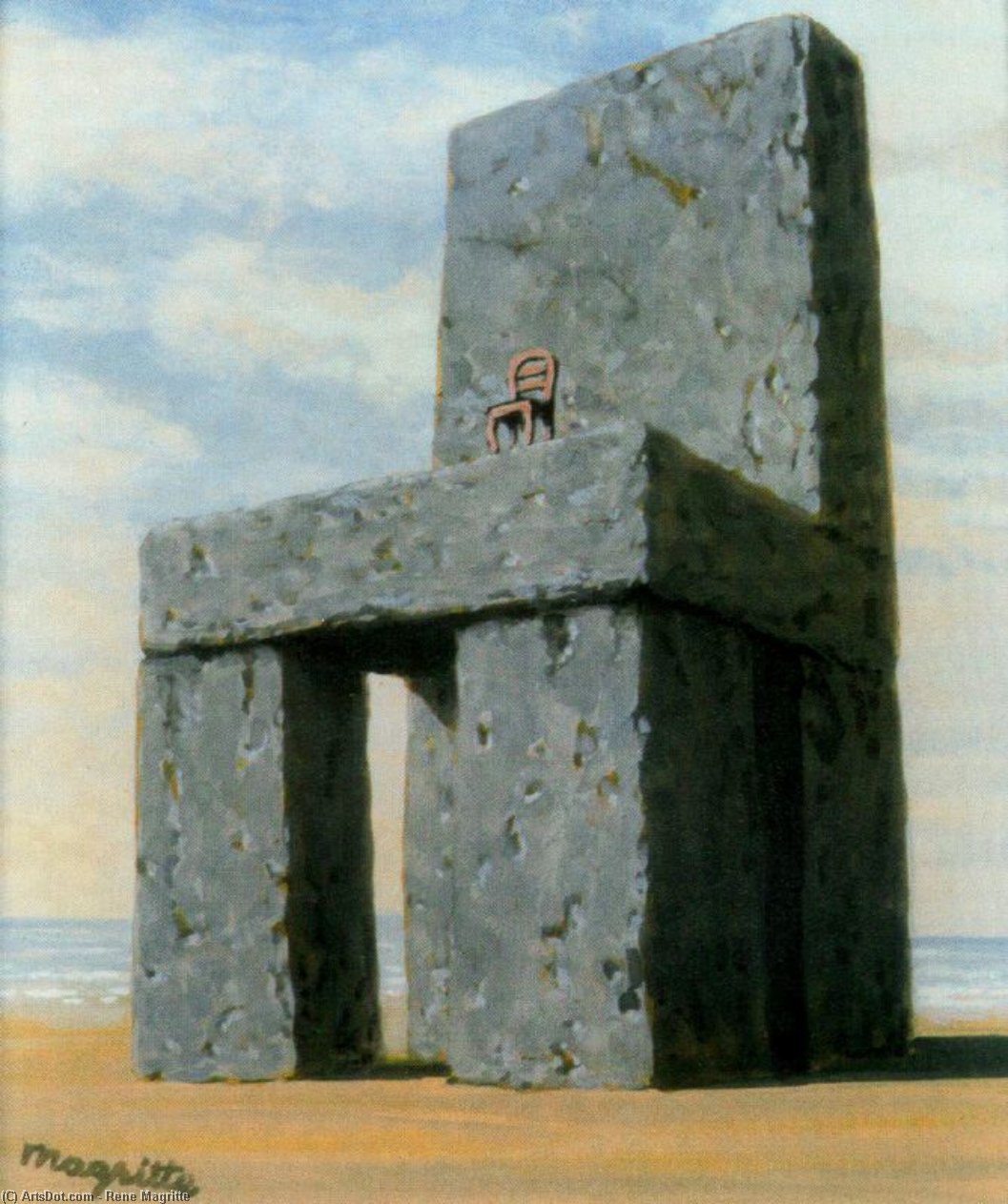
The legend of the centuries


 Pročitaj više
Giclee štampa / Umetnički otisak
Giclée štampa ili print na platnu muzejskog kvaliteta uz brzu proizvodnju i fleksibilne opcije završne obrade. ( Kupi ručno naslikanu sliku Kupi digitalnu sliku)




P118B $10

P118H $10

P118W $10

P438Z $10

P508JH $12

P508YH $12

P805H $10

P805Z $10

P919BZ $10

P919G $10

P919XJ $10

P959ZH $10

P968JZ $12

W106C $8

W218G $10

W218JH $8

W218Y $10

W307PJ $10

W316G $10

W316PJ $8

W316Y $10

W398PJ $8

W4111J $10

W500HY $15

W500JH $15

W692G $12

W849H $8

W940BG $15

W953PJ $8




Izaberite jednu od naših unapred definisanih veličina koje odgovaraju originalnim proporcijama umetničkog dela.

Možete uneti sopstvene dimenzije kako biste umetničko delo prilagodili specifičnom okviru ili prostoru. Ako odabrani format ne odgovara proporcijama originalne slike, mi ćemo ili iscrtati deo dela ili proširiti sliku pomoću ogledane ivice ili jednobojnog popunjavanja. Digitalni prikaz će vam biti poslat na odobrenje pre početka proizvodnje.
Imajte na umu da pregled na ekranu ne odražava stvarno iscrtavanje ili proširivanje. Samo će prikaz (mockup) precizno pokazati finalnu kompoziciju.
Iako su prilagođene dimenzije dostupne, preporučujemo da odaberete dimenziju sa unapred definisane liste kako biste očuvali originalne proporcije.
Dostava širom sveta () za 2 nedelje umesto uobičajenih 4/5 nedelja. (7 септембар)

Besplatna ekspresna dostava širom sveta

Visokokvalitetno laneno platno

Kompletno osiguranje transporta

Garancija povraćaja carine i uvoznih dažbina

Garancija vernosti boja

Politika povraćaja u roku od 100 dana (isključivo u slučaju nedostataka)

Garancija povrata novca od 100%

Popust pri grupnoj kupovini
 Opcija sa staklom dostupna je samo za dimenzije manje od 110 cm

The legend of the centuries
Giclee štampa / Umetnički otisak
Dimenzije reprodukcije
-


Konačna cena
$ 62
A Vision Beyond Reality: The Enigma of Magritte
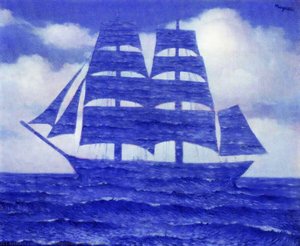
In the vast landscape of twentieth-century Surrealism, few works possess the haunting, intellectual gravity of René Magritte’s La Légende des siècles (The Legend of the Centuries). Painted in 1950, this masterpiece serves as a profound meditation on the nature of perception and the persistent mystery of existence. Magritte, the Belgian master of the unexpected, does not rely on the chaotic, automatic scribbles favored by some of his contemporaries; instead, he employs a meticulous, almost academic technique to render scenes that are startlingly clear yet fundamentally impossible. The painting presents a breathtaking juxtaposition where the monumental meets the mundane, inviting the viewer into a world where the laws of physics and logic have been quietly suspended.
The composition is anchored by a towering, ancient stone structure that evokes the weight of epochs past, a monolith that seems to dwarf the very concept of time. Yet, perched precently upon this enduring monument is an object of startling domesticity: a simple wooden chair with a vibrant red cushion. This placement creates a jarring sense of scale and context, forcing us to confront the fragility of human presence against the backdrop of eternal history. As we gaze upon the scene, the boundaries between the real and the imagined begin to blur, much like the way Magritte himself sought to reveal that even the most visible images can conceal profound secrets.
Symbolism and the Architecture of Dreams
To look upon this work is to engage in a silent dialogue with the subconscious. The chair, often interpreted as a stand-in for the human condition, represents our fleeting, individual existence—fragile, temporary, and somewhat out of place amidst the grand narrative of time. Magritte uses trompe l’oeil skills to ensure that every texture, from the grain of the wood to the cold surface of the stone, feels tangibly real, which only serves to deepen the psychological impact of its illogical arrangement. The red cushion provides a singular, piercing note of color, acting as a heartbeat within the otherwise somber and monumental landscape.
The emotional resonance of the piece lies in its ability to provoke both wonder and introspection. It is a painting that does not offer easy answers; rather, it poses the very question Magritte himself famously championed: "What does that mean?" For the collector or the enthusiast of fine art, this work offers more than mere decoration; it provides a window into a philosophical inquiry. It challenges the viewer to reconsider their place in the world and to find beauty in the unsettling gaps between what we see and what we understand.
An Eternal Addition to the Curated Space
For interior designers and connoisseurs of high-end art, a reproduction of The Legend of the Centuries serves as a powerful focal point that commands attention through its intellectual depth. Its surrealist aesthetic is remarkably versatile, lending an air of sophisticated mystery to modern minimalist galleries, classic study rooms, or avant-garde living spaces. The painting’s ability to spark conversation makes it an indispensable element for any curated collection seeking to transcend the purely decorative.
Choosing a high-quality hand-painted reproduction allows the subtle nuances of Magritte's brushwork and the dramatic interplay of light and shadow to be fully appreciated. Whether placed in a quiet corner to invite solitary contemplation or used as a bold statement piece in a grand hall, this work brings with it the enduring legacy of Belgian Surrealism. It is an invitation to dwell within a legend—one that celebrates the marvelous, the strange, and the eternally mysterious.
Biografija umetnika
Early Life and the Seeds of Surrealism
René Magritte, geboren René François Ghislain Magritte am 21. November 1898 in Lessines, Belgien, trat in eine Welt ein, die sein enigmatisches künstlerisches Sehen tiefgreifend prägen würde. Sein frühes Leben war geprägt von einem erschütternden Ereignis – dem Selbstmord seiner Mutter als er nur dreizehn Jahre alt war. Das Bild ihrer Leiche beim Wiederaufbau durch den Sambre Fluss mit ihrem Kleid, das ihr Gesicht verdeckte, wurde ein obsessives Motiv, das sich subtil in seinen späteren Arbeiten widerspiegelte und eine kontinuierliche Erforschung verborgener Realitäten zum Ausdruck brachte. Dieses frühe Trauma instillte ihm eine Faszination für Mysterium, Verlust und die erschreckende Macht dessen, was nicht gesehen wird. Obwohl Einzelheiten seines Kindeslebens nur schwer zu finden sind, ist klar, dass diese formative Erfahrung seinen lebenslangen Zweifel an Wahrnehmung und Darstellung begründete. Er begann mit Zeichnungen im Alter von zehn Jahren und offenbarte eine natürliche Neigung zum visuellen Ausdruck, erkundete aber zunächst Impressionismus bevor er einen Weg einschlug, der ihn dazu führte, einer der bedeutendsten Figuren in der Surrealistischen Kunst zu werden.
Artistic Development and Influences
Magrittes künstlerische Reise war nicht unmittelbar oder einfachweg erfolgreich. Er studierte an der Académie Royale des Beaux-Arts in Brüssel und fand ihre traditionellen Methoden erstickend. Sein frühes Werk experimentierte mit Futurismus und Kubismus und ließ sich Elemente dieser Avantgarde Bewegungen aufnehmen, lehnte aber deren ausschließlich formale Interessen ab. Es gelang ihm nicht bis zum Begegnen mit Giorgio de Chiricos Gemälde *Die Melodie der Liebe* im Jahr 1922, dass Magritte eine Resonanz entdeckte, die seinen künstlerischen Kurs für immer veränderte. De Chiricos traumhafte Landschaften und verstörende Kombinationen öffneten ihm einen neuen Blick – eine Welt, in der das Bekannte fremd erscheinen konnte und das Gewöhnliche tiefgreifende Mysterium aufnehmen konnte. Dieses Erlebnis entfachte sein Engagement für Surrealismus, obwohl er oft eine einzigartige Distanz zu seinen ausgeprägtesten psychologischen oder automatischen Ansätzen bewahrte. Er bevorzugte eine präzise Technik, um reale Szenarien darzustellen und ließ sich nicht von anderen Mitgliedern der Bewegung beeinflussen.
The Heart of Surrealism: Challenging Reality
Bis 1926 hatte Magritte sich vollständig dem Wesen des Surrealismus verschrieben und schuf *Le Jockey Perdu (Der Verlorene Jockey)*, das allgemein als sein erstes wirklich surrealistisches Werk angesehen wird. Allerdings war seine Art von Surrealismus einzigartig. Er interessierte sich nicht für die Erkundung des Unterbewusstseins durch frei assoziative oder traumhafte Bilder wie einige seiner Zeitgenossen. Stattdessen suchte Magritte nach einer neuen Möglichkeit zu sehen – eine Welt, in der das Bekannte fremd erscheinen konnte und das Gewöhnliche tiefgreifende Mysterium aufnehmen konnte. Er war nicht daran interessiert, die Oberfläche von Objekten zu erforschen oder eine bestimmte Perspektive einzunehmen wie andere Künstler seiner Zeit. Magritte konzentrierte sich darauf, die Wahrnehmung von Realität herauszufordern, indem er alltägliche Objekte in unerwarteten Kontexten präsentierte und damit dazu aufforderte, eigene Annahmen über die Welt um uns herum zu hinterfragen.
Iconic Works: Paradoxes of Perception
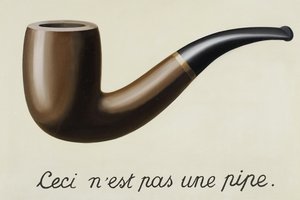
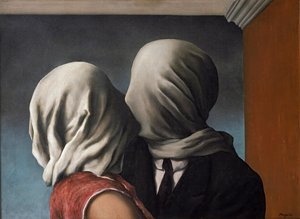
Magritte’s oeuvre is marked by a distinctive preoccupation with paradoxes – visual illusions that disrupt our understanding of reality and invite contemplation. *Les Amants (Die Liebenden)*, geschaffen zwischen 1927 und 1928, zeigt zwei Figuren hinter einem Vorhang, deren Gesichter verdeckt sind und somit eine zentrale Frage aufwirft: Wie können wir wirklich sehen? Diese berühmte Darstellung wird oft als ein Echo des frühen Traumas von Magrittes Mutter interpretiert – einer Figur, die sowohl eine Faszination für Geheimnis und Intimität als auch eine Reflexion über Verlust und Verbergenheit zum Ausdruck bringt. *The Treachery of Images (Dieses Bild ist kein Rohr)* (1929) ist ein Meisterwerk der Surrealistischen Kunst und stellt einen klassischen Fall von Dekonstruktion dar: Ein Bild wird nicht das Ding selbst, sondern lediglich eine Darstellung davon. Magritte nutzt eine hohe technische Präzision und eine sorgfältige Auswahl von Materialien, um diese paradoxe Aussage zu verstärken und uns daran zu erinnern, dass eine Repräsentation niemals die Sache ist.
Legacy and Influence
Despite initial difficulties in gaining recognition, Magritte’s work gradually gained prominence, insbesondere in den Vereinigten Staaten mit Ausstellungen im Jahr 1936 und später retrospektiven Veranstaltungen beim Museum of Modern Art (1965) und dem Metropolitan Museum of Art (1992). Er blieb politisch engagiert und setzte sich für künstlerische Autonomie ein. Er entwickelte weiterhin seinen unverwechselbaren Stil und erkundete Themen wie Wiederholung, Täuschung und die Macht der Sprache in Gemälden, die sowohl intellektuell anregend als auch visuell beeindruckend sind. Magritte starb am 15. August 1967 und hinterließ ein Werkkörper, das weiterhin Publikum weltweit fasziniert und herausfordert. Sein Einfluss reicht weit über die Malerei hinaus und umfasst Pop Art, Minimalismus und Konzeptkunst.
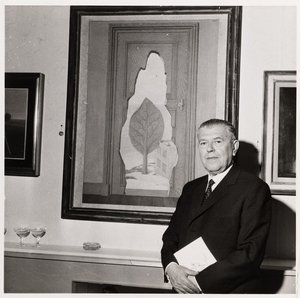
Рене Магрит
1898 - 1967 , Belgija
Osnovne informacije
- Artistic Movement Or Style: Surrealizam
- Artists Who Influenced This Artist: ['Žorž De Čiriko']
- Date Of Birth: 21 novembra 1898
- Date Of Death: 15 augusta 1967
- Full Name: René François Ghislain Magritte
- Nationality: Belgijac
- Notable Artworks:
- Les Amants
- Trešcarenj ulaga
- Vreme zamrzeno
- Čovečanstvo
- Place Of Birth: Lesennes, Belgiju
Povezani članci
Surrealistički Majstori: 10 dela koja su definisala pokret i inspiracija za vaš dom
Otkrijte 10 remek dela koja su definisala surrealizam! Dalí, Magritte i drugi majstori kroz snoviće i simbolizam. Inspiracija za vaš dom uz ArtsDot – reprodukcije vrhunskog kvaliteta i kuratorske ideje. Istražite kolekciju online!
Surrealizam u Umima Majstora: Top 10 Delo Koja Su Definisala Pokret
Uronite u svet surrealizma! Otkrijte Top 10 remek-dela Dalija, Magrita i drugih majstora. Analiza umetnosti, inspiracija za dekoraciju doma i vrhunske reprodukcije na ArtsDot.com. Istražite podsvest i snovi kroz umetnost!
Pretvorite dečje fotografije u čarobne ilustracije: Očuvanje detinjstva uz AI
Pretvorite dečje fotografije u čarobna umetnička dela uz AI Masterpiece Painting od ArtsDot! Personalizovani pokloni, očuvanje uspomena i jedinstvena dekoracija doma. Naručite sada!
Najbolja dela Roja Lichtenštajna: Pop art ikone za vaš dom | ArtsDot
Istražite 25 najpoznatijih dela Roja Lichtenštajna! Otkrijte priče iza pop art ikona, bend-dots tehniku i živopisne boje. Reprodukcije slika vrhunskog kvaliteta za vaš dom na ArtsDot.com.
Transformacija Fotografije u Epski Svet Naučne Fantastike i Sajberpanka: Umetnička Reinterpretacija Digitalnog Doba
Transformišite fotografije u epska dela naučne fantastike i sajberpanka sa ArtsDot-om! Ručno oslikane reprodukcije vrhunskog kvaliteta, inspirisane vašom vizijom. Investirajte u umetnost koja priča vašu priču.