 Pregledaj u prostoru
 Pošalji
 Podeli
 Detalji o delu

 Преузми
 Slični predmeti
 Rendgenski snimak
 Slajdovi
 Stats
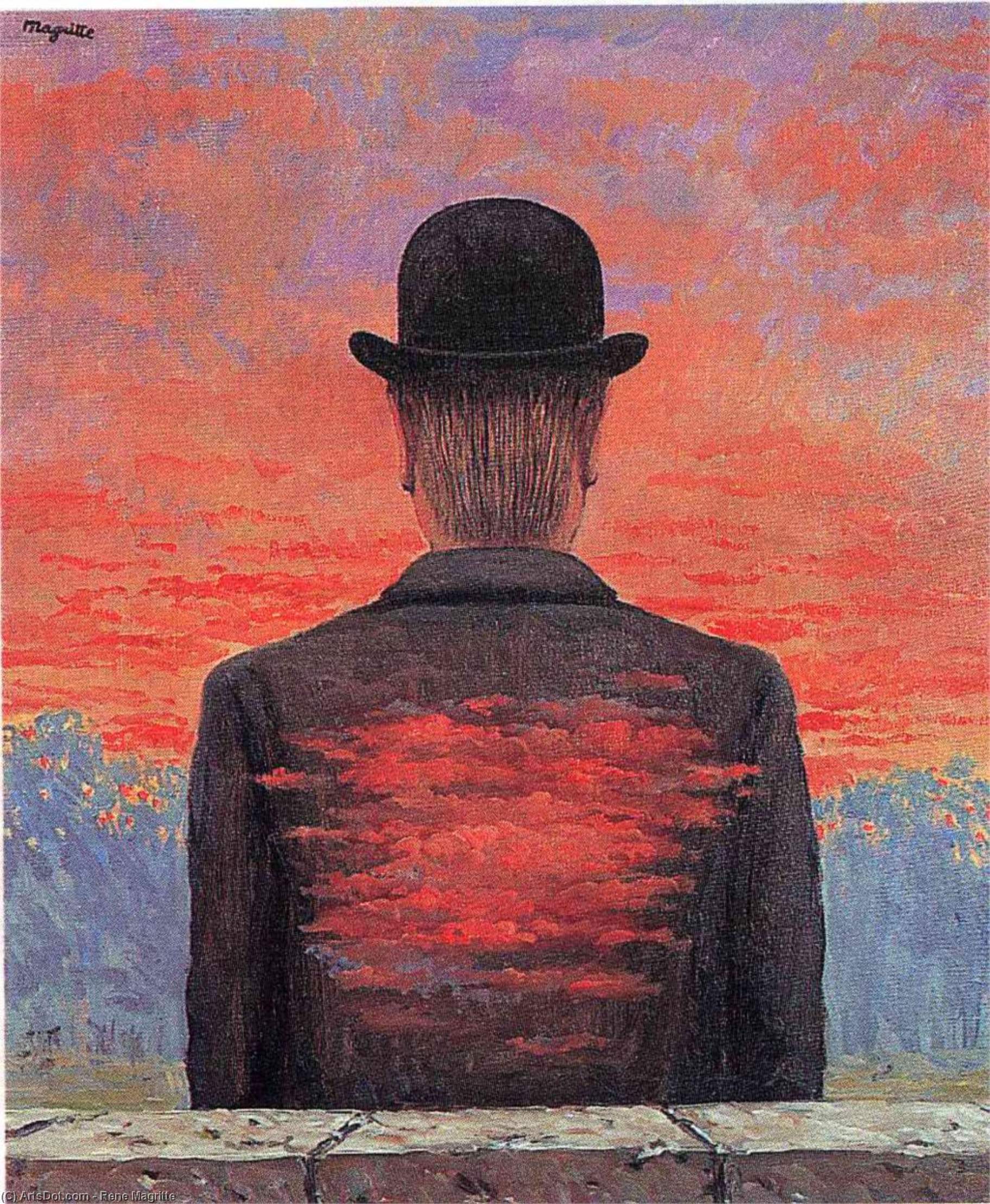
StatsThe poet recompensed


 Pročitaj više
Ručno rađena uljana reprodukcija
Ručno oslikano uljanim bojama na platnu u dimenzijama i okviru po vašem izboru, izrađeno po porudžbini od strane naših umetnika. ( Switch to Print Switch to Digital Image)




P118B $10

P118H $10

P118W $10

P438Z $10

P508JH $12

P508YH $12

P805H $10

P805Z $10

P919BZ $10

P919G $10

P919XJ $10

P959ZH $10

P968JZ $12

W106C $8

W218G $10

W218JH $8

W218Y $10

W307PJ $10

W316G $10

W316PJ $8

W316Y $10

W398PJ $8

W4111J $10

W500HY $15

W500JH $15

W692G $12

W849H $8

W940BG $15

W953PJ $8




Izaberite jednu od naših unapred definisanih veličina koje odgovaraju originalnim proporcijama umetničkog dela.

Можете унети сопствене димензије како бисте прилагодили дело одређеном оквиру или простору. Ако одабрана величина не одговара пропорцијама оригинала, слика ће бити исечена или проширена додатним елементима који се ручно насликавају. Дигитални prikaz ће вам бити послат на одобрење пре почетка производње.
Имајте на уму да преглед на екрану не одражава стварно исецање или проширење. Само приказ (mockup) ће тачно приказати коначну композицију.
Иако су доступне прилагођене величине, препоручујемо да одаберете димензију из дефинисане листе како бисте сачували оригиналне пропорције.
Nakon narudžbine, tim ArtsDot.com će klijentu putem e-pošte poslati uputstva i dostaviti prikaz predloženog rešenja
Isporuka širom sveta () za 3/4 nedelje umesto uobičajenih 5 nedelja. (8 септембар). Bez kompromisa po pitanju kvaliteta.

Besplatna ekspresna dostava širom sveta

Visokokvalitetno laneno platno

Kompletno osiguranje transporta

Garancija povraćaja carine i uvoznih dažbina

Garancija vernosti boja

Politika povraćaja u roku od 100 dana (isključivo u slučaju nedostataka)

Garancija povrata novca od 100%

Popust pri grupnoj kupovini
 Opcija sa staklom dostupna je samo za dimenzije manje od 110 cm

The poet recompensed
Tehnika reprodukcije
Dimenzije reprodukcije
-


Konačna cena
$ 263
A Vision Beyond the Visible
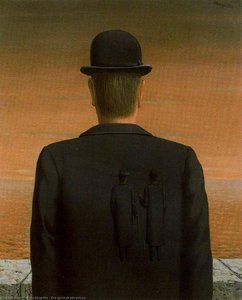
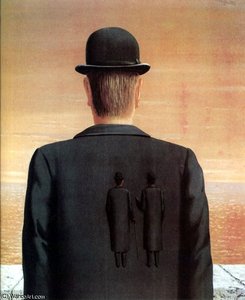
In the quiet, enigmatic world of René Magritte, reality is never quite what it seems. His 1956 masterpiece, "The Poet Recompensed," serves as a profound gateway into the Surrealist psyche, inviting viewers to step beyond the boundaries of the tangible. At first glance, we encounter the familiar silhouette of a man in a bowler hat, his back turned toward us in a posture of contemplative stillness. Yet, as our eyes linger, the logic of the physical world begins to dissolve. The figure is not merely standing before a landscape; he is becoming part of it. Magritte masterfully orchestrates a visual paradox where the solid form of a man’s coat and head merges seamlessly with a vibrant, crimson sky. This breathtaking dissolution challenges our very understanding of boundaries, suggesting that the internal world of thought and the external world of nature are inextricably linked.
The emotional resonance of this piece lies in its ability to evoke both a sense of profound peace and an unsettling mystery. There is a certain melancholy in the man's anonymity, a feeling of looking upon a soul lost in the vastness of the infinite. For the collector or the interior designer, this painting offers more than just aesthetic beauty; it provides a focal point for deep reflection. It possesses a quiet power that can anchor a room, transforming a modern living space into a sanctuary for thought and wonder. The way the fiery red of the sunset bleeds into the monochrome tones of the man's attire creates a dramatic tension that is both captivating and soothing, making it an ideal centerpiece for those who appreciate art that speaks to the complexities of the human condition.
The Alchemy of Surrealist Technique
Magritte’s technical execution in "The Poet Recompensed" is a testament to his disciplined approach to the Surrealist movement. Eschewing the chaotic splatters of abstraction, he utilized a meticulous, smooth application of oil on canvas to achieve an almost hyper-real clarity. This precision is vital; for the illusion of the sky replacing the face to be effective, the transition must be seamless and convincing. The artist employs a striking, high-contrast palette, pitting the stark blacks and whites of the man's formal attire against the overwhelming, saturated warmth of the twilight clouds. This deliberate use of color does not merely decorate the canvas but acts as a psychological tool, pulling the viewer’s gaze into the heart of the sunset.
The technique serves to heighten the painting's symbolic weight. By rendering the man in such a crisp, recognizable manner—complete with the formal detail of a tie and a structured hat—Magritte grounds the viewer in reality before abruptly subverting it. This juxtaposition is the hallmark of his genius. The subtle gradations of light within the red expanse suggest depth and movement, as if the clouds are drifting through the very space where a human mind should be. For those seeking a high-quality reproduction, capturing these delicate tonal shifts and the smooth, luminous finish of the original is essential to preserving the artwork's hauntingly beautiful atmosphere.
A Legacy of Mystery and Symbolism
To understand "The Poet Recompensed," one must look into the shadows of Magritte’s own history. The artist’s life was marked by early traumas, including the loss of his mother, an event that left a lasting imprint on his fascination with veiled identities and hidden truths. In this work, the absence of a face becomes a powerful symbol of the universal human experience—the idea that we are all, in some sense, anonymous travelers navigating a world of beautiful mysteries. The bowler hat, a signature motif of Magritte’s, represents the "everyman," allowing any viewer to project themselves into the scene.
The painting functions as a visual poem about the rewards of looking deeper. To be "recompensed" is to be given something in return for one's search; here, the poet (or the viewer) is rewarded with a vision of cosmic beauty that transcends the mundane. It is an invitation to find the extraordinary within the ordinary. As a piece of decor, it brings an intellectual depth to any environment, stimulating conversation and inspiring a sense of curiosity. Whether placed in a curated gallery setting or a sophisticated private study, "The Poet Recompensed" remains a timeless testament to the enduring power of the imagination.
Srodna umetnička dela
Biografija umetnika
Early Life and the Seeds of Surrealism
René Magritte, geboren René François Ghislain Magritte am 21. November 1898 in Lessines, Belgien, trat in eine Welt ein, die sein enigmatisches künstlerisches Sehen tiefgreifend prägen würde. Sein frühes Leben war geprägt von einem erschütternden Ereignis – dem Selbstmord seiner Mutter als er nur dreizehn Jahre alt war. Das Bild ihrer Leiche beim Wiederaufbau durch den Sambre Fluss mit ihrem Kleid, das ihr Gesicht verdeckte, wurde ein obsessives Motiv, das sich subtil in seinen späteren Arbeiten widerspiegelte und eine kontinuierliche Erforschung verborgener Realitäten zum Ausdruck brachte. Dieses frühe Trauma instillte ihm eine Faszination für Mysterium, Verlust und die erschreckende Macht dessen, was nicht gesehen wird. Obwohl Einzelheiten seines Kindeslebens nur schwer zu finden sind, ist klar, dass diese formative Erfahrung seinen lebenslangen Zweifel an Wahrnehmung und Darstellung begründete. Er begann mit Zeichnungen im Alter von zehn Jahren und offenbarte eine natürliche Neigung zum visuellen Ausdruck, erkundete aber zunächst Impressionismus bevor er einen Weg einschlug, der ihn dazu führte, einer der bedeutendsten Figuren in der Surrealistischen Kunst zu werden.
Artistic Development and Influences
Magrittes künstlerische Reise war nicht unmittelbar oder einfachweg erfolgreich. Er studierte an der Académie Royale des Beaux-Arts in Brüssel und fand ihre traditionellen Methoden erstickend. Sein frühes Werk experimentierte mit Futurismus und Kubismus und ließ sich Elemente dieser Avantgarde Bewegungen aufnehmen, lehnte aber deren ausschließlich formale Interessen ab. Es gelang ihm nicht bis zum Begegnen mit Giorgio de Chiricos Gemälde *Die Melodie der Liebe* im Jahr 1922, dass Magritte eine Resonanz entdeckte, die seinen künstlerischen Kurs für immer veränderte. De Chiricos traumhafte Landschaften und verstörende Kombinationen öffneten ihm einen neuen Blick – eine Welt, in der das Bekannte fremd erscheinen konnte und das Gewöhnliche tiefgreifende Mysterium aufnehmen konnte. Dieses Erlebnis entfachte sein Engagement für Surrealismus, obwohl er oft eine einzigartige Distanz zu seinen ausgeprägtesten psychologischen oder automatischen Ansätzen bewahrte. Er bevorzugte eine präzise Technik, um reale Szenarien darzustellen und ließ sich nicht von anderen Mitgliedern der Bewegung beeinflussen.
The Heart of Surrealism: Challenging Reality
Bis 1926 hatte Magritte sich vollständig dem Wesen des Surrealismus verschrieben und schuf *Le Jockey Perdu (Der Verlorene Jockey)*, das allgemein als sein erstes wirklich surrealistisches Werk angesehen wird. Allerdings war seine Art von Surrealismus einzigartig. Er interessierte sich nicht für die Erkundung des Unterbewusstseins durch frei assoziative oder traumhafte Bilder wie einige seiner Zeitgenossen. Stattdessen suchte Magritte nach einer neuen Möglichkeit zu sehen – eine Welt, in der das Bekannte fremd erscheinen konnte und das Gewöhnliche tiefgreifende Mysterium aufnehmen konnte. Er war nicht daran interessiert, die Oberfläche von Objekten zu erforschen oder eine bestimmte Perspektive einzunehmen wie andere Künstler seiner Zeit. Magritte konzentrierte sich darauf, die Wahrnehmung von Realität herauszufordern, indem er alltägliche Objekte in unerwarteten Kontexten präsentierte und damit dazu aufforderte, eigene Annahmen über die Welt um uns herum zu hinterfragen.
Iconic Works: Paradoxes of Perception
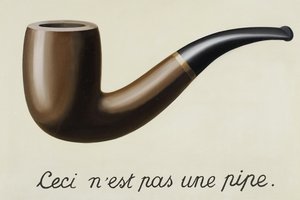
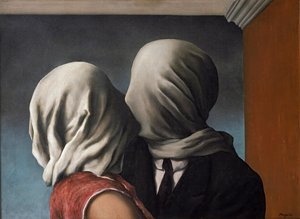
Magritte’s oeuvre is marked by a distinctive preoccupation with paradoxes – visual illusions that disrupt our understanding of reality and invite contemplation. *Les Amants (Die Liebenden)*, geschaffen zwischen 1927 und 1928, zeigt zwei Figuren hinter einem Vorhang, deren Gesichter verdeckt sind und somit eine zentrale Frage aufwirft: Wie können wir wirklich sehen? Diese berühmte Darstellung wird oft als ein Echo des frühen Traumas von Magrittes Mutter interpretiert – einer Figur, die sowohl eine Faszination für Geheimnis und Intimität als auch eine Reflexion über Verlust und Verbergenheit zum Ausdruck bringt. *The Treachery of Images (Dieses Bild ist kein Rohr)* (1929) ist ein Meisterwerk der Surrealistischen Kunst und stellt einen klassischen Fall von Dekonstruktion dar: Ein Bild wird nicht das Ding selbst, sondern lediglich eine Darstellung davon. Magritte nutzt eine hohe technische Präzision und eine sorgfältige Auswahl von Materialien, um diese paradoxe Aussage zu verstärken und uns daran zu erinnern, dass eine Repräsentation niemals die Sache ist.
Legacy and Influence
Despite initial difficulties in gaining recognition, Magritte’s work gradually gained prominence, insbesondere in den Vereinigten Staaten mit Ausstellungen im Jahr 1936 und später retrospektiven Veranstaltungen beim Museum of Modern Art (1965) und dem Metropolitan Museum of Art (1992). Er blieb politisch engagiert und setzte sich für künstlerische Autonomie ein. Er entwickelte weiterhin seinen unverwechselbaren Stil und erkundete Themen wie Wiederholung, Täuschung und die Macht der Sprache in Gemälden, die sowohl intellektuell anregend als auch visuell beeindruckend sind. Magritte starb am 15. August 1967 und hinterließ ein Werkkörper, das weiterhin Publikum weltweit fasziniert und herausfordert. Sein Einfluss reicht weit über die Malerei hinaus und umfasst Pop Art, Minimalismus und Konzeptkunst.
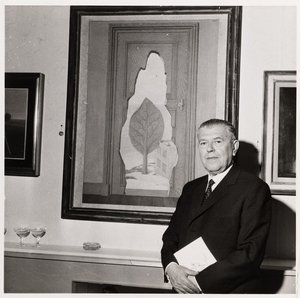
Рене Магрит
1898 - 1967 , Belgija
Osnovne informacije
- Artistic Movement Or Style: Surrealizam
- Artists Who Influenced This Artist: ['Žorž De Čiriko']
- Date Of Birth: 21 novembra 1898
- Date Of Death: 15 augusta 1967
- Full Name: René François Ghislain Magritte
- Nationality: Belgijac
- Notable Artworks:
- Les Amants
- Trešcarenj ulaga
- Vreme zamrzeno
- Čovečanstvo
- Place Of Birth: Lesennes, Belgiju
Povezani članci
Golden Hours: Sunset Motifs in Western Art History
Explore the captivating history of sunset motifs in Western art! Discover iconic paintings by Monet, Van Gogh & Kuindzhi. Learn about Romanticism, Impressionism & collecting these timeless masterpieces. Expert insights at ArtsDot.
Crimson Threads of Narrative: Exploring Symbolism & Representation in Artworks Featuring the Red Dress
Explore the rich symbolism of the red dress in art history! From ancient power displays to iconic portraits like Cézanne’s 'Madame Cezanne', discover the cultural and artistic significance behind this captivating color. Expert analysis & insights.
Surrealist Painting Masterpieces: 10 Artworks That Redefined Reality | ArtsDot
Journey into the dreamlike world of Surrealism! Explore 10 masterpieces by Dali, Magritte & Miró that redefined art. Discover their stories & find museum-quality reproductions to elevate your home decor on ArtsDot.com.
Surrealistički Majstori: 10 dela koja su definisala pokret i inspiracija za vaš dom
Otkrijte 10 remek dela koja su definisala surrealizam! Dalí, Magritte i drugi majstori kroz snoviće i simbolizam. Inspiracija za vaš dom uz ArtsDot – reprodukcije vrhunskog kvaliteta i kuratorske ideje. Istražite kolekciju online!
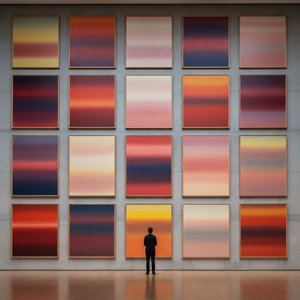
Mark Rothko: 25 Remek-dela Apstraktne Ekspresije za Vaš Dom | ArtsDot
Istražite 25 remek-dela Marka Rothka – ikona apstraktne ekspresije. Otkrijte priče, tehnike i emocije iza ovih veličanstvenih slika. Reprodukcije vrhunskog kvaliteta za vaš dom na ArtsDot.com!