

 Pregledaj u prostoru
 Pošalji
 Podeli
 Detalji o delu

 Преузми
 Slični predmeti
 Rendgenski snimak
 Slajdovi
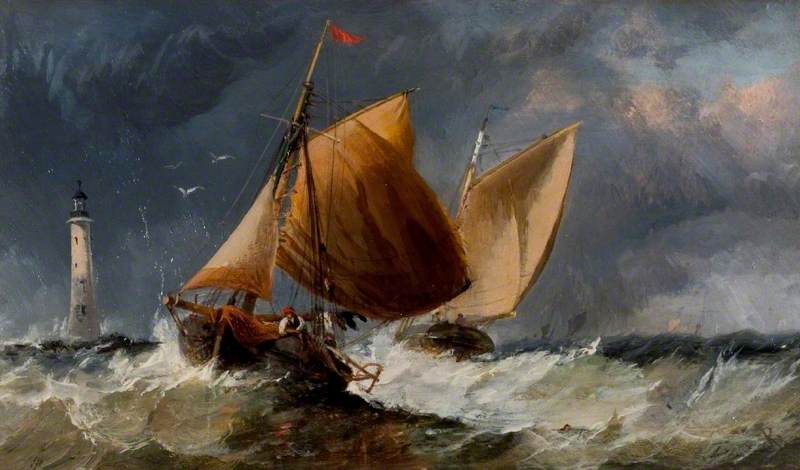
Fishing Craft off the Eddystone Lighthouse
 14.0 x 24.0 cm
 Laing Art Gallery
 Pročitaj više
Ručno rađena uljana reprodukcija
Ručno oslikano uljanim bojama na platnu u dimenzijama i okviru po vašem izboru, izrađeno po porudžbini od strane naših umetnika. ( Kupi print Kupi digitalnu sliku)




































Izaberite jednu od naših unapred definisanih veličina koje odgovaraju originalnim proporcijama umetničkog dela.

Можете унети сопствене димензије како бисте прилагодили дело одређеном оквиру или простору. Ако одабрана величина не одговара пропорцијама оригинала, слика ће бити исечена или проширена додатним елементима који се ручно насликавају. Дигитални prikaz ће вам бити послат на одобрење пре почетка производње.
Имајте на уму да преглед на екрану не одражава стварно исецање или проширење. Само приказ (mockup) ће тачно приказати коначну композицију.
Иако су доступне прилагођене величине, препоручујемо да одаберете димензију из дефинисане листе како бисте сачували оригиналне пропорције.
Nakon narudžbine, tim ArtsDot.com će klijentu putem e-pošte poslati uputstva i dostaviti prikaz predloženog rešenja
Isporuka širom sveta () za 3/4 nedelje umesto uobičajenih 5 nedelja. (25 август). Bez kompromisa po pitanju kvaliteta.

Besplatna ekspresna dostava širom sveta

Visokokvalitetno laneno platno

Kompletno osiguranje transporta

Garancija povraćaja carine i uvoznih dažbina

Garancija vernosti boja

Politika povrata u roku od 60 dana (samo u slučaju nedostataka)

Garancija povrata novca od 100%

Popust pri grupnoj kupovini
 Opcija sa staklom dostupna je samo za dimenzije manje od 110 cm

Fishing Craft off the Eddystone Lighthouse
Tehnika reprodukcije
Dimenzije reprodukcije
-


Konačna cena
$ 263
Srodna umetnička dela







Biografija umetnika
A Life Painted in Light: The Evocative Landscapes of Richard Beavis
Richard Beavis (1824-1896) remains a somewhat enigmatic figure within the pantheon of 19th-century British landscape painters, yet his work possesses a quiet power and atmospheric sensitivity that continues to captivate. Born in England, Beavis dedicated his artistic life to capturing the beauty of both his native land and the alluring landscapes of Brittany and France. While not achieving the widespread renown of some of his contemporaries, his consistent exhibition at the Royal Academy – spanning several decades – testifies to a recognized talent and a dedication to plein-air painting that foreshadowed the Impressionist movement. Beavis’s artistic journey was one of subtle refinement, moving from detailed topographical studies towards a more emotive and atmospheric rendering of light and color. He wasn't merely recording scenes; he was translating feeling onto canvas.Early Years and Artistic Formation
Details regarding Beavis’s early life are scarce, adding to the mystique surrounding his career. However, it is known that he received formal artistic training, likely in London, during a period when landscape painting enjoyed immense popularity. The influence of earlier masters such as John Constable and J.M.W. Turner is subtly present in his early works – a reverence for natural light and an attempt to capture the transient effects of weather are hallmarks of this formative period. He quickly established himself as a skilled watercolourist, a medium particularly suited to capturing the delicate nuances of the British countryside. His initial focus was on detailed depictions of rural scenes, often featuring picturesque villages and idyllic river landscapes. These early paintings demonstrate a meticulous attention to detail and a strong understanding of perspective, but they lack the emotional depth that would characterize his later work. It’s believed he travelled extensively throughout England during this time, honing his observational skills and developing a keen eye for composition.Brittany and the Barbizon Influence
A pivotal moment in Beavis's artistic development came with his repeated visits to Brittany, France, beginning in the mid-19th century. The rugged coastline, dramatic skies, and unique quality of light in this region profoundly impacted his style. He became increasingly drawn to the landscapes around Fontainebleau, a location favored by artists associated with the Barbizon School. The Barbizons – Théodore Rousseau, Jean-François Millet, and Camille Corot among them – championed a realistic approach to landscape painting, emphasizing direct observation of nature and a rejection of academic conventions. While Beavis never fully embraced the social realism of some Barbizon painters, he absorbed their commitment to plein-air painting and their focus on capturing the atmospheric effects of light and shadow. His Brittany scenes are characterized by a looser brushstroke, a more muted palette, and a greater emphasis on conveying mood and atmosphere than precise topographical accuracy.Royal Academy Recognition and Mature Style
Beavis’s consistent exhibition at the Royal Academy from 1849 until his death in 1896 underscores his standing within the British art establishment. His submissions typically featured landscapes of Brittany, Fontainebleau, and England, showcasing a growing mastery of watercolour and oil painting.- He skillfully depicted coastal scenes with crashing waves and windswept cliffs.
- His paintings of Fontainebleau forests are imbued with a sense of tranquility and mystery.
- Even his English landscapes gained a new depth and emotional resonance, reflecting the influence of his French experiences.
Legacy and Historical Significance
Richard Beavis’s work occupies an interesting position within 19th-century British art history. He wasn't a revolutionary figure like Turner or Constable, but he was a dedicated and skilled painter who consistently produced high-quality landscapes that captured the beauty of both England and France. His embrace of plein-air painting and his focus on atmospheric effects foreshadowed the Impressionist movement. While often categorized as part of the British landscape tradition, his time in Brittany and his exposure to the Barbizon School infused his work with a distinctly European sensibility. Today, Beavis’s paintings are appreciated for their quiet beauty, their evocative atmosphere, and their subtle mastery of light and color. He represents a bridge between the Romantic traditions of earlier generations and the more modern approaches that would define the art of the late 19th and early 20th centuries – a painter who quietly observed and beautifully translated the world around him onto canvas.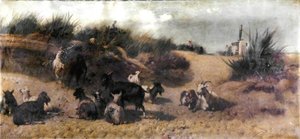
richard beavis
1824 - 1896
Osnovne informacije
- Artistic Movement Or Style: Royal Academy Art
- Artists Who Influenced This Artist:
- Jean-Baptiste Camille Corot
- William Turner
- Date Of Birth: 1824
- Date Of Death: 1896
- Full Name: Richard Beavis
- Nationality: British
- Notable Artworks:
- The Cliffs of Brittany
- Fontainebleau Landscape
- Place Of Birth: London, England

