

 Pregledaj u prostoru
 Pošalji
 Podeli
 Detalji o delu

 Преузми
 Slični predmeti
 Rendgenski snimak
 Slajdovi
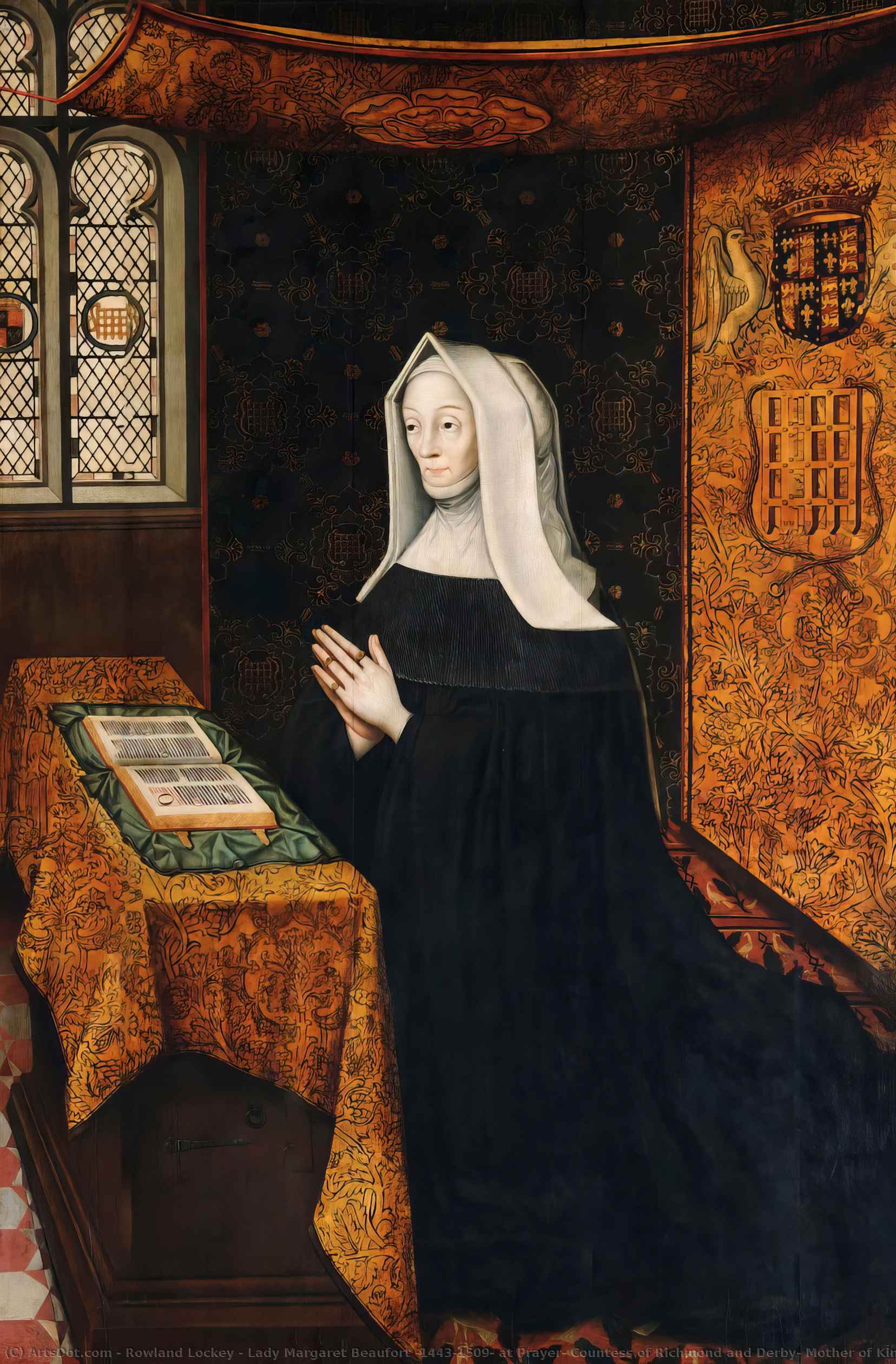
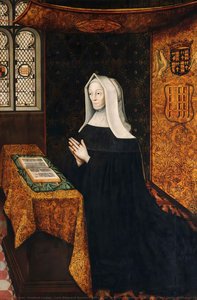
Lady Margaret Beaufort (1443–1509) at Prayer, Countess of Richmond and Derby, Mother of King Henry VII and Foundress of the College
 Oil On Panel
- Tudor Portraiture
 Early Modern
 178.0 x 114.0 cm
 St John's College
 Pročitaj više
Ručno rađena uljana reprodukcija
Ručno oslikano uljanim bojama na platnu u dimenzijama i okviru po vašem izboru, izrađeno po porudžbini od strane naših umetnika. ( Kupi print Kupi digitalnu sliku)




P118B $10

P118H $10

P118W $10

P438Z $10

P508JH $12

P508YH $12

P805H $10

P805Z $10

P919BZ $10

P919G $10

P919XJ $10

P959ZH $10

P968JZ $12

W106C $8

W218G $10

W218JH $8

W218Y $10

W307PJ $10

W316G $10

W316PJ $8

W316Y $10

W398PJ $8

W4111J $10

W500HY $15

W500JH $15

W692G $12

W849H $8

W940BG $15

W953PJ $8




Izaberite jednu od naših unapred definisanih veličina koje odgovaraju originalnim proporcijama umetničkog dela.

Можете унети сопствене димензије како бисте прилагодили дело одређеном оквиру или простору. Ако одабрана величина не одговара пропорцијама оригинала, слика ће бити исечена или проширена додатним елементима који се ручно насликавају. Дигитални prikaz ће вам бити послат на одобрење пре почетка производње.
Имајте на уму да преглед на екрану не одражава стварно исецање или проширење. Само приказ (mockup) ће тачно приказати коначну композицију.
Иако су доступне прилагођене величине, препоручујемо да одаберете димензију из дефинисане листе како бисте сачували оригиналне пропорције.
Nakon narudžbine, tim ArtsDot.com će klijentu putem e-pošte poslati uputstva i dostaviti prikaz predloženog rešenja
Isporuka širom sveta () za 3/4 nedelje umesto uobičajenih 5 nedelja. (4 септембар). Bez kompromisa po pitanju kvaliteta.

Besplatna ekspresna dostava širom sveta

Visokokvalitetno laneno platno

Kompletno osiguranje transporta

Garancija povraćaja carine i uvoznih dažbina

Garancija vernosti boja

Politika povrata u roku od 60 dana (samo u slučaju nedostataka)

Garancija povrata novca od 100%

Popust pri grupnoj kupovini
 Opcija sa staklom dostupna je samo za dimenzije manje od 110 cm

Lady Margaret Beaufort (1443–1509) at Prayer, Countess of Richmond and Derby, Mother of King Henry VII and Foundress of the College
Tehnika reprodukcije
Dimenzije reprodukcije
-


Konačna cena
$ 263
A Vision of Devotion: The Eternal Legacy of Lady Margaret Beaufort
In the quiet corridors of history, few figures command as much reverence as Lady Margaret Beaufort, the matriarch of the Tudor dynasty. Rowland Lockey’s masterful oil-on-panel painting, Lady Margaret Beaufort (1443–1509) at Prayer, serves as a profound window into a soul defined by piety and political significance. This monumental work, measuring an impressive 178 x 114 cm, transcends mere portraiture to become a spiritual meditation. As the mother of King Henry VII, Lady Margaret was a pivotal architect of the English throne, yet Lockey chooses to strip away the clamor of courtly politics, presenting instead a moment of profound, solitary intimacy. The viewer is invited into a sacred space where the weight of a kingdom rests upon the shoulders of a woman lost in contemplative prayer.
The painting’s composition is a masterclass in the Tudor aesthetic, blending the solemnity of religious devotion with the opulence of noble status. Centrally positioned, Lady Margaret is captured in a state of deep concentration, her eyes perhaps tracing the sacred texts within an open book resting upon a table before her. She is draped in a black robe that speaks to her humility and religious commitment, contrasted beautifully by a crisp white head covering that frames a face etched with wisdom and grace. The artist utilizes the rich, layered textures of oil on panel to breathe life into every fold of her attire, creating a tactile reality that makes her presence feel almost tangible within the room.
Symbolism and the Art of the Tudor Court
Every element within Lockey’s composition is imbued with symbolic weight, designed to communicate the subject's multifaceted identity. The background is not merely a setting but a tapestry of historical significance. Ornate patterns, floral motifs, and heraldic designs adorn the walls, suggesting an environment of immense prestige—perhaps a private chapel or a scholarly study within a grand estate. These intricate details serve as a silent testament to her role as a foundress of great academic institutions, such as St John's College, Cambridge. The interplay of light and shadow, a hallmark of Lockey’s technique, casts a soft, diffused glow over the scene, enveloping the subject in an atmosphere of serenity and divine peace.
For the discerning collector or interior designer, this piece offers more than just visual beauty; it offers a narrative of strength and intellectual legacy. The meticulous attention to detail—from the delicate textures of the wall hangings to the subtle highlights on the prayer book—provides a focal point that commands attention in any sophisticated setting. A high-quality reproduction of this masterpiece brings with it an aura of historical depth and quiet dignity, making it an ideal centerpiece for those looking to infuse their spaces with a sense of timelessness, scholarly elegance, and the enduring spirit of devotion.
Srodna umetnička dela
Biografija umetnika
The Quiet Master of Tudor Portraiture
In the grand, gilded tapestry of the English Renaissance, certain names shine with an unshakeable brilliance, while others linger in the soft shadows of history, possessing a subtle, enduring grace. Rowland Lockey (c. 1565–1616) belongs to that second, more mysterious category. A figure often discussed in the periphery of much larger luminaries, Lockey was an artist whose hands bridged the gap between the meticulous precision of the early Tudor era and the burgeoning dynamism of the Jacobean age. Born likely in London, the son of a skilled crossbow maker, Lockey’s journey from the workshops of Fleet Street to the prestigious circles of the royal court is a testament to the vibrant, interconnected nature of Elizabethan craftsmanship.
His artistic identity was forged in the crucible of an apprenticeship that placed him at the very heart of English aesthetic evolution. Beginning in 1581, Lockey studied under Nicholas Hilliard, the legendary miniaturist to Queen Elizabeth I. This formative period was far more than a mere technical education; it was an immersion into a world where every glint of gold and every delicate line of vellum held profound political and social meaning. Under Hilliard’s tutelage, Lockey mastered the art of the subtle—learning how to manipulate light and layer glazes to create a sense of depth and vitality that could breathe life into a flat surface. This training as both a painter and a goldsmith endowed his work with a unique tactile quality, blending the precision of metalwork with the fluid elegance of oil painting.
A Legacy of Reinterpretation and Devotion
While Lockey is frequently categorized as a copyist, such a label fails to capture the soulful nuance he brought to his subjects. His most celebrated achievements lie in his monumental reproductions of Hans Holbein the Younger’s iconic works, most notably the "Family of Sir Thomas More." In these large-scale canvases, Lockey did not merely replicate; he reinterpreted. Where Holbein’s original captured a frozen, solemn dignity, Lockey’s versions introduced a subtle shift in expression and pose, infusing the figures with a newfound energy that resonated with the changing spirit of the late Tudor period. His ability to inhabit the style of his predecessors while injecting a contemporary vitality is what marks him as a true master of his craft.
Beyond these grand family portraits, Lockey’s oeuvre includes deeply moving individual studies that capture the spiritual and political weight of his era. His depiction of Lady Margaret Beaufort at Prayer stands as a pinnacle of his ability to convey profound intimacy. In this work, he strips away the clamor of courtly life to present a moment of solitary, sacred devotion. Through the masterful use of texture—the heavy folds of black robes contrasted against the crispness of white linen—he creates a space where the viewer feels the very weight of history and piety. This capacity to balance the opulence of noble status with the vulnerability of human emotion is the hallmark of his enduring significance.
The Intersection of Craft and Courtly Life
Lockey’s professional life was deeply intertwined with the prestigious guilds of London, having achieved the status of a freeman of the Worshipful Company of Goldsmiths by 1600. This dual identity as an artist and a goldsmith allowed him to serve the fashionable long galleries of great English houses, providing the essential visual lineage that noble families required to assert their legitimacy and heritage. His work functioned as a vital component of the Tudor social fabric, creating sets of oil paintings that documented the continuity of power and bloodlines.
Ultimately, the historical importance of Rowland Lockey lies in his role as a custodian of the English portrait tradition. He stood at the crossroads of eras, preserving the meticulous techniques of the 16th century while preparing the way for the more expressive styles of the 17th. Though he may remain eclipsed by the giants of the Renaissance, his contributions—characterized by a quiet, meticulous brilliance—continue to offer historians and art lovers a window into the soul of the Tudor and Jacobean worlds.
rowland lockey
1565 - 1616
Osnovne informacije
- Artistic Movement Or Style: Tudor Portraiture; Flemish Renaissance
- Artists Or Movements Influenced By This Artist: ['Dutch painters']
- Artists Who Influenced This Artist:
- Hans Holbein Jr.
- Nicholas Hilliard
- Date Of Death: 1616
- Full Name: Rowland Lockey
- Nationality: English
- Notable Artworks:
- Sir Thomas More & James I
- George Talbot (1528–1590)
- Mary, Queen of Scots
- Sheffield portrait
- Place Of Birth: London, England
Povezani članci
Sacred Narratives on Canvas: Exploring Devotional Imagery Across Art History
Explore the rich history of devotional art! Discover iconic masterpieces, symbolism & techniques from antiquity to the Renaissance. Expert insights for collectors & enthusiasts at ArtsDot.
Sacred Expressions: A Journey Through Devotional Art Across Cultures & Eras
Explore the rich history of devotional art across cultures & eras. Discover iconic masterpieces, symbolism, and artistic techniques. Expert insights for collectors & enthusiasts.
The Enduring Legacy of Formal Portraiture: Power, Identity & Artistic Exploration
Explore the rich history of formal portraiture & its enduring power to capture identity and shape perception. Discover investment-worthy artworks, expert appraisals, and custom reproduction services at ArtsDot.
Sacred Narratives Embodied: A Comprehensive Exploration of Religious Iconography in Art History
Explore the rich history of religious iconography in art! Discover symbolism, movements & masterpieces from Byzantine to Renaissance periods. Expert insights for collectors and enthusiasts at ArtsDot.

Sacred Visions: Exploring Faith & Devotion in Religious Art Across Cultures
Explore the rich history of religious art across cultures! Discover symbolism, Renaissance masterpieces & the power of color in devotional works. Expert insights for collectors and enthusiasts.

