

 Pregledaj u prostoru
 Pošalji
 Podeli
 Detalji o delu

 Преузми
 Slični predmeti
 Rendgenski snimak
 Slajdovi
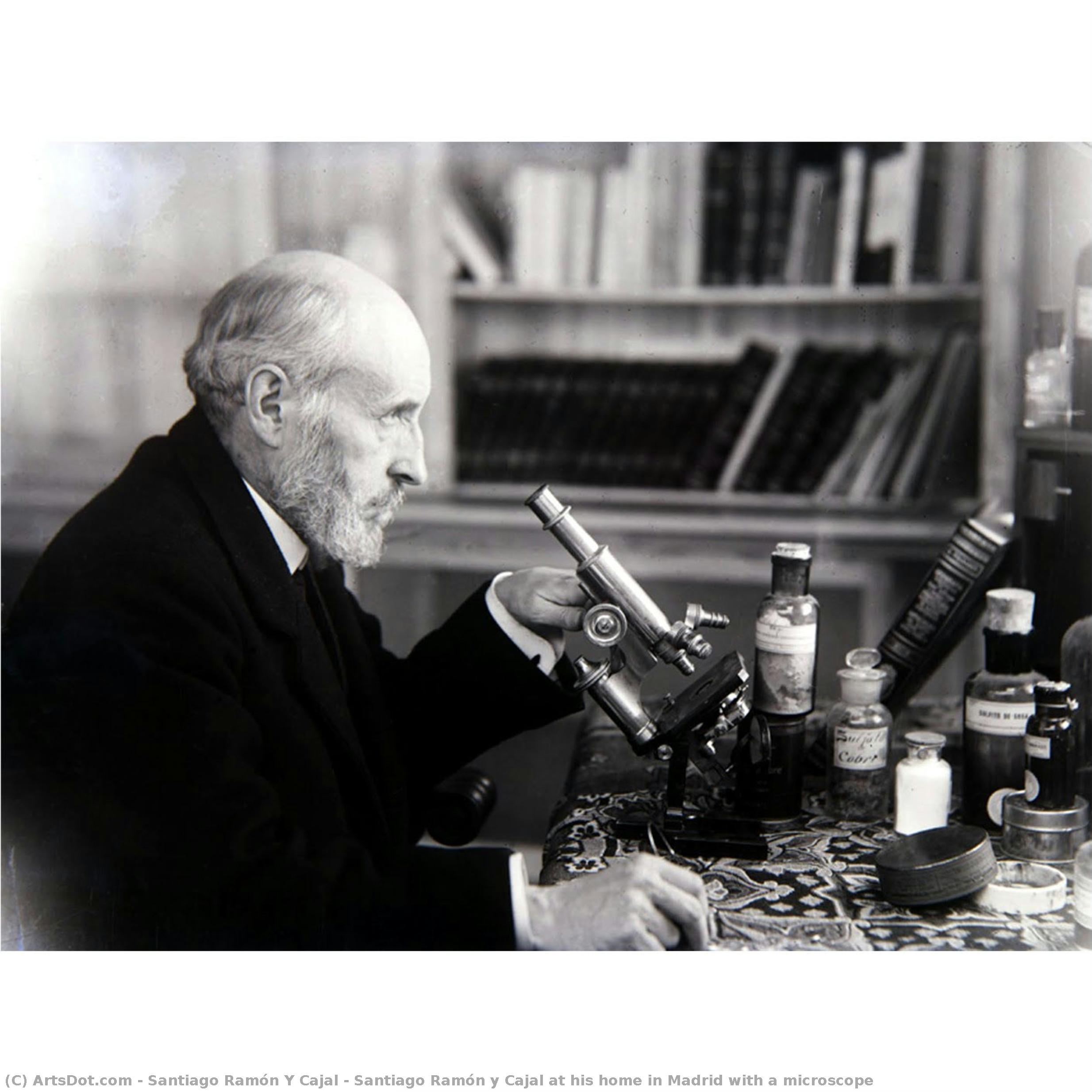
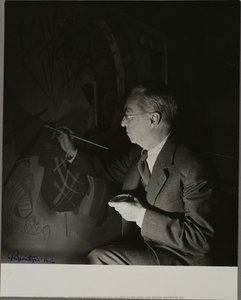
Santiago Ramón y Cajal at his home in Madrid with a microscope

 Pročitaj više
Ručno rađena uljana reprodukcija
Ručno oslikano uljanim bojama na platnu u dimenzijama i okviru po vašem izboru, izrađeno po porudžbini od strane naših umetnika. ( Kupi print Kupi digitalnu sliku)




































Izaberite jednu od naših unapred definisanih veličina koje odgovaraju originalnim proporcijama umetničkog dela.

Можете унети сопствене димензије како бисте прилагодили дело одређеном оквиру или простору. Ако одабрана величина не одговара пропорцијама оригинала, слика ће бити исечена или проширена додатним елементима који се ручно насликавају. Дигитални prikaz ће вам бити послат на одобрење пре почетка производње.
Имајте на уму да преглед на екрану не одражава стварно исецање или проширење. Само приказ (mockup) ће тачно приказати коначну композицију.
Иако су доступне прилагођене величине, препоручујемо да одаберете димензију из дефинисане листе како бисте сачували оригиналне пропорције.
Nakon narudžbine, tim ArtsDot.com će klijentu putem e-pošte poslati uputstva i dostaviti prikaz predloženog rešenja
Isporuka širom sveta () za 3/4 nedelje umesto uobičajenih 5 nedelja. (29 август). Bez kompromisa po pitanju kvaliteta.

Besplatna ekspresna dostava širom sveta

Visokokvalitetno laneno platno

Kompletno osiguranje transporta

Garancija povraćaja carine i uvoznih dažbina

Garancija vernosti boja

Politika povrata u roku od 60 dana (samo u slučaju nedostataka)

Garancija povrata novca od 100%

Popust pri grupnoj kupovini
 Opcija sa staklom dostupna je samo za dimenzije manje od 110 cm

Santiago Ramón y Cajal at his home in Madrid with a microscope
Tehnika reprodukcije
Dimenzije reprodukcije
-


Konačna cena
$ 263
Srodna umetnička dela






Biografija umetnika
The Architect of the Mind: The Dual Legacy of Santiago Ramón y Cajal
In the annals of human achievement, few figures possess a legacy as profoundly dualistic as Santiago Ramón y Cajal. To the scientific community, he is the revered father of modern neuroscience, the Nobel laureate who mapped the invisible labyrinth of the human brain. To the art historian, he represents a rare specimen of the polymath—a man whose meticulous hand could translate the microscopic mysteries of life into breathtakingly precise visual narratives. Born in 1852 in Petilla de Aragón, Spain, Cajal’s life was not merely a pursuit of knowledge, but a lifelong dialogue between the analytical rigor of medicine and the expressive freedom of the brush.
His early years were marked by a tension between duty and desire. While his father, a man of science and discipline, sought to steer him toward a practical medical career, Cajal found solace in the boundless realms of artistic imagination. This period of his life was characterized by an intense, almost rebellious, devotion to painting. He did not see art and science as opposing forces; rather, he viewed them as two different lenses through which one could observe the fundamental truths of nature. This early inclination toward aesthetics would later become his greatest scientific asset, providing him with the observational acuity necessary to perceive what others had overlooked.
A Symphony of Silver and Shadow
The true metamorphosis of Cajal’s career occurred when he turned his artistic eye toward the microscopic world. Utilizing a revolutionary technique involving potassium dichromate and silver nitrate—a method often referred to as the Golgi stain—he achieved what was previously thought impossible: the visualization of individual neurons. Where others saw only a chaotic, undifferentiated mass of cellular matter, Cajal’s trained eyes perceived a complex, interconnected web of arborized structures. His drawings were not merely scientific records; they were masterpieces of biological illustration, imbued with a sense of depth, texture, and structural elegance that captured the very essence of neural communication.
These illustrations served as a bridge between raw data and human understanding. Through his work, the concept of the neuron doctrine—the idea that neurons are discrete, individual cells rather than a continuous reticulum—was brought to light. His ability to render the delicate dendrites and sturdy axons with such clarity allowed him to communicate complex neuroanatomical concepts with an unparalleled precision. This period of his life represents a pinnacle where technique met vision, as he used the tools of chemistry to feed the hunger of his artistic soul, ultimately revealing the intricate architecture of thought itself.
A Lasting Impression on Science and Art
The historical significance of Santiago Ramón y Cajal cannot be overstated. In 1906, the world recognized his monumental contributions when he was awarded the Nobel Prize in Physiology or Medicine. This honor cemented his status as a titan of science, yet his influence extended far beyond the laboratory. His anatomical studies and oil paintings remain testament to a man who refused to be confined by a single discipline. He demonstrated that the scientific method is enhanced by the artist's sensitivity to form, light, and detail.
Today, we look back at Cajal not just as a researcher, but as a visionary who bridged two worlds. His legacy lives on in every modern map of the brain and in every piece of scientific illustration that seeks to find beauty in truth. He remains an enduring inspiration for anyone who believes that the pursuit of logic and the pursuit of beauty are, at their core, the same journey.
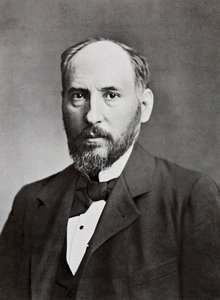
santiago ramón y cajal
1852 - 1934 , Spain
Osnovne informacije
- Artistic Movement Or Style: Scientific Illustration
- Artists Or Movements Influenced By This Artist: ['Neuroscience']
- Artists Who Influenced This Artist: ['León Abadías y Santolaria']
- Date Of Birth: May 1, 1852
- Date Of Death: 1934
- Full Name: Santiago Ramón y Cajal
- Nationality: Spanish
- Notable Artworks: ['Drawings of Ramón y Cajal']
- Place Of Birth: Petilla de Aragón, Spain

