

 Pregledaj u prostoru
 Pošalji
 Podeli
 Detalji o delu

 Преузми
 Slični predmeti
 Rendgenski snimak
 Slajdovi
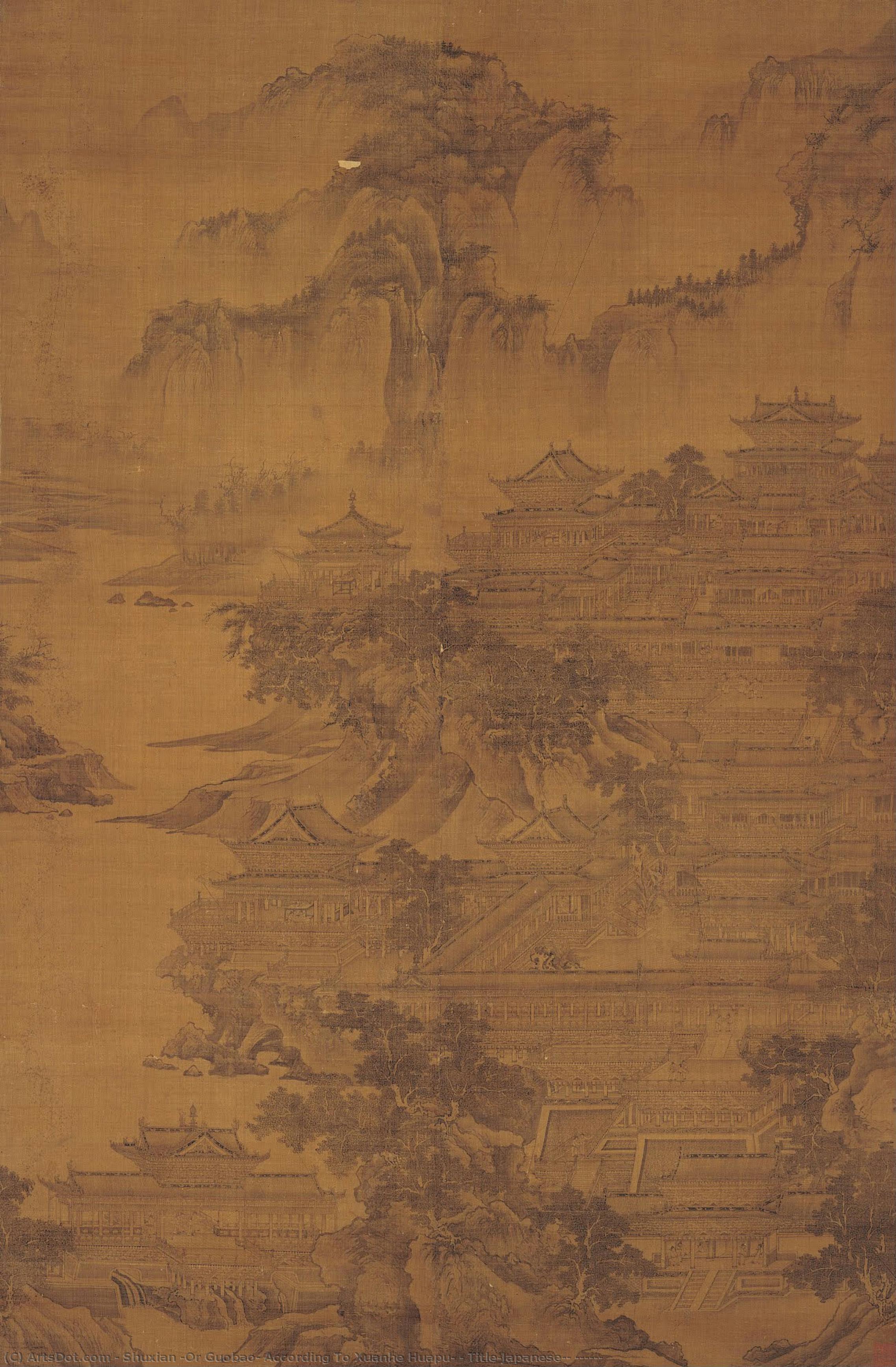
Title(Japanese): 明皇避暑宮図
 Ink
Ink- WallArt
 900
900- High Medieval
 106.0cm x 162.0cm
 Muzej lepih umetnosti grada Osake
 Pročitaj više
Ručno rađena uljana reprodukcija
Ručno oslikano uljanim bojama na platnu u dimenzijama i okviru po vašem izboru, izrađeno po porudžbini od strane naših umetnika. ( Kupi print Kupi digitalnu sliku)




P118B $10

P118H $10

P118W $10

P438Z $10

P508JH $12

P508YH $12

P805H $10

P805Z $10

P919BZ $10

P919G $10

P919XJ $10

P959ZH $10

P968JZ $12

W106C $8

W218G $10

W218JH $8

W218Y $10

W307PJ $10

W316G $10

W316PJ $8

W316Y $10

W398PJ $8

W4111J $10

W500HY $15

W500JH $15

W692G $12

W849H $8

W940BG $15

W953PJ $8




Izaberite jednu od naših unapred definisanih veličina koje odgovaraju originalnim proporcijama umetničkog dela.

Можете унети сопствене димензије како бисте прилагодили дело одређеном оквиру или простору. Ако одабрана величина не одговара пропорцијама оригинала, слика ће бити исечена или проширена додатним елементима који се ручно насликавају. Дигитални prikaz ће вам бити послат на одобрење пре почетка производње.
Имајте на уму да преглед на екрану не одражава стварно исецање или проширење. Само приказ (mockup) ће тачно приказати коначну композицију.
Иако су доступне прилагођене величине, препоручујемо да одаберете димензију из дефинисане листе како бисте сачували оригиналне пропорције.
Nakon narudžbine, tim ArtsDot.com će klijentu putem e-pošte poslati uputstva i dostaviti prikaz predloženog rešenja
Isporuka širom sveta () za 3/4 nedelje umesto uobičajenih 5 nedelja. (7 септембар). Bez kompromisa po pitanju kvaliteta.

Besplatna ekspresna dostava širom sveta

Visokokvalitetno laneno platno

Kompletno osiguranje transporta

Garancija povraćaja carine i uvoznih dažbina

Garancija vernosti boja

Politika povraćaja u roku od 100 dana (isključivo u slučaju nedostataka)

Garancija povrata novca od 100%

Popust pri grupnoj kupovini
 Opcija sa staklom dostupna je samo za dimenzije manje od 110 cm

Title(Japanese): 明皇避暑宮図
Tehnika reprodukcije
Dimenzije reprodukcije
-


Konačna cena
$ 263
A Vision of Imperial Serenity
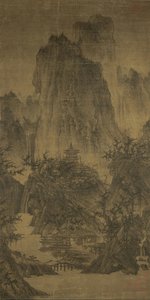
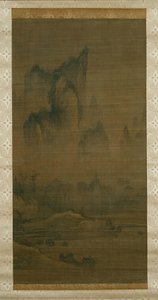
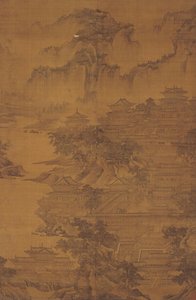
In the delicate interplay of ink and silk, the painting Title(Japanese): 明皇避暑宮図 invites the viewer into a world of profound tranquility and imperial grandeur. This exquisite masterpiece captures a moment of respite within the summer palace of Emperor Xuanzong, a sanctuary designed to offer escape from the sweltering heat of the season. Through the masterful hand of Shuxian (also known as Guobao), the canvas unfolds as a sprawling narrative of nature’s majesty and human grace. The scene is anchored by a breathtaking landscape where towering, mist-shrouded mountains meet the gentle ripples of a foreground lake. As one’s gaze wanders across the water, several boats drift peacefully, carrying figures who appear to be lost in the quiet contemplation of their surroundings. It is a composition that breathes with life, capturing the harmonious coexistence between the structured elegance of man-made architecture and the untamed glory of the natural world.
The technical brilliance of this work lies in its meticulous attention to detail, a hallmark of the early Northern Song dynasty style. The artist employs a precise, almost architectural approach to rendering the palace buildings, utilizing fine lines that suggest the use of measuring tools to achieve perfect proportion and structural integrity. This precision is balanced by a more fluid, organic technique used for the landscape elements; the trees are rendered with soulful vitality, while the distant peaks feature subtle texture strokes that evoke the ruggedness of ancient stone. While some scholars suggest that the fine details may have been softened through later Yuan dynasty copies, the enduring essence of the original remains intact, offering a rhythmic movement between the sharp clarity of the structures and the ethereal softness of the mountain mists.
Historical Resonance and Aesthetic Splendor
To behold this painting is to step back into a period of significant cultural transition in China. Created during an era marked by political shifts, the work embodies the Neo-Confucian ideals of harmony and balance that began to take root during the Five Dynasties and Song periods. The subject matter—the Emperor seeking refuge in nature—serves as a powerful symbol of the search for stability amidst chaos. The palace is not merely a building but a metaphor for an ordered universe, sheltered by the protective embrace of the mountains and nourished by the flowing waters. For the discerning collector or interior designer, this piece offers more than just visual beauty; it provides a window into a philosophical era where art served as a bridge between the earthly realm and the spiritual sublime.
Integrating a high-quality reproduction of this work into a contemporary space brings an atmosphere of timeless sophistication and meditative calm. The expansive scale and the delicate palette of earth tones and ink washes make it a versatile centerpiece for any curated collection. Whether placed in a formal study to inspire intellectual focus or in a serene living area to promote relaxation, the painting’s emotional impact is undeniable. It commands attention through its intricate storytelling and rewards deep observation with its layers of historical depth and technical mastery. Owning such a piece is an invitation to preserve the legacy of Shuxian and to surround oneself with the enduring elegance of classical Chinese landscape tradition.
Srodna umetnička dela

Biografija umetnika
A Master of Landscape Painting in Turbulent Times
Guo Zhongshu, known by the courtesy name Shuxian (or Guobao, as recorded in the Xuanhe Huapu), remains a singular and luminous figure within the complex artistic tapestry of the Five Dynasties and Song dynasties. Born in Luoyang around 929 AD, his life unfolded during an era defined by profound political fragmentation and cultural upheaval. Yet, amidst this landscape of instability, Shuxian achieved a level of artistic serenity that would define a generation. His work serves as a bridge between the fading grandeur of the Tang Dynasty and the emerging, more introspective aesthetic of the Song period—a transition marked by a shift toward Neo-Confucian ideals of restraint, harmony, and deep philosophical contemplation.
The foundations of Shuxian’s mastery were laid in his early scholarly pursuits. Immersed in the rigorous study of Confucian classics and the disciplined practice of calligraphy, he developed an eye for meticulous detail and a hand capable of extraordinary grace. His lineage, connected to prominent officials, provided him with the intellectual resources necessary to cultivate a vision that was as much about spiritual depth as it and visual beauty. This scholarly background allowed him to infuse his landscapes with a sense of literati elegance, where every brushstroke carried the weight of classical wisdom and every mountain peak whispered of ancient truths.
The Essence of the Xuanhe Huapu Style
Shuxian’s artistic breakthrough is most notably associated with the Xuanhe Huapu style, a method that prioritized the capture of atmospheric essence over mere photographic realism. During the Xuanhe reign, he embraced a technique characterized by subtle tonal variations and the meticulous layering of ink washes. This approach allowed him to evoke the ephemeral qualities of nature—the dampness of a morning mist, the shifting light through forest canopies, and the heavy stillness of mountain air. By focusing on these atmospheric conditions, Shuxian could convey profound emotions, inviting the viewer to experience the landscape not just as a sight, but as a felt presence.
His technical brilliance is perhaps most evident in his architectural depictions, where he achieved a breathtaking balance between structural precision and organic fluidity. In masterpieces such as Title(Japanese): 明皇避暑宮図, one observes a remarkable command of line. He utilized fine, almost architectural strokes to render the summer palace of Emperor Xuanzong with perfect proportion and integrity. However, this rigidity is never overwhelming; it is softened by the soulful vitality of the surrounding trees and the ethereal, mist-shrouded mountains that meet the gentle ripples of foreground lakes. This interplay between the man-made and the natural world reflects a harmonious coexistence that was central to the era's philosophical aspirations.
Legacy and Historical Significance
The enduring legacy of Shuxian lies in his ability to find stillness within chaos. While his contemporaries often grappled with the literal turbulence of their political reality, Shuxian’s oeuvre offered a sanctuary of peace. His influence can be traced through the development of the Northern Song landscape tradition, where the emphasis on shanshui (mountain-water) painting became a vehicle for spiritual exploration. Through his signature use of ink washes and his ability to imbue nature with human emotion, he helped establish a visual language that would resonate throughout Chinese art history for centuries.
To study the works attributed to Shuxian is to engage in a dialogue with the past. Whether observing the delicate interplay of light in his landscapes or the structural elegance of his architectural scenes, one encounters an artist who sought to capture the eternal within the transient. His life and art stand as a testament to the power of creativity to transcend the boundaries of time and political strife, leaving behind a world of profound tranquility and unmatched aesthetic splendor.
Osnovne informacije
- Artistic Movement Or Style: Literati Painting Style
- Artists Or Movements Influenced By This Artist: ['Eight Eccentrics of Yangzhou']
- Artists Who Influenced This Artist: ['Li Shan']
- Date Of Birth: c. 929
- Date Of Death: 977
- Full Name: Guo Zhongshu
- Nationality: Chinese
- Notable Artworks:
- Autumn Plants and Insects
- Title(Japanese): 明皇避暑宮図
- Place Of Birth: Luoyang, China
Povezani članci

25 Remek-dela Džona Konstebla: Lepota Engleske na Platnu | ArtsDot
Uronite u svet Džona Konstebla! Otkrijte 25 remek-dela engleskog pejzaža, romantizma i seoske idile. Kupite reprodukcije slika vrhunskog kvaliteta za dekoraciju enterijera na ArtsDot.com.

Katsushika Hokusai: 25 Remek-dela Japanskog Umetnika za Vaš Dom | ArtsDot
Uronite u svet Katsushike Hokusaija! Otkrijte 25 remek-dela japanskog umetnika, uključujući čuveni 'Veliki talas'. Ukiyo-e štampe, pejzaži i istorija iza svakog dela. Pronađite inspiraciju za dekor enterijera i kupite reprodukcije slika vrhunskog kvaliteta na ArtsDot.com.
Boats on Canvas: 10 Masterpieces of Maritime Art for Your Home Decor
Sail away with 10 iconic boat paintings! Explore masterpieces by Monet, Van Gogh & Turner. Discover the stories behind these timeless seascapes and find museum-quality art reproductions for your home decor at ArtsDot.com.
Serene Visions: Exploring Themes of Tranquility in Art History & Contemporary Practice
Explore the history of serene landscape art & discover artists who evoke tranquility. Find the perfect calming artwork for your home with expert guidance from ArtsDot.

Glavna dela koja su definisala Romantični pejzaž: 10 remek-dela za vaš dom
Otkrijte 10 remek-dela romantičnog pejzažnog slikarstva! Uronite u svet Claude Lorraina, Caspara David Friedricha i Turnera. Ispričane priče umetnosti, inspiracija za dekoraciju doma. Kvalitetne reprodukcije na ArtsDot.com – istražite celu kolekciju online!