

 Pregledaj u prostoru
 Pošalji
 Podeli
 Detalji o delu

 Преузми
 Slični predmeti
 Rendgenski snimak
 Slajdovi
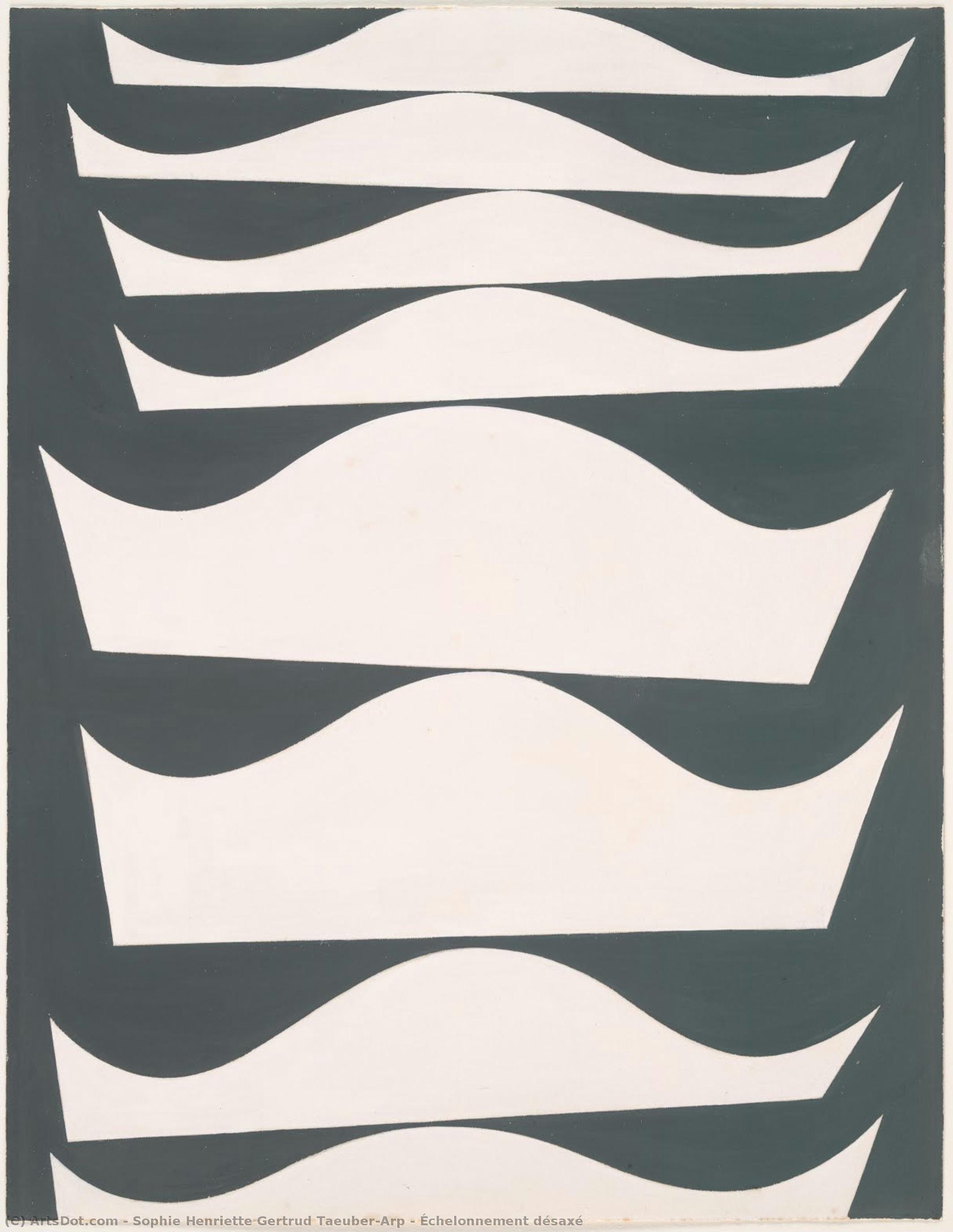
Échelonnement désaxé
 Acrylic On Paper
- WallArt
- Constructivism/Geometric Abstraction
 1934
1934 35.0 x 27.0 cm
 MoMA - Muzej moderne umetnosti
 Pročitaj više
Ručno rađena uljana reprodukcija
Ručno oslikano uljanim bojama na platnu u dimenzijama i okviru po vašem izboru, izrađeno po porudžbini od strane naših umetnika. ( Kupi print Kupi digitalnu sliku)




P118B $10

P118H $10

P118W $10

P438Z $10

P508JH $12

P508YH $12

P805H $10

P805Z $10

P919BZ $10

P919G $10

P919XJ $10

P959ZH $10

P968JZ $12

W106C $8

W218G $10

W218JH $8

W218Y $10

W307PJ $10

W316G $10

W316PJ $8

W316Y $10

W398PJ $8

W4111J $10

W500HY $15

W500JH $15

W692G $12

W849H $8

W940BG $15

W953PJ $8




Izaberite jednu od naših unapred definisanih veličina koje odgovaraju originalnim proporcijama umetničkog dela.

Можете унети сопствене димензије како бисте прилагодили дело одређеном оквиру или простору. Ако одабрана величина не одговара пропорцијама оригинала, слика ће бити исечена или проширена додатним елементима који се ручно насликавају. Дигитални prikaz ће вам бити послат на одобрење пре почетка производње.
Имајте на уму да преглед на екрану не одражава стварно исецање или проширење. Само приказ (mockup) ће тачно приказати коначну композицију.
Иако су доступне прилагођене величине, препоручујемо да одаберете димензију из дефинисане листе како бисте сачували оригиналне пропорције.
Nakon narudžbine, tim ArtsDot.com će klijentu putem e-pošte poslati uputstva i dostaviti prikaz predloženog rešenja
Isporuka širom sveta () za 3/4 nedelje umesto uobičajenih 5 nedelja. (23 август). Bez kompromisa po pitanju kvaliteta.

Besplatna ekspresna dostava širom sveta

Visokokvalitetno laneno platno

Kompletno osiguranje transporta

Garancija povraćaja carine i uvoznih dažbina

Garancija vernosti boja

Politika povrata u roku od 60 dana (samo u slučaju nedostataka)

Garancija povrata novca od 100%

Popust pri grupnoj kupovini
 Opcija sa staklom dostupna je samo za dimenzije manje od 110 cm

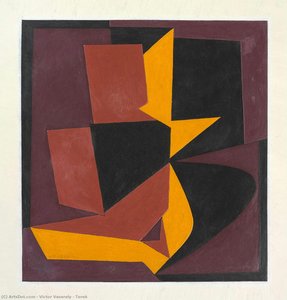
Échelonnement désaxé
Tehnika reprodukcije
Dimenzije reprodukcije
-


Konačna cena
$ 263
Opis umetničkog dela
A Dance of Curves and Order: Unveiling Sophie Taeuber-Arp’s “Échelonnement désaxé”
Sophie Henriette Gertrud Taeuber-Arp's "Échelonnement désaxé" (Deconstructed Steps) is not merely a painting; it’s an invitation to contemplate the delicate balance between structure and chance, order and fluidity. Created in 1934 during a pivotal period of her artistic evolution – bridging the chaotic energy of Dada with the burgeoning principles of Constructivism – this work embodies Taeuber-Arp's unique vision: a synthesis of organic forms and geometric precision that continues to resonate with contemporary audiences.
The artwork presents a black and white photograph of an original gouache on paper painting. The composition immediately draws the eye, revealing a meticulously arranged series of elongated curves or arches, reminiscent of architectural elements or abstracted steps. These shapes aren’t sharply defined; instead, they possess a gentle, almost hesitant quality, as if perpetually poised between stillness and movement. The arrangement is strikingly symmetrical, creating a grid-like structure that provides an underlying sense of order, yet the subtle variations in size and orientation prevent it from feeling rigid or predictable.
Decoding the Language of Form: Technique and Materials
Taeuber-Arp’s masterful use of gouache on paper is crucial to understanding the work's character. Gouache, a pigment mixed with a binder (typically gum arabic), offers a luminous opacity and rich color saturation – qualities that are particularly evident in this grayscale rendition. The flat texture suggested by the photograph speaks to the medium’s inherent properties, avoiding the heavy impasto often associated with oil painting. This deliberate restraint allows the underlying structure of the composition to take center stage, highlighting the interplay between line and form.
The photograph itself captures the subtle nuances of the original artwork's surface. The even lighting minimizes shadows, emphasizing the curves’ graceful flow and creating a sense of depth despite the two-dimensional nature of the piece. It’s a testament to Taeuber-Arp’s careful attention to detail, ensuring that every curve and angle is faithfully represented.
Symbolism and Emotional Resonance: A Journey Through Abstraction
While “Échelonnement désaxé” resists straightforward interpretation, its formal elements evoke a complex range of emotions. The repetitive nature of the curves can be seen as representing order, rhythm, or even a subtle mechanical precision – qualities that were central to Constructivist aesthetics. However, the gentle variations in size and orientation introduce an element of chance and spontaneity, suggesting a dialogue between control and freedom.
The contrast between light and dark further amplifies this duality. The darker areas create a sense of grounding and stability, while the lighter curves appear to float or emerge from the background, adding a touch of ethereal beauty. Some viewers might interpret the work as reflecting Taeuber-Arp’s own experiences navigating the shifting artistic landscapes of Dada and Constructivism – a constant negotiation between established conventions and radical experimentation.
A Legacy in Geometric Harmony: Context and Influence
Created in 1934, “Échelonnement désaxé” reflects Taeuber-Arp’s pivotal role in the development of abstract art. Her work aligns with both Dada's rejection of traditional representation and Constructivism’s emphasis on geometric forms as a means of expressing underlying structures. This piece is part of a broader body of work that demonstrates her exploration of chance, intuition, and the interplay between organic and mechanical elements – themes that would continue to inform her practice throughout her career.
Today, “Échelonnement désaxé” stands as a testament to Taeuber-Arp’s innovative spirit and enduring artistic vision. Its elegant simplicity and profound emotional depth make it a captivating work of art for collectors, interior designers, and anyone seeking a glimpse into the heart of 20th-century abstraction.
Srodna umetnička dela

Biografija umetnika
The Architect of Abstraction: The Life and Legacy of Sophie Taeuber-Arp
In the turbulent landscape of early 20th-century modernism, few figures possessed the multidisciplinary vision of Sophie Henriette Gertrud Taeuber-Arp. Born in 1889 in the serene Swiss town of Davos, her journey would eventually lead her to the very heart of the avant-garde revolution. She was not merely a painter or a sculptor; she was a weaver of worlds, an artist who dissolved the boundaries between fine art and functional design. Her life’s work stands as a testament to the power of geometric precision married to the spontaneous energy of the human spirit, creating a visual language that remains strikingly contemporary.
Taeuber-Arp’s artistic foundation was built upon a rigorous dedication to craft. Her early education at the Gewerbeschule in St. Gallen provided her with a profound understanding of textiles and design, a skill set that would later become a cornerstone of her abstract vocabulary. This technical mastery was further refined through her studies at influential German art schools, most notably the Bauhaus. It was here that she absorbed the revolutionary principles of modernism—the idea that art should be integrated into the fabric of daily life. Her marriage to the renowned artist Jean Arp in 1922 did more than unite two souls; it forged a creative partnership that would propel her into the epicenter of the Dada movement.
A Rebellion in Form: Dada and the Geometric Spirit
When the shadows of World War I descended upon Europe, Taeuber-Arp found herself part of the radical Dadaist circle in Cologne. While many associated Dada with chaos and nihilism, Sophie brought a unique structural discipline to its rebellion. She embraced the movement's anti-rationalist ethos, yet she infused it with a meticulous sense of composition. Her iconic “Dada Head” serves as a breathtaking example of this duality; by utilizing assemblage techniques involving geometric shapes and textile fragments, she rejected traditional sculptural norms in favor of a new, fragmented reality that mirrored the fractured world around her.
As her career progressed, her work transitioned from the provocative spontaneity of Dada toward the structured elegance of Constructivism and Concrete Art. This evolution is beautifully captured in her various masterpieces:
- Schematic Composition (1933): A vibrant oil on board that demonstrates her ability to use color and geometry to create a sense of playful, rhythmic movement.
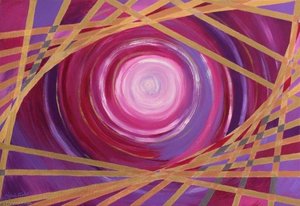
- Composition of Circles and Overlapping Angles (1930): An iconic exploration of how geometric precision can evoke organic, fluid energy within a Constructivist framework.
- Shells and Flowers (1938): A delicate paper cut that showcases her mastery of minimalism, using radial design and stark contrast to find beauty in the simplest of forms.
The Enduring Resonance of a Visionary
The historical significance of Sophie Taeuber-Arp lies in her refusal to be confined by medium or label. She moved seamlessly between the tactile world of textile design, the structural demands of furniture creation, and the ethereal realms of dance and painting. Her ability to blend organic forms with mathematical precision allowed her to bridge the gap between the natural world and the industrial age. She did not just observe the changing tides of modernism; she helped direct them.
Though her life was tragically cut short in 1943, her influence continues to ripple through the history of abstract art. Today, we recognize her as a pioneer who saw the potential for profound beauty in the grid, the circle, and the line. Her legacy is found in every modern design that seeks harmony between function and aesthetic, reminding us that true innovation often requires the courage to break old forms to build entirely new ones.

sophie henriette gertrud taeuber-arp
1889 - 1943 , Switzerland
Osnovne informacije
- Artistic Movement Or Style: Dada, Constructivism & Concrete Art
- Artists Or Movements Influenced By This Artist: ['Vienna Exhibition']
- Artists Who Influenced This Artist: ['Jean Arp']
- Date Of Birth: 19 January 1889
- Date Of Death: 13 January 1943
- Full Name: Sophie Henriette Gertrud Taeuber-Arp
- Nationality: Swiss
- Notable Artworks:
- Dada Head
- Plate (folio 24)
- Sophie Taeuber-Arp
- Place Of Birth: Davos, Switzerland
Povezani članci

Top 10 dela geometrijske apstrakcije koje morate videti | ArtsDot.com
Istražite 10 remek-dela geometrijske apstrakcije – Mondrian, Malevič i Kandinski. Otkrijte priče iza ovih ikoničnih slika i pronađite inspiraciju za dekoraciju enterijera sa ArtsDot.com! Reprodukcije vrhunskog kvaliteta.
Beyond Form & Color: Geometric Abstraction's Evolution in 20th/21st Century Art
Explore the evolution of geometric abstraction from Cubism to contemporary art. Discover key artists like Malevich & Mondrian, investment insights, and expert collecting advice at ArtsDot.
Beyond Form & Color: Geometric Abstraction's Enduring Legacy in Art History
Explore the captivating world of geometric abstraction! Discover its origins, key artists like Malevich & Mondrian, and why this movement remains highly valued by art collectors today. Expert insights at ArtsDot.
Beyond Form: Exploring Geometric Abstraction's Enduring Legacy in Art History
Explore the captivating world of geometric abstraction! Discover its origins, key artists like Kandinsky & Mondrian, and why this movement remains highly valued by art collectors today. Expert insights at ArtsDot.

Kandinsky's Masterpieces: 25 Paintings That Define Abstract Art | ArtsDot
Journey through Wassily Kandinsky's 25 most iconic abstract paintings. Explore his revolutionary use of color, form & spiritual expressionism. Find museum-quality Kandinsky reproductions and elevate your home decor with ArtsDot.com. Discover all masterpieces on ArtsDot.com!

