

 Pregledaj u prostoru
 Pošalji
 Podeli
 Detalji o delu

 Преузми
 Slični predmeti
 Rendgenski snimak
 Slajdovi
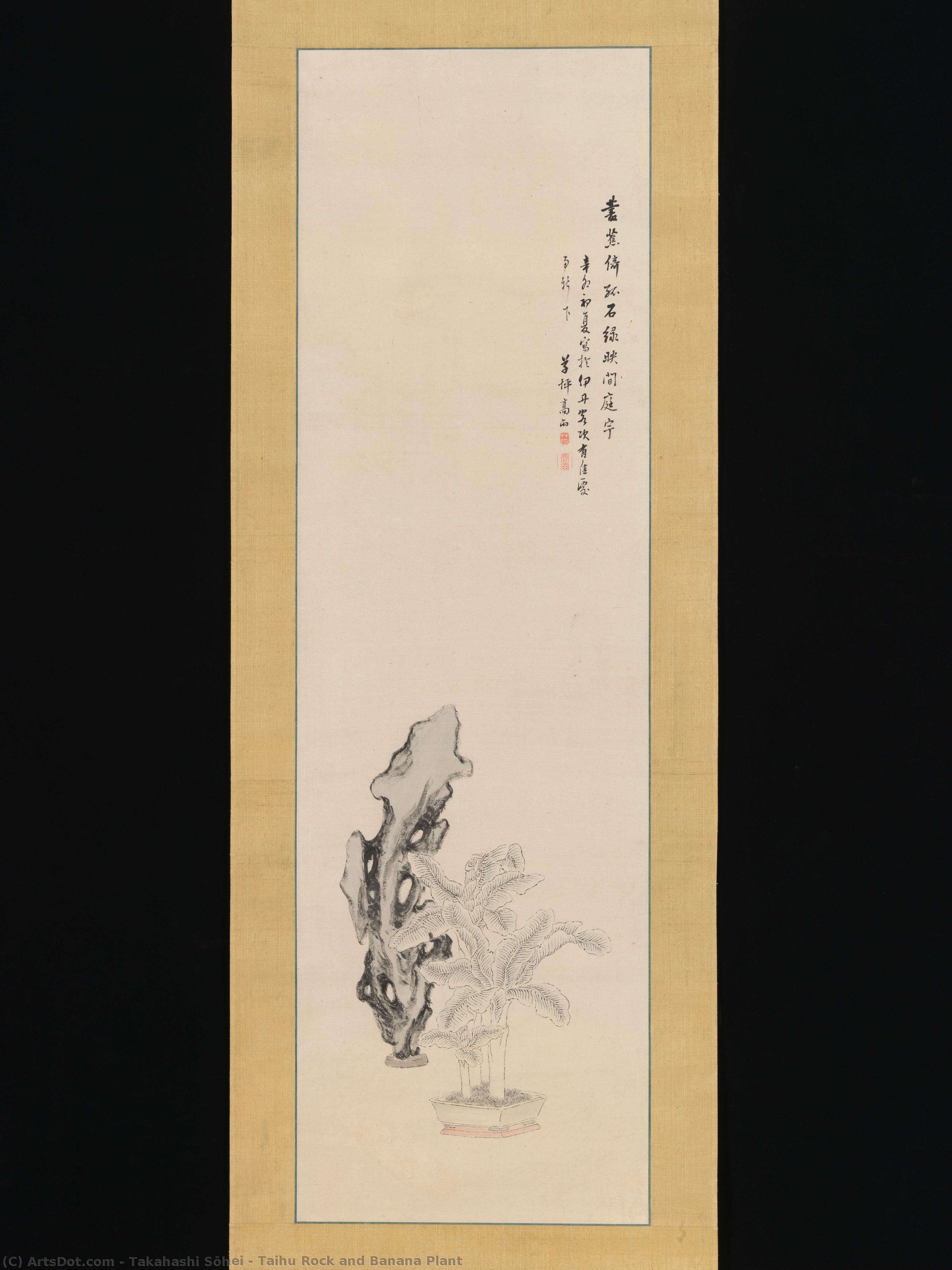
Taihu Rock and Banana Plant
 1831
1831 100.0 x 30.0 cm
 Pročitaj više
Kupite digitalnu sliku visoke rezolucije i poboljšanog kvaliteta, koja je znatno superiornija od onoga što vidite u online prikazu.
Svaka datoteka je pedantno pripremljena od strane naših stručnjaka koristeći napredne alate i profesionalnu ručnu retušu. Osiguravamo da svaka slika ima izuzetnu oštrinu, preciznu reprodukciju boja i fine detalje.
Konačna datoteka se dostavlja putem e-pošte u roku od 72 sata, optimizovana za neposrednu upotrebu u profesionalnim, izdavačkim i štamparskim okruženjima. To je isti kvalitet kojem veruju vrhunski studiji dizajna, izdavači i galerije.
Digitalna slika
Preuzmite datoteku visoke rezolucije za ličnu upotrebu, štampanje i kreativne projekte. ( Kupi print Kupi ručno naslikanu sliku)
Uključeno uz svaku porudžbinu digitalne slike
Profesionalna digitalna isporuka, zagarantovana
Kada odaberete ArtsDot.com, ne dobijate samo sliku – vi primate profesionalno unapređeno digitalno umetničko delo, izrađeno sa najvećom preciznošću i uz garanciju zadovoljstva. Evo svega što automatski dolazi uz vašu porudžbinu:

Brza dostava putem e-pošte
Vaša digitalna slika visoke rezolucije biće vam poslata putem e-pošte u roku od 72 sata od poručivanja – spremna za trenutnu upotrebu.

Digitalna datoteka unapređena veštačkom inteligencijom
Vaše umetničko delo je profesionalno optimizovano korišćenjem naprednih AI alata i ručne obrade, čime se osiguravaju maksimalni detalji, oštrina i preciznost boja.

Besplatna ponovna isporuka doživotno
Slučajno ste obrisali ili izgubili svoju datoteku? Ne brinite – poslaćemo vam je ponovo u bilo kom trenutku, potpuno besplatno.

Bez troškova uvoza – zauvek
Uživajte u svojim umetničkim delima trenutno, bez carine, dažbina ili troškova dostave – digitalni download je uvek bez poreza.

Garancija vernosti boja
Uz pomoć profesionalnih alata i upravljanja bojama, osiguravamo da vaša digitalna slika što vernije odražava originalne boje.

Garancija zadovoljstva u roku od 60 dana
Ako niste zadovoljni svojom digitalnom slikom, revidirat ćemo je ili vratiti 100% novca u roku od 60 dana – bez ikakvih pitanja.

100% garancija povrata novca
Niste zadovoljni? Obezbedite pun povrat novca u roku od 60 dana od trenutka kada ste primili svoju digitalnu datoteku – bez suvišnih pitanja.

Popusti na velike porudžbine
Kupite 3 slike, uštedite 10% - Kupite 5 slika, uštedite 15% - Kupite 10+ slika, uštedite 20%. Odlično za kreativne projekte, galerije i agencije.
Srodna umetnička dela










Biografija umetnika
William Oliver: A Watercolourist of the Romantic Landscape
William Oliver, born in Sudbury, Suffolk, in 1804, was a British watercolour artist who spent much of his career capturing the beauty of England and beyond – from the rolling hills of home to the sun-drenched Pyrenees and the dramatic landscapes of Tyrol. Though not widely celebrated during his lifetime, Oliver’s meticulous observation and skillful rendering have earned him recognition as a significant figure in 19th-century watercolour painting, particularly within the context of the burgeoning Romantic movement. His life was marked by a dedication to art and a fascinating connection to another artist – his former student, William Oliver Williams – a relationship that adds an intriguing layer to his story. Oliver’s early artistic development is somewhat shrouded in detail, but he began exhibiting his work with the Society of British Artists in 1829, showcasing scenes like “A Beach Scene in Kent” and “Fish Boat.” These initial works established a foundation for his subsequent career, demonstrating an aptitude for capturing atmospheric effects and depicting natural settings. He continued to exhibit regularly throughout the 1830s and 40s, steadily building a reputation as a competent landscape artist. Crucially, Oliver’s artistic journey wasn't solely confined to England; he embarked on extensive travels across Europe, documenting diverse terrains and cultures with his brush. These journeys – encompassing France, Spain, Italy, Switzerland, Germany, and the Tyrol – profoundly influenced his style, imbuing his paintings with a sense of worldly experience and a keen appreciation for regional character. His depictions of the Pyrenees Mountains, in particular, reveal a deep engagement with the dramatic beauty of these ranges. Oliver’s artistic practice was largely centered around watercolour, a medium he mastered with remarkable precision. He wasn't simply replicating what he saw; instead, he employed a layered technique, building up washes of color to create luminous effects and subtle tonal variations. His compositions often featured carefully arranged elements – trees, rocks, water – creating a sense of depth and spatial awareness. He was particularly adept at capturing the fleeting qualities of light and atmosphere, imbuing his landscapes with a palpable sense of mood and emotion. His work reflects the Romantic sensibility’s emphasis on subjective experience and the sublime power of nature. Furthermore, Oliver's career coincided with the rise of topographical watercolour, a genre that sought to accurately represent specific locations. While he wasn’t solely focused on strict accuracy, his detailed renderings demonstrate an understanding of perspective and spatial relationships. A significant aspect of Oliver’s life was his connection to William Oliver Williams. Oliver initially trained under Williams, who later became a successful artist in his own right, adopting the professional name of William Oliver. This familial link is noteworthy because it highlights the transmission of artistic knowledge and techniques within families during this period. It also suggests that Oliver may have benefited from Williams’ experience and guidance, although the precise nature of their relationship remains somewhat unclear. The shared surname further complicates our understanding of their individual contributions to the art world. Oliver's career spanned several decades, culminating in his death in 1853 at Langley Mill House, Halstead, Essex. His passing was attributed to “hypertrophy of the heart,” a condition indicative of an enlarged heart – a common ailment during that era. Throughout his life, Oliver exhibited extensively, including at the Society of British Artists and the British Institution, showcasing over 30 works in total. His paintings found their way into collections across Britain and America, demonstrating a sustained appreciation for his work among collectors and institutions. Notably, he was elected a full member of the New Society (now the Royal Institute) of Painters in Water-Colours in 1834, a testament to his standing within the artistic community.Key Works and Artistic Style
Oliver’s oeuvre is characterized by a remarkable range of subjects and landscapes. He produced numerous depictions of English countryside scenes, capturing the rolling hills, woodlands, and waterways with meticulous detail. His travels extended beyond England, resulting in vibrant paintings of the Pyrenees Mountains, the Rhine Valley, and other European locations. His work often features dramatic lighting effects, particularly during sunrise and sunset, which he skillfully rendered using layered washes of color. He was known for his ability to convey a sense of atmosphere and mood through subtle tonal variations and carefully chosen compositions. Some notable examples include “On the Lahn near Oberlahnstein near the Rhine,” “View of the Environs of Perugia, Tiber in the Distance, Papal States, Italy,” and "Lahneck Castle, from Oberlahnstein on the Lahn, Duchy of Nassau." These works exemplify his technical skill and artistic vision.Historical Context and Influences
Oliver’s work emerged during a period of significant change in the art world. The Romantic movement was gaining momentum, challenging traditional academic styles and emphasizing subjective experience and emotional expression. Artists like Turner and Constable were pushing the boundaries of watercolour painting, exploring new techniques and subjects. Oliver's career coincided with this dynamic era, and his paintings reflect the influence of these pioneering artists. He drew inspiration from the topographical watercolours that were gaining popularity at the time, but he also developed a distinctive style characterized by its luminous colors and atmospheric effects. The publication of *American Scenery* in 1840, featuring engravings after William Henry Bartlett, played a significant role in shaping Oliver’s interest in depicting landscapes beyond England.Legacy and Recognition
While William Oliver may not be as widely celebrated as some of his contemporaries, his work continues to be appreciated for its technical skill, atmospheric effects, and evocative depictions of the natural world. His paintings are held in several important collections, including those at the Baltimore Museum of Art, Brooklyn Museum, and the Metropolitan Museum of Art. His legacy is further cemented by his connection to William Oliver Williams, a fellow artist who shared his surname and professional name. Oliver’s story serves as a reminder that artistic success can be shaped not only by individual talent but also by familial connections and broader historical trends. His contribution to watercolour painting during the Romantic era deserves recognition for its beauty, detail, and enduring appeal.
takahashi sōhei
1804 - 1835

