

 Pregledaj u prostoru
 Pošalji
 Podeli
 Detalji o delu

 Преузми
 Slični predmeti
 Rendgenski snimak
 Slajdovi
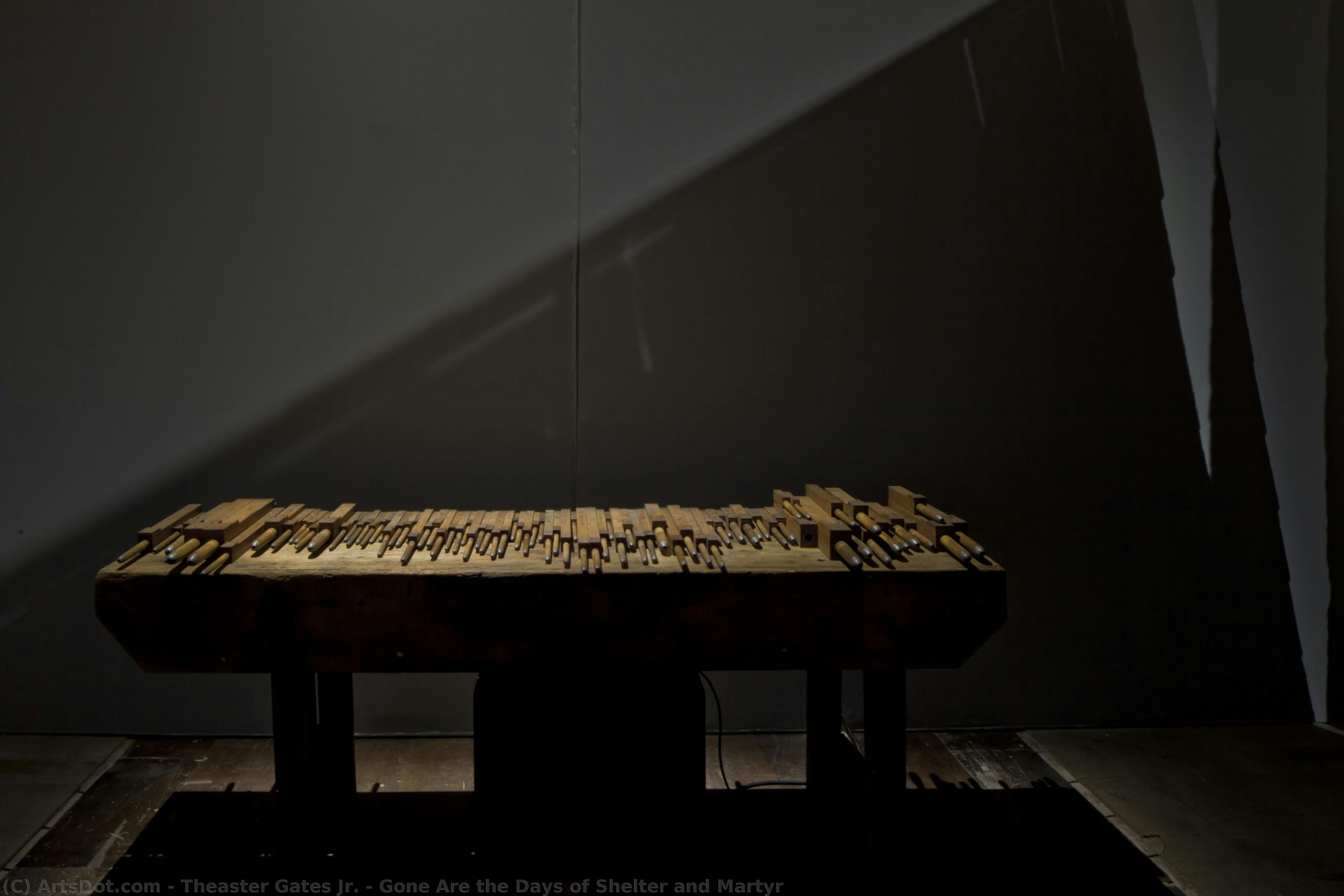
Gone Are the Days of Shelter and Martyr


 Pročitaj više
Giclee štampa / Umetnički otisak
Giclée štampa ili print na platnu muzejskog kvaliteta uz brzu proizvodnju i fleksibilne opcije završne obrade. ( Kupi ručno naslikanu sliku Kupi digitalnu sliku)




P118B $10

P118H $10

P118W $10

P438Z $10

P508JH $12

P508YH $12

P805H $10

P805Z $10

P919BZ $10

P919G $10

P919XJ $10

P959ZH $10

P968JZ $12

W106C $8

W218G $10

W218JH $8

W218Y $10

W307PJ $10

W316G $10

W316PJ $8

W316Y $10

W398PJ $8

W4111J $10

W500HY $15

W500JH $15

W692G $12

W849H $8

W940BG $15

W953PJ $8




Izaberite jednu od naših unapred definisanih veličina koje odgovaraju originalnim proporcijama umetničkog dela.

Možete uneti sopstvene dimenzije kako biste umetničko delo prilagodili specifičnom okviru ili prostoru. Ako odabrani format ne odgovara proporcijama originalne slike, mi ćemo ili iscrtati deo dela ili proširiti sliku pomoću ogledane ivice ili jednobojnog popunjavanja. Digitalni prikaz će vam biti poslat na odobrenje pre početka proizvodnje.
Imajte na umu da pregled na ekranu ne odražava stvarno iscrtavanje ili proširivanje. Samo će prikaz (mockup) precizno pokazati finalnu kompoziciju.
Iako su prilagođene dimenzije dostupne, preporučujemo da odaberete dimenziju sa unapred definisane liste kako biste očuvali originalne proporcije.
Dostava širom sveta () za 2 nedelje umesto uobičajenih 4/5 nedelja. (30 август)

Besplatna ekspresna dostava širom sveta

Visokokvalitetno laneno platno

Kompletno osiguranje transporta

Garancija povraćaja carine i uvoznih dažbina

Garancija vernosti boja

Politika povrata u roku od 60 dana (samo u slučaju nedostataka)

Garancija povrata novca od 100%

Popust pri grupnoj kupovini
 Opcija sa staklom dostupna je samo za dimenzije manje od 110 cm

Gone Are the Days of Shelter and Martyr
Giclee štampa / Umetnički otisak
Dimenzije reprodukcije
-


Konačna cena
$ 62
The Weight of Memory: Exploring Theaster Gates Jr.’s Martyr Construction
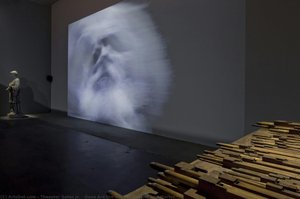
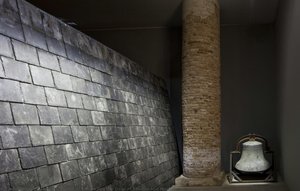
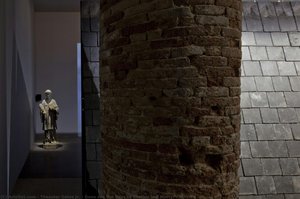
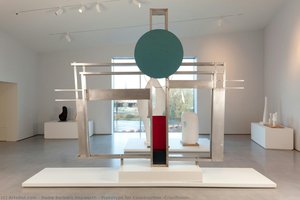
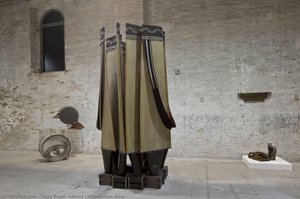
The installation “Martyr Construction,” conceived by Theaster Gates Jr., stands as a poignant testament to the enduring legacy of faith and resilience within marginalized communities. Born in Chicago, Illinois, Gates’ artistic trajectory began not with formal training but with visceral experience—witnessing the crumbling infrastructure and spiritual emptiness that characterize many Black neighborhoods following the economic turbulence of 2007-2008. This observation fueled a conviction that art could transcend mere aesthetics to become an instrument for profound social regeneration. Gates' approach distinguishes him from conventional sculptural practice; he doesn’t simply create objects but actively engages with architectural spaces, transforming them into repositories of history and emotion. His inspiration draws heavily from Japanese Buddhism—specifically the concept of wabi-sabi—which embraces imperfection and transience as virtues rather than flaws. This philosophy informs his meticulous process of repurposing materials salvaged from St. Laurence Catholic Church, a historic parish building demolished in Chicago’s South Side. Rather than discarding these remnants, Gates painstakingly reconstitutes them into a sculptural assemblage that speaks volumes about loss, remembrance, and the enduring spirit of faith. The technique employed is deceptively simple yet profoundly deliberate. Gates utilizes reclaimed wood—primarily from the church’s structural timbers—to construct a monumental table surface. This tabletop isn't merely decorative; it’s imbued with the palpable energy of its origins – bearing visible marks of time and decay, mirroring the scars of urban disinvestment. Alongside the table sits a piano, painstakingly restored to functional condition, symbolizing not just musical artistry but also the potential for restorative action—bringing beauty back into neglected spaces. Fragments of architectural elements—a bell, building materials, and even a portion of a concrete statue depicting St. Laurence—are integrated into the installation, creating a layered narrative that honors the church’s past while simultaneously projecting an image of hopeful renewal. Historically, “Martyr Construction” responds to a broader trend of decline witnessed in Black churches across America – institutions that served as vital hubs for social cohesion and spiritual solace. Gates' project confronts this reality head-on, acknowledging the profound impact of institutional abandonment on communities grappling with systemic challenges. However, it refuses to dwell solely on sorrow; instead, it asserts an affirmative vision—one rooted in reclaiming cultural heritage and transforming spaces of decay into beacons of creativity and connection. The installation’s emotional resonance is undeniable. It evokes a sense of melancholy mingled with determination – mirroring the experience of communities confronting hardship while striving to preserve their identity. Yet, crucially, “Martyr Construction” communicates an underlying message of hope—a belief that beauty can emerge from ruin, and that remembrance serves as a catalyst for transformative change. This piece invites contemplation on themes of loss, resilience, and the enduring power of faith, offering viewers a powerful reminder that even in the face of adversity, art possesses the capacity to heal, inspire, and revitalize our shared human experience.Srodna umetnička dela


Biografija umetnika
The Alchemy of Urban Renewal: The Visionary World of Theaster Gates Jr.
In the heart of Chicago, where the echoes of industrial history meet the pressing realities of modern urban life, the work of Theaster Gates Jr. emerges as a profound dialogue between destruction and rebirth. Born in 1973, Gates did not merely observe the decay of his native city; he integrated its very marrow into his artistic practice. His journey is one of radical transformation, moving from the rhythmic spirituals of Black churches to the disciplined precision of pottery and urban planning. This unique trajectory has allowed him to develop a language where the boundaries between fine art, social activism, and architectural intervention dissolve, creating a singular form of social practice that seeks to heal the fractured landscapes of the American Midwest.
The essence of Gates’s work lies in his ability to find sanctity within the discarded. He operates with the soul of an alchemist, utilizing materials that carry the weight of history—tar, clay, fire hoses, and even the salvaged bricks of demolished structures. These are not merely medium choices; they are vessels of memory. By repurposing the fragments of abandoned buildings, Gates engages in a process of spatial reclamation, turning the debris of disinvestment into sculptural monuments of resilience. His practice is deeply informed by the concept of wabi-sabi—the beauty of imperfection and impermanence—allowing him to honor the scars of urban neglect while simultaneously celebrating the potential for new growth.
Architectural Interventions and the Rebuild Foundation
Beyond the gallery walls, Gates’s most significant contributions are found in the physical revitalization of Chicago’s South Side. Through his non-profit organization, the Rebuild Foundation, he has pioneered a model where art serves as the primary engine for community development. His projects are not merely aesthetic improvements but profound institutional shifts. He has transformed neglected spaces into vibrant cultural hubs, such as the Stony Island Arts Bank, which serves as a sanctuary for Black archives and communal gathering. In these spaces, the distinction between an art installation and a community center vanishes, replaced by a living, breathing ecosystem of cultural preservation.
This commitment to "building" extends to his use of architectural theory to address social justice. Influenced by thinkers like Henri Lefebvre, Gates views space as a political construct that can be reclaimed through intentional use. His work often involves:
- Repurposing Sacred Spaces: Transforming fragments of defunct churches into meditative installations that explore faith and endurance.
- Material Narratives: Using tar and salvaged wood to create "paintings" that function as tactile histories of labor and industry.
- Community Stewardship: Creating permanent infrastructures like the Black Cinema House and Archive House to protect endangered Black histories.
A Legacy of Resilience and Social Progress
The historical significance of Theaster Gates Jr. lies in his refusal to let art remain a passive observer of social struggle. His work embodies a "virtuous circle" where the proceeds from fine art sales are reinvested into the rehabilitation of entire city blocks, effectively turning the art market into a tool for urban planning. This revolutionary approach has earned him international acclaim, including the Smithsonian American Ingenuity Award and the Kurt Schwitters Prize. Yet, despite these accolades, his heart remains rooted in the transformative power of the local.
As a professor and a practitioner, Gates continues to challenge the conventional hierarchies of the art world. He reminds us that the most powerful art is often found not in the pristine white cube of a museum, but in the reclaimed brick of a community center or the soulful resonance of a choral performance by his ensemble, the Black Monks of Mississippi. His legacy is one of profound hope—a testament to the idea that through creativity, we can strip away the layers of neglect to reveal the enduring strength and beauty inherent in our shared human history.
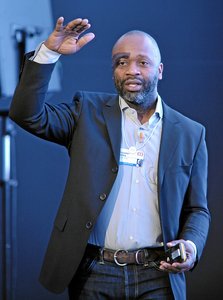
theaster gates jr.
1973 - , United States of America
Osnovne informacije
- Artistic Movement Or Style: Social practice art; Urban planning
- Artists Or Movements Influenced By This Artist: ['Color field painting']
- Artists Who Influenced This Artist: ['Philip Guston']
- Date Of Birth: 1973
- Full Name: Theaster Gates Jr.
- Nationality: American
- Notable Artworks: ['Gone Are the Days of Shelter and Martyr']
- Place Of Birth: Chicago, United States
Povezani članci

Bronze Sculptures That Defined Art History | ArtsDot
Journey through art history with our Top 10 bronze sculptures! Explore masterpieces by Rodin, Michelangelo & more. Discover stories behind iconic statues and find museum-quality reproductions for your home decor at ArtsDot.com.

The Enduring Form: Exploring Themes & Techniques in Sculpture Across Historical Periods
Explore the rich history of sculpture from ancient masterpieces to contemporary innovations. Discover key techniques, influential artists & investment potential for discerning art collectors.

The Enduring Form: Sculpture Across History, Technique & Emotional Resonance
Explore the rich history of sculpture with ArtsDot. Discover key techniques, influential artists & investment potential for discerning collectors. Expert insights into valuing and collecting timeless masterpieces.

Bronze Age to Modern Masters: 10 Sculptures That Redefined Art | ArtsDot
Journey through art history with 10 legendary bronze sculptures – from Michelangelo's David to Rodin’s Thinker. Explore the stories, techniques & timeless beauty of these masterpieces. Find museum-quality reproductions & elevate your home decor on ArtsDot.com.
Nasleđe bronze: Istorija, tehnike i savremene interpretacije skulpture – vodič za kolekcionare
Istražite bogatu istoriju bronze i tehnike livenja skulptura. Saveti za kolekcionare, investiciono vrednovanje i savremene interpretacije aluminijumske bronze. ArtsDot – stručnjaci za umetnost.

