

 Pregledaj u prostoru
 Pošalji
 Podeli
 Detalji o delu

 Преузми
 Slični predmeti
 Rendgenski snimak
 Slajdovi
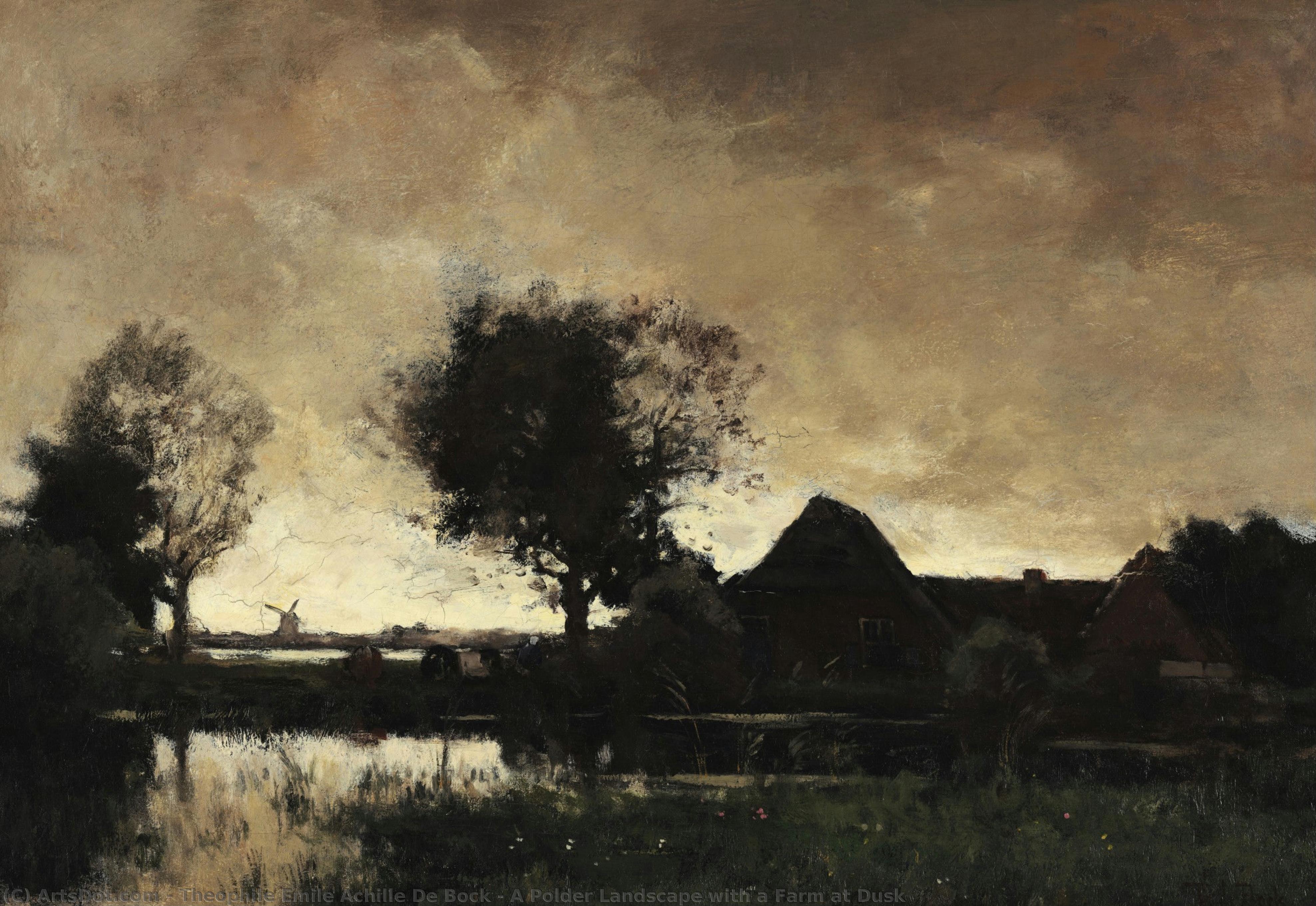
A Polder Landscape with a Farm at Dusk
 Oil
Oil- WallArt
- Hague School
 19th Century
 53.0 x 75.0 cm
 Crocker Art Museum
 Pročitaj više
Giclee štampa / Umetnički otisak
Giclée štampa ili print na platnu muzejskog kvaliteta uz brzu proizvodnju i fleksibilne opcije završne obrade. ( Kupi ručno naslikanu sliku Kupi digitalnu sliku)




P118B $10

P118H $10

P118W $10

P438Z $10

P508JH $12

P508YH $12

P805H $10

P805Z $10

P919BZ $10

P919G $10

P919XJ $10

P959ZH $10

P968JZ $12

W106C $8

W218G $10

W218JH $8

W218Y $10

W307PJ $10

W316G $10

W316PJ $8

W316Y $10

W398PJ $8

W4111J $10

W500HY $15

W500JH $15

W692G $12

W849H $8

W940BG $15

W953PJ $8




Izaberite jednu od naših unapred definisanih veličina koje odgovaraju originalnim proporcijama umetničkog dela.

Možete uneti sopstvene dimenzije kako biste umetničko delo prilagodili specifičnom okviru ili prostoru. Ako odabrani format ne odgovara proporcijama originalne slike, mi ćemo ili iscrtati deo dela ili proširiti sliku pomoću ogledane ivice ili jednobojnog popunjavanja. Digitalni prikaz će vam biti poslat na odobrenje pre početka proizvodnje.
Imajte na umu da pregled na ekranu ne odražava stvarno iscrtavanje ili proširivanje. Samo će prikaz (mockup) precizno pokazati finalnu kompoziciju.
Iako su prilagođene dimenzije dostupne, preporučujemo da odaberete dimenziju sa unapred definisane liste kako biste očuvali originalne proporcije.
Dostava širom sveta () za 2 nedelje umesto uobičajenih 4/5 nedelja. (26 август)

Besplatna ekspresna dostava širom sveta

Visokokvalitetno laneno platno

Kompletno osiguranje transporta

Garancija povraćaja carine i uvoznih dažbina

Garancija vernosti boja

Politika povrata u roku od 60 dana (samo u slučaju nedostataka)

Garancija povrata novca od 100%

Popust pri grupnoj kupovini
 Opcija sa staklom dostupna je samo za dimenzije manje od 110 cm

A Polder Landscape with a Farm at Dusk
Giclee štampa / Umetnički otisak
Dimenzije reprodukcije
-


Konačna cena
$ 62
Opis predmeta
The Quiet Majesty of the Dutch Twilight
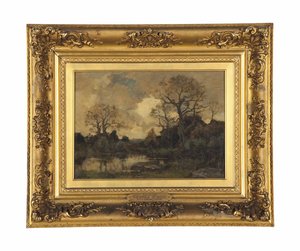
In the soft, fading light of a departing sun, A Polder Landscape with a Farm at Dusk invites the viewer into a moment of profound stillness. Theophile Emile Achille de Bock, a master of the Hague School, captures a scene where the boundaries between earth and sky begin to blur. As the day wanes over the Dutch countryside, a woman is seen finishing her labors near a waterside farmstead, her silhouette merging with the deepening shadows of the polder. The composition is anchored by the presence of water—perhaps a tranquil lake or a slow-moving river—which reflects the muted, melancholic tones of the twilight sky. A solitary boat rests upon the surface, adding a touch of human narrative to an otherwise vast and atmospheric landscape, suggesting a life lived in rhythmic harmony with the natural world.
The technique employed by De Bock is a masterclass in tonalism and subtlety. Eschewing the vibrant, jarring colors of more modern movements, he restricts his palette to the darkest, most evocative hues. The bricks of the farmstead and the lushness of the grass are rendered in deep, earthy tones, while the trees standing against the horizon possess only the faintest, ghostly tinge of green. This restrained approach creates a sense of immense depth and atmosphere, where light is not something that strikes the eye, but something that permeates the very air. For collectors and interior designers, this painting offers a sophisticated layer of texture; its muted color story allows it to integrate seamlessly into elegant, contemporary spaces, providing a focal point that commands attention through quietude rather than noise.
A Legacy of Observation and Emotion
To understand the emotional weight of this work, one must look to the historical context of the Hague School and De Bock’s unique place within it. Trained under masters like Borsselen and Weissenbruch, De Bock developed a vision rooted in meticulous observation. His ability to capture the "mood" of the Dutch landscape was so profound that even Vincent van Gogh took notice, praising the artist's inherent temperament. While some critics of his era found his work overly subdued or sketchy, it is precisely this atmospheric gloom and tonal precision that define his legacy. He did not seek to dramatize the landscape with artificial light; instead, he sought to honor its true, often somber, essence.
The symbolism within the piece speaks to the cyclical nature of life and labor. The transition from day to night serves as a metaphor for the completion of toil and the arrival of rest. There is a palpable sense of peace found in the solitude of the polder, a sanctuary away from the industrializing world of the late 19th century. For those seeking to adorn their homes with art that evokes contemplation and serenity, this reproduction serves as a window into a lost era of pastoral tranquility. It is more than a mere depiction of a farm; it is an invitation to pause, to breathe, and to find beauty in the subtle transitions of the natural world.
Srodna umetnička dela


Biografija umetnika
The Quiet Master of the Dutch Countryside
Théophile Emile Achille de Bock (1851–1904) remains one of the most evocative, if understated, voices of the Hague School. Born in The Hague, Netherlands, De Bock’s early life was far removed from the bohemian studios of the art world; he initially pursued a pragmatic career as a clerk for the Dutch Railway Company. However, an innate passion for drawing and a profound sensitivity to the natural world eventually pulled him away from the ledger books and toward the easel. This transition marked the beginning of a lifelong devotion to capturing the atmospheric soul of the Dutch landscape, a pursuit that would define his legacy.
His artistic journey was shaped by rigorous training under some of the most significant figures of the era. By studying under masters such as J.W. van Borselen, J.H. Weissenbruch, and Jacob Maris, De Bock became deeply immersed in the principles of Tonalism. These mentors taught him to look beyond mere topographical accuracy, encouraging instead a focus on light, moisture, and the subtle gradations of color that define the Low Countries. His association with Willem Maris further enriched his palette, fostering a collaborative spirit that allowed him to refine his ability to translate the heavy, damp air of the Netherlands onto canvas.
A Vision of Atmospheric Tonalism
De Bock’s work is characterized by a distinctive, often somber temperament. While some contemporary critics occasionally dismissed his style as overly subdued or sketch-like, modern admirers recognize this as a deliberate and masterful choice. He possessed an unparalleled ability to evoke the quietude of the Dutch polders, often utilizing a dark, moody palette to create scenes of profound contemplation. His landscapes are rarely about dramatic action; rather, they are studies in stillness, where the interplay of shadow and soft light suggests the fleeting moments of dusk or the heavy presence of an approaching storm.
The influence of the French Barbizon School played a transformative role in his development. During his frequent travels to Paris and the forests of Barbizon in 1880, De Bock encountered the works of Gustave Courbet and Jean-François Millet. This exposure to French Realism deepened his commitment to depicting rural life and natural landscapes with an unvarnished, honest eye. He sought to capture the essence of the earth—the texture of the soil, the weight of the clouds, and the solitary beauty of a farmstead at twilight—blending the Dutch tonalist tradition with a newfound French-inspired realism.
Legacy and Historical Significance
The historical significance of De Bock lies in his unwavering commitment to his artistic vision. Even when faced with pressure to diversify his subject matter, he remained steadfastly dedicated to the pastoral scenes that resonated most deeply with his spirit. This dedication was noted even by Vincent van Gogh, who recognized De Bock’s inherent talent and temperament, though Van Gogh famously attempted to persuade him to explore more dynamic and varied themes. This interaction serves as a testament to the respect De Bock commanded among his peers.
Today, the works of Théophile de Bock are celebrated for their emotional depth and technical mastery of atmosphere. His paintings serve as windows into a vanished era of the Dutch landscape, offering a sense of peace and melancholy that continues to captivate collectors and historians alike. Through his meticulous observation and devotion to the subtle nuances of nature, De Bock secured his place as a vital contributor to the Hague School, leaving behind a body of work that remains as evocative and timeless as the landscapes he so lovingly depicted.
theophile emile achille de bock
1851 - 1904 , Netherlands
Osnovne informacije
- Artistic Movement Or Style: Hague School
- Artists Or Movements Influenced By This Artist: ['Vincent van Gogh']
- Artists Who Influenced This Artist:
- Jacob Maris
- Corot
- Johannes Hendrik Weissenbruch
- Date Of Birth: 1851
- Full Name: Théophile Emile Achille de Bock
- Nationality: Dutch
- Notable Artworks:
- Landscape
- Schaapskooi - October
- Place Of Birth: The Hague, Netherlands
Povezani članci
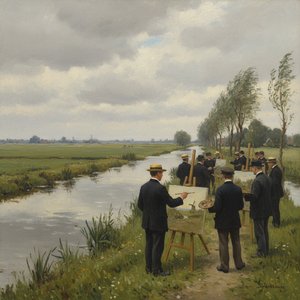
The Hague School: Realism, Atmosphere & the Dawn of Dutch Impressionism
Explore the Hague School's pivotal role in Dutch art history. Discover realism, atmospheric landscapes & its influence on Impressionism. Learn about key artists like Mauve & Maris with ArtsDot.

Glavna dela koja su definisala Romantični pejzaž: 10 remek-dela za vaš dom
Otkrijte 10 remek-dela romantičnog pejzažnog slikarstva! Uronite u svet Claude Lorraina, Caspara David Friedricha i Turnera. Ispričane priče umetnosti, inspiracija za dekoraciju doma. Kvalitetne reprodukcije na ArtsDot.com – istražite celu kolekciju online!
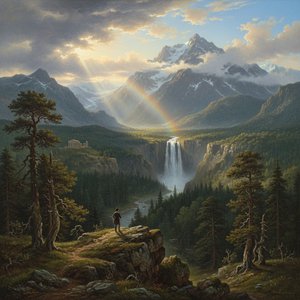
Evoking Nature's Sublime: A Comprehensive Exploration of 19th-Century Landscape Painting
Explore the captivating world of 19th-century landscape painting! Discover renowned artists like Friedrich & Monet, key movements, and find the perfect artwork to bring nature's serenity into your home. Expert insights at ArtsDot.

Evocations of Place: A Historical Journey Through Landscape Art
Explore the rich history of landscape art with ArtsDot. Discover renowned artists, movements like Impressionism & Romanticism, and expert guidance for collecting timeless pieces. Find your perfect serene escape today!
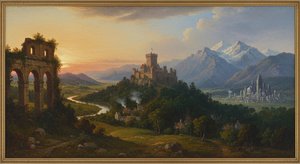
Evocations of Place: A Historical Journey Through Landscape Art
Explore the rich history of landscape art with ArtsDot. Discover renowned artists, movements like Impressionism & tonalism, and expert guidance for collecting timeless pieces. Find your perfect serene escape today!

