

 Pregledaj u prostoru
 Pošalji
 Podeli
 Detalji o delu

 Преузми
 Slični predmeti
 Rendgenski snimak
 Slajdovi
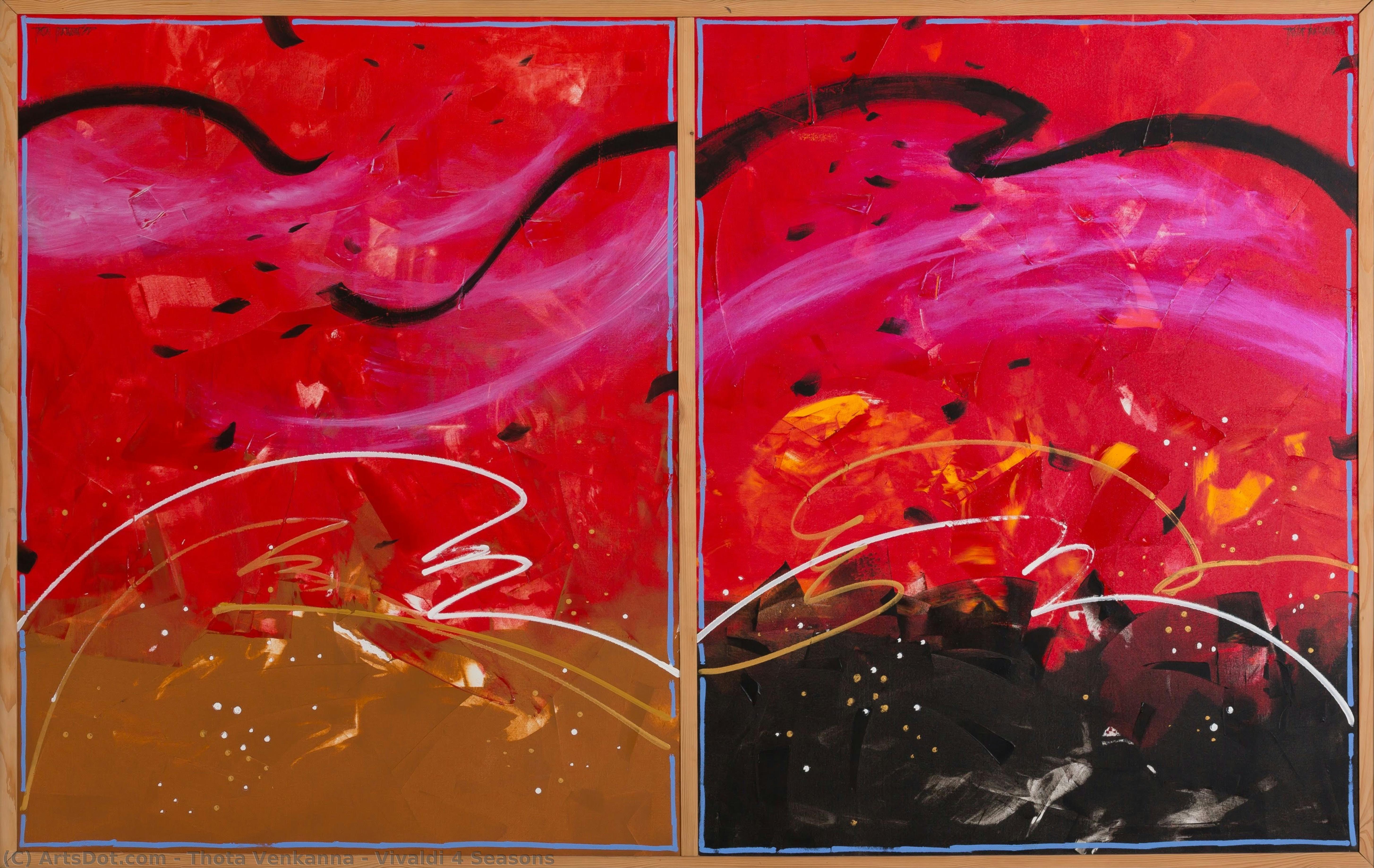
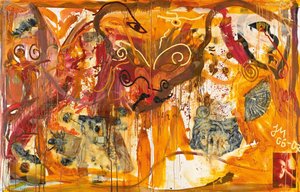
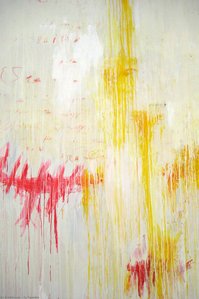
Vivaldi 4 Seasons
 Acrylic On Canvas
- WallArt
- Other
 2008
2008- Contemporary
 150.0 x 240.0 cm
 Cholamandal Artists' Village
 Pročitaj više
Kupite digitalnu sliku visoke rezolucije i poboljšanog kvaliteta, koja je znatno superiornija od onoga što vidite u online prikazu.
Svaka datoteka je pedantno pripremljena od strane naših stručnjaka koristeći napredne alate i profesionalnu ručnu retušu. Osiguravamo da svaka slika ima izuzetnu oštrinu, preciznu reprodukciju boja i fine detalje.
Konačna datoteka se dostavlja putem e-pošte u roku od 72 sata, optimizovana za neposrednu upotrebu u profesionalnim, izdavačkim i štamparskim okruženjima. To je isti kvalitet kojem veruju vrhunski studiji dizajna, izdavači i galerije.
Digitalna slika
Preuzmite datoteku visoke rezolucije za ličnu upotrebu, štampanje i kreativne projekte. ( Kupi print Kupi ručno naslikanu sliku)
Uključeno uz svaku porudžbinu digitalne slike
Profesionalna digitalna isporuka, zagarantovana
Kada odaberete ArtsDot.com, ne dobijate samo sliku – vi primate profesionalno unapređeno digitalno umetničko delo, izrađeno sa najvećom preciznošću i uz garanciju zadovoljstva. Evo svega što automatski dolazi uz vašu porudžbinu:

Brza dostava putem e-pošte
Vaša digitalna slika visoke rezolucije biće vam poslata putem e-pošte u roku od 72 sata od poručivanja – spremna za trenutnu upotrebu.

Digitalna datoteka unapređena veštačkom inteligencijom
Vaše umetničko delo je profesionalno optimizovano korišćenjem naprednih AI alata i ručne obrade, čime se osiguravaju maksimalni detalji, oštrina i preciznost boja.

Besplatna ponovna isporuka doživotno
Slučajno ste obrisali ili izgubili svoju datoteku? Ne brinite – poslaćemo vam je ponovo u bilo kom trenutku, potpuno besplatno.

Bez troškova uvoza – zauvek
Uživajte u svojim umetničkim delima trenutno, bez carine, dažbina ili troškova dostave – digitalni download je uvek bez poreza.

Garancija vernosti boja
Uz pomoć profesionalnih alata i upravljanja bojama, osiguravamo da vaša digitalna slika što vernije odražava originalne boje.

Garancija zadovoljstva od 100 dana
Ako niste zadovoljni svojom digitalnom slikom, izvršićemo reviziju ili ćemo vam vratiti 100% novca u roku od 100 dana – bez ikakvih pitanja.

100% garancija povrata novca
Niste zadovoljni? Dobijte puni povraćaj novca u roku od 100 dana od prijema digitalne datoteke – bez suvišnih pitanja.

Popusti na velike porudžbine
Kupite 3 slike, uštedite 10% - Kupite 5 slika, uštedite 15% - Kupite 10+ slika, uštedite 20%. Odlično za kreativne projekte, galerije i agencije.
Srodna umetnička dela

Biografija umetnika
Early Life and Influences – A Pittsburgh Boy’s Artistic Awakening
Paul Jackson Pollock, born Paul Guillaume Pollock on January 28, 1912, in Cody, Wyoming, was the youngest of five children in a family rooted in Iowa. His parents, LeRoy and Stella May Pollock, were of Irish and Scots-Irish descent, hailing from Tingley, Iowa, where they had established themselves as farmers. This rural upbringing, punctuated by frequent moves across the Midwest – to Carson City, Nevada; Santa Fe, New Mexico; Amarillo, Texas; and finally settling in Davenport, Iowa – profoundly shaped his early experiences and would later inform the raw, visceral quality of his art. His father’s surname was initially McCoy, but adopted Pollock after his adoption by a family named Pollock. This familial history, coupled with exposure to diverse landscapes and a sense of constant movement, instilled within him a restless spirit and an appreciation for the unconventional. Pollock's artistic journey began modestly, studying painting at the Chicago Art Institute from 1945 to 1948. While he initially focused on commercial illustration – a demanding but lucrative profession that honed his technical skills – it was during this period that he encountered the burgeoning Abstract Expressionist movement and became deeply influenced by artists like Piet Mondrian and Franz Kline. The stark geometric forms of Mondrian, with their emphasis on order and structure, contrasted sharply with Kline’s forceful, gestural brushstrokes, sparking a critical dialogue within Pollock's developing artistic sensibility. Betty Parsons, a prominent New York art dealer and later his wife, played a crucial role in introducing him to the avant-garde scene and championing his work during its formative years. Her gallery became a vital hub for emerging artists, providing exposure and fostering a community of creative minds.The Drip Technique and Action Painting – A Revolutionary Approach
Pollock’s artistic breakthrough arrived with the development of what would become known as the “drip technique” or “action painting.” Rejecting traditional easel-based methods, he began experimenting with pouring and dripping paint directly onto canvases laid flat on the floor. This seemingly chaotic process was, in fact, a meticulously controlled exploration of color, texture, and movement. As described in his own writings, Pollock sought to eliminate the conscious control traditionally associated with painting, allowing the act of creation itself to dictate the composition. He would often dance around the canvas while applying paint, using his entire body as an instrument – a technique that perfectly embodied the spirit of “action painting.” This revolutionary approach was not without its critics. Some dismissed it as random and lacking in skill, arguing that it resembled nothing more than a child’s messy experiment. However, Pollock's supporters recognized the profound significance of his method: it represented a radical departure from established artistic conventions, prioritizing spontaneity, immediacy, and the artist’s physical engagement with the medium. Works like *Number 17A* (1948) and *No. 5, 1948* (1950) are prime examples of this technique, showcasing the vibrant, layered surfaces achieved through Pollock's unconventional process. The all-over painting style, where the entire canvas is treated as a unified field of color and texture, further distinguished his work from more traditional compositions.Major Works and Artistic Evolution – From Mural to Personal Exploration
Throughout the 1950s, Pollock’s output exploded in both scale and ambition. He created monumental murals for public spaces, including the iconic *Mural on Indian Red Ground* (1950), which demonstrated his ability to translate abstract concepts into large-scale, immersive experiences. His work during this period is characterized by a bold use of color – particularly blues, reds, and yellows – and a dynamic interplay of textures created through layered applications of paint. *Autumn Rhythm (Number 30)* (1952) exemplifies this phase, capturing the energy and movement of his studio practice. However, Pollock’s artistic trajectory was not linear. As he matured as an artist, he began to explore more personal themes and techniques. Works like *Convergence* (1952) and *Blue Poles* (*Number 11*, 1952) reveal a shift towards greater introspection and a subtle refinement of his style. The influence of Joan Mitchell, another prominent Abstract Expressionist, is evident in the landscapes that began to appear in his work during this period, reflecting his own experiences with nature and memory. His later paintings, such as *The Deep* (1953), demonstrate a continued exploration of color and texture while retaining a sense of underlying tension and emotional depth.Legacy and Historical Significance – A Pioneer of Abstract Expressionism
Jackson Pollock’s untimely death in 1956, following a car accident, tragically cut short a brilliant career. Yet, his impact on the art world is undeniable. He is widely considered one of the most important figures in Abstract Expressionism, a movement that profoundly shaped the course of 20th-century art. His innovative techniques – particularly the drip technique – revolutionized painting and inspired generations of artists to explore new ways of expressing themselves. Pollock’s work continues to be celebrated for its raw energy, emotional intensity, and groundbreaking approach to composition. His retrospective exhibitions at the Museum of Modern Art in New York City (1967) and the Tate Gallery in London (1998) cemented his place as a central figure in modern art history. Beyond his artistic achievements, Pollock’s life – marked by struggles with alcoholism and a complex relationship with his wife Lee Krasner – offers a poignant reflection on the challenges faced by artists navigating the demands of creativity and personal demons. His legacy endures not only through his paintings but also as a testament to the power of experimentation, self-expression, and the enduring spirit of artistic innovation.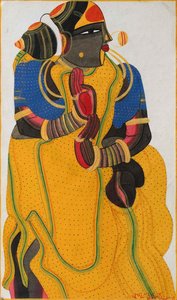
Thota Venkanna
1949 - , Indija