

 Pregledaj u prostoru
 Pošalji
 Podeli
 Detalji o delu

 Преузми
 Slični predmeti
 Rendgenski snimak
 Slajdovi
 Stats
StatsTensioni #2


 Pročitaj više
Kupite digitalnu sliku visoke rezolucije i poboljšanog kvaliteta, koja je znatno superiornija od onoga što vidite u online prikazu.
Svaka datoteka je pedantno pripremljena od strane naših stručnjaka koristeći napredne alate i profesionalnu ručnu retušu. Osiguravamo da svaka slika ima izuzetnu oštrinu, preciznu reprodukciju boja i fine detalje.
Konačna datoteka se dostavlja putem e-pošte u roku od 72 sata, optimizovana za neposrednu upotrebu u profesionalnim, izdavačkim i štamparskim okruženjima. To je isti kvalitet kojem veruju vrhunski studiji dizajna, izdavači i galerije.
Digitalna slika
Preuzmite datoteku visoke rezolucije za ličnu upotrebu, štampanje i kreativne projekte. ( Switch to Print Kupi ručno naslikanu sliku)
Uključeno uz svaku porudžbinu digitalne slike
Profesionalna digitalna isporuka, zagarantovana
Kada odaberete ArtsDot.com, ne dobijate samo sliku – vi primate profesionalno unapređeno digitalno umetničko delo, izrađeno sa najvećom preciznošću i uz garanciju zadovoljstva. Evo svega što automatski dolazi uz vašu porudžbinu:

Brza dostava putem e-pošte
Vaša digitalna slika visoke rezolucije biće vam poslata putem e-pošte u roku od 72 sata od poručivanja – spremna za trenutnu upotrebu.

Digitalna datoteka unapređena veštačkom inteligencijom
Vaše umetničko delo je profesionalno optimizovano korišćenjem naprednih AI alata i ručne obrade, čime se osiguravaju maksimalni detalji, oštrina i preciznost boja.

Besplatna ponovna isporuka doživotno
Slučajno ste obrisali ili izgubili svoju datoteku? Ne brinite – poslaćemo vam je ponovo u bilo kom trenutku, potpuno besplatno.

Bez troškova uvoza – zauvek
Uživajte u svojim umetničkim delima trenutno, bez carine, dažbina ili troškova dostave – digitalni download je uvek bez poreza.

Garancija vernosti boja
Uz pomoć profesionalnih alata i upravljanja bojama, osiguravamo da vaša digitalna slika što vernije odražava originalne boje.

Garancija zadovoljstva od 100 dana
Ako niste zadovoljni svojom digitalnom slikom, izvršićemo reviziju ili ćemo vam vratiti 100% novca u roku od 100 dana – bez ikakvih pitanja.

100% garancija povrata novca
Niste zadovoljni? Dobijte puni povraćaj novca u roku od 100 dana od prijema digitalne datoteke – bez suvišnih pitanja.

Popusti na velike porudžbine
Kupite 3 slike, uštedite 10% - Kupite 5 slika, uštedite 15% - Kupite 10+ slika, uštedite 20%. Odlično za kreativne projekte, galerije i agencije.
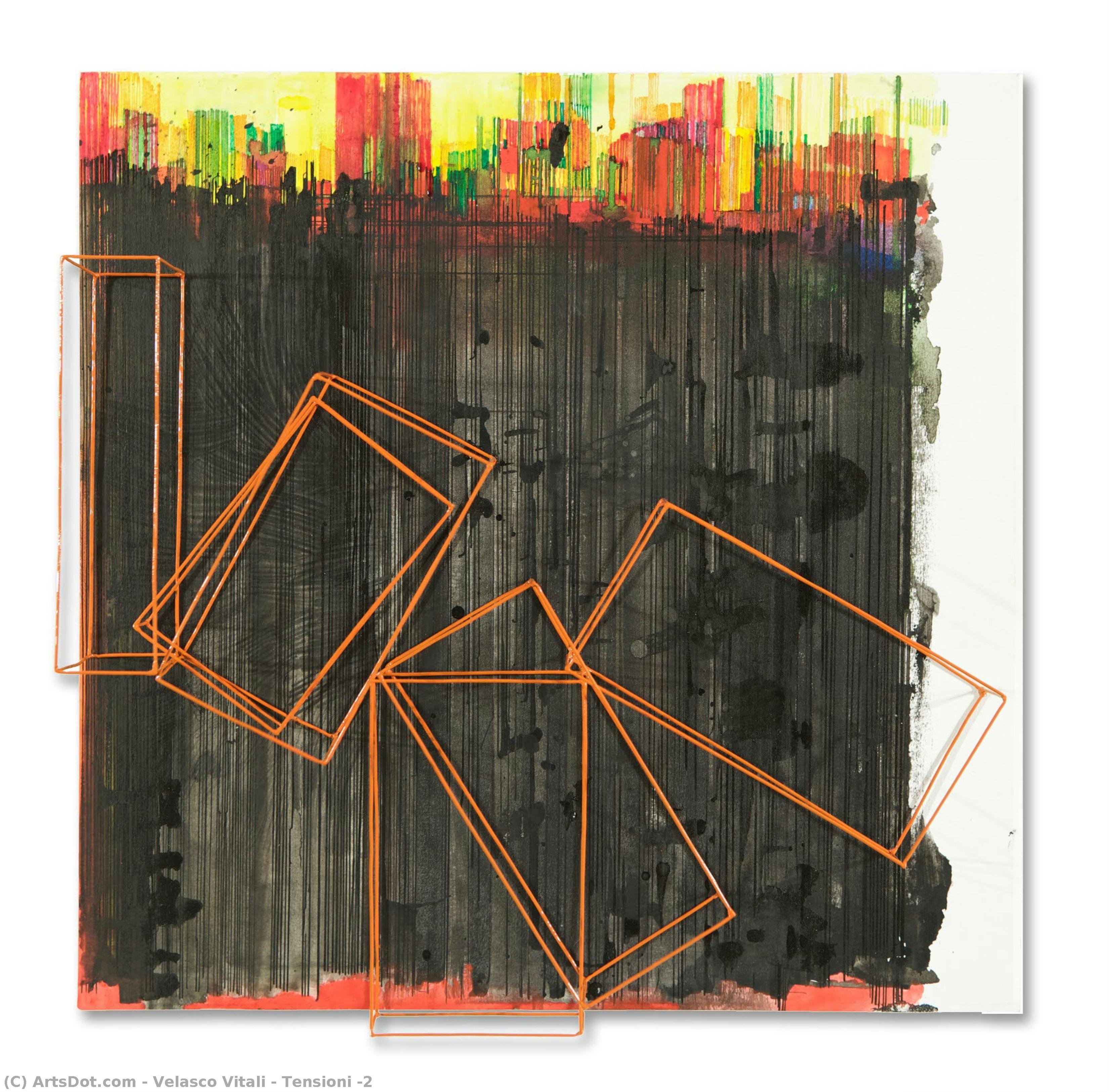
Velasco Vitali’s *Tensione #2*: A Tangled Exploration of Form and Illusion
Velasco Vitali's Tensione #2 presents a captivating visual puzzle, a meticulously constructed sculpture rendered in black and white that invites prolonged contemplation. Created in 2015, this artwork exemplifies Vitali’s signature approach – a deliberate layering of seemingly disparate elements to generate profound questions about perception, space, and the nature of representation itself. The piece immediately draws the eye to its core: four precisely positioned orange squares, arranged with an almost unsettling geometric precision. These aren't merely static shapes; they actively engage with the viewer’s sense of depth, creating a convincing illusion of three-dimensionality that suggests a contained volume – perhaps a box, or a vessel – subtly hinting at notions of protection, containment, and even fragility.
- Technique: Vitali's technique is characterized by a masterful blend of welding and drawing. The iron wire tangles, meticulously assembled and fused together, provide the structural foundation. These are then overlaid with ink, pencil, or watercolor drawings, creating a layered effect that adds complexity and visual richness to the composition.
- Materiality: The juxtaposition of rigid metal with delicate lines speaks to a core tension within the work – a dialogue between strength and vulnerability, order and chaos.
Contextualizing the Crucible of Change
To fully appreciate Tensione #2, it’s crucial to understand Velasco Vitali's artistic trajectory, which emerged from the turbulent and transformative decade of the 1960s. This period witnessed a radical shift in art’s role within society, moving away from traditional notions of beauty and representation towards conceptual engagement and social commentary. Artists like Vitali were reacting against the constraints of post-war austerity and the anxieties of the Cold War, embracing experimentation and challenging established norms. The influence of movements such as Minimalism and Conceptualism is palpable here – a focus on fundamental forms, an interrogation of perception, and a rejection of overt emotional expression.
Symbolic Layers: Orange, Form, and Illusion
The deliberate use of orange squares adds another layer of symbolic meaning. Orange is often associated with energy, enthusiasm, and warmth, yet within the stark black and white palette, it becomes an arresting focal point, demanding attention. The geometric arrangement of these squares reinforces the theme of constructed reality – a carefully crafted illusion that plays with our understanding of space and form. The ‘tension’ in the title suggests a deliberate imbalance, a disruption of conventional visual harmony, prompting viewers to actively engage with the artwork's inherent ambiguities.
Emotional Impact and Artistic Significance
Tensione #2 is more than just a visually striking sculpture; it’s an invitation to contemplate the relationship between perception, representation, and reality. Vitali’s work resonates with a sense of unease and intrigue, prompting viewers to question their own assumptions about how they interpret visual information. This piece exemplifies Vitali's ability to create works that are both intellectually stimulating and emotionally engaging – a hallmark of his distinctive artistic vision. Its enduring appeal lies in its timeless exploration of fundamental artistic principles.
Srodna umetnička dela



Biografija umetnika
The Crucible of Change: Shaping Art in the Tumultuous 1960s
The decade of the 1960s wasn’t merely a period; it was an eruption, a seismic shift that fundamentally altered the course of art and its relationship with society. Emerging from the shadow of post-war austerity and the lingering anxieties of the Cold War, artists began to question established norms – not just in technique, but in purpose and definition. The canvas ceased to be solely a vehicle for personal expression; it became a stage for social commentary, a mirror reflecting the burgeoning counterculture, and a tool for challenging the very notion of what constituted “art.” This era witnessed an explosion of diverse movements, each grappling with the complexities of a rapidly changing world – Minimalism, Pop Art, Conceptualism, Happenings, and Psychedelic art all vying for dominance, yet inextricably linked by a shared spirit of rebellion and experimentation.- The Seeds of Discontent: The early 1960s were marked by escalating social unrest – the Civil Rights Movement, anti-war protests, and the rise of student activism. Traditional artistic approaches, often perceived as elitist and detached from everyday life, felt increasingly inadequate to address these pressing issues. Artists sought new ways to engage with the public, moving beyond the confines of galleries and museums into unconventional spaces like street corners and performance venues.
- Pop Art’s Bold Statement: Emerging in Britain and then exploding across the Atlantic, Pop Art represented a direct challenge to Abstract Expressionism's dominance. Artists like Andy Warhol, Roy Lichtenstein, and Richard Hamilton embraced imagery from popular culture – advertising, comic books, celebrity photographs – elevating these mundane objects to the status of art. This wasn’t simply imitation; it was a critique of consumerism and mass media, exposing their pervasive influence on society.
- Minimalism: Reducing Art to its Essence: Simultaneously, Minimalism emerged as a stark counterpoint to Pop Art's overt celebration of the everyday. Artists like Donald Judd, Sol LeWitt, and Carl Andre stripped art down to its most essential components – geometric forms, industrial materials, and simple processes. The focus shifted from the artist’s hand to the object itself, emphasizing materiality and spatial relationships.
- Conceptualism: The Idea Takes Center Stage: Closely related to Minimalism was Conceptual Art, which prioritized the idea behind the artwork over its physical manifestation. Artists like Joseph Kosuth questioned the definition of art, exploring concepts such as language, perception, and representation. This movement paved the way for performance art and other ephemeral forms of artistic expression.
The Rise of New Media and Performance Art
As traditional painting and sculpture began to feel increasingly restrictive, artists turned their attention to new media and performance practices. The burgeoning field of television offered unprecedented opportunities for experimentation, while the rise of experimental music and theater influenced approaches to visual art. Happenings, a loosely defined genre of events that combined elements of performance, installation, and audience participation, became a defining feature of the 1960s art scene. These events often blurred the boundaries between artist and spectator, challenging traditional notions of artistic authority and creating immersive experiences.- Television as Canvas: Artists like Nam June Paik began to explore the potential of television as a medium for artistic expression, creating video installations that commented on consumer culture, media saturation, and the nature of reality. Paik’s pioneering work laid the groundwork for digital art and video installation.
- Performance Art: The Body as Medium: Performance art emerged as a powerful means of challenging social norms and exploring personal identity. Artists like Yoko Ono and Carolee Schneemann used their bodies as instruments, creating provocative performances that addressed issues such as gender, sexuality, and political activism.
- Happenings: A Collaborative Experiment: Happenings were characterized by their spontaneity, unpredictability, and audience participation. Artists like Merce Cunningham and John Cage created events that defied traditional artistic conventions, inviting viewers to become active participants in the creative process.
Key Figures and Their Distinct Voices
The 1960s witnessed a remarkable convergence of talent, each artist bringing their unique perspective and approach to the evolving art landscape. While Pop Art dominated the public consciousness with its vibrant imagery and commentary on consumer culture, other movements offered equally compelling visions.- Andy Warhol: Perhaps the most recognizable figure of the decade, Warhol’s silkscreen prints of celebrities and mass-produced objects challenged traditional notions of artistic value and explored the relationship between art and commerce.
- Roy Lichtenstein: Known for his meticulous reproductions of comic book panels, Lichtenstein elevated commercial imagery to the level of fine art, questioning the distinction between high and low culture.
- Sol LeWitt: LeWitt's minimalist sculptures, often created using simple geometric forms and industrial materials, emphasized the process of creation over the finished object. His conceptual approach influenced a generation of artists.
- Joseph Kosuth: Kosuth’s Conceptual works explored the relationship between language, art, and reality, challenging traditional definitions of artistic expression.
A Lasting Legacy: The Echoes of 1960s Art Today
The innovations of the 1960s continue to resonate in contemporary art. Minimalism’s emphasis on materiality and spatial relationships remains a significant influence, while Conceptualism has shaped approaches to installation and performance art. Pop Art's critique of consumer culture continues to inform artistic practices today, and the embrace of new media – video, digital art, and interactive installations – can be traced back to the experiments of artists like Nam June Paik. The spirit of rebellion and experimentation that defined the 1960s remains a vital force in contemporary art, encouraging artists to challenge conventions, explore new possibilities, and engage with the complexities of the world around them. The decade’s legacy is not just a collection of artworks; it's an ethos—a persistent questioning of what art *is* and what it can *do*.
Velasco Vitali
1960 -