

 Pregledaj u prostoru
 Pošalji
 Podeli
 Detalji o delu

 Преузми
 Slični predmeti
 Rendgenski snimak
 Slajdovi
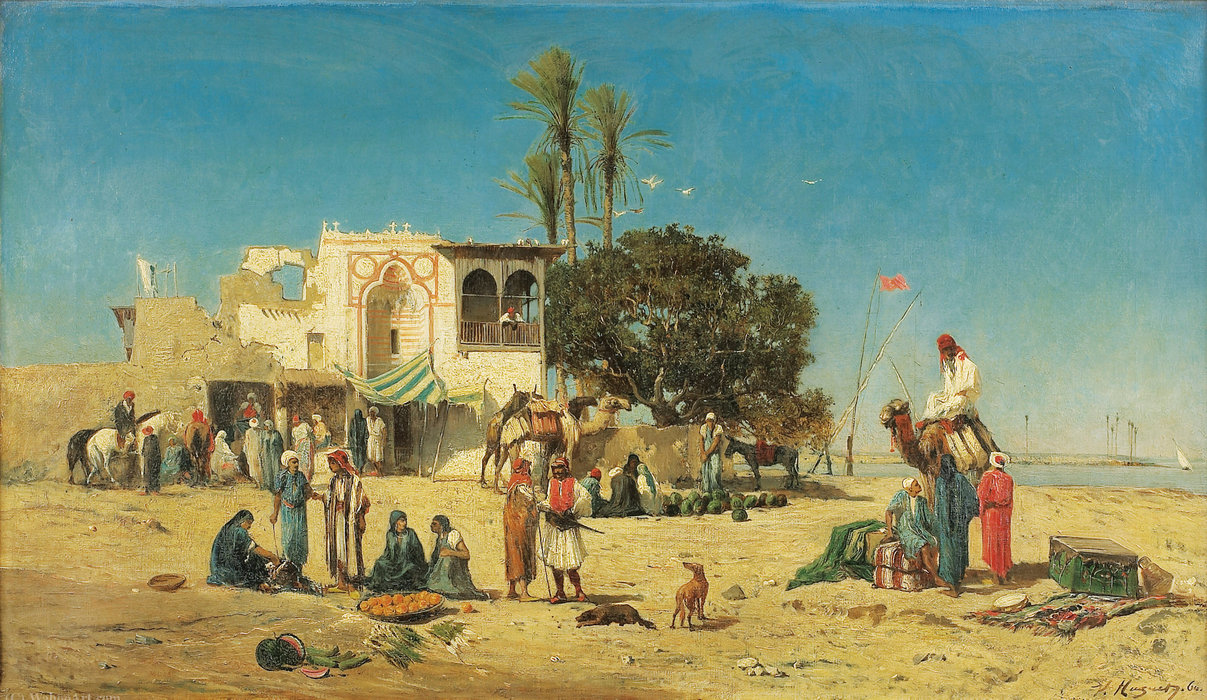
Market at the edges of the nile
 Pročitaj više
Ručno rađena uljana reprodukcija
Ručno oslikano uljanim bojama na platnu u dimenzijama i okviru po vašem izboru, izrađeno po porudžbini od strane naših umetnika. ( Kupi print Kupi digitalnu sliku)




P118B $10

P118H $10

P118W $10

P438Z $10

P508JH $12

P508YH $12

P805H $10

P805Z $10

P919BZ $10

P919G $10

P919XJ $10

P959ZH $10

P968JZ $12

W106C $8

W218G $10

W218JH $8

W218Y $10

W307PJ $10

W316G $10

W316PJ $8

W316Y $10

W398PJ $8

W4111J $10

W500HY $15

W500JH $15

W692G $12

W849H $8

W940BG $15

W953PJ $8




Izaberite jednu od naših unapred definisanih veličina koje odgovaraju originalnim proporcijama umetničkog dela.

Можете унети сопствене димензије како бисте прилагодили дело одређеном оквиру или простору. Ако одабрана величина не одговара пропорцијама оригинала, слика ће бити исечена или проширена додатним елементима који се ручно насликавају. Дигитални prikaz ће вам бити послат на одобрење пре почетка производње.
Имајте на уму да преглед на екрану не одражава стварно исецање или проширење. Само приказ (mockup) ће тачно приказати коначну композицију.
Иако су доступне прилагођене величине, препоручујемо да одаберете димензију из дефинисане листе како бисте сачували оригиналне пропорције.
Nakon narudžbine, tim ArtsDot.com će klijentu putem e-pošte poslati uputstva i dostaviti prikaz predloženog rešenja
Isporuka širom sveta () za 3/4 nedelje umesto uobičajenih 5 nedelja. (30 август). Bez kompromisa po pitanju kvaliteta.

Besplatna ekspresna dostava širom sveta

Visokokvalitetno laneno platno

Kompletno osiguranje transporta

Garancija povraćaja carine i uvoznih dažbina

Garancija vernosti boja

Politika povrata u roku od 60 dana (samo u slučaju nedostataka)

Garancija povrata novca od 100%

Popust pri grupnoj kupovini
 Opcija sa staklom dostupna je samo za dimenzije manje od 110 cm

Market at the edges of the nile
Tehnika reprodukcije
Dimenzije reprodukcije
-


Konačna cena
$ 263
A Glimpse into Daily Life: Market at the Edges of the Nile
Victor Pierre Huguet’s *Market at the Edges of the Nile* transports us to a bustling scene along the famed river, offering a vibrant snapshot of 19th-century Egyptian life. The painting is a masterful example of Orientalism – a Western artistic movement fascinated with the cultures of the Middle East and North Africa. Huguet doesn’t present an idealized or romanticized vision; instead, he offers a detailed portrayal of everyday commerce and social interaction. We see figures engaged in trade, conversation, and leisure, creating a lively atmosphere that feels both immediate and historically distant. The composition is carefully arranged to draw the eye through the scene, from the central horse and chair to the boats gently bobbing on the Nile’s waters.Technique & Style: Detailed Realism with Atmospheric Depth
Huguet demonstrates a remarkable skill for detailed realism in this work. His brushstrokes are precise, capturing the textures of fabrics, the glint of sunlight on bottles, and the varied expressions of the individuals present. The artist employs a rich color palette, dominated by warm earth tones that evoke the arid landscape and sun-drenched atmosphere of Egypt. Notice how Huguet uses light and shadow to create depth, particularly in the background where figures become slightly blurred, suggesting distance and movement. This technique adds to the painting’s immersive quality, inviting viewers to step into the scene. While rooted in realism, there's a subtle atmospheric quality that hints at Impressionistic influences beginning to emerge during this period.Historical Context & Orientalism
Painted during a period of increased European interest and involvement in Egypt, *Market at the Edges of the Nile* reflects the prevailing fascination with “exotic” locales. Orientalist paintings like Huguet’s were immensely popular, catering to a Western audience eager for glimpses into distant lands. However, it's important to acknowledge that Orientalism often carried inherent biases and stereotypes. While Huguet’s work appears observational, it is still filtered through a European lens. Nevertheless, the painting provides valuable insight into the material culture and social dynamics of 19th-century Egypt, offering a visual record of daily life along the Nile. The artist's attention to detail suggests careful observation, even if framed within the conventions of his time.Emotional Resonance & Interior Design
*Market at the Edges of the Nile* evokes a sense of warmth, energy, and cultural richness. The painting’s lively scene invites contemplation on themes of community, commerce, and the passage of time. Its warm color palette and detailed composition make it an ideal addition to various interior design schemes.- In a living room, it could serve as a focal point, adding character and sophistication.
- A dining room would benefit from its convivial atmosphere.
- Even a study or library could be enhanced by the painting’s historical depth and visual interest.
Srodna umetnička dela

Biografija umetnika
Victor Pierre Huguet: Capturing the Soul of the Orient
Victor Pierre Huguet (1835-1902) stands as a significant figure within the realm of 19th-century Orientalist painting, a movement that sought to depict scenes from the Middle East and North Africa with both artistic beauty and a nuanced understanding of their cultures. Born in Le Lude, France, Huguet’s life was inextricably linked to his art, fueled by an insatiable curiosity for distant lands and a profound respect for the traditions he encountered. His journey wasn't merely geographical; it was a deep immersion into a world vastly different from his native France, resulting in paintings that resonate with both exotic allure and intimate human detail.
Huguet’s artistic education began under the tutelage of Émile Loubon at the École supérieure des beaux-arts de Marseille. Loubon specialized in landscapes featuring animals, providing Huguet with a foundational understanding of composition and rendering natural settings. However, it was his subsequent studies with Eugène Fromentin, a prominent Orientalist painter based in Paris, that truly shaped his artistic trajectory. Fromentin’s emphasis on direct observation and the portrayal of local life instilled in Huguet a commitment to authenticity and a desire to capture the essence of the cultures he depicted.
Early Travels and Artistic Development
Huguet's first significant journey abroad occurred in 1852, when he traveled to Egypt. This initial encounter with the ancient land ignited within him a lifelong fascination with its history, architecture, and people. The following year, he accompanied Jean-Baptiste Henri Durand-Brager on an expedition to Crimea, offering him valuable experience in depicting military scenes and capturing the atmosphere of conflict. These early experiences proved formative, establishing his technical skills and laying the groundwork for his distinctive style.
Crucially, Huguet’s artistic development was profoundly influenced by his extensive travels throughout North Africa – Libya, Algeria, Tunisia, and Egypt. Unlike many Western artists who approached these regions with a sense of detached observation, Huguet sought to engage respectfully with local communities, learning their customs and documenting their daily lives. This genuine interest is evident in the warmth and humanity that permeates his paintings. He wasn’t simply sketching exotic landscapes; he was striving to portray the souls of the people within them.
A Distinctive Style: Color, Light, and Human Connection
Huguet's artistic style evolved considerably over time, reflecting his growing understanding of the regions he depicted. Initially, his work exhibited a more academic approach, characterized by meticulous detail and a focus on architectural grandeur. However, as he gained experience and developed a deeper connection with the cultures he portrayed, his palette became brighter and more vibrant, and his brushwork grew looser and more expressive. He favored warm, saturated colors – ochres, reds, and yellows – to evoke the sun-drenched landscapes of North Africa.
What truly distinguishes Huguet’s work is his ability to capture the essence of human interaction within these exotic settings. His paintings are populated by a diverse cast of characters – merchants, laborers, nomads, and religious figures – each rendered with remarkable sensitivity and psychological depth. He didn't simply depict scenes; he conveyed emotions, relationships, and the rhythms of daily life. His compositions often feature intimate moments of connection—a father teaching his son to read, a woman drawing water from a well, or a group of men engaged in animated conversation – these details elevate his work beyond mere topographical representation.
Legacy and Recognition
Victor Huguet continued to exhibit his works at the Salon de Marseille and the Paris Salon until 1893, after which he became a regular exhibitor at the Société des Peintres Orientalistes Français. His paintings are now housed in museums across France, including Nîmes, Montpellier, and Marseille, testament to their enduring appeal. Huguet’s legacy lies not only in his technical skill but also in his commitment to portraying the Middle East and North Africa with respect, empathy, and a profound appreciation for its rich cultural heritage. He remains an important voice within Orientalist art, offering a nuanced perspective on a world often viewed through a Western lens.
victor pierre huguet
1835 - 1902 , France
Osnovne informacije
- Artistic Movement Or Style: Orientalist Painting
- Artists Or Movements Influenced By This Artist: ['French Orientalism']
- Artists Who Influenced This Artist:
- Eugène Fromentin
- Émile Loubon
- Date Of Birth: May 1, 1835
- Date Of Death: August 16, 1902
- Full Name: Victor Pierre Huguet
- Nationality: French
- Notable Artworks:
- Fetching Water
- By The Water
- Horseman at the door
- Place Of Birth: Le Lude, France

