

 Pregledaj u prostoru
 Pošalji
 Podeli
 Detalji o delu

 Преузми
 Slični predmeti
 Rendgenski snimak
 Slajdovi
 Stats
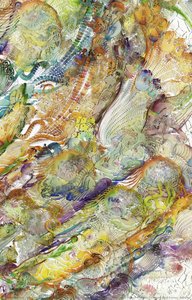
StatsCelestial Globe Gores by Coronelli


 Pročitaj više
Ručno rađena uljana reprodukcija
Ručno oslikano uljanim bojama na platnu u dimenzijama i okviru po vašem izboru, izrađeno po porudžbini od strane naših umetnika. ( Switch to Print Switch to Digital Image)




P118B $10

P118H $10

P118W $10

P438Z $10

P508JH $12

P508YH $12

P805H $10

P805Z $10

P919BZ $10

P919G $10

P919XJ $10

P959ZH $10

P968JZ $12

W106C $8

W218G $10

W218JH $8

W218Y $10

W307PJ $10

W316G $10

W316PJ $8

W316Y $10

W398PJ $8

W4111J $10

W500HY $15

W500JH $15

W692G $12

W849H $8

W940BG $15

W953PJ $8




Izaberite jednu od naših unapred definisanih veličina koje odgovaraju originalnim proporcijama umetničkog dela.

Можете унети сопствене димензије како бисте прилагодили дело одређеном оквиру или простору. Ако одабрана величина не одговара пропорцијама оригинала, слика ће бити исечена или проширена додатним елементима који се ручно насликавају. Дигитални prikaz ће вам бити послат на одобрење пре почетка производње.
Имајте на уму да преглед на екрану не одражава стварно исецање или проширење. Само приказ (mockup) ће тачно приказати коначну композицију.
Иако су доступне прилагођене величине, препоручујемо да одаберете димензију из дефинисане листе како бисте сачували оригиналне пропорције.
Nakon narudžbine, tim ArtsDot.com će klijentu putem e-pošte poslati uputstva i dostaviti prikaz predloženog rešenja
Isporuka širom sveta () za 3/4 nedelje umesto uobičajenih 5 nedelja. (8 септембар). Bez kompromisa po pitanju kvaliteta.

Besplatna ekspresna dostava širom sveta

Visokokvalitetno laneno platno

Kompletno osiguranje transporta

Garancija povraćaja carine i uvoznih dažbina

Garancija vernosti boja

Politika povraćaja u roku od 100 dana (isključivo u slučaju nedostataka)

Garancija povrata novca od 100%

Popust pri grupnoj kupovini
 Opcija sa staklom dostupna je samo za dimenzije manje od 110 cm

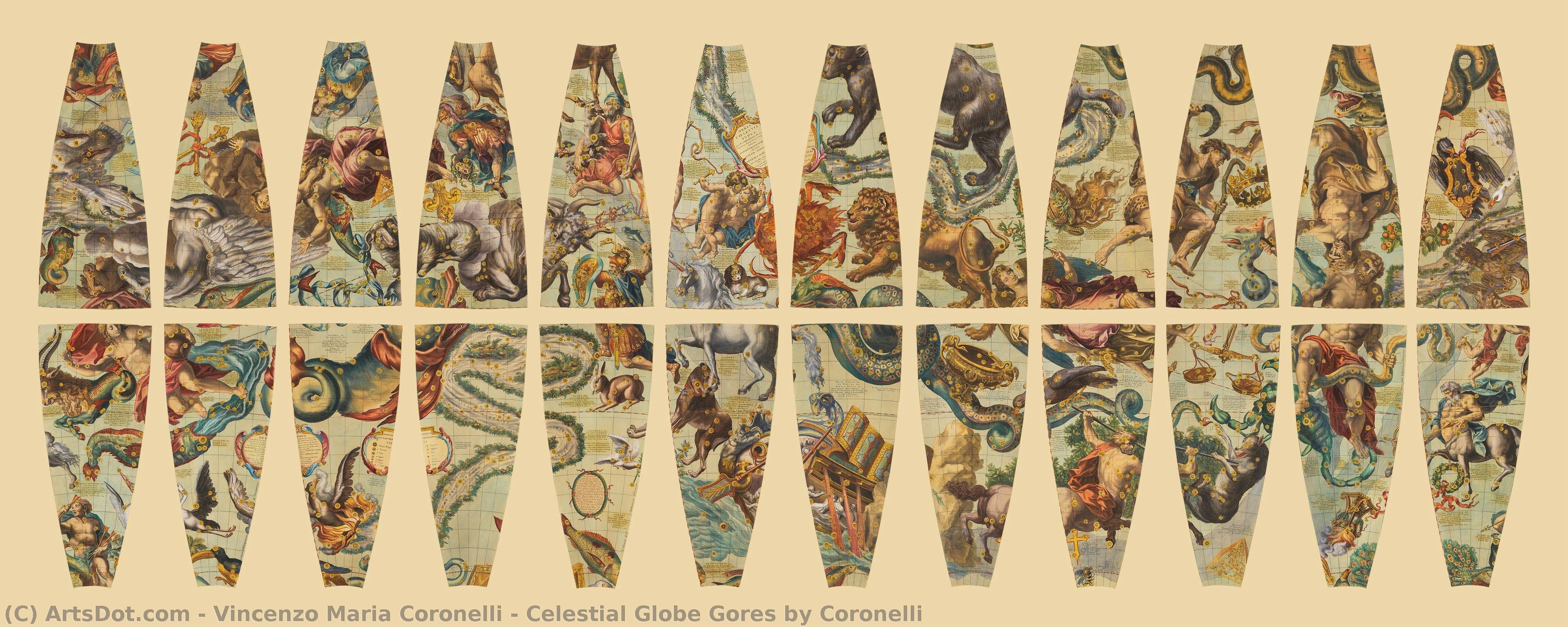
Celestial Globe Gores by Coronelli
Tehnika reprodukcije
Dimenzije reprodukcije
-


Konačna cena
$ 263
A Celestial Tapestry of Knowledge and Wonder
In the vast expanse of cartographic history, few works capture the intersection of scientific precision and artistic whimsy as enchantingly as Vincenzo Maria Coronelli’s "Celestial Globe Gores." This breathtaking piece serves as a window into the seventeenth-century mind, where the boundaries between geography, astronomy, and fine art were beautifully blurred. The artwork presents an intricate arrangement of celestial segments, designed to adorn the surface of a globe, yet it transcends its functional origins to become a profound meditation on our place within the cosmos. As one gazes upon the composition, there is an immediate sense of being transported to an era of discovery, where every star and constellation told a story of mythic proportions.
The visual narrative of this piece is a dense, vibrant mosaic of life and light. Within its delicate patterns, the viewer encounters a surprising variety of elements—from the graceful silhouettes of birds in flight to human figures that seem to inhabit the very fabric of the heavens. This layering of terrestrial life against the backdrop of the infinite sky creates a rhythmic complexity that keeps the eye moving across the canvas. The technique employed reflects the meticulous nature of Coronelli himself, a master cartographer whose work demanded both mathematical accuracy and an aesthetic elegance capable of inspiring awe in the scholars and nobility of Venice.
The Artistry of the Heavens
Stylistically, the work embodies the grandeur of the late Baroque period, characterized by its dramatic use of detail and its ability to evoke a sense of movement. The "Celestial Globe Gores" do not merely depict static objects; they breathe with an organic energy. Each element, whether it be a meticulously rendered animal or a celestial body, is treated with a level of care that suggests the hand of a true master. For the collector or interior designer, this piece offers a unique opportunity to introduce a sense of intellectual depth and historical prestige into a space. It is not simply a decoration, but a conversation piece that invites contemplation on the history of human exploration.
The emotional impact of the painting lies in its ability to evoke both curiosity and tranquility. There is a certain nostalgia found in the weathered textures and the classical arrangement of the figures, reminding us of a time when the universe felt both mysterious and deeply connected to the earthly realm. For those seeking to curate an environment of sophistication—perhaps a private library, a study, or a grand salon—this reproduction provides a focal point that is as intellectually stimulating as it is visually soothing. It brings the timeless beauty of the Venetian sky into the modern home, offering a permanent connection to the golden age of cosmography.
Srodna umetnička dela




Biografija umetnika
The Shadowed Genius: Diego Velázquez and the Dawn of Modern Portraiture
Diego Rodríguez de Silva y Velázquez, a name synonymous with Spanish art in the 17th century, stands as a monumental figure whose influence continues to resonate through the centuries. Born in Seville around 1599, Velázquez’s journey from a minor court painter to one of Europe's most celebrated artists is a testament to his extraordinary talent and astute understanding of human nature. His career unfolded against the backdrop of a vibrant and complex Spain – a nation grappling with religious upheaval, political intrigue, and burgeoning artistic innovation. Velázquez wasn’t merely a recorder of likenesses; he was a profound observer of character, a master of light and shadow, and ultimately, a pioneer in the development of modern portraiture.Early Years and Apprenticeship: A Foundation in Printmaking
Velázquez's early life remains somewhat shrouded in mystery, though it’s known he began his artistic training as a teenager with Juan de Meléndez, a court painter. However, it was his apprenticeship under the printmaker, Luis Andrés de Morales, that proved crucial to his development. This seemingly unconventional start instilled within him an unparalleled understanding of composition, perspective, and the subtle nuances of color – skills he would later translate into his paintings with remarkable precision. Morales’s workshop provided Velázquez with a rigorous training in rendering textures and capturing detail, a foundation far more sophisticated than was typically offered to aspiring painters at the time. This early exposure to printmaking also fostered a keen eye for observation and an appreciation for the power of visual representation – qualities that would become hallmarks of his artistic style.Service to the Spanish Court: A Royal Patronage
In 1622, Velázquez entered the service of King Philip IV of Spain, initially as a court painter and later as *pintor de cámara* (chamber painter), a position that afforded him considerable influence within the royal household. This appointment marked a turning point in his career, providing him with access to the most prominent figures of the Spanish court – from the regal Queen Isabella to the flamboyant Cardinal-Infante Ferdinand. It was during this period that he produced some of his most iconic works, including the renowned “Las Meninas” (1656), a complex and layered painting that continues to fascinate art historians with its intricate composition and psychological depth. The court provided him not only with subjects but also with an unparalleled opportunity to study human behavior, capturing the fleeting expressions and subtle gestures of his sitters with astonishing accuracy.Technique and Style: Mastering Light, Shadow, and Illusion
Velázquez’s artistic style is characterized by a remarkable mastery of technique and a profound understanding of visual illusion. He employed *sfumato*, a technique borrowed from Leonardo da Vinci, to create soft, hazy outlines and subtle gradations of tone – particularly evident in his portraits, where he rendered the skin with an almost photographic realism. His use of light is equally masterful, employing dramatic contrasts between illumination and shadow to sculpt forms, define volumes, and evoke mood. He frequently worked *alla prima*, directly on the canvas without preliminary sketches, allowing for a spontaneous and intuitive approach that resulted in paintings brimming with energy and immediacy. Crucially, Velázquez was not simply replicating appearances; he was constructing an illusion of reality, inviting the viewer to step into the scene and engage with the subjects as if they were present.Legacy and Historical Significance
Diego Velázquez’s impact on art history is immeasurable. He elevated portraiture beyond mere likenesses, transforming it into a vehicle for exploring psychological depth and capturing the essence of his subjects. His innovative use of light, shadow, and composition influenced generations of artists, including Rembrandt van Rijn and Eugène Delacroix. Furthermore, Velázquez’s later years were marked by a shift towards a more abstract and expressive style, foreshadowing developments in modern art. He died in 1660, leaving behind a vast and diverse body of work that continues to be studied and admired for its technical brilliance, psychological insight, and enduring power. His legacy is not just as a painter but as a revolutionary who fundamentally altered the course of Western art, establishing new standards for portraiture and paving the way for future artistic explorations.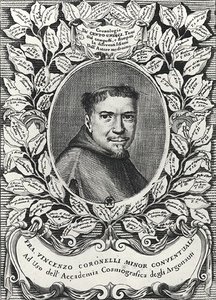
vincenzo maria coronelli
1650 - 1718 , Italy
Osnovne informacije
- Artistic Movement Or Style: Baroque/Realism
- Artists Or Movements Influenced By This Artist:
- Rococo
- Romanticism
- Artists Who Influenced This Artist:
- Luis de Morales
- El Greco
- Caravaggio
- Date Of Birth: 1599-08-02
- Date Of Death: 1660-08-6
- Full Name: Diego Velázquez de Silva y Velázquez
- Nationality: Spanish
- Notable Artworks:
- Las Meninas
- Diana and her Companions
- The Surrender of Breda
- Pope Innocent X
- Place Of Birth: Seville, Spain
Povezani članci
Pietro Longhi's Venetian Scenes: A Study of Rococo Society & Domestic Life
Explore the captivating world of Pietro Longhi's Venetian scenes! Discover insightful analysis of his Rococo masterpieces & social commentary on 18th-century life. Learn about this 'Venetian Hogarth' and his lasting artistic legacy.

Jacopo Tintoretto: 25 Remek-dela Venecijanskog Majstora | Reprodukcije i Inspiracija za Dom
Uronite u svet Jacopa Tintoreta! Otkrijte 25 remek-dela venecijanskog renesansnog majstora. Istražite dramatične kompozicije, bogate boje i istoriju umetnosti na ArtsDot.com. Reprodukcije slika za luksuzni enterijer.
The Golden Light of Innovation: Exploring the Venetian Renaissance Art Movement (1430–1580)
Explore the Golden Age of Venetian art (1430–1580). Discover Giorgione, Titian & Tintoretto's techniques, the 'colorito' revolution, and lasting influence. Expert insights for collectors & enthusiasts.
Vittore Carpaccio: Venetian Renaissance Narrative & the Poetics of Detail
Explore the captivating world of Vittore Carpaccio, a master storyteller of the Venetian Renaissance. Discover his intricate details, narrative cycles like 'The Legend of St. Ursula,' and unique artistic style.

Jacopo Palma il Giovane: A Venetian Master's Poetic Evolution
Explore the captivating world of Jacopo Palma il Giovane, a pivotal Venetian Renaissance master. Discover his unique style, influenced by Titian & Tintoretto, and learn about key works perfect for discerning collectors.