

 Pregledaj u prostoru
 Pošalji
 Podeli
 Detalji o delu

 Преузми
 Slični predmeti
 Rendgenski snimak
 Slajdovi
 Stats
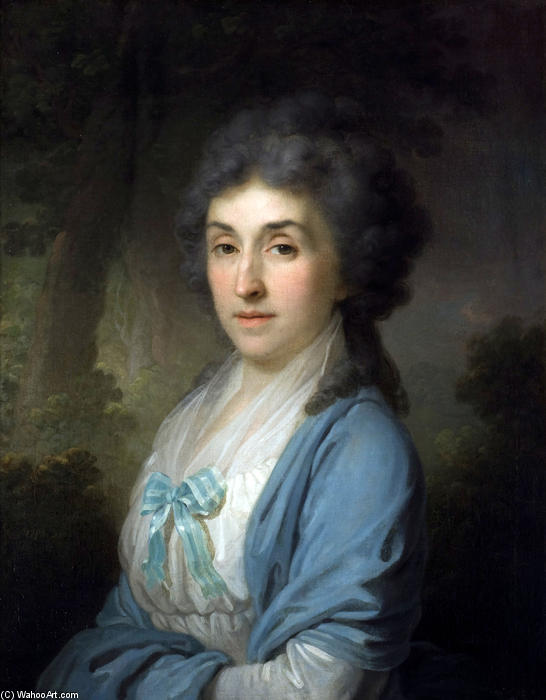
StatsPortrait of Ekaterina Aleksandrovna Novosiltseva

 Pročitaj više
Ručno rađena uljana reprodukcija
Ručno oslikano uljanim bojama na platnu u dimenzijama i okviru po vašem izboru, izrađeno po porudžbini od strane naših umetnika. ( Switch to Print Switch to Digital Image)




































Izaberite jednu od naših unapred definisanih veličina koje odgovaraju originalnim proporcijama umetničkog dela.

Можете унети сопствене димензије како бисте прилагодили дело одређеном оквиру или простору. Ако одабрана величина не одговара пропорцијама оригинала, слика ће бити исечена или проширена додатним елементима који се ручно насликавају. Дигитални prikaz ће вам бити послат на одобрење пре почетка производње.
Имајте на уму да преглед на екрану не одражава стварно исецање или проширење. Само приказ (mockup) ће тачно приказати коначну композицију.
Иако су доступне прилагођене величине, препоручујемо да одаберете димензију из дефинисане листе како бисте сачували оригиналне пропорције.
Nakon narudžbine, tim ArtsDot.com će klijentu putem e-pošte poslati uputstva i dostaviti prikaz predloženog rešenja
Isporuka širom sveta () za 3/4 nedelje umesto uobičajenih 5 nedelja. (8 септембар). Bez kompromisa po pitanju kvaliteta.

Besplatna ekspresna dostava širom sveta

Visokokvalitetno laneno platno

Kompletno osiguranje transporta

Garancija povraćaja carine i uvoznih dažbina

Garancija vernosti boja

Politika povraćaja u roku od 100 dana (isključivo u slučaju nedostataka)

Garancija povrata novca od 100%

Popust pri grupnoj kupovini
 Opcija sa staklom dostupna je samo za dimenzije manje od 110 cm

Portrait of Ekaterina Aleksandrovna Novosiltseva
Tehnika reprodukcije
Dimenzije reprodukcije
-


Konačna cena
$ 263
A Glimpse into Imperial Russia: Portrait of Ekaterina Aleksandrovna Novosiltseva
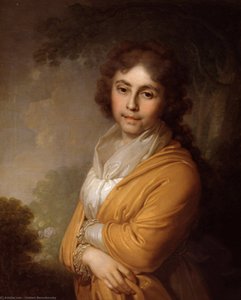
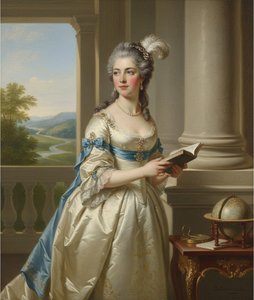
This exquisite portrait by Vladimir Lukich Borovikovsky offers a captivating window into 19th-century Russian aristocratic life. Depicting Ekaterina Aleksandrovna Novosiltseva, a lady of the court, the painting exemplifies the Rococo style’s enduring influence on Russian art during the early Romantic period. The subject's serene expression and elegant attire convey an air of refined grace and quiet contemplation, characteristic of the era's ideals of feminine beauty and virtue. The dark background serves to highlight her pale complexion and the delicate hues of her clothing, drawing the viewer’s eye directly to her presence.Artistic Technique and Rococo Revival
Borovikovsky masterfully employs soft lighting and visible brushstrokes to create a sense of realism and movement within the composition. The ruffled collars and cuffs of her blouse, along with the flowing drape of her blue garment – likely silk or another luxurious fabric – are rendered with meticulous detail. The artist’s technique showcases a revival of Rococo aesthetics, characterized by lightness, elegance, and asymmetrical forms, albeit infused with the burgeoning Romantic sensibility that emphasized emotion and individual expression. Note how the subtle parting of her lips and the gentle gaze suggest an inner life and thoughtful disposition, moving beyond mere representation to capture a sense of personality.The Artist: Vladimir Lukich Borovikovsky and His Legacy
Born in 1757 in Myrhorod (present-day Ukraine), Borovikovsky’s artistic journey began with painting icons before transitioning to portraiture, a genre that would define his career. A pivotal moment arrived when Empress Catherine II recognized his talent during a visit to Kremenchuk and summoned him to Saint Petersburg. This marked the beginning of his rise to prominence as Russia's leading portraitist of the Romantic era. He became renowned for his intimate depictions of nobility and his sentimental style, capturing not just likeness but also conveying a sense of character and emotion. His portraits of Catherine II and other members of the Russian aristocracy remain iconic examples of 19th-century Russian art.Symbolism and Historical Context
Beyond its aesthetic beauty, this portrait provides valuable insight into the social customs and fashion of Imperial Russia. The blue garment, a popular color choice for women of high standing, signifies elegance and refinement. The updo hairstyle adorned with a ribbon reflects contemporary trends in aristocratic fashion. The painting’s creation during a period of relative stability and prosperity within the Russian Empire underscores the patronage afforded to artists by the elite class. It serves as a visual document of a specific moment in time, offering a glimpse into the lives and values of the Russian aristocracy.Emotional Impact and Enduring Appeal
"Portrait of Ekaterina Aleksandrovna Novosiltseva" evokes a sense of quiet dignity and introspective beauty. The subject’s gentle gaze and serene expression invite contemplation, drawing viewers into her world. The painting's masterful use of light and shadow creates a three-dimensional effect, making the subject appear remarkably lifelike. This combination of technical skill and emotional depth ensures that this portrait continues to resonate with art lovers today, offering a timeless glimpse into a bygone era.Srodna umetnička dela
![Three Studies Of A Woman's Head And A Study Of Hands [recto], — Žan Antoan Vato, Rococo Style](/media/artworks/images-thumb/65/73/65730255a762c06e3235059db7ffcb5f.jpg)
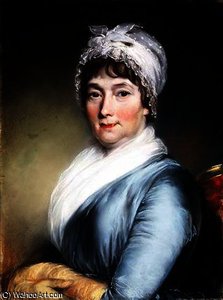
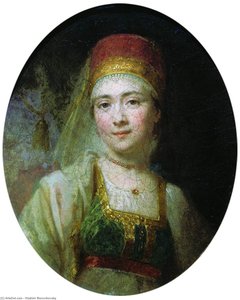
Biografija umetnika
Vladimir Lukich Borovikovsky: A Life in Portraiture
Early Life and Training
- Born: July 24, 1757, in Myrhorod (present-day Ukraine).
- Family Background: His father, Luka Borovyk, was a Ukrainian Cossack and an amateur icon painter. This early exposure significantly influenced young Vladimir’s artistic beginnings.
- Initial Artistic Pursuits: Borovikovsky began his career painting icons for local churches, honing his skills in religious art before transitioning to portraiture.
Rise to Prominence and Imperial Patronage
- Key Moment: A pivotal moment arrived when Borovikovsky’s friend, Vasyl Kapnist, commissioned him to create allegorical paintings for Empress Catherine II's visit to Kremenchuk.
- Imperial Recognition: The Empress was deeply impressed by his work and requested he relocate to Saint Petersburg, marking a turning point in his career.
- Move to St. Petersburg: After September 1788, Borovikovsky established himself in the imperial capital, adopting the more aristocratic surname “Borovikovsky.”
Artistic Style and Influences
- Stylistic Characteristics: Borovikovsky’s portraits are known for their intimacy, sentimental quality, and delicate rendering of textures.
- Influences: He was influenced by Dmitry Levitzky and Johann Baptist Lampi, receiving private lessons from both. The ideas of Prince Nikolay Lvov also profoundly shaped his artistic vision.
- Artistic Movement: His work bridges the Rococo and Romanticism movements, exhibiting elements of both styles.
Notable Works and Major Achievements
- Key Portraits: Some of his most celebrated works include portraits of Catherine II, Count Razumovsky, Dmitry Levitzky, Morteza Qoli Khan Qajar, and the iconic portrait of M.I. Lopukhina.
- Portrait of Catherine II (1794): This work secured his appointment as an academician by the Academy of Arts.
- Prolific Output: Borovikovsky created approximately 500 portraits during his lifetime, with around 400 surviving today.
Later Life and Legacy
- Freemasonry: In 1819, Borovikovsky became a Freemason, which influenced his later artistic focus.
- Return to Icon Painting: He increasingly dedicated himself to icon painting in his later years, including the creation of an iconostasis for the Smolensky Cemetery Church.
- Death and Burial: Vladimir Lukich Borovikovsky passed away on April 6, 1825, and was interred in the Lazarus Cemetery of the Alexander Nevsky Monastery in Saint Petersburg.
- Historical Significance: He is considered Russia’s leading portraitist of the Romantic era, capturing the essence of Russian nobility and society at a pivotal moment in history.
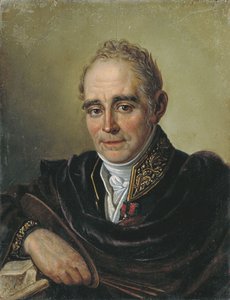
vladimir lukich borovikovsky
1757 - 1825
Osnovne informacije
- Birth Date: July 24, 1757
- Birth Place: Myrhorod (now Ukraine)
- Death Date: April 6, 1825
- Influenced:
- Alexey Venetsianov
- Bugaevsky-Blagodarny
- Influenced By:
- Dmitry Levitzky
- Johann Baptist Lampi
- Nikolay Lvov
- Movement: Romanticism, Rococo
- Name: Vladimir Lukich Borovikovsky
- Nationality: Russian
- Notable Works:
- Portrait of Catherine II
- Portrait of Dmitry Levitzky
- Portrait of M. I. Lopukhina
Povezani članci
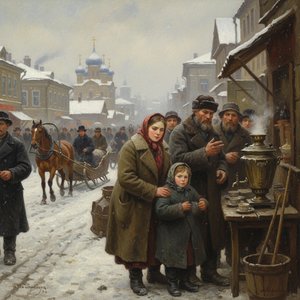
Vladimir Makovsky: Realism, Social Commentary & Russian Life in Late 19th-Century Painting
Explore the captivating world of Vladimir Makovsky, a leading Russian realist painter. Discover his insightful depictions of 19th-century life, social commentary & legacy with ArtsDot.

Rokoko: 10 Remek Dela Koja Su Definisala Eleganciju i Ukus
Otkrijte 10 remek dela koja su definisala rokoko umetnost! Uronite u svet Boucher-a, Watteau-a i Fragonarda. Istorija, stil i inspiracija za vaš dom. Kvalitetne reprodukcije i kuratorski odabiri na ArtsDot.com!
Borovikovsky: Portraiture, Enlightenment Ideals & Russian Aristocratic Identity
Explore the captivating portraits of Vladimir Borovikovsky, Russia's foremost artist of the Enlightenment era. Discover his influence on aristocratic image and sentimental style. Learn about his life, techniques & legacy.

The Rococo Aesthetic: Opulence, Rebellion & the Pursuit of Pleasure in 18th-Century Art
Explore the opulent world of Rococo art! Discover its origins, key artists like Watteau & Boucher, and lasting influence on design. Expert insights for collectors & enthusiasts.
The Allure of Elegance in Art: A Historical & Aesthetic Exploration of Refinement & Grace
Explore the exquisite world of Rococo art! Discover its history, masters (Watteau, Boucher & more), and defining elegance. Expert insights for collectors seeking museum-quality reproductions & custom portraits.