

 Pošalji
 Podeli
 Detalji o delu

 Преузми
 Slični predmeti
 Slajdovi
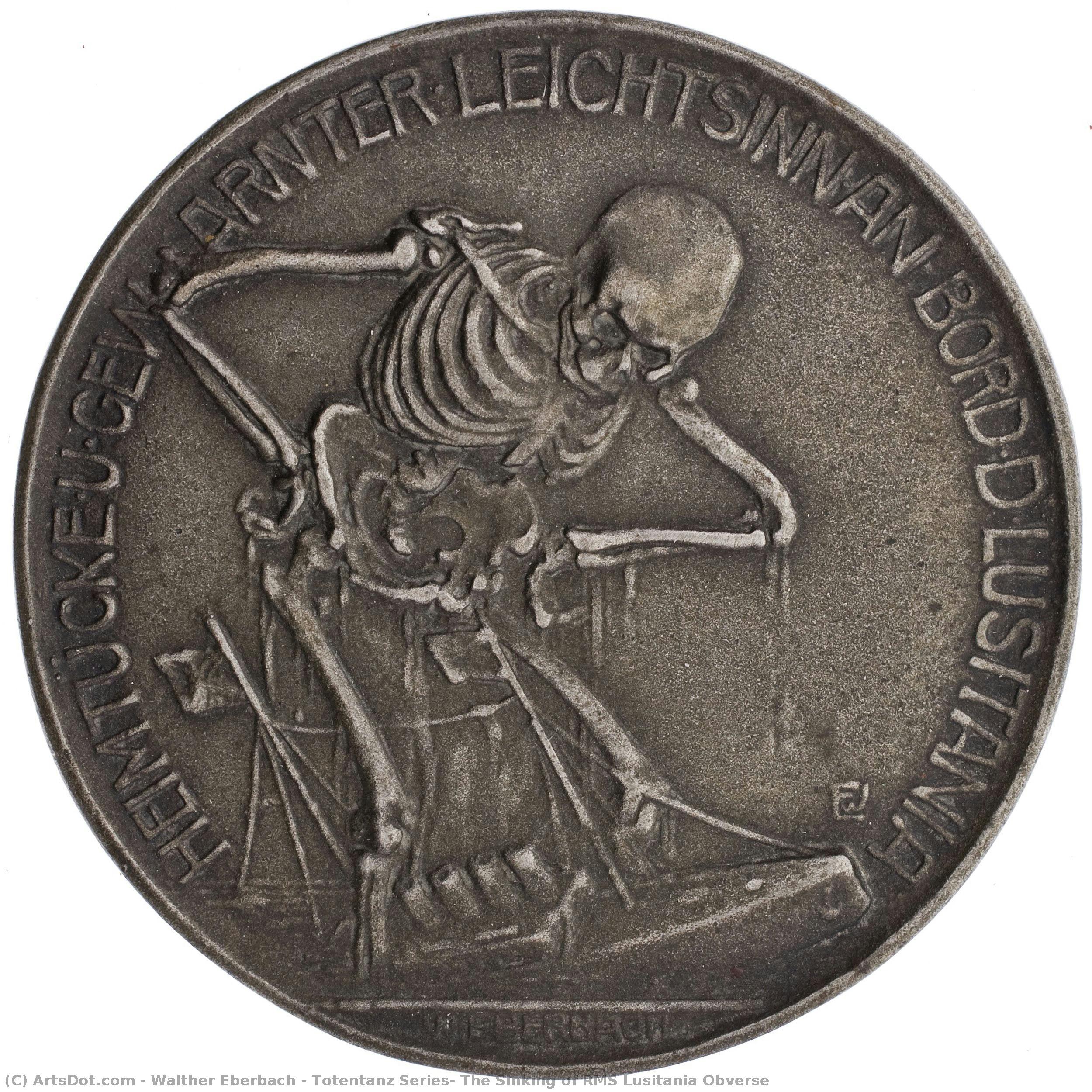
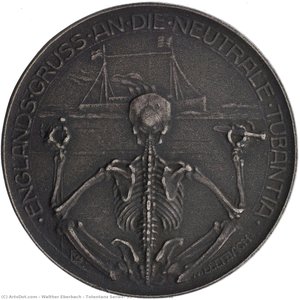
Totentanz Series: The Sinking of RMS Lusitania Obverse


 Pročitaj više
Giclee štampa / Umetnički otisak
Giclée štampa ili print na platnu muzejskog kvaliteta uz brzu proizvodnju i fleksibilne opcije završne obrade. ( Kupi ručno naslikanu sliku Kupi digitalnu sliku)




































Izaberite jednu od naših unapred definisanih veličina koje odgovaraju originalnim proporcijama umetničkog dela.

Možete uneti sopstvene dimenzije kako biste umetničko delo prilagodili specifičnom okviru ili prostoru. Ako odabrani format ne odgovara proporcijama originalne slike, mi ćemo ili iscrtati deo dela ili proširiti sliku pomoću ogledane ivice ili jednobojnog popunjavanja. Digitalni prikaz će vam biti poslat na odobrenje pre početka proizvodnje.
Imajte na umu da pregled na ekranu ne odražava stvarno iscrtavanje ili proširivanje. Samo će prikaz (mockup) precizno pokazati finalnu kompoziciju.
Iako su prilagođene dimenzije dostupne, preporučujemo da odaberete dimenziju sa unapred definisane liste kako biste očuvali originalne proporcije.
Dostava širom sveta () za 2 nedelje umesto uobičajenih 4/5 nedelja. (24 август)

Besplatna ekspresna dostava širom sveta

Visokokvalitetno laneno platno

Kompletno osiguranje transporta

Garancija povraćaja carine i uvoznih dažbina

Garancija vernosti boja

Politika povrata u roku od 60 dana (samo u slučaju nedostataka)

Garancija povrata novca od 100%

Popust pri grupnoj kupovini
 Opcija sa staklom dostupna je samo za dimenzije manje od 110 cm

Totentanz Series: The Sinking of RMS Lusitania Obverse
Giclee štampa / Umetnički otisak
Dimenzije reprodukcije
-


Konačna cena
$ 62
Opis predmeta
A Somber Reflection on Mortality and Maritime Tragedy
In the hauntingly beautiful Totentanz Series: The Sinking of RMS Lusitania Obverse, we encounter a profound meditation on death, memory, and the relentless passage of time. Created in 1916 by the master German engraver and medallist Walther Eberbach, this piece serves as more than just a commemorative object; it is a visceral window into an era defined by global upheaval. The artwork presents a striking, embossed metal medallion that captures the chilling essence of the "Dance of Death." At its heart, a skeletal figure sits poised within a small vessel, rowing through dark, turbulent waters. This central motif does not merely depict a scene; it evokes the heavy, inescapable presence of mortality that shadowed the early years of the twentieth century.
The composition is masterfully contained within a circular form, a shape that inherently suggests the cyclical nature of life and death. Eberbach utilizes a monochromatic palette of deep charcoars, silvers, and weathered grays to establish an atmosphere of somber reverence. The lighting within the relief is expertly handled, with diffused highlights dancing across the raised edges of the skeleton’s bones and the cresting ripples of the water, while deep shadows retreat into the recessed textures. This interplay of light and shadow creates a remarkable three-dimensional depth, making the metallic surface feel alive with movement and tragic weight.
The Artistry of Precision and Symbolism
Technically, this work is a triumph of ziselieren—the meticulous art of chasing and engraving. Eberbach’s background as a trained metal sculptor is evident in the way every line serves a narrative purpose. The texture of the water is not merely suggested but felt through subtle, rhythmic incisions that contrast against the stark, organic geometry of the skeletal form. The surrounding text, etched with classical precision around the perimeter, provides the historical anchor, grounding the allegorical imagery in the real-world tragedy of the RMS Lusitania. This fusion of historical fact and symbolic allegory transforms the medallion from a simple commemorative item into a powerful piece of fine art.
For the discerning collector or interior designer, this reproduction offers an unparalleled opportunity to introduce a sense of historical gravity and intellectual depth to a curated space. The piece functions as a conversation starter, inviting viewers to contemplate the themes of the Totentanz—the inescapable dance that all living things must eventually join. Whether placed in a study filled with historical volumes or used as a focal point in a contemporary gallery setting, the artwork’s weathered, aged appearance provides an authentic sense of antiquity and prestige. It is a masterful blend of German craftsmanship and universal human emotion, making it a timeless addition to any collection dedicated to the profound intersections of history and art.
Srodna umetnička dela

Biografija umetnika
The Master of Metal and Memory: The Life of Walther Eberbach
In the annals of German art history, few names evoke the somber elegance and technical precision of Walther Eberbach. Born in 1866 in Besigheim, Eberbach emerged from a lineage of craftsmanship that would define his entire creative existence. His journey began not merely with a brush or a chisel, but with the disciplined hands of a draftsman and metal sculptor. Through his formative studies in Schwäbisch Gmünd and later at the Kunstgewerbeschule Stuttgart, he mastered the intricate language of metalwork, a skill that would allow him to breathe life into bronze, silver, and steel. His career was a nomadic tapestry of European culture, spanning the industrial energy of Cologne, the historical weight of Strasbourg, and the cosmopolitan atmosphere of London and Berlin.
Eberbach was far more than a mere craftsman; he was a storyteller of the profound. As an educator in Strasbourg and later in Heilbronn, he passed on the delicate arts of ziselieren (chasing) and goldsmithing to new generations, ensuring that the meticulous traditions of the past survived into a modernizing world. His work often sat at the intersection of Victorian allegory and a hauntingly realistic portrayal of human mortality. This duality allowed him to capture the zeitgeist of an era caught between the grandeur of imperial pride and the devastating reality of industrial warfare.
Symbolism in Bronze: The Totentanz Series
The true emotional depth of Eberbach’s legacy is perhaps most poignantly realized in his Totentanz (Dance of Death) series. In these works, the artist moved beyond simple ornamentation to engage with the most harrowing themes of his time. His medallions and reliefs serve as historical witnesses, utilizing skeletal figures and symbolic landscapes to process the collective trauma of the early 20th century. Each piece is a masterclass in embossed metalwork, where every line serves a narrative purpose.
His explorations of historical tragedy are both beautiful and unsettling:
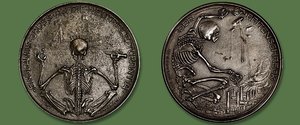
- The Sinking of the RMS Lusitania: In this somber embossed medallion, Eberbach depicts a skeletal figure rowing through turbulent waves, a hauntingly beautiful commemoration of one of the era's most tragic maritime disasters.
- Death Pumping Blood over Verdun: A powerful and visceral relief print from 1916, this work captures the sheer devastation of the Battle of Verdun, using symbolic imagery to reflect the horrors of World War I.
- Britannia Rules the Waves?: Through this bronze relief, Eberbach poses a provocative question regarding naval supremacy and mortality, blending maritime history with a chilling Victorian allegory.
A Legacy of Craftsmanship and Historical Reflection
The significance of Walther Eberbach lies in his ability to transform cold, hard materials into vessels of deep historical reflection. While many artists of his era focused on the purely aesthetic or the purely political, Eberbach found a middle ground where meticulous realism met symbolic depth. His membership in organizations such as the Künstlerbunds Heilbronn and his frequent exhibitions with the Kunstverein Heilbronn solidified his role as a pillar of the German artistic community.
As we look back on his life, which concluded in 1944, we see an artist who refused to look away from the shadows of history. Whether through the delicate precision of an engraving or the heavy, textured presence of a bronze relief, Eberbach’s work remains a vital connection to a period of immense transition. He remains a master of the permanent—an artist who used the most enduring mediums to capture the most fleeting and tragic moments of human existence.
walther eberbach
1866 - 1944 , Germany
Osnovne informacije
- Artistic Movement Or Style: Realist Art Style
- Date Of Birth: 1866 Heidelberg Germany
- Date Of Death: 1944 Weinsberg Germany
- Full Name: walther eberbach
- Nationality: German
- Notable Artworks:
- Totentanz Series: Britannia Rules the Waves?
- Totentanz Series: Death Pumping Blood over Verdun
- Totentanz Series: SS Tubantia
- Place Of Birth: Heidelberg Germany
Povezani članci
Gray Masterpieces: 10 Iconic Paintings & The Power of Subtle Light |
Explore 10 iconic paintings where light gray reigns supreme! From Monet's Impressionism to Hopper’s realism, discover the stories & subtle power of these masterpieces. Find museum-quality art reproductions at .
Dark Gray Masterpieces: 10 Iconic Paintings & Timeless Home Decor Ideas
Explore 10 iconic paintings dominated by dark gray tones, from Rembrandt & Caravaggio to Goya. Discover the stories behind these masterpieces and find museum-quality art reproductions for your home at . Explore the full collection online.
Payne's Gray Masterpieces: 10 Iconic Paintings & Timeless Decor Ideas
Explore 10 iconic paintings dominated by 'Payne's Gray', from Rembrandt to Whistler. Discover the stories behind these atmospheric masterpieces & find museum-quality reproductions for your home decor at ArtsDot.com. Explore the full collection online.

Golden Glow: How to Use Metallic Gold Artworks to Elevate Your Home Decor with Timeless Luxury
Discover how to elevate your home with the timeless elegance of metallic gold artworks. From sculptural metal pieces to gilded oil paintings, learn expert interior design tips for integrating luxurious gold accents into your space with sophistication and grace.

The Nuances of Gray: Exploring Emotional Depth & Artistic Innovation in Grayscale Works
Explore the captivating world of grayscale art! Discover iconic paintings, master techniques like chiaroscuro, & the psychology of tone. Find museum-quality reproductions to elevate your home décor at ArtsDot.

