

 Pošalji
 Podeli
 Detalji o delu

 Преузми
 Slični predmeti
 Slajdovi
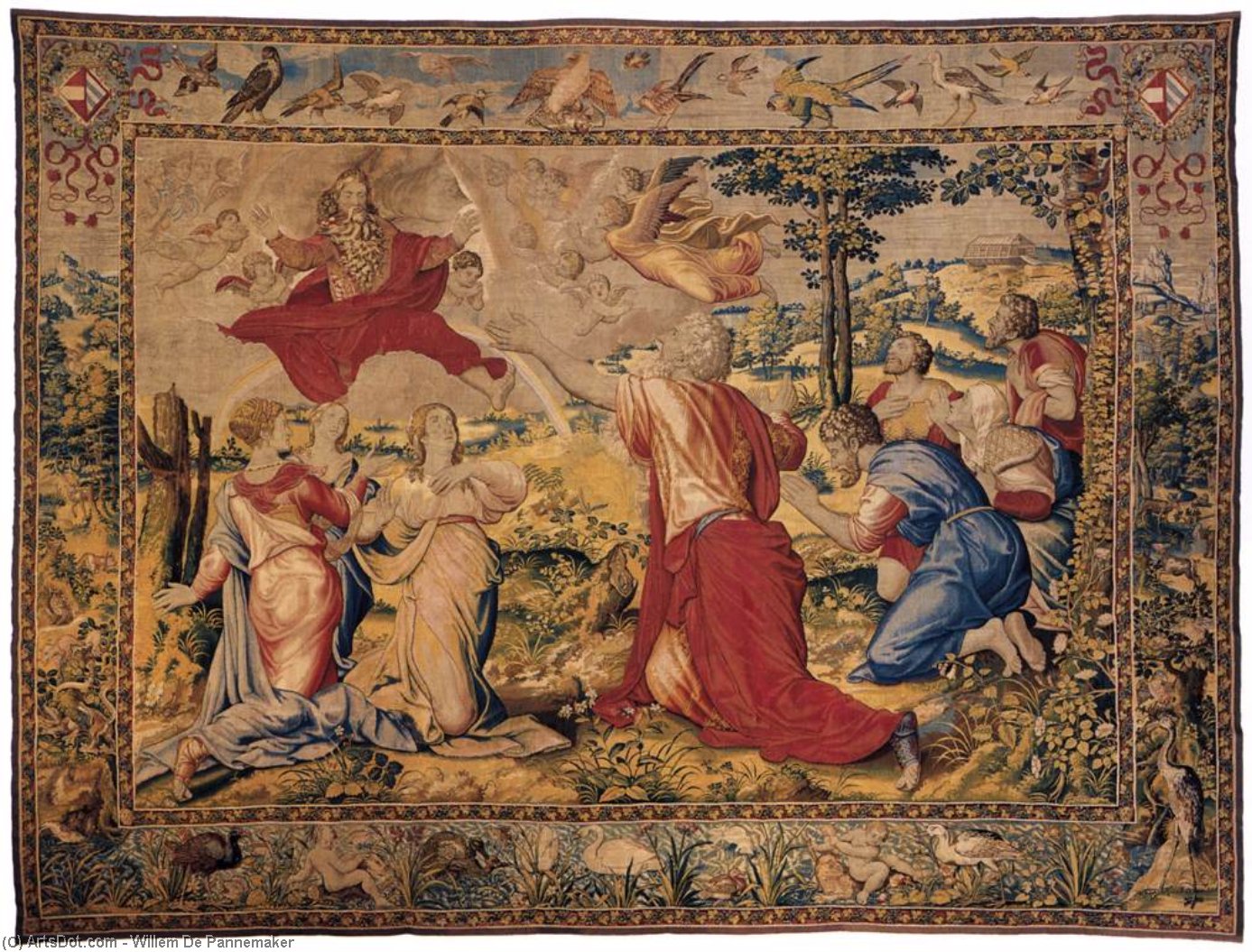
God the Father Establishing His Covenant with Noah
 Tapestry
- Textile
- Renaissance
 1567
1567- Renaissance
 430.0 x 560.0 cm
 Rijksmuseum
 Pročitaj više
Ručno rađena uljana reprodukcija
Ručno oslikano uljanim bojama na platnu u dimenzijama i okviru po vašem izboru, izrađeno po porudžbini od strane naših umetnika. ( Kupi print Kupi digitalnu sliku)




































Izaberite jednu od naših unapred definisanih veličina koje odgovaraju originalnim proporcijama umetničkog dela.

Можете унети сопствене димензије како бисте прилагодили дело одређеном оквиру или простору. Ако одабрана величина не одговара пропорцијама оригинала, слика ће бити исечена или проширена додатним елементима који се ручно насликавају. Дигитални prikaz ће вам бити послат на одобрење пре почетка производње.
Имајте на уму да преглед на екрану не одражава стварно исецање или проширење. Само приказ (mockup) ће тачно приказати коначну композицију.
Иако су доступне прилагођене величине, препоручујемо да одаберете димензију из дефинисане листе како бисте сачували оригиналне пропорције.
Nakon narudžbine, tim ArtsDot.com će klijentu putem e-pošte poslati uputstva i dostaviti prikaz predloženog rešenja
Isporuka širom sveta () za 3/4 nedelje umesto uobičajenih 5 nedelja. (2 септембар). Bez kompromisa po pitanju kvaliteta.

Besplatna ekspresna dostava širom sveta

Visokokvalitetno laneno platno

Kompletno osiguranje transporta

Garancija povraćaja carine i uvoznih dažbina

Garancija vernosti boja

Politika povrata u roku od 60 dana (samo u slučaju nedostataka)

Garancija povrata novca od 100%

Popust pri grupnoj kupovini
 Opcija sa staklom dostupna je samo za dimenzije manje od 110 cm

God the Father Establishing His Covenant with Noah
Tehnika reprodukcije
Dimenzije reprodukcije
-


Konačna cena
$ 263
A Divine Pact Etched in Time: God Establishing His Covenant with Noah
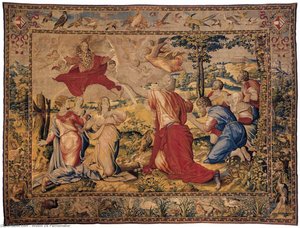
To stand before this monumental depiction of God the Father Establishing His Covenant with Noah is to be enveloped by an atmosphere thick with divine promise and profound human vulnerability. This canvas captures not merely a scene, but a pivotal moment in theological narrative—the instant grace descends upon humanity after the cataclysm. The composition draws the eye immediately to the central interaction: God’s outstretched hand gently touching Noah's head, a gesture that speaks volumes of mercy overcoming judgment. In His other hand, the dove, an eternal symbol of peace and renewal, completes this tableau of divine reassurance. Surrounding this core exchange are figures—witnesses to history—and the subtle inclusion of life itself, represented by the bird in the upper corner, all contributing to a sense of sacred drama unfolding before our very eyes.
The Masterful Hand of Willem de Pannemaker
This work is attributed to Willem de Pannemaker, an artist whose career was deeply rooted in the rich traditions of Flemish craftsmanship. While his biography speaks of him as a titan associated with tapestry, this painting showcases his mastery across various mediums, allowing us to appreciate the enduring quality of his vision. The style reflects the grand sweep of Renaissance influence filtering through Northern European art—a period where meticulous detail met burgeoning emotional depth. One can almost feel the dedication in every brushstroke, an inheritance from the rigorous standards set within the Pannemaker workshop. His ability to imbue religious subject matter with such palpable human emotion elevates this piece beyond mere illustration; it becomes a meditation on faith.
Symbolism and Spiritual Resonance
The symbolism woven throughout the scene is rich and deeply resonant for the art connoisseur. The covenant itself represents a fresh start, a promise of enduring life following ultimate destruction. The dove is perhaps the most potent symbol here, universally understood as the cessation of storm and the return of hope. Observing the grouping of figures—the solemnity on the far left, the attentive presence near the center, and the quiet witness on the right—we are invited to contemplate our own place within cycles of trial and redemption. It is a visual sermon, urging the viewer toward contemplation of enduring covenants in their own lives.
Bringing Sacred Grandeur Home
For those seeking to integrate such profound artistic weight into a contemporary space, this reproduction offers an unparalleled opportunity. The sheer scale of the original work—a commanding 430 x 560 cm—suggests its intended placement in a grand hall or chapel setting. Owning a high-quality hand-painted reproduction allows one to harness that monumental feeling of sacred grandeur without the logistical constraints. It serves not just as decoration, but as a focal point for contemplation, transforming any room into a space imbued with historical reverence and enduring spiritual calm.
Srodna umetnička dela

Biografija umetnika
The Titan of Flemish Tapestry: The Life and Legacy of Willem de Pannemaker
In the vibrant, industrious heart of sixteenth-century Brussels, a golden age of textile artistry unfolded, driven by the unparalleled mastery of Willem de Pannemaker. Born around 1510, likely in the burgeoning artistic hub of Beverwijk or within the bustling streets of Brussels itself, Willem was destined for greatness through the lineage of his craft. He was the scion of the prestigious Pannemaker workshop, led by his father, Pieter, a man whose reputation for excellence laid the foundation upon which Willem would build his monumental career. To study under Pieter was to undergo a rigorous apprenticeship in the very soul of Flemish craftsmanship—learning not merely the mechanics of the loom, but the delicate alchemy of dyeing fine wool and silk, and the complex geometry required to translate grand artistic visions into woven reality.
As Willem matured, he did not merely inherit a tradition; he elevated it to heights previously unimagined in Northern Europe. His talent caught the eye of the most powerful figures of the Renaissance, most notably Charles V, Holy Roman Emperor. This divine patronage transformed the Pannemaker workshop from a respected local institution into the premier atelier for the Habsburg court. Through these royal commissions, Willem became a bridge between the meticulous, detailed traditions of the Low Countries and the sweeping, classical grandeur emerging from Italy. His work began to breathe with the influence of masters like Raphael, integrating a new sense of anatomical precision and dynamic composition into the heavy, luxurious medium of tapestry.
A Symphony of Thread and Symbolism
The artistry of Willem de Pannemaker is defined by a breathtaking synthesis of realism and decorative splendor. He possessed a rare ability to render the tactile world—the sheen of silk, the weight of velvet, and the subtle textures of natural landscapes—with such precision that his tapestries often felt like windows into another realm. His compositions were never static; they pulsed with an emotional intensity that drew the viewer into the sacred and the heroic alike. Whether depicting a biblical covenant or a contemporary military conquest, Willem utilized a bold color palette to guide the eye through intricate narratives of grace, struggle, and triumph.
His most celebrated achievements remain some of the most significant treasures of the Renaissance era:
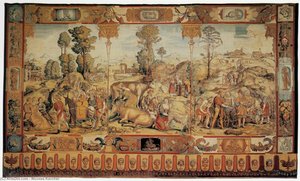
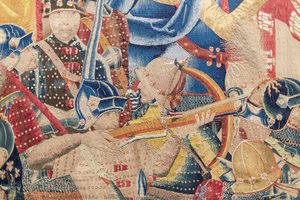
- The Conquest of Tunis: A monumental eight-part series created between 1548 and 1554, based on designs by Jan Cornelisz Vermeyen. This work is historically profound, not only for its depiction of imperial power but for its remarkable inclusion of one of the earliest European artistic renderings of a tornado, showcasing Willem's eye for naturalistic drama.
- The Wedding of Mercury: A rare and exquisite series that serves as a vital visual record of Ovid’s Metamorphoses, depicting the myth of Mercury and Herse in a way that remains unparalleled in surviving textile art.
- The Months of Lucas: A charming and sophisticated series attributed to the influence of Lucas van Leyden, which captures the rhythmic cycle of seasonal life among both the nobility and the peasantry, blending genre painting with high-art weaving.
Historical Significance and Enduring Influence
Willem de Pannemaker’s career represents the zenith of the Brussels tapestry industry. He was more than a weaver; he was a visual storyteller for the most influential dynasty in Europe. By successfully merging the Northern European preoccupation with minute detail and symbolic depth with the Italian Renaissance's focus on classical proportion and movement, he helped define the aesthetic language of his age. His workshop became a crucible of innovation, where the boundaries between fine art and decorative craft were blurred, creating works that functioned as both political propaganda for the Habsburgs and timeless masterpieces of human expression.
Though he passed away in 1581, leaving behind a legacy etched in silk and gold thread, the impact of his work continues to resonate. To look upon a Pannemaker tapestry is to witness the moment when the Flemish tradition reached its most magnificent crescendo, capturing the grandeur of an empire and the delicate nuances of the human spirit within the enduring embrace of woven art.
willem de pannemaker
1513 - 1581
Osnovne informacije
- Artistic Movement Or Style: Renaissance Tapestry Art
- Artists Or Movements Influenced By This Artist: ['Charles V']
- Artists Who Influenced This Artist: ['Jan Cornelisz Vermeyen']
- Date Of Birth: circa 1510
- Date Of Death: 1581
- Full Name: Willem de Pannemaker
- Nationality: Flemish
- Notable Artworks:
- Conquest of Tunis
- The Wedding of Mercury
- Christ Appearing to Mary Magdalene
- Place Of Birth: Brussels
Povezani članci
Povratak freske: Zidne slike kao novi luksuzni izraz u savremenoj arhitekturi i dizajnu
Otkrijte luksuz zidnih slika i fresaka za savršen enterijer! Ekskluzivni dizajn, stručni umetnici & kvalitetna izrada. Inspiracija i rešenja za hotele i privatne prostore.

Transforming Spaces: A Comprehensive Exploration of Wall Decor Through Art History & Contemporary Practice
Explore the art of transforming spaces with our comprehensive guide to wall decor. From historical movements to contemporary trends, discover how to curate impactful interiors and commission bespoke artwork for a truly personalized aesthetic.

Illuminating Faith: Biblical Narrative & Artistic Expression Through the Ages
Explore the rich history of biblical art from Giotto to the Renaissance masters with ArtsDot. Discover symbolism, techniques & enduring legacies. Museum-quality reproductions & expert insights.
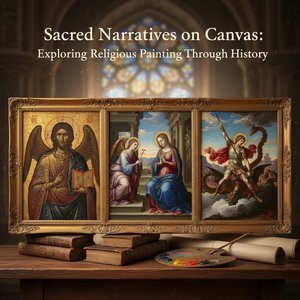
Sacred Narratives on Canvas: Exploring Religious Painting Through History
Explore the rich history of religious painting with ArtsDot.com! Discover iconic artworks, symbolism & techniques from antiquity to the Renaissance. Enhance your art appreciation today.
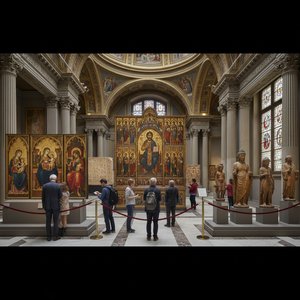
Sacred Narratives Embodied: A Comprehensive Exploration of Religious Iconography in Art History
Explore the rich history of religious iconography in art! Discover symbolism, movements & masterpieces from Byzantine to Renaissance periods. Expert insights for collectors and enthusiasts at ArtsDot.

