 Pregledaj u prostoru
 Pošalji
 Podeli
 Detalji o delu

 Преузми
 Slični predmeti
 Rendgenski snimak
 Slajdovi
 Stats
StatsFemale Nude Study


 Pročitaj više
Giclee štampa / Umetnički otisak
Giclée štampa ili print na platnu muzejskog kvaliteta uz brzu proizvodnju i fleksibilne opcije završne obrade. ( Kupi ručno naslikanu sliku Switch to Digital Image)




P118B $10

P118H $10

P118W $10

P438Z $10

P508JH $12

P508YH $12

P805H $10

P805Z $10

P919BZ $10

P919G $10

P919XJ $10

P959ZH $10

P968JZ $12

W106C $8

W218G $10

W218JH $8

W218Y $10

W307PJ $10

W316G $10

W316PJ $8

W316Y $10

W398PJ $8

W4111J $10

W500HY $15

W500JH $15

W692G $12

W849H $8

W940BG $15

W953PJ $8




Izaberite jednu od naših unapred definisanih veličina koje odgovaraju originalnim proporcijama umetničkog dela.

Možete uneti sopstvene dimenzije kako biste umetničko delo prilagodili specifičnom okviru ili prostoru. Ako odabrani format ne odgovara proporcijama originalne slike, mi ćemo ili iscrtati deo dela ili proširiti sliku pomoću ogledane ivice ili jednobojnog popunjavanja. Digitalni prikaz će vam biti poslat na odobrenje pre početka proizvodnje.
Imajte na umu da pregled na ekranu ne odražava stvarno iscrtavanje ili proširivanje. Samo će prikaz (mockup) precizno pokazati finalnu kompoziciju.
Iako su prilagođene dimenzije dostupne, preporučujemo da odaberete dimenziju sa unapred definisane liste kako biste očuvali originalne proporcije.
Dostava širom sveta () za 2 nedelje umesto uobičajenih 4/5 nedelja. (7 септембар)

Besplatna ekspresna dostava širom sveta

Visokokvalitetno laneno platno

Kompletno osiguranje transporta

Garancija povraćaja carine i uvoznih dažbina

Garancija vernosti boja

Politika povraćaja u roku od 100 dana (isključivo u slučaju nedostataka)

Garancija povrata novca od 100%

Popust pri grupnoj kupovini
 Opcija sa staklom dostupna je samo za dimenzije manje od 110 cm

Female Nude Study
Giclee štampa / Umetnički otisak
Dimenzije reprodukcije
-


Konačna cena
$ 62
A Study in Quietude: William Etty’s ‘Female Nude Study’
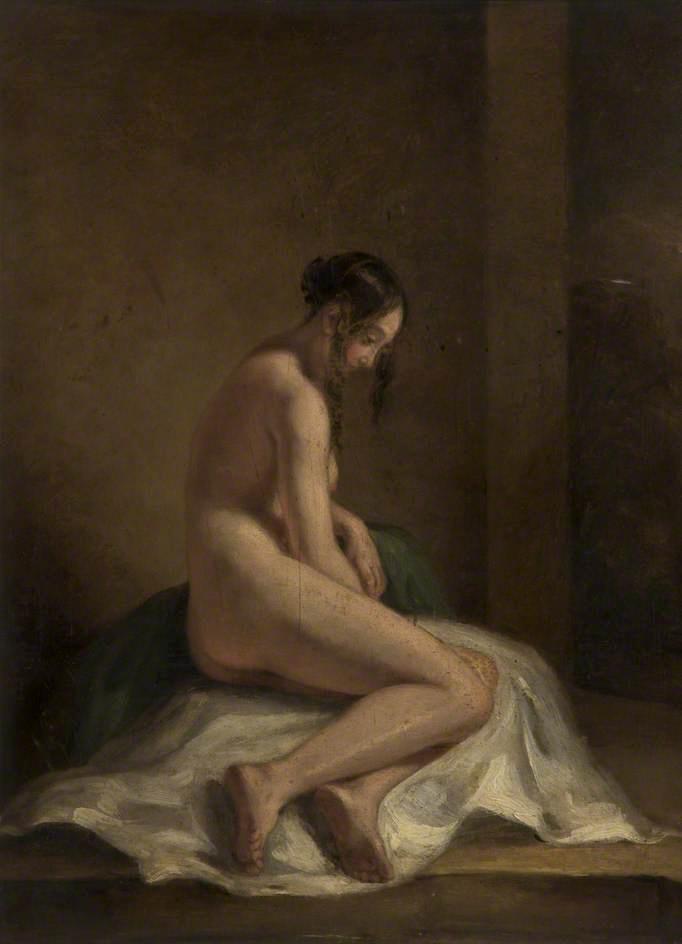
William Etty's 'Female Nude Study,' a remarkably intimate and profoundly evocative work, stands as a pivotal piece within the trajectory of 19th-century British art. More than simply a depiction of the human form, it’s an exploration of vulnerability, introspection, and the subtle power of suggestion – qualities that both captivated and challenged Victorian sensibilities. Born in York during a period when the rigid conventions of academic painting still held considerable sway, Etty's journey from humble beginnings to Royal Academician was marked by a persistent pursuit of realism and a willingness to push against established boundaries. This particular study, rendered with meticulous detail and bathed in a carefully orchestrated chiaroscuro, reveals an artist deeply attuned to the nuances of light, shadow, and human emotion.
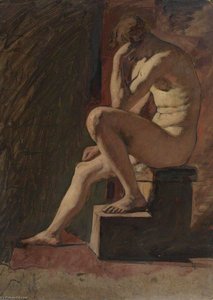
The composition itself is deceptively simple: a seated female figure, positioned slightly off-center within a muted interior space. Her posture—legs drawn upwards, head bowed—immediately invites contemplation. There’s no overt drama or theatricality; rather, a quiet dignity and a palpable sense of inward focus permeate the scene. The draped cloth, rendered with exquisite texture through subtle shifts in tone, adds layers of softness and visual interest while simultaneously hinting at concealment and modesty. Etty masterfully utilizes negative space to draw attention to the figure’s form, emphasizing its graceful lines and the delicate curve of her spine.
The Language of Light and Shadow
Etty's technical prowess is immediately apparent in his masterful manipulation of light and shadow. The lighting, originating from an unseen source on the left, creates a dramatic interplay of highlights and deep shadows that sculpt the figure’s body with remarkable precision. This chiaroscuro technique not only adds depth and volume but also imbues the scene with a sense of moodiness and introspection. Notice how the light catches the folds of the drapery, revealing their intricate textures while simultaneously obscuring certain details, creating an atmosphere of mystery and reserve.
The artist’s use of line is equally noteworthy. Rather than relying on sharp outlines to define the figure's form, Etty employs subtle gradations of tone—a technique known as modeling—to create a sense of volume and realism. This approach allows the eye to trace the contours of the body with ease, appreciating its organic curves and delicate details. The overall effect is one of understated elegance and profound emotional resonance.
A Victorian Sensibility
‘Female Nude Study’ firmly situates itself within the context of 19th-century academic painting—a tradition characterized by a commitment to realism, anatomical accuracy, and classical subject matter. However, Etty's work transcends mere imitation; he infuses it with his own unique sensibility, imbuing the scene with a palpable sense of vulnerability and introspection. This was a period when nude figures in art were often treated as objects of idealized beauty or mythological allegory, but Etty’s approach is far more intimate and psychologically nuanced.
The muted color palette—variations of brown, beige, and earthy tones—further reinforces the painting's contemplative mood. The absence of bright colors creates a sense of stillness and quietude, drawing attention to the figure’s form and expression. It’s as if Etty is inviting us to share in her private thoughts and emotions.
Symbolism and Emotional Resonance
Beyond its technical brilliance, ‘Female Nude Study’ resonates with a profound sense of symbolism. The bowed head and self-embracing posture suggest introspection, vulnerability, or perhaps even melancholy. It's a pose that invites interpretation—a silent plea for understanding or a moment of quiet contemplation. The painting doesn’t offer easy answers; instead, it presents us with a complex and ambiguous image that lingers in the mind long after we’ve viewed it.
Etty’s work remains remarkably relevant today, offering a powerful reminder of the enduring appeal of human vulnerability and the transformative power of art. Reproductions of this piece offer an opportunity to bring its quiet intensity into any space, serving as both a visual delight and a source of contemplation.
Srodna umetnička dela
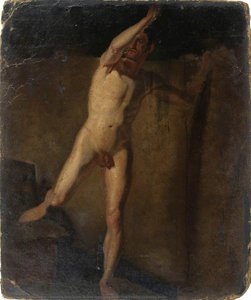
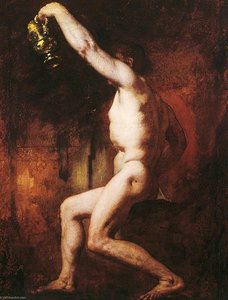
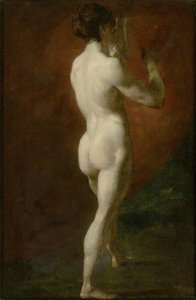
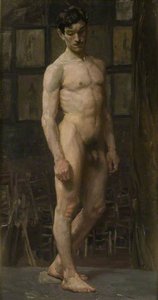
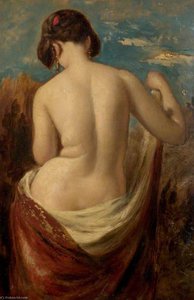
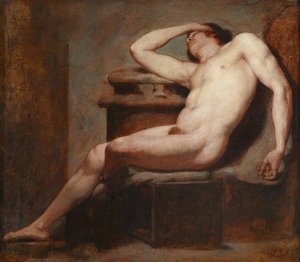
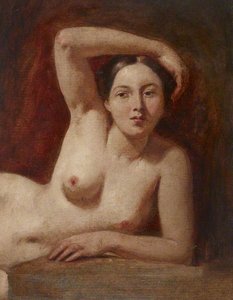
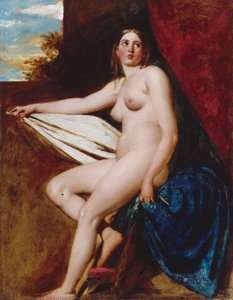
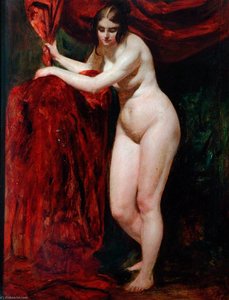
Biografija umetnika
A Pioneer of the British Nude: The Life and Art of William Etty
William Etty, a name perhaps less instantly recognizable than his contemporaries like Turner or Constable, nevertheless occupies a pivotal position in 19th-century British art. Born in York on March 10, 1787, above his father’s bakery, Etty's journey from humble beginnings to Royal Academician was one marked by relentless dedication, artistic innovation, and no small measure of controversy. His early life offered little indication of the path he would forge. Apprenticed at age twelve to a printer in Hull, seven years were spent immersed in the practicalities of typography – a world far removed from the canvases that would eventually bear his signature. Yet, even amidst the mechanical demands of printmaking, Etty nurtured a burgeoning passion for drawing, an impulse that ultimately propelled him towards London and the hallowed halls of the Royal Academy Schools in 1807. There, under the tutelage of Thomas Lawrence, he honed his skills through diligent copying, laying the foundation for a career defined by masterful depictions of the human form.The Rise to Prominence: Nudes and Controversy
Etty’s breakthrough arrived in 1821 with Cleopatra's Arrival in Cilicia, a painting that immediately ignited both admiration and scandal. The work, teeming with nude figures, was exhibited to widespread acclaim, yet simultaneously earned him a reputation for indecency. This duality would become a defining characteristic of his career. He wasn’t merely depicting nudity; he was exploring the human form with an unprecedented realism and anatomical precision for a British artist of that era. His commitment to accurately rendering flesh tones, light, and shadow – influenced by his study of Venetian masters like Titian and Rubens during travels in Italy and France – set him apart. He continued to produce historical scenes populated with nudes, often drawn from classical mythology or literature, such as The Sirens and Ulysses. These works were commercially successful, allowing Etty to thrive despite the constant criticism leveled against his subject matter. In 1828, he was elected a Royal Academician, solidifying his position within the established art world, even as whispers of impropriety followed him. The sheer audacity of portraying the human body with such unflinching honesty challenged Victorian sensibilities and cemented Etty’s legacy as a provocateur who dared to confront societal norms.Beyond the Nude: Portraits and Still Life
While Etty is most celebrated for his nudes, his artistic range extended beyond this controversial domain. Recognizing the need to broaden his appeal – and perhaps secure a more stable income – he ventured into portraiture during the 1830s. Though not as groundbreaking as his figure paintings, these portraits demonstrate his technical skill and ability to capture character. Furthermore, Etty became one of the first English painters to seriously engage with still life, demonstrating an eye for detail and a sensitivity to texture that rivaled the Dutch masters he admired. This diversification reveals a pragmatic side to Etty’s artistic practice, a willingness to adapt to market demands while remaining true to his core aesthetic principles. He continued, however, to return to the nude form throughout his life, driven by an unwavering fascination with its beauty and expressive potential. His meticulous anatomical studies informed both his nudes and portraits alike, underscoring his dedication to mastering the art of representation.Influences and Artistic Style
Etty’s artistic vision was profoundly shaped by the masters of Venetian painting – Titian and Rubens – whom he encountered during his formative years in Italy and France. These artists championed dramatic lighting and expressive color palettes, techniques that Etty skillfully adopted into his own work. He meticulously dissected cadavers to achieve unparalleled anatomical accuracy, a practice considered unorthodox for its time but crucial to his artistic endeavors. Like many Romantic painters, Etty sought to convey emotion and psychological depth through his compositions, prioritizing atmosphere and gesture over mere visual representation. His canvases pulsate with energy, capturing fleeting moments of human experience with remarkable immediacy. The influence of Rembrandt’s chiaroscuro – the dramatic interplay between light and dark – is evident in numerous paintings, contributing to their haunting beauty and emotional resonance.Legacy and Rediscovery
William Etty died in York on November 13, 1849, leaving behind a substantial body of work that initially enjoyed considerable popularity. However, tastes shifted in the decades following his death, and his paintings fell into relative obscurity. By the late 19th century, his once-celebrated works were largely forgotten, dismissed as outdated or simply too shocking for Victorian sensibilities. A remarkable rediscovery began in the early 21st century. His inclusion in Tate Britain’s landmark Exposed: The Victorian Nude exhibition (2001–2002) sparked renewed interest in his art, prompting critical reevaluation and a reassessment of his place in British art history. The restoration of The Sirens and Ulysses in 2010 further cemented this revival, revealing the brilliance of his technique and the enduring power of his vision. Today, William Etty is recognized as a pioneering figure who challenged artistic conventions, celebrated the human form with unparalleled realism, and left an indelible mark on the landscape of British art. His works stand as testaments to his skill, dedication, and unwavering commitment to capturing the beauty and complexity of the human experience.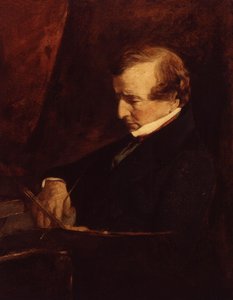
Vilijam Eti
1787 - 1849 , Велика Британија
Osnovne informacije
- Datum Rođenja: 10. mart 1787.
- Datum Smrti: 13. novembar 1849.
- Mesto Rođenja: York, Ujedinjeno Kraljevstvo
- Nacionalnost: Britanski
- Puno Ime: William Etty
- Umetnički Pokret: Romantizam
- Značajna Dela: ['Kleopatra”, “Sirene i Ulises”, "Ženski akt"],\n "Uticajni umetnici": ["Thomas Lawrence"]\n}']
Povezani članci
William Collins: A Study in Victorian Narrative Painting & Social Commentary
Explore the captivating world of William Collins (1788-1847), a celebrated Victorian painter known for his charming genre scenes and poignant social commentary. Discover his artistic journey, influences, and lasting legacy with ArtsDot.
William Powell Frith: Narratives of Victorian Society & the Rise of Realist Painting
Explore the life & works of William Powell Frith, the 'greatest British painter of social scenes.' Discover his iconic Victorian genre paintings and learn about his lasting impact on realist art. Hand-painted reproductions available.
The Enduring Allure of the Nude: A Historical & Artistic Exploration of the Human Form
Explore the captivating history of nude art! Discover iconic paintings & artists from classical to modern eras. Uncover symbolism, techniques & find museum-quality reproductions at ArtsDot.
William Etty: Rediscovering Victorian Sensibility & the Sublime in Historical Painting
Explore the captivating world of William Etty, a pioneering Victorian artist famed for his dramatic historical paintings and groundbreaking nude figures. Discover his life, controversial reception, and enduring legacy with our expert analysis.
Academic Realism's Finest: 10 Masterpieces for Art Lovers & Home Decor
Explore 10 defining Academic Realism masterpieces by Bouguereau, Gérôme & Cabanel. Discover the stories behind these iconic paintings and bring timeless art into your home with museum-quality reproductions from ArtsDot.com. Explore the full collection online!