

 Pregledaj u prostoru
 Pošalji
 Podeli
 Detalji o delu

 Преузми
 Slični predmeti
 Rendgenski snimak
 Slajdovi
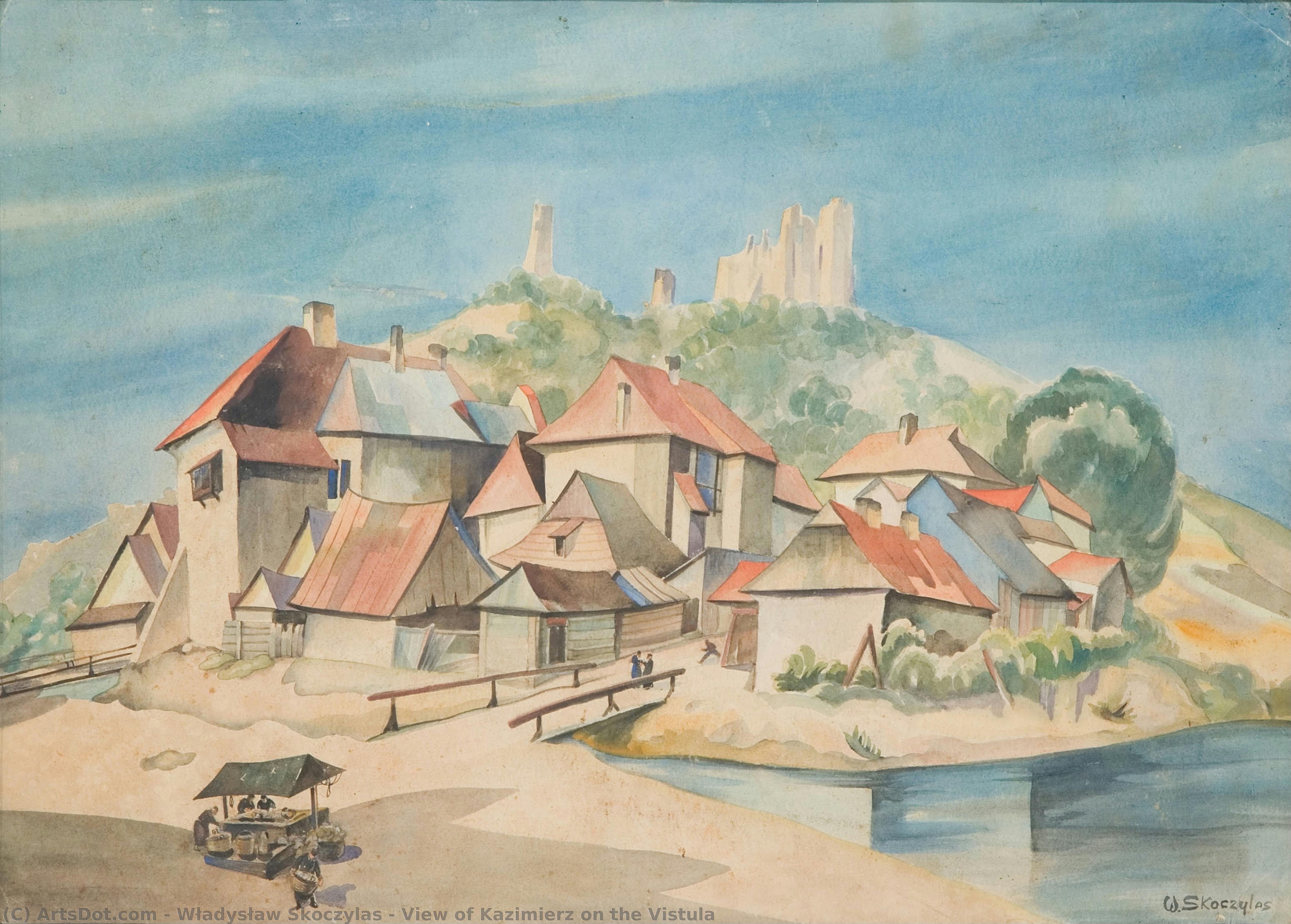
View of Kazimierz on the Vistula
 Impressionism
 1930
1930 71.0 x 97.0 cm
 Pročitaj više
Ručno rađena uljana reprodukcija
Ručno oslikano uljanim bojama na platnu u dimenzijama i okviru po vašem izboru, izrađeno po porudžbini od strane naših umetnika. ( Kupi print Kupi digitalnu sliku)




































Izaberite jednu od naših unapred definisanih veličina koje odgovaraju originalnim proporcijama umetničkog dela.

Можете унети сопствене димензије како бисте прилагодили дело одређеном оквиру или простору. Ако одабрана величина не одговара пропорцијама оригинала, слика ће бити исечена или проширена додатним елементима који се ручно насликавају. Дигитални prikaz ће вам бити послат на одобрење пре почетка производње.
Имајте на уму да преглед на екрану не одражава стварно исецање или проширење. Само приказ (mockup) ће тачно приказати коначну композицију.
Иако су доступне прилагођене величине, препоручујемо да одаберете димензију из дефинисане листе како бисте сачували оригиналне пропорције.
Nakon narudžbine, tim ArtsDot.com će klijentu putem e-pošte poslati uputstva i dostaviti prikaz predloženog rešenja
Isporuka širom sveta () za 3/4 nedelje umesto uobičajenih 5 nedelja. (5 септембар). Bez kompromisa po pitanju kvaliteta.

Besplatna ekspresna dostava širom sveta

Visokokvalitetno laneno platno

Kompletno osiguranje transporta

Garancija povraćaja carine i uvoznih dažbina

Garancija vernosti boja

Politika povrata u roku od 60 dana (samo u slučaju nedostataka)

Garancija povrata novca od 100%

Popust pri grupnoj kupovini
 Opcija sa staklom dostupna je samo za dimenzije manje od 110 cm

View of Kazimierz on the Vistula
Tehnika reprodukcije
Dimenzije reprodukcije
-


Konačna cena
$ 263
Srodna umetnička dela
Biografija umetnika
The Soul of Polish Tradition: The Life and Legacy of Władysław Skoczylas
Władysław Skoczylas (1883–1934) remains a luminous figure in the tapestry of Polish art, a creator whose hands moved between the delicate transparency of watercolor and the rugged, rhythmic strength of woodcutting. Born in the historic salt-mining town of Wieliczka, his early life was deeply intertwined with the industrious spirit of his homeland. The son of a salt mine foreman, Skoczylas grew up surrounded by the textures of earth and tradition, an environment that would later manifest in his profound connection to Polish folk motifs and landscapes. His formal education at the Kraków Academy of Fine Arts placed him under the guidance of masters such as Teodor Axentowicz and Leon Wyczółkowski, yet it was a physical limitation that perhaps most significantly defined his artistic trajectory. A debilitating allergy to oil paints forced him to abandon the heavy, layered medium of oils, leading him instead toward the ethereal world of watercolor—a shift that allowed him to master the play of light and the subtle gradations of atmosphere.
As his career matured, Skoczylas became much more than a painter; he emerged as a visionary who sought to bridge the gap between ancient Slavic heritage and the burgeoning modernism of the early 20th century. His travels expanded his technical vocabulary significantly. In Paris, he studied sculpture under the legendary Antoine Bourdelle, and in Leipzig, he refined his mastery of woodcutting at the Hochschule für Grafik und Buchkunst. This international exposure did not dilute his Polish identity but rather provided him with the sophisticated tools necessary to elevate folk art into a high-art form. His woodcuts, characterized by bold lines and a powerful sense of graphic rhythm, became iconic representations of Polish national character, often depicting heroic figures from folklore and the rugged beauty of the Carpathian mountains.
A Mastery of Medium and Motif
The brilliance of Skoczylas lies in his ability to inhabit multiple artistic dimensions simultaneously. In his watercolors, one finds a nostalgic, impressionistic realism that captures the fleeting essence of Polish life. His celebrated works, such as View of Kazimierz on the Vistula, serve as windows into a bygone era, where the light of an autumnal afternoon settles softly upon historic architecture and quiet village streets. These paintings are not merely topographical records but emotional landscapes, imbued with a sense of longing and a deep reverence for the permanence of Polish culture amidst a changing world.
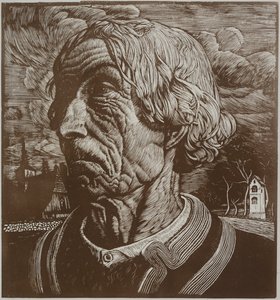
Conversely, his graphic work presents a starker, more muscular aesthetic. Through the medium of woodcut, Skoczylas achieved a rhythmic simplicity that echoed the strength of the peasantry and the resilience of the nation. His ability to distill complex narratives into striking black-and-white compositions allowed his art to resonate far beyond the gallery walls. This period of his development was marked by several key artistic pillars:
- The Watercolorist’s Sensitivity: A profound command over tonal gradations and light, used to evoke the atmospheric beauty of Polish landscapes and historic towns like Kazimierz.
- The Woodcutter’s Precision: The use of bold, graphic lines to create a modern, stylized language that celebrated folk motifs and national legends.
- The Sculptor’s Form: An understanding of volume and structural integrity, inherited from his studies in Paris, which informed the weight and presence of his graphic compositions.
An Enduring Pedagogical and Cultural Legacy
Beyond his personal output, Skoczylas was a vital architect of Polish artistic education. As a teacher, he passed on his rigorous technical standards and his passion for national identity to a new generation of artists, ensuring that the flame of Polish modernism would continue to burn brightly. His influence extended into the very fabric of the nation's visual culture, as he promoted an art form that was both technically sophisticated and deeply rooted in local tradition. He did not merely observe Polish life; he helped define its visual vocabulary for a modern era.
Though his life was tragically cut short in Warsaw in 1934, the impact of his work remains undiminished. Today, his collections—most notably the vast holdings in the Cracow Saltworks Museum in Wieliczka—serve as essential repositories of Polish heritage. Skoczylas stands as a testament to the power of artistic adaptation; by turning a physical constraint into a stylistic triumph, he created a body of work that remains as vital and evocative as the landscapes and legends that inspired him. His legacy is one of harmony: a perfect balance between the delicate whisper of watercolor and the enduring strike of the woodcut.
władysław skoczylas
1883 - 1934 , Poland
Osnovne informacije
- Artistic Movement Or Style: Watercolorism
- Artists Or Movements Influenced By This Artist: ['Henryk Grohman']
- Artists Who Influenced This Artist:
- Teodor Axentowicz
- Leon Wyczółkowski
- Date Of Birth: April 4, 1883
- Date Of Death: April 8, 1934
- Full Name: Władysław Skoczylas
- Nationality: Polish
- Notable Artworks:
- View of Kazimierz on the Vistula
- Female Dancer
- Place Of Birth: Wieliczka, Poland
Povezani članci

Watercolor Wonders: 10 Masterpieces That Redefined Art History | ArtsDot
Journey through 10 legendary watercolor masterpieces by Sargent, Turner & Homer! Explore iconic landscapes, portraits & floral art that redefined history. Find museum-quality reproductions and curated decor ideas at ArtsDot.com.

Ephemeral Visions: Exploring the Artistic Legacy & Contemporary Practice of Watercolor Painting
Explore the captivating world of watercolor painting! Discover its rich history, essential techniques, influential artists & collecting tips. A comprehensive guide for art enthusiasts from ArtsDot.
Ephemeral Echoes: Exploring the Aesthetic & Historical Significance of Vintage Watercolor Painting
Explore the captivating world of vintage watercolor painting! Discover its rich history, techniques, influential artists & collecting tips. Expert insights for enthusiasts and collectors at ArtsDot.

Ephemeral Visions: Exploring the History & Emotional Resonance of Watercolor Painting
Explore the captivating history of watercolor painting, from ancient techniques to modern masters like Kandinsky & Blake. Discover essential artists, collecting tips & the emotional power of this luminous medium. Expert insights for art enthusiasts.

Ephemeral Visions: Exploring the Artistic Legacy & Nuances of Watercolor Painting
Explore the captivating world of watercolor painting! Discover its rich history, essential techniques, influential artists & collecting tips from art experts. A comprehensive guide for enthusiasts.

