

 Pregledaj u prostoru
 Pošalji
 Podeli
 Detalji o delu

 Преузми
 Slični predmeti
 Rendgenski snimak
 Slajdovi
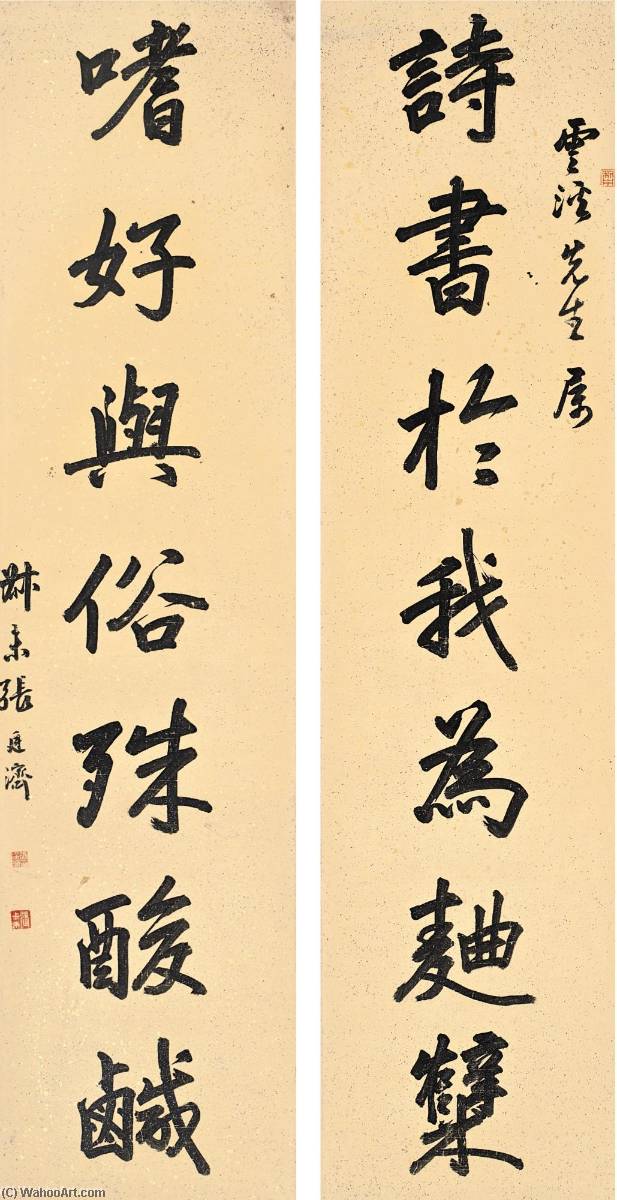
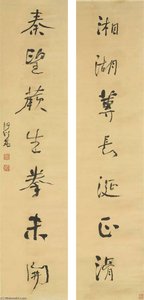
Calligraphy Couplet in Xingshu
 125.0 x 31.0 cm
 Pročitaj više
Ručno rađena uljana reprodukcija
Ručno oslikano uljanim bojama na platnu u dimenzijama i okviru po vašem izboru, izrađeno po porudžbini od strane naših umetnika. ( Kupi print Kupi digitalnu sliku)




































Izaberite jednu od naših unapred definisanih veličina koje odgovaraju originalnim proporcijama umetničkog dela.

Можете унети сопствене димензије како бисте прилагодили дело одређеном оквиру или простору. Ако одабрана величина не одговара пропорцијама оригинала, слика ће бити исечена или проширена додатним елементима који се ручно насликавају. Дигитални prikaz ће вам бити послат на одобрење пре почетка производње.
Имајте на уму да преглед на екрану не одражава стварно исецање или проширење. Само приказ (mockup) ће тачно приказати коначну композицију.
Иако су доступне прилагођене величине, препоручујемо да одаберете димензију из дефинисане листе како бисте сачували оригиналне пропорције.
Nakon narudžbine, tim ArtsDot.com će klijentu putem e-pošte poslati uputstva i dostaviti prikaz predloženog rešenja
Isporuka širom sveta () za 3/4 nedelje umesto uobičajenih 5 nedelja. (21 август). Bez kompromisa po pitanju kvaliteta.

Besplatna ekspresna dostava širom sveta

Visokokvalitetno laneno platno

Kompletno osiguranje transporta

Garancija povraćaja carine i uvoznih dažbina

Garancija vernosti boja

Politika povrata u roku od 60 dana (samo u slučaju nedostataka)

Garancija povrata novca od 100%

Popust pri grupnoj kupovini
 Opcija sa staklom dostupna je samo za dimenzije manje od 110 cm

Calligraphy Couplet in Xingshu
Tehnika reprodukcije
Dimenzije reprodukcije
-


Konačna cena
$ 263
Srodna umetnička dela




Biografija umetnika
Zhang Tingji: The Architect of Chinese Calligraphy
Zhang Tingji (1768-1848), a name perhaps less familiar to the general public than some of his contemporaries, stands as a towering figure in the history of Chinese calligraphy. More than simply a master of brush and ink, he was an innovator, a systematizer, and ultimately, the architect who meticulously designed the very framework for several crucial calligraphic scripts – Xingshu, Lishu, and Seal Script – profoundly shaping their evolution and establishing them as dominant forms within Chinese artistic tradition. His influence resonates through generations of calligraphers, cementing his legacy as one of the most important figures in the development of this revered art form.
Born into a family with deep roots in the porcelain industry during the Qing Dynasty, Zhang Tingji’s early life was inextricably linked to the world of artistic production. His father, Zhang Xiaocai, was a renowned potter and official, providing him with an environment steeped in aesthetic sensibility and practical craftsmanship. This exposure instilled within him a profound appreciation for form, balance, and the meticulous execution required to achieve excellence – qualities that would later become hallmarks of his own work. He initially pursued a career in government service, demonstrating administrative skills alongside his artistic inclinations, but it was calligraphy that ultimately captured his heart and consumed his considerable talent.
The Foundations of Xingshu: A Revolutionary Approach
Zhang Tingji’s most significant contribution lies undoubtedly in the development of Xingshu (行書), or running script. Prior to his work, Xingshu was often characterized by a looseness and informality that lacked a clear structural basis. Zhang Tingji recognized this deficiency and sought to impose order upon its seemingly chaotic nature. He meticulously analyzed the existing styles of calligraphers like Wang Hui and Zhao Peng, identifying their strengths and weaknesses, and then devised a systematic approach based on principles of balance, rhythm, and visual harmony.
His groundbreaking work, exemplified by his Calligraphy Couplet in Running Script (行書聯), established a set of codified rules for Xingshu – the careful placement of strokes, the consistent use of pressure variations to create depth and texture, and the strategic arrangement of characters within the composition. Crucially, he emphasized the importance of “breath” and “flow,” advocating for a script that felt natural and effortless while maintaining impeccable control. This systematic approach wasn’t merely about replicating existing styles; it was about creating a new standard – a blueprint for future generations to build upon.
Lishu and Seal Script: Refining Existing Forms
While Xingshu represented a radical departure, Zhang Tingji's work on Lishu (隸書) and Seal Script (篆書) was characterized by a more conservative yet equally impactful approach. He recognized the inherent strengths of these established scripts – their robustness and legibility in Lishu, and their elegant formality in Seal Script – but sought to refine them through careful observation and meticulous execution.
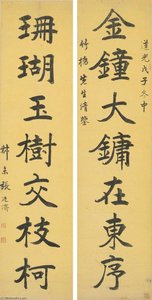
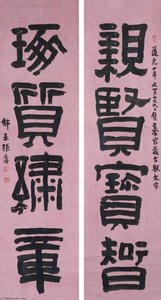
For Lishu, he focused on achieving a greater sense of stability and clarity, reducing the excessive flourishes that had sometimes characterized earlier versions. In his Calligraphy Couplet in Lishu (隸書聯), he demonstrated a refined control over line weight and spacing, creating a script that was both powerful and legible. Similarly, with Seal Script, he sought to standardize its proportions and ensure consistent execution of the various strokes, elevating it from a somewhat idiosyncratic style to a more universally accepted form.
Legacy and Historical Significance
Zhang Tingji’s influence extends far beyond his own lifetime. His systematic approach to calligraphy – emphasizing observation, analysis, and codified rules – became the foundation for subsequent generations of calligraphers. His work served as a crucial bridge between traditional practices and the burgeoning interest in systematization that emerged during the Qing Dynasty. He is credited with establishing a new standard for Xingshu, which profoundly impacted the development of Chinese calligraphy for centuries to come.
Furthermore, his meticulous cataloging efforts – particularly his *Writings on Collected Antiques in the Pavilion of Tranquil Manner* – not only documented and preserved numerous examples of calligraphic works but also provided invaluable insights into the historical context of Chinese art. His legacy is a testament to the power of disciplined observation, rigorous analysis, and a deep commitment to preserving and advancing the traditions of Chinese calligraphy.
Today, Zhang Tingji remains a revered figure in the world of Chinese art, his work continuing to inspire artists and scholars alike. His systematic approach serves as a reminder that even within seemingly fluid artistic practices, there exists a profound value in structure, discipline, and a relentless pursuit of excellence.
zhang tingji
1768 - 1848
Osnovne informacije
- Artistic Movement Or Style: Calligraphy (Xingshu, Lishu, Seal)
- Artists Who Influenced This Artist: ['None],\n "Artists or movements influenced by this artist": ["Traditional Chinese art"]\n}']
- Date Of Birth: 1768
- Date Of Death: 1848
- Full Name: Zhang Tingji
- Nationality: Chinese
- Notable Artworks:
- Calligraphy Couplet in Li Script
- Calligraphy Couplet in Xingshu
- Calligraphy Couplet in Seal Script
- Place Of Birth: WahooArt

