

The Collector's Journey: Understanding the Global Landscape of Art Acquisition
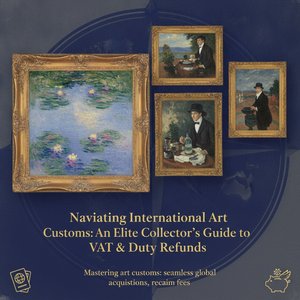 Navigating International Art Customs: A Sophisticated Guide to VAT, Duties, and Seamless Global Acquisitions
The Collector's Journey: Understanding the Global Landscape of Art Acquisition To collect art is to embark upon a lifelong pilgrimage, a pursuit that transcends the mere acquisition of objects and enters the realm of emotional resonance. For those of...
To collect art is to embark upon a lifelong pilgrimage, a pursuit that transcends the mere acquisition of objects and enters the realm of emotional resonance. For those of us moved by the dappled sunlight of a Monet or the profound, textured shadows in a Van Gogh, the act of collecting is an intimate dialogue with history. We do not merely seek decorations for our walls; we seek fragments of beauty that speak to the soul. However, as our passion expands beyond local galleries to the vast, interconnected world of international masters, the journey becomes more complex. The borders that separate nations should never be barriers to beauty, yet the movement of fine art across the globe introduces a layer of logistical nuance that requires both patience and a refined understanding of global commerce.
As we navigate this landscape, we must recognize that every masterpiece carries with it a heritage. Whether it is a bespoke oil reproduction commissioned to capture a personal memory or a carefully selected piece from an established collection, the transit of such treasures involves more than just physical movement. It involves the careful management of expectations and the navigation of international protocols. For the discerning collector, the true joy lies in the discovery, while the wisdom lies in understanding the subtle intricacies of bringing these luminous works into one's private sanctuary.
Decoding Customs: A Gentle Guide to Import Duties and Tariffs
 Customs
Customs is an authority or agency in a country responsible for collecting tariffs and for controlling the flow of goods, including animals, transports, personal effects, and hazardous items, into and out of a country. Traditionally, customs has been ...
There is a certain gravity to the arrival of a new painting, a moment of anticipation as we await the arrival of a work that promises to transform a room. Yet, this moment can sometimes be shadowed by the technicalities of international trade. At its core, the global landscape of art acquisition is governed by customs authorities—the gatekeepers of international trade. These agencies are tasked with more than just taxation; they manage the security and flow of goods, ensuring that every shipment complies with the specific legal frameworks of the destination country.
To navigate this terrain, one must understand that customs duties, often referred to as tariffs, are levies imposed by a nation upon imported goods. These duties are not arbitrary but are calculated based on the country of origin, the declared value of the artwork, and the specific classification of the piece. While some trade agreements may offer exemptions for certain types of art, the fundamental reality remains that the importer of record bears the responsibility for these costs. It is important to note that while original works of art—such as paintings, drawings, and sculptures—may enjoy duty-free status under specific international classifications like Chapter 97, the presence of non-art elements, such as an exceptionally valuable frame, may require separate classification and potential duties.
Navigating the Fiscal Landscape: VAT, Import Taxes, and Regional Requirements
 No Hidden Fees: Your Expert Guide to Navigating International Art Customs & VAT Refunds
Understanding the Global Landscape: Import Duties and Customs Fundamentals Customs Customs is an authority or agency in a country responsible for collecting tariffs and for controlling the flow of goods, including animals, transports, personal effect...
As an artwork crosses a sovereign threshold, it enters the realm of fiscal scrutiny. Value Added Tax (VAT) and import taxes represent perhaps the most significant variable in the total cost of acquisition. These levies are not merely administrative burdens but are complex instruments used by nations to regulate trade and generate revenue. The application of VAT is particularly nuanced, as thresholds for registration and varying rates vary significantly from one country to another. For instance, a collector in the United Kingdom may encounter different regulatory landscapes than one residing in France or Germany.
In many European territories, there are even provisions for reduced VAT rates on works of art, reflecting a cultural commitment to making fine art more accessible. However, the complexity deepens when considering regional tax requirements and the necessity of proper documentation. For collectors acquiring pieces from specific regions, such as Brazil or Mexico, certain identifiers like a CPF or a local tax ID may be essential for a smooth transit. Understanding these nuances is the first step in ensuring that your passion for contemporary or classical art does not become entangled in the friction of international bureaucracy.
Smooth Transitions: Managing Logistics and Documentation for International Shipments
 The Collector's Guide to International Art Logistics: Navigating Customs, VAT, and Global Acquisitions with Absolute Certainty
The Nuances of Global Art Acquisition: Understanding International Trade Regulations To the discerning collector, the acquisition of a masterpiece is far more than a mere transaction; it is an emotional and intellectual journey that transcends border...
The movement of high-value assets across borders introduces a layer of complexity that exists far beyond the aesthetic appreciation of the work itself. For the elite collector, understanding these nuances is the first step in ensuring that a new acquisition arrives not just as a physical object, but as a preserved legacy. The global art market operates within a delicate web of cultural heritage laws and trade regulations designed to protect the sanctity of national treasures while facilitating the flow of beauty.
Successful international logistics require meticulous attention to detail. This includes everything from ensuring the correct use of industrial-grade protective materials—such as 3mm tubes for rolled art or reinforced double-walled boxes for framed pieces—to providing the necessary declarations for customs officials. For certain countries, such as Italy, providing a Reproduction Declaration is vital to clarify the nature of the work being imported. By approaching the logistical phase with preparation and precision, the collector can ensure that the physical journey of the artwork is as seamless as its emotional impact.
The Seamless Experience: How ArtsDot Simplifies Customs and VAT Refunds
 F.A.Q.: Customs Fees Refund – A Guide for Elite Collectors
F.A.Q.: Customs Fees Refund – A Guide for Elite Collectors At ArtsDot.com, we make international collecting smooth and transparent. Here’s how our customs/VAT refund works for your peace of mind. How the Customs/VAT Refund Works We ship your artwork...
At ArtsDot.com, we believe that the joy of discovering a new masterpiece should never be overshadowed by the technicalities of international trade. We strive to make international collecting smooth and transparent, providing a sense of peace of mind that allows you to focus entirely on the beauty of your new acquisition. Our commitment to excellence extends beyond the brushstrokes on the canvas to the very way we support our global community of collectors.
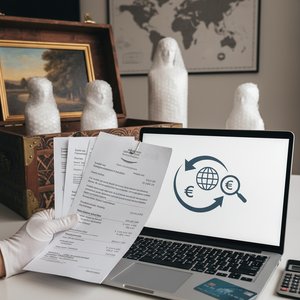
We understand that local customs authorities may occasionally charge VAT or import fees upon delivery, and to mitigate this uncertainty, we have established a clear and reliable refund process. If you are charged a VAT or customs fee that is shown on your official customs invoice, we will refund the amount paid. To facilitate this, all we require is a clear photo of the official invoice issued by the carrier or local customs authority, sent to our support team along with your order number. This simple, transparent system ensures that your pursuit of beauty remains an inspiring journey, free from the hidden burdens of international commerce.