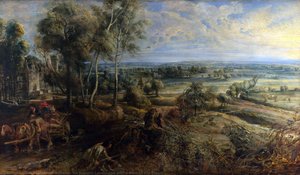
The Legacy of the Hunt: Exploring the Dramatic Allure of Baroque and Romantic Landscapes
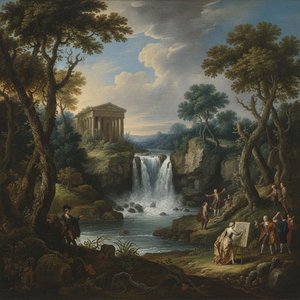 Drama in Nature: The Captivating Grandeur of Baroque Landscapes and the Art of Emotional Spectacle
The Seismic Shift: From Renaissance Harmony to Baroque Emotion The Visceral Stage: Exploring Dramatic Narratives & Emotional Intensity in Baroque Art The Baroque Embrace of Emotion: A Shift from Renaissance Rationality Wikipedia: Baroque painting Bar...
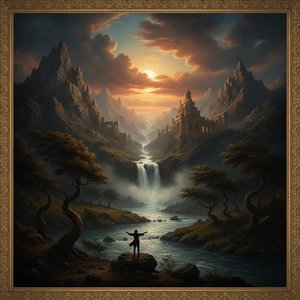
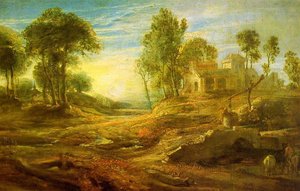
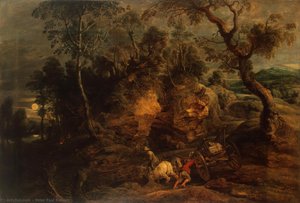
To stand before a landscape is to do more than merely observe a vista; it is to engage in a profound dialogue with the earth itself. For centuries, the art of the hunt has served as a powerful medium for this connection, capturing not just the physical pursuit of game, but the complex tension between human ambition and the untamed majesty of the natural world. In the era of the Renaissance, landscapes often sought a sense of mathematical harmony and quietude, presenting an idealized, balanced world. However, as Europe moved into the seventeenth century, a seismic shift occurred. The emergence of the Baroque movement brought with it an appetite for drama, emotion, and the visceral spectacle of life in motion.
The hunt, with its inherent pulse of adrenaline and its deep symbolic ties to nobility and social hierarchy, became the perfect stage for this new aesthetic. These works were never merely about rural activity; they were carefully constructed tableaux brimming with symbolic weight. As we look toward the Romantic era, this connection deepened further, as artists began to explore the sublime—that breathtaking intersection of beauty and terror found in the vastness of nature. Whether through the lens of aristocratic tradition or the raw power of the wild, hunting scenes allow us to bring a sense of historical narrative and emotional depth into our contemporary living spaces, reminding us of an age where the boundaries between civilization and the wilderness were beautifully, and often perilously, blurred.
A Symphony of Motion and Nature: The Technical Mastery of Flemish and 19th-Century Masters
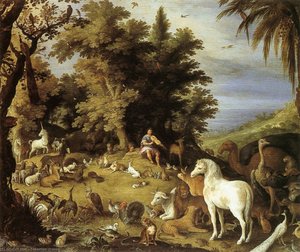 Landscape with a Deer Hunt
Sebastiaan Vrancx’s ‘Landscape with a Deer Hunt’: A Flemish Baroque Vision This exquisite hand-painted reproduction captures the essence of a pivotal moment in 16th-century Flemish art – a deer hunt rendered with the dramatic intensity and meticulous...
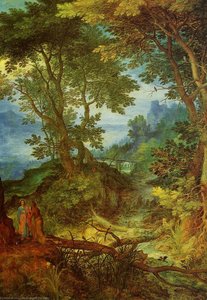
The true magic of a hunting masterpiece lies in the technical prowess required to render the fleeting moment. Consider the Flemish Baroque vision, epitomized by masters such as Sebastiaan Vrancx. In his works, one finds a meticulous attention to detail that transcends simple depiction. Through the sophisticated use of chiaroscuro—the dramatic interplay of light and shadow—and atmospheric perspective, these artists could create an illusion of infinite depth, drawing the viewer’s eye from the textured forest floor toward the hazy, distant horizon. The precise rendering of a horse’s musculature or the subtle glint of sunlight on a hunter's weaponry speaks to a level of observation that is nothing short of extraordinary.
As the centuries progressed, this technical mastery evolved into new forms of expression. In the nineteenth century, artists like Edgar Hunt dedicated their brushes to capturing the grandeur of aristocratic pursuits, preserving a romanticized vision of a bygone era through vibrant palettes and clear, luminous compositions. While the Flemish masters excelled in the heavy, dramatic textures of the Baroque, later painters brought a renewed clarity and a fascination with the atmosphere of the chase. It is this technical lineage—the ability to capture the very breath of a changing world through layered oils and deliberate brushwork—that defines the enduring appeal of these works. When you hold a hand-painted reproduction, you are not just looking at a picture; you are experiencing the legacy of these masters, where every stroke is an echo of historical brilliance.
Curating the Wild: Integrating Hunting Scenes into Sophisticated Interior Design
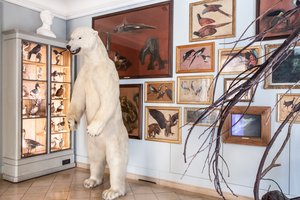 Musee de la Chasse et de la Nature
A Symphony of Art and Wilderness: The Soul of Hôtel de Guénégaud In the heart of Paris, tucked away within the aristocratic shadows of the Marais, lies a sanctuary where the boundaries between the wild and the refined dissolve into a singular, breath...
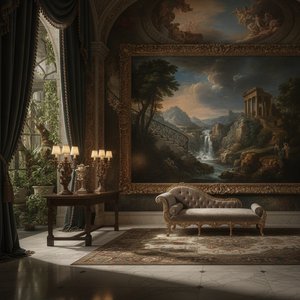
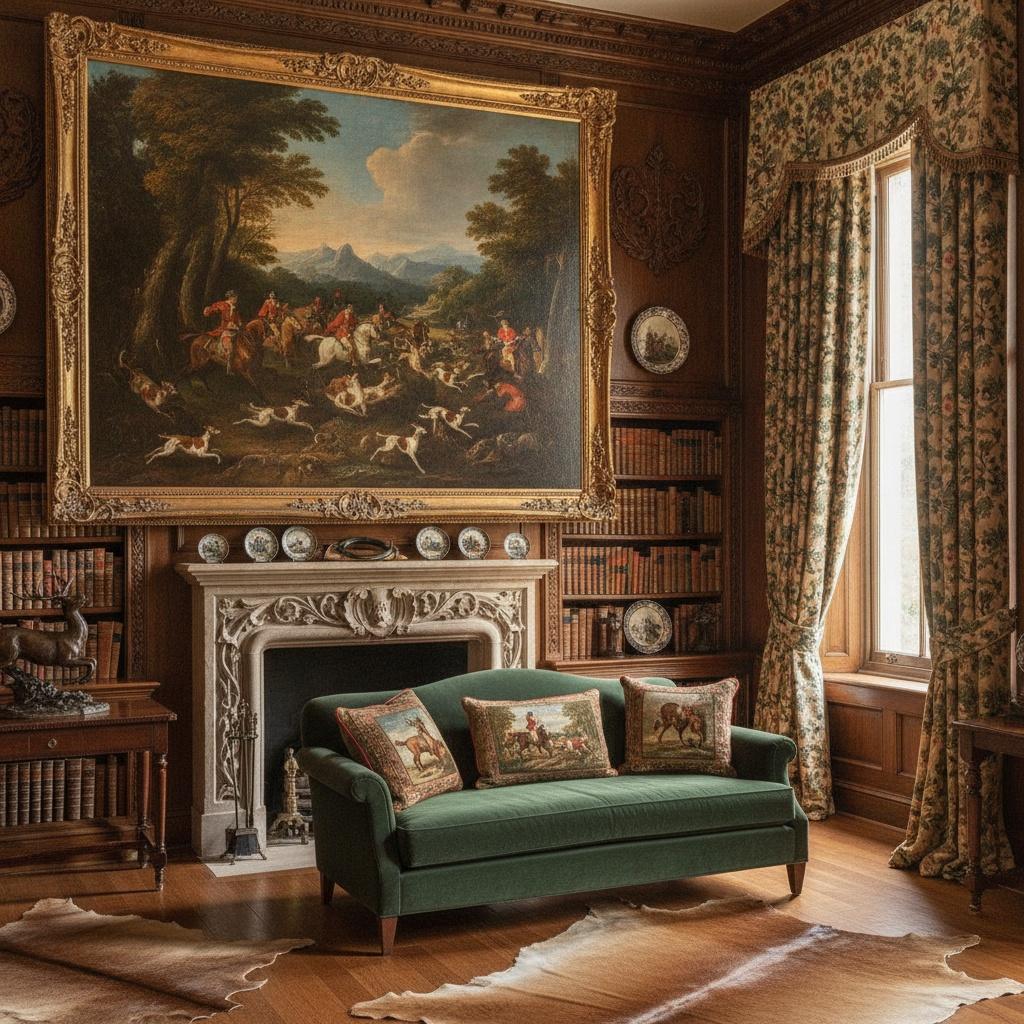
Integrating such powerful imagery into a modern home requires a discerning eye for balance and atmosphere. The goal is to achieve what the Musée de la Chasse et de la Nature in Paris so elegantly demonstrates: a seamless dissolution of the boundaries between the wild and the refined. In an interior setting, a hunting scene can act as a profound focal point, lending a sense of established history and "old-world" prestige to a room.
For those decorating a library, study, or grand dining hall, larger-format works or even multi-panel group sets can transform a wide wall into an architectural feature, creating a window into a storied past. To maintain a sophisticated aesthetic, consider the following design principles:
- Color Harmony: Use the earthy browns, deep forest greens, and muted blues found within the painting to inform your room's color palette, creating a cohesive visual flow.
- Scale and Impact: A single, large-scale canvas can anchor a room, while smaller, intimate pieces are perfect for creating a curated gallery wall that invites close contemplation.
- Thematic Layering: Pair these rugged, naturalistic scenes with refined textures like leather, dark wood, or brass to echo the aristocratic themes of the artwork.
The Modern Renaissance: Transforming Personal Memories into Historical Masterpieces
At ArtsDot.com, we believe that the beauty of art history should not be confined to museums; it should be a living, breathing part of your personal story. We offer a unique opportunity to "remix" the past through our bespoke customization services. Imagine the profound impact of a Period Shift—the ability to take a contemporary photograph and have it reimagined with the luminous, light-drenched style of Monet or the dramatic, textured impasto of Van Gogh.
This modern renaissance extends to your most cherished memories. Our most popular service allows you to transform personal milestones into museum-grade treasures. Whether it is a beautifully restored family portrait or a custom pet portrait—perhaps depicting your loyal companion as a distinguished general from a historical era—our artists work with unparalleled skill to bridge the gap between the present and the past. Through our Professional Digital Mockup Service, we remove all uncertainty, allowing you to see the composition and color adjustments before the first drop of oil touches the canvas. This ensures that your custom commission is not just a painting, but a perfectly realized vision of your own history, rendered with the prestige of the Old Masters.
The Tactile Experience: The Enduring Beauty of Hand-Painted Oil Reproductions
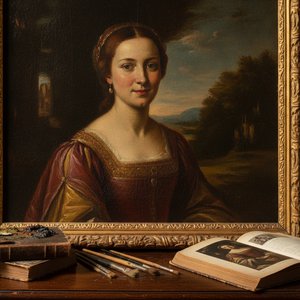
In an increasingly digital and mass-produced world, there is an irreplaceable value in the tactile reality of a hand-painted work. There is a fundamental difference between a computer-printed poster and a true oil reproduction. When you choose a handmade oil painting from our collection, you are investing in the soul of the piece. Each work is meticulously crafted on 100% cotton canvas, where the artist’s visible brushstrokes create a physical texture and a depth of tone that no print can replicate.
Our process is a labor of passion and precision. From the initial application of flexible gesso to prevent cracking, to the use of specialized oils like safflower to ensure whites remain pristine and free from yellowing, every step is designed for longevity. Once the painting is complete, a final coat of Damar varnish protects the surface from dust and moisture, ensuring that the pigments remain vibrant for generations. Whether you opt for a classic finish or an "Aged & Cracked" (craquelure) effect to enhance its historical character, our reproductions are engineered to be lasting legacies. This is art you can feel—a piece of history, captured by hand, and preserved for your future.