

The Soul of the Canvas: Understanding the Essence of Dutch Impressionism
To step into the world of Dutch Impressionism is to embark on a sensory journey where the boundaries between reality and perception begin to soften. Unlike the more structured, often dramatic narratives found in earlier eras, this movement invites us to pause and breathe. It is an art form rooted in the quiet observation of the everyday—the way a morning mist clings to a polder or how the sun filters through a low-hanging cloud over a sleepy village. For the discerning collector, these works offer more than mere decoration; they provide a window into a specific, tranquil temperament that celebrates the fleeting beauty of the natural world.
At its heart, this style is about capturing the essence rather than the exact anatomical or architectural detail. It draws heavily from the legacy of the Dutch Golden Age, yet it breathes with a new, modern vitality. Where masters like Gerard ter Borch once focused on the meticulous realism of a singer and lutenist, the Impressionists sought the vibration of light itself. This shift represents a profound emotional evolution, moving from the documentation of status and stillness to the celebration of movement, atmosphere, and the ephemeral glow that defines our most cherished memories.
A Symphony of Light: How Dutch Masters Capture Atmosphere and Emotion
Light is the true protagonist in every Dutch Impressionist masterpiece. It is not merely a tool used to illuminate subjects, but a living, breathing element that dictates the mood of the entire composition. Consider the works of artists like Anton Mauve, where a winter landscape is not just a depiction of cold, but a study in muted tones and heavy, impasto textures that make the very air feel thick with moisture. The light here is often soft, diffused by clouds, creating a sense of melancholy and peace that resonates deeply within a quiet room.
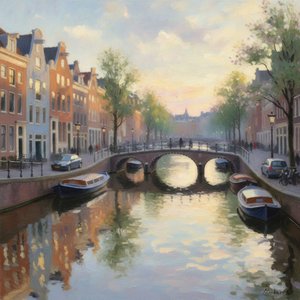
This mastery of illumination extends to the more vibrant scenes as well. Artists such as Jacobus Schoemaker Doyer captured the rhythmic pulse of Dutch cityscapes, using light to guide the eye through bustling streets and sun-drenched canals. There is a rhythmic quality to the brushwork—a way in which color is layered to create depth and luminosity. When you observe these paintings, you are not just looking at a scene; you are experiencing the temperature of the day, the humidity of the breeze, and the emotional weight of a sunset. It is this ability to translate atmospheric conditions into visible emotion that makes these works so enduringly captivating for those seeking to infuse their homes with soul.
Curating Serenity: Integrating Impressionistic Landscapes into Your Interior Design
Bringing Dutch Impressionism into your living space is an exercise in intentionality and mood-setting. Because these paintings are so deeply connected to the elements of earth, water, and sky, they serve as natural anchors for interior design. For a room intended for relaxation, such as a master bedroom or a quiet reading nook, a landscape featuring the soft, silvery tones of a Dutch road or a misty polder can create an immediate sense of sanctuary. The muted palettes act as a visual exhale, lowering the energy of the room and inviting contemplation.
In more expansive, social areas like a grand living room or a dining hall, you might opt for larger-format works or even multi-panel compositions that span a wide wall. A series of three or four panels depicting a continuous river scene can act as a breathtaking architectural feature, much like a window looking out onto an eternal spring. When selecting pieces, consider the existing color palette of your room; an Impressionist work with subtle blues and greens can complement modern neutrals, while a more vibrant, light-drenched piece can provide a necessary focal point in a minimalist space. The goal is to create a dialogue between the art and the architecture, allowing the painting to breathe life into the walls.
From Golden Age to Impressionist Brushstroke: A Visual Journey Through Time
The lineage of Dutch art is a continuous thread of brilliance, stretching from the profound psychological depth of the 17th century to the atmospheric freedom of the late 19th century. To appreciate the Impressionist movement, one must acknowledge its ancestors. The influence of Jan Dirksz Both, with his golden, Mediterranean-inspired light, or the intricate realism of Pieter Cornelis Dommershuijzen’s lively marketplaces, provided the foundation upon which later artists built their innovations. These earlier masters taught the world how to see the drama in a landscape and the life in a crowd.
The Impressionists took this foundation and loosened the grip of precision. They moved away from the heavy, dark shadows of the past toward a brighter, more translucent way of painting. This evolution is visible in the transition from the solid, structural forms of traditional Dutch landscapes to the fluid, almost rhythmic strokes found in the works of Gerard Bilders. It is a journey from the certain to the felt—from the objective reality of what is there to the subjective experience of how it feels to be present in that moment. For the collector, owning pieces from this lineage allows for a rich, layered narrative within a home collection, bridging the gap between historical grandeur and modern sensibility.
Personalizing Your Collection: Customizing Masterpieces for Your Unique Space
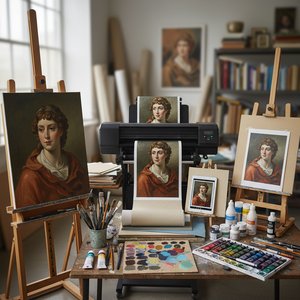
One of the most enchanting aspects of collecting fine art reproductions is the ability to tailor history to your personal aesthetic. We believe that art should never be a compromise; it should be a reflection of your unique story. This might mean choosing a specific color palette to match your upholstery, or perhaps commissioning a piece that reimagines a personal memory through an Impressionist lens. The beauty of modern craftsmanship allows for a level of customization that was once reserved only for the wealthiest aristocrats.
Imagine transforming a cherished family photograph into a work of art that possesses the thick, tactile impasto of a late 19th-century master, or requesting a "period shift" where a contemporary scene is reimagined with the light and texture of the Dutch masters. Whether you are looking for a single, impactful canvas or a complex, multi-panel installation designed to wrap around a staircase, the possibilities are as vast as the landscapes themselves. By focusing on the emotion and the atmosphere rather than just the subject, you can curate a collection that does more than fill a space—it creates an atmosphere of timeless elegance and personal meaning.