The Poetry of Curves: Defining Biomorphic Abstraction
 Organic Abstraction
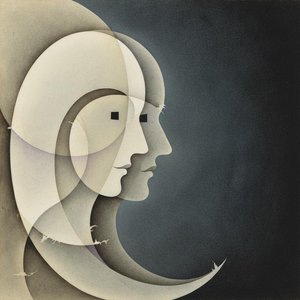
Organic Abstraction is an artistic style characterized by "the use of rounded or wavy abstract forms based on what one finds in nature." It takes its cues from rhythmic forms found in nature, both small scale, as in the structures of small-growth lea...
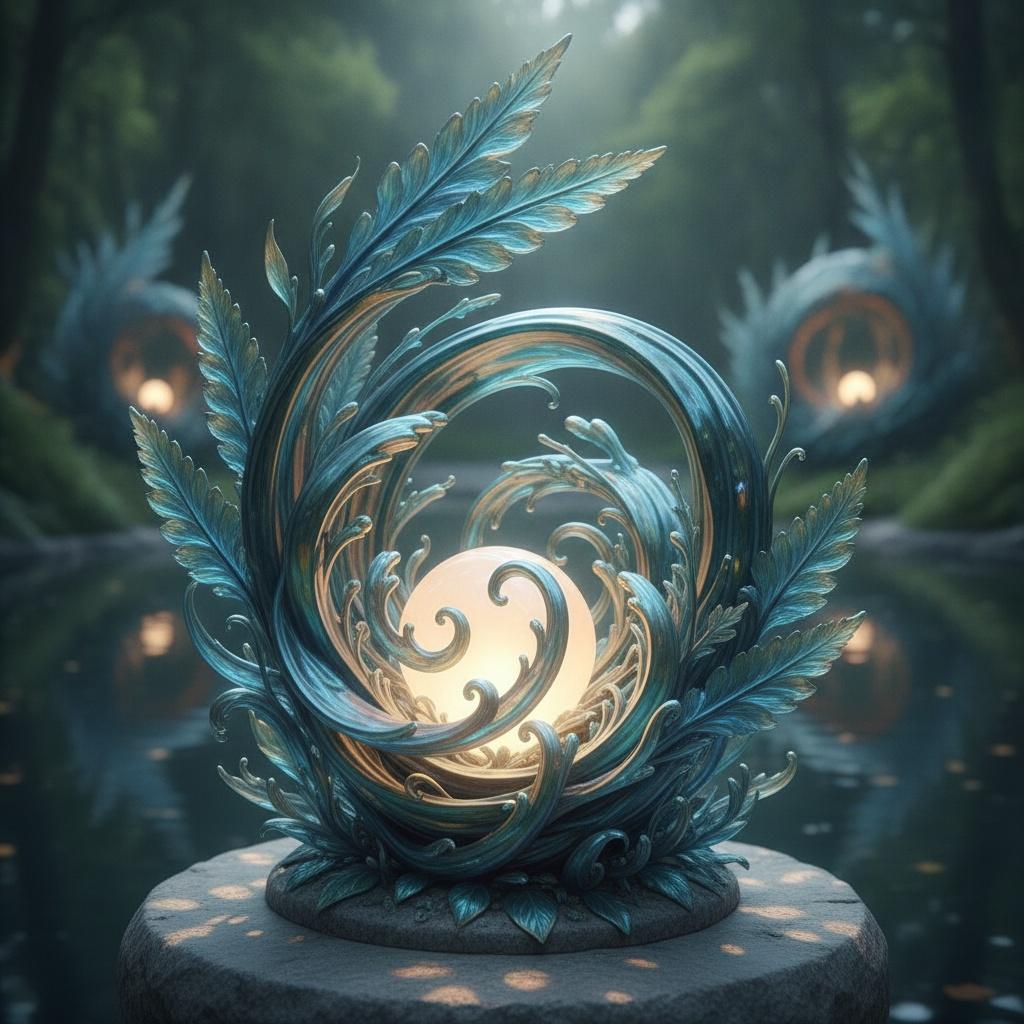
To step into the world of biomorphic art is to abandon the rigid, often taxing geometry of modern life and surrender to a more primal, soothing rhythm. While traditional abstraction often relies on the sharp, uncompromising edges of squares and triangles, biomorphic abstraction whispers through rounded, wavy forms that feel as intuitive as breathing. It is an artistic language born from the soft curve of a nautilus shell, the delicate veins of a leaf, or the sweeping movement of wind across a sun-drenched dune. This style does not seek to strictly mimic nature, but rather to suggest life itself—capturing the essence of growth, mutation, and the continuous flow of existence without the need for literal representation.
At its heart, this movement celebrates what the philosopher Henri Bergson described as unforeseeable novelty. It moves away from the cold, intellectual formalism of styles like Cubism or Constructivism, opting instead for a visual dialogue that feels deeply grounded in our shared biological experience. When we encounter these organic shapes, we are not merely looking at paint on canvas; we are witnessing a celebration of the rhythmic, undulating forms that define our very existence. It is an art of connection, bridging the gap between our structured indoor environments and the wild, flowing energy of the earth.
Nature’s Blueprint: From Nautilus Shells to Cosmic Forms
 Beyond Shapes: 10 Iconic Abstract Masterpieces That Redefine Art
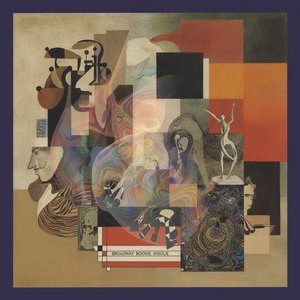
Introduction Imagine walking into a room where the walls do not speak in words or recognizable faces, but in whispers of color, rhythmic pulses of line, and the raw energy of emotion. This is the magic of abstract art—a realm where the boundaries of ...
The inspiration for biomorphic abstraction is as vast as the universe itself, spanning from the microscopic to the celestial. One might find the same mathematical grace in the spiral of a chambered nautilus as one finds in the swirling arms of a distant galaxy. This interconnectedness allows the artist to draw cues from both the small-scale structures of budding stems and the grand, sweeping shapes revealed by modern astronomy. The beauty of this style lies in its ability to evoke the familiar—the bones and musculature of the human body or the intricate architecture of a honeycomb—while simultaneously transporting the viewer into a realm of pure, abstract emotion.
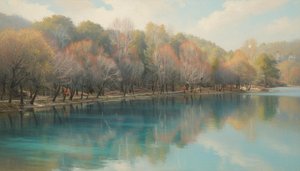
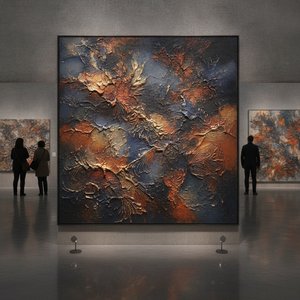
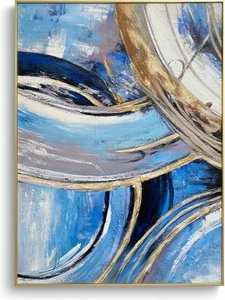
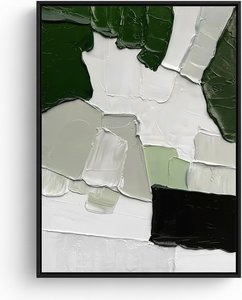
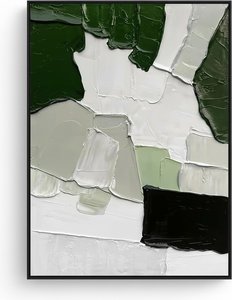
This fascination with organic structures creates a sense of profound harmony. By utilizing forms that echo the natural world, artists can tap into a universal aesthetic that feels both sophisticated and ancient. Whether it is the way light dances across a textured impasto surface to suggest a luminous landscape or the use of layered colors to mimic the depth of a forest floor, biomorphic art utilizes nature's own blueprint to create works that resonate with our subconscious. It is a visual journey through the very architecture of life, inviting us to find beauty in the asymmetrical and the imperfect.
A Sanctuary of Softness: Bringing Organic Flow into Modern Interiors
 Nature’s Flow: How Organic Forms and Biomorphic Abstraction Bring Harmony to Modern Interior Design
The Poetry of Curves: Understanding Organic Abstraction in the Home Organic Abstraction Organic Abstraction is an artistic style characterized by "the use of rounded or wavy abstract forms based on what one finds in nature." It takes its cues from rh...
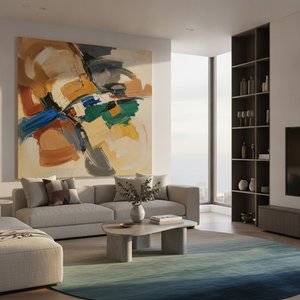
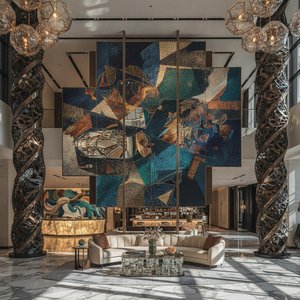
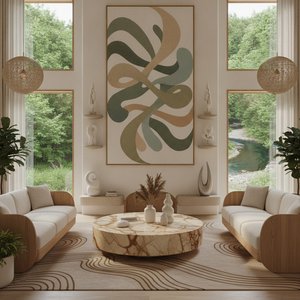
In the realm of modern interior design, the introduction of organic abstraction acts as a transformative element, capable of shifting the entire atmosphere of a room. In an era where our lives are often dominated by the hard lines of technology and urban architecture, bringing biomorphic elements into the home offers a profound sense of visual serenity. To adorn a living space with these rounded, fluid forms is to compose a sanctuary that feels both curated and deeply soulful. It moves the decor away from the sterile and toward something far more restorative.
Integrating these pieces into your home is about more than mere decoration; it is about creating a dialogue between your personal space and the natural world. A large-scale, multi-panel canvas featuring flowing charcoal and ethereal cream tones can serve as a focal point that anchors a room in stillness. For those looking to infuse their homes with a sense of peace, choosing artworks that emphasize soft curves and rhythmic pulses can help mitigate the stress of modern life. Much like a well-placed window to a garden, biomorphic art provides a window into a more tranquil state of being, making your home a true retreat from the outside world.
Mastering the Movement: Iconic Artists and the Surrealist Connection
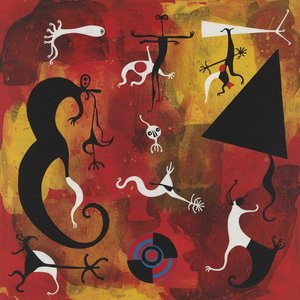
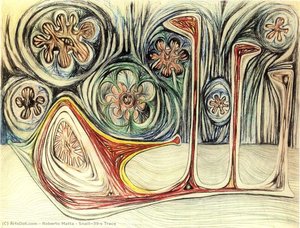 Snail's Trace
Explore 'Snail’s Trace' by Roberto Matta (1937). A mesmerizing surrealist drawing featuring biomorphic forms & layered color. Abstract Expressionism meets Chilean art.
The history of biomorphic abstraction is inextricably linked to the profound explorations of the Surrealist movement. While Surrealism often sought to depict the illogical or dreamlike scenes of the unconscious mind, many of its practitioners utilized biomorphic shapes to navigate the boundaries between reality and a "super-reality." Artists like Roberto Matta explored these mesmerizing forms through layered colors and abstract expressionism, creating works that feel like traces of a living organism. Similarly, the influence of Surrealism can be seen in the way artists use unexpected juxtapositions to awaken the viewer's sense of wonder.
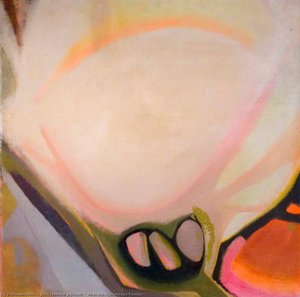
We see this legacy in the evolution of artists such as John Howard Jephcott, whose journey moved from representational painting toward luminous landscapes and organic forms that capture atmosphere rather than precise depiction. Even the architectural marvels of the world, such as the Guggenheim Museum designed by Frank Lloyd Wright, reflect this biomorphic spirit through their flowing, continuous lines. This era of art taught us that the most powerful way to express the human condition is often through the fluid, the metamorphic, and the beautifully strange.
Curating Your Own Natural Escape: Tips for Selecting Biomorphic Artworks
 john howard jephcott
Early Life and Artistic Foundations John Howard Jephcott, born in 1910 and passing away in 1984, was a British artist whose work embodies the spirit of mid-20th century abstraction. While biographical details remain somewhat elusive—a characteristic ...
Selecting art for your collection can feel daunting, but when approaching biomorphic abstraction, the process becomes an act of personal discovery. To begin, consider the color palette of your existing space. If you seek a sense of calm, look for works with soft blues, teals, and creams that evoke water or mist. For a more energetic, grounded feeling, search for deeper earth tones and vibrant oranges that suggest warmth and vitality. At ArtsDot.com, we encourage you to browse by color and mood, allowing your intuition to guide you toward the piece that resonates most deeply with your spirit.
When choosing a piece, think about the scale and the "flow" of your walls. A single, large-format canvas can create a powerful moment of monolithic serenity, while a multi-panel group set can elegantly wrap around a staircase or fill a wide hallway, creating a sense of continuous movement. If you are unsure how a specific composition will look, our expert art consultants can provide digital mockups, placing the artwork directly onto a photo of your wall to ensure a perfect match for your aesthetic. Whether you choose a hand-painted oil reproduction with rich, visible brushstrokes or a custom commission that transforms a personal memory into an organic masterpiece, the goal is to create a space that feels uniquely yours—a curated escape into the fluid beauty of nature.