Defining Realism: The Shift from Idealized Classicism to Objective Truth
 The Poetic Truth of Observation: Exploring 19th-Century Realism in Painting
The Rise of Realism: A Rejection of Idealism Wikipedia: Realism (art movement) Realism was an artistic movement that emerged in France in the 1840s. Realists rejected Romanticism, which had dominated French literature and art since the early 19th cen...
The history of Western art is often viewed as a pendulum swinging between the pursuit of the divine and the confrontation with the tangible. For centuries, the academic tradition, championed by institutions like the Académie des Beaux-Arts, held a near-monopoly on taste, favoring Neoclassicism and the sweeping, theatrical dramas of Romanticism. These movements sought to transport the viewer to exalted realms—mythological landscapes, heroic battles, and exotic locales that existed far beyond the reach of the common man. Art was a window into the sublime, often polished to a mirror-scale smoothness that erased the grit, sweat, and very real textures of human existence. However, as the 1840s dawned, a seismic shift occurred in France, marking the birth of Realism. This was not merely a change in brushwork but an act of profound artistic rebellion.
The emergence of Realism represented a deliberate turning away from the exaggerated emotionalism and theatricality of the Romantics in favor of something far more daunting: the unvarnished present. Led by figures such as Gustave Courbet, the movement rejected the gilded, often suffocating atmosphere of idealized classicism. Where a Romantic painter might depict a tragic hero lost in a storm to evoke awe, the Realist would instead focus on the weary eyes of a laborer caught in the rain. This movement demanded that art confront the contemporary world—the industrial revolutions, the social inequalities, and the everyday lives of the working class—without the safety net of allegory or myth. It was a commitment to portraying life
as it is, embracing the mundane, the imperfect, and even the unpleasant as legitimate subjects for high art.
The Impact of 19th-Century Realism on Modern Interior Aesthetics
 Romantic Realism's Finest: 10 Masterpieces for Your Home | ArtsDot
Introduction To gaze upon these ten masterpieces is to step into a world suspended between dream and reality, where the raw power of human emotion collides with meticulous observation. The Romantic Realism movement, though relatively short-lived, lef...
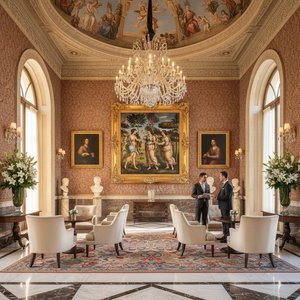
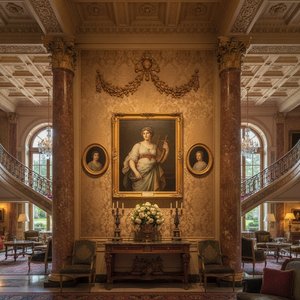
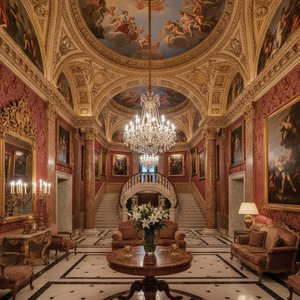
For the contemporary designer or procurement manager tasked with defining the atmosphere of a luxury hotel or corporate lobby, the legacy of 19th-century Realism offers an unparalleled toolkit for creating grounded, sophisticated environments. Unlike the escapism found in more fantastical art styles, Realist works provide an anchor of authenticity. They possess a unique ability to bridge the gap between historical grandeur and modern accessibility. In a world increasingly saturated with digital artifice, the presence of a piece that celebrates the tangible reality of our world brings a sense of permanence and truth to a space. This makes Realism an ideal choice for hospitality projects where the goal is to foster a sense of connection and comfort among diverse international guests.
The aesthetic impact of Realism lies in its ability to introduce "humanity" into large-scale architectural projects. While abstract works can provide striking focal points, they often lack the narrative weight required to tell a story within a room. Realist paintings, by contrast, invite contemplation through their recognizable subjects and relatable emotions. Whether it is a landscape that captures the quiet dignity of rural life or a portrait that reflects the complexities of urban existence, these works imbue a space with a palpable soul. For designers working on high-volume projects, integrating these themes allows for a cohesive design language that feels both curated and deeply rooted in the human experience, providing a sophisticated backdrop that complements modern textures like stone, wood, and steel.
Technical Mastery: Analyzing Texture, Light, and Anatomical Precision in Realist Works
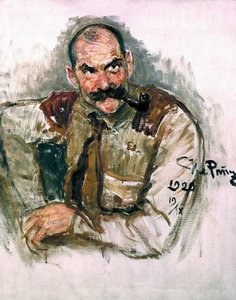
To truly appreciate the power of Realism, one must look beyond the subject matter and examine the technical rigor required to achieve such lifelike results. The movement was founded on direct observation, which necessitated a mastery of light, shadow, and anatomy. Unlike the smooth, porcelain-like finishes of Neoclassical works, Realist painters often utilized more robust, visible brushstrokes to convey the weight and texture of their subjects. This technique, often leaning toward an
impasto style, allows the light to catch the physical ridges of the paint, creating a dynamic surface that changes as a viewer moves through a room. This tactile depth is what distinguishes a true hand-painted oil reproduction from a flat, digital print.
The brilliance of Realism also resides in its sophisticated handling of light—not as a divine, supernatural force, but as a natural element that defines form and atmosphere. Artists like Millet and Courbet understood how light interacts with different surfaces: the roughness of burlap, the dampness of earth, or the subtle sheen of skin. This precision in rendering texture creates a sense of three-dimensionality that is essential for large-scale installations. When selecting art for a professional space, understanding this technical depth is crucial; it is the interplay of light and shadow within the paint itself that provides the "glow" and presence necessary to command attention in high-ceilinged lobbies or expansive corridors.
Strategic Implementation: Selecting Realist Masterpieces for Hospitality and Corporate Spaces
 The Evocative Embrace of Reality: Exploring Romantic Realism in 19th-Century Painting
Introduction: Beyond Idealization – The Rise of Romantic Realism The Poetic Truth of Observation: Exploring 19th-Century Realism in Painting Explore the captivating world of 19th-century Realism! Discover key artists like Courbet & Millet, masterpiec...
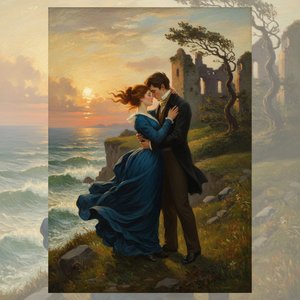
Implementing Realism into a large-scale design project requires a strategic approach to selection, particularly when managing the complexities of bulk procurement. For the professional decorator, the challenge is to balance the "truth" of the artwork with the specific mood of the interior. In more intimate settings, such as hotel suites or executive boardrooms, works that lean toward
Romantic Realism can be incredibly effective. This sub-genre maintains the meticulous observation of the Realist movement but infuses it with a subtle emotional charge and atmospheric beauty, making the space feel both grounded and evocative.
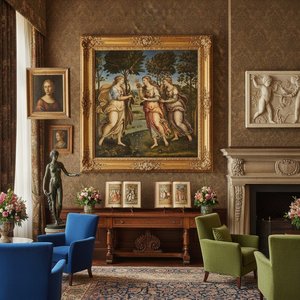
When selecting pieces for high-traffic areas like restaurants or lounges, consider the scale and color palette of the room. Realist works often feature earthy, organic tones—ochres, deep umbers, and muted greens—which can serve as a stabilizing element in modern, brightly lit environments. For larger walls, the use of
multi-panel layouts (splitting a single masterpiece across three, four, or five canvases) is an excellent way to create a contemporary architectural look while maintaining the classical integrity of the subject. This approach allows for a seamless flow of color and brushwork across wide expansions, turning a singular historical moment into a monumental design feature that defines the entire room's character.
Customization and Scale: Tailoring Realist Reproductions for Large-Scale Architectural Projects
 Beyond the Ideal: A Definitive Guide to the Power and Truth of 19th-Century Realism in Art
The Great Rejection: How Realism Challenged Romanticism and Academic Tradition The Poetic Truth of Observation: Exploring 19th-Century Realism in Painting The Rise of Realism: A Rejection of Idealism Wikipedia: Realism (art movement) Realism was an a...
One of the greatest advantages in modern art procurement is the ability to move beyond the limitations of existing frames and sizes through custom reproduction services. For architects and designers, the ability to scale a masterpiece to fit a specific wall or to "remix" its elements is transformative. Whether it is requesting an
extended wrap where the artist continues the painting around the edges of the canvas for a frameless, modern look, or commissioning a large-format mural that recreates a historical ceiling, the possibilities for customization are vast. This level of control ensures that the art does not merely sit within a space but becomes an integral part of its architectural fabric.
Furthermore, the ability to personalize the aesthetic through "Period Shifts" or stylistic adjustments allows for unparalleled creative freedom. A designer can take a contemporary photograph and have it transformed into a work reminiscent of the 19th-century Realist masters, ensuring that the art is perfectly aligned with the brand identity of a hotel or corporate entity. By utilizing professional digital mockups, procurement managers can visualize these large-scale installations before production begins, removing the uncertainty often associated with high-volume orders. This synergy of historical authenticity and modern customization ensures that every project can achieve a level of bespoke luxury that is both timeless and technically precise.
For professionals seeking to elevate their projects with museum-quality reproductions, ArtsDot.com provides a reliable, end-to-end solution. From the initial consultation and digital mockup to the final delivery of hand-painted oils via DHL or FedEx, we specialize in making fine art accessible for large-scale hospitality and corporate needs. Our platform offers deep catalog variety, custom sizing, and the technical expertise required to bring the profound truth of Realism into the modern architectural landscape.