Introduction
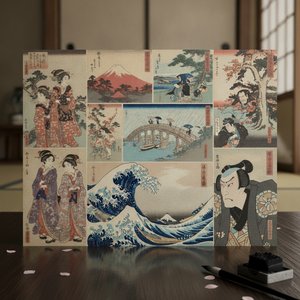
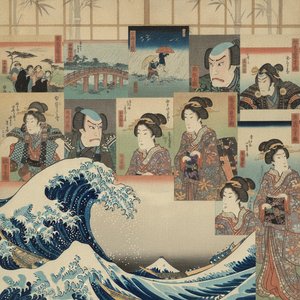
To step into the world of Ukiyo-e is to enter a realm of floating delights, where the transient beauty of everyday life is captured with breathtaking precision and vibrant emotion. Originating in the Edo period of Japan, this "pictures of the floating world" movement was never meant for the dusty halls of silent museums; it was born from the pulse of the streets, the theater, and the bustling pleasure districts. Through the masterful use of woodblock printing, artists transformed fleeting moments—the gentle curve of a wave, the quiet grace of a courtesan, or the sudden mist over a mountain pass—into enduring icons of visual storytelling.
These works represent more than just historical artifacts; they are a sensory journey through a vanished era. The bold outlines, flat planes of color, and unconventional compositions did not merely document Japanese culture; they fundamentally reshified the global perception of art, leaving an indelible mark on the Impressionists and modern graphic design alike. Even today, the rhythmic energy and profound connection to nature found in these prints resonate with a contemporary soul, reminding us to find majesty in the ephemeral.
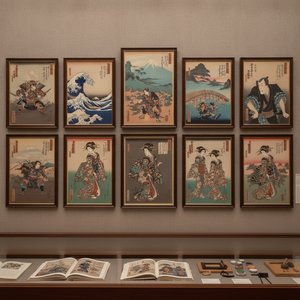
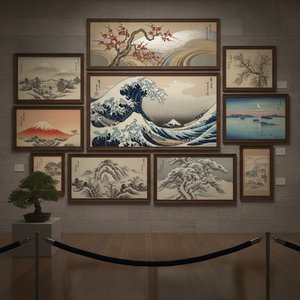
As we wander through this curated selection, we invite you to pause before each piece, observing the delicate interplay of ink and paper. The following ten masterpieces serve as our guide, marking the definitive milestones that shaped the Ukiyo-e movement and continue to captivate the world with their timeless elegance.
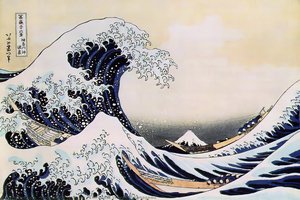
The Great Wave off Kanagawa - Katsushika Hokusai
 The Great Wave off Kanagawa - Katsushika Hokusai
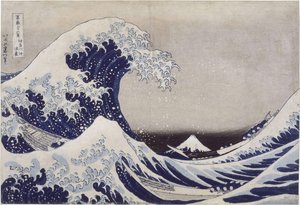
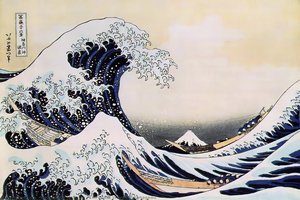
Katsushika Hokusai’s The Great Wave off Kanagawa stands as the definitive pinnacle of the ukiyo-e movement, capturing a breathtaking moment of tension between the ephemeral and the eternal. This 1831 masterpiece transcends mere landscape; it is a visceral experience of motion, where the deep, striking intensity of imported Prussian blue meets the frothing, claw-like crests of a colossal wave. As part of the iconic Thirty-six Views of Mount Fuji series, the print achieves a profound emotional resonance by juxtaposing the terrifying power of the sea against the silent, snow-capped stability of the distant peak.
The visual language of this work—characterized by bold, precise outlines and a dynamic, swirling composition—remains remarkably influential in contemporary aesthetics. Its balanced palette of indigo, white, and subtle earth tones offers an unparalleled versatility for modern interiors, providing a sophisticated focal point that brings both movement and a sense of calm strength to minimalist or traditional spaces. It remains an essential study in the sublime beauty of nature's untamed energy.
Femenine wave - Katsushika Hokusai
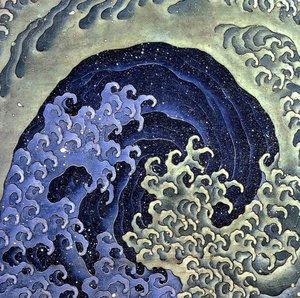 Femenine wave - Katsushika Hokusai
Katsushika Hokusai's Feminine Wave is far more than a mere seascape; it is an immersive encounter with the raw, rhythmic pulse of the natural world. Within this masterpiece of the Ukiyo-e movement, the ocean becomes a living entity, characterized by a towering, sculptural crest that seems to defy gravity through a swirling vortex of Prussian blue and frothing white. Hokusai utilizes bold mokusatsu outlines to command attention, creating a dramatic tension between the colossal force of the breaking wave and the graceful, soaring bird that introduces a sense of liberated motion above the spray.
The composition serves as a profound meditation on impermanence, where the deep, layered washes of blue contrast against a pale, expansive sky to evoke both power and serenity. To possess such a work is to invite the breath of the ocean into your surroundings. It is not mere decoration, but a transformation of space—turning a room into a gallery of the soul where the eternal dance between sea and sky can be contemplated daily.
Cranes on pine tree - Katsushika Hokusai
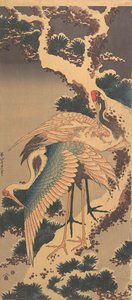 Cranes on pine tree - Katsushika Hokusai
Katsushika Hokusai’s Cranes on Pine Tree is a profound meditation on longevity and the enduring harmony of nature. Within this vertical composition, two elegant cranes are captured in a moment of mid-courtship, their fluid forms set against the rugged, steadfast silhouette of an ancient pine. The artwork utilizes the masterful bokashi technique—layering sumi ink washes on traditional washi paper to create a misty, atmospheric depth that feels both ethereal and grounded.
Every brushstroke serves a symbolic purpose: the crane embodies good fortune and marital fidelity, while the pine represents resilience through winter. The diffused, twilight lighting and the subtle mottled textures evoke a sense of quiet serenity, inviting the viewer into a world of Zen-like stillness. Owning a piece of this legacy is more than an acquisition; it is an inheritance of taste. At ArtsDot.com, we bring this lineage of Ukiyo-e mastery to your professional or residential spaces, allowing you to host a handshake across centuries on your very own walls.
The Sixth Month (Right) - Utagawa Kuniyoshi
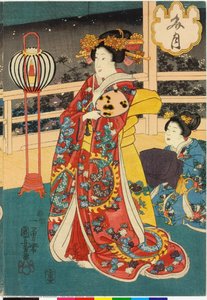 The Sixth Month (Right) - Utagawa Kuniyoshi
To encounter Utagawa Kuniyoshi’s “The Sixth Month (Right)” is to step into a masterfully composed moment of Edo-period elegance, where the ephemeral beauty of autumn is captured with unparalleled precision. As one of the definitive masterpieces of the ukiyo-e movement, this 1849 woodblock print commands attention through its sophisticated narrative depth and seasonal symbolism. Kuniyoshi, a titan of the genre, utilizes a rich palette of autumnal hues to frame a central figure in traditional silk, her grace punctuated by the rustic charm of a harvest pumpkin.
The work transcends mere decoration; it is an exploration of mono no aware —the pathos of things. Through the warm glow of lanterns and the meticulous rendering of silhouetted trees, Kuniyoshi invites the viewer to contemplate the fleeting nature of time. For the discerning collector or those curating refined, modern interiors, this piece offers a profound sense of legacy. Its ability to blend traditional Japanese motifs with a dramatic, almost theatrical use of light makes it an enduring icon of aesthetic sophistication and timeless cultural importance.
Fuji, Mountains in clear Weather (Red Fuji) - Katsushika Hokusai
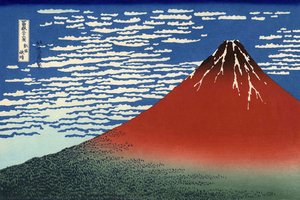 Fuji, Mountains in clear Weather (Red Fuji) - Katsushika Hokusai
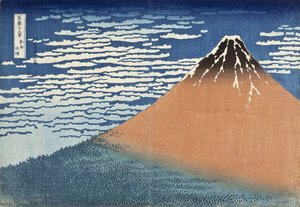
Imagine standing in the quiet stillness of dawn, where the air is crisp and the world holds its breath before the sun breaks the horizon. In this fleeting moment of profound silence, a sudden warmth touches the peak of the earth's most sacred monument. This is the essence captured in Katsushical Hokusai’s 1831 masterpiece, Fuji, Mountains in Clear Weather (Red Fuji) .
As part of the legendary Thirty-Six Views of Mount Fuji , this woodblock print stands as a pillar of the Ukiyo-e art movement . Hokusai utilizes bold, flat planes of vibrant vermilion and deep earth tones to transform a geological landmark into a spiritual experience. The striking contrast between the mountain's fiery silhouette and the tranquil, horizontal clouds evokes a sense of eternal endurance and cosmic harmony.
This work earns its place among the top masterpieces for its ability to distill the immense power of nature into a single, breathtaking composition. Integrating such a timeless icon into a modern interior does more than decorate a wall; it introduces a focal point of meditative peace, inviting the serenity of the Edo period into the rhythm of contemporary life.
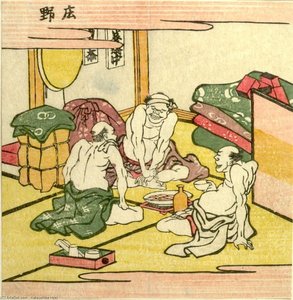
Akasaka, No. 37 - Utagawa Hiroshige
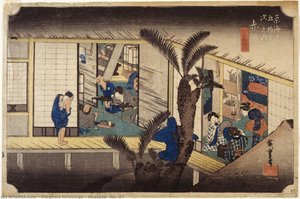 Akasaka, No. 37 - Utagawa Hiroshige
Step into the quietude of Edo-period Japan through Utagawa Hiroshige’s Akasaka, No. 37 . This exquisite woodblock print from the legendary Fifty-three Stations of the Tōkaidō series captures a fleeting moment of social harmony amidst the lush, atmospheric landscapes of the Tokaido highway. The scene unfolds with a delicate balance of human activity and natural grandeur, where travelers gather in a space defined by the soft textures of wooden furniture and the rhythmic presence of seasonal foliage.
Hiroshige utilizes masterful tonal gradations to evoke the misty, cool air of the Akasaka station, inviting a sense of meditative stillness. The interplay of light and shadow across the figures creates a cinematic depth that anticipates the Impressionist movement, making this piece a cornerstone of the Ukiyo-e art movement . In a modern interior, the serene color palette and balanced composition of this masterpiece serve as a profound focal point, offering a window into a world of tranquility and inspiring a sense of reflective calm in any contemporary space.
The Imagire Sea Ferry, Maisaka, from the series The Fifty-three Stations of the Tokaido (Gyosho edition) - Utagawa Hiroshige
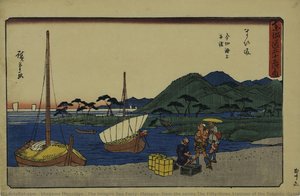 The Imagire Sea Ferry, Maisaka, from the series The Fifty-three Stations of the Tokaido (Gyosho edition) - Utagawa Hiroshige
In The Imagire Sea Ferry, Maisaka by Utagawa Hiroshige , the composition achieves a breathtaking structural harmony that defines the pinnacle of the Ukiyo-e movement. The artwork is anchored by a sophisticated geometric balance; the horizontal expanse of the coastline is punctuated by the rhythmic, vertical silhouettes of travelers and the scattered, circular forms of colorful umbrellas. These elements create a stabilized visual flow that guides the eye from the bustling shoreline to the vast, atmospheric horizon of the sea.
This precise arrangement of shapes and negative space offers a timeless perfection that continues to resonate within the Top 10 Masterpieces That Defined the Ukiyo-e Art Movement . For the modern professional, Hiroshige’s mastery of spatial economy mirrors the principles of contemporary minimalist design. The clean lines and balanced distribution of weight provide a grounding effect, making this piece an ideal cornerstone for a sophisticated, modern aesthetic that values clarity, tranquility, and understated elegance.
Kabuki Actor Ōtani Oniji III as Yakko Edobei - toshusai sharaku
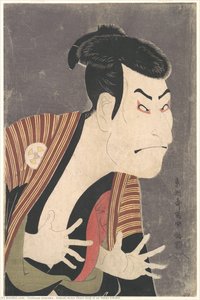 Kabuki Actor Ōtani Oniji III as Yakko Edobei - toshusai sharaku
In the fleeting moments of the Edo period, few artists captured the raw, unbridled energy of human emotion as piercingly as Tōshūsai Sharaku. His masterpiece, Kabuki Actor Ōtani Oniji III as Yakko Edobei , serves as a breathtaking window into the heart of Kabuki theater, frozen in time since 1794. This woodblock print does not merely depict a performer; it captures a psychological crescendo. The actor is caught in a moment of intense theatricality—his mouth agape and eyes directed upward in a gaze of profound intensity.
The technical brilliance lies in the stark, monochromatic composition where deep, somber tones push the figure forward, creating a three-dimensional presence that leaps from the paper. Through the masterful use of contrast and fine woodblock lines, Sharaku strips away the mundane, leaving only the visceral essence of the character's spirit. To possess a reproduction of this work is to encounter one of art history's greatest enigmas; it is an invitation to transform your space into a gallery of the soul, anchored by a legacy of mystery and motion.
Early Department from a Daimyo - Utagawa Hiroshige
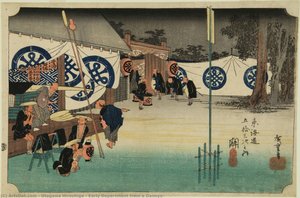 Early Department from a Daimyo - Utagawa Hiroshige
Acquiring a piece like Early Department from a Daimyo by Utagawa Hiroshige represents a profound investment in both cultural legacy and refined aesthetic taste. As one of the definitive masterpieces of the Ukiyo-e movement, this work captures the rhythmic pulse of Edo-period Japan, where the disciplined presence of samurai archery meets the transient leisure of the riverside. Hiroshige’s technical command over muted mineral pigments and atmospheric perspective creates a sense of depth that has captivated collectors for generations, securing its high market value and historical importance.
The composition serves as a masterclass in balance, utilizing soft greys, earthy browns, and tranquil blues to evoke the gentle, diffused light of an overcast afternoon. This delicate interplay of color and social narrative offers a window into the 'floating world,' making it a cornerstone of Japanese art history. For the modern professional decorating high-end corporate spaces or luxury hospitality suites, a high-quality reproduction of this print provides immense aesthetic authority. It brings a sense of historical prestige and serene sophistication to contemporary interiors, maintaining the same visual impact and status as the original masterpiece.
Keishi (Kyoto), Capital - Utagawa Hiroshige
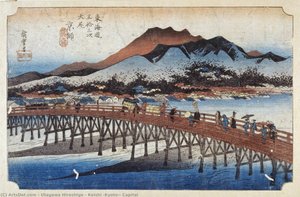 Keishi (Kyoto), Capital - Utagawa Hiroshige
In 1834, Utagawa Hiroshige captured the pulse of Japan’s imperial heart in Keishi (Kyoto), Capital . This masterpiece from the legendary Fifty-three Stations of the Tōkaidō series transcends mere landscape; it is a sensory journey through the Edo period. As you gaze upon the bridge, you feel the rhythmic movement of travelers and merchants, their colorful umbrellas shielding them from a soft, atmospheric mist. Hiroshige’s mastery of bokashi —subtle color gradations—infuses the water and distant mountains with a luminous, breathing quality that defines the ukiyo-e movement.
The composition balances the bustling energy of the bridge with the serene expanse of the river, creating a profound sense of depth and quiet prestige. Owning Keishi (Kyoto), Capital by Utagawa Hiroshige isn’t just a purchase; it is an inheritance of a lineage of taste. It brings the poetic light and historical soul of the floating world directly to your walls, allowing you to host a legacy of Japanese artistry in your own private gallery.
Conclusion
As the light fades on our journey through the floating world, we are reminded that these Ukiyo-e masterpieces are far more than mere relics of Edo-period Japan; they are breathing echoes of a timeless human connection to beauty, transience, and the sublime. The delicate curve of a wave, the quiet dignity of a landscape, and the fleeting grace of a portrait continue to move hearts across centuries, offering a profound sense of serenity to anyone who pauses to look. These works do not belong solely to history; they are living presences that possess the power to transform the atmosphere of any contemporary space, turning a room into a sanctuary of reflection.
At ArtsDot.com , we believe in honoring this enduring legacy by serving as a creative partner for those who seek to weave such profound narratives into their own environments. Whether you are an interior designer curating the soul of a luxury hotel, an architect defining the character of a private villa, or a professional decorator composing a refined corporate space, we provide the tools to turn your vision into an artistic statement. Through our museum-quality, hand-painted reproductions and our professional digital mockup service, we allow you to see these historical treasures integrated seamlessly into your unique architectural projects, ensuring every brushstroke aligns with your aesthetic intent.
We invite you to explore the depth of this movement and find the pieces that resonate with your next project by browsing our full collection . Let us help you bring the timeless elegance of the floating world into the modern era, creating spaces that do not just house people, but inspire them.