Introduction
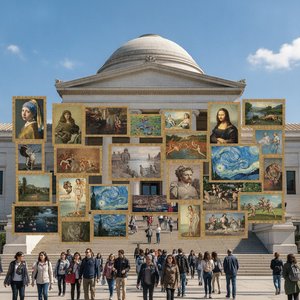
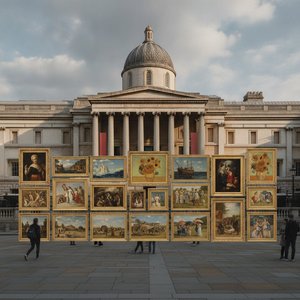
Walking through the grand, light-filled corridors of the National Gallery of Art in Washington, D.C., is more than a simple museum visit; it is an encounter with the very pulse of human creativity. To stand before its most significant works is to witness the evolution of vision itself, where every brushstroke serves as a bridge between the past and our present understanding of beauty, struggle, and light.
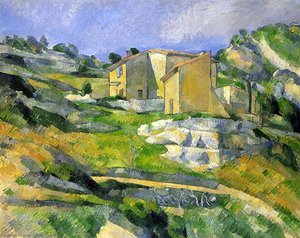
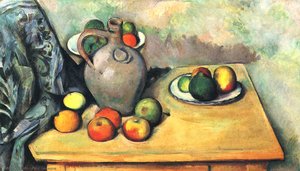
The gallery’s prestige is anchored by extraordinary legacies, most notably the Chester Dale Collection . This assembly of masterpieces reflects the discerning eye of an era when collectors did not merely seek decoration, but sought to document the shifting currents of modern history. From the structured, intellectual landscapes of Cézanne to the vibrant, emotive color palettes of Matisse, the collection captures a pivotal moment in time—the transition from the fleeting impressions of the 19th century to the bold, transformative energy of Modernism.
These twenty-five selected works remain profoundly meaningful today because they transcend their historical origins. They continue to challenge our perceptions, offering a sensory experience that resonates across generations. Whether it is the raw power found in an American masterpiece or the delicate interplay of light in a French Impressionist scene, these paintings possess a timeless vitality that speaks to the universal human experience.
As we begin this curated journey through the gallery's most essential treasures, prepare to move through a landscape of color and emotion. The following list invites you to explore twenty-five definitive works that define the National Gallery of Art, each one a window into the soul of art history.
The Walk. Lady with a Parasol - Claude Monet
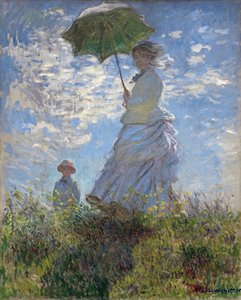 The Walk. Lady with a Parasol - Claude Monet
In the hallowed halls of the National Gallery of Art, Washington, few works capture the ephemeral pulse of life quite like The Walk. Lady with a Parasol by Claude Monet. This 1875 masterpiece is a sensory immersion into the Impressionist soul, where the boundaries between human presence and the natural world dissolve under a sun-drenched sky. Monet utilizes loose, rhythmic brushstrokes to depict a woman and child strolling through a vibrant landscape, their forms momentarily caught in a dance of light and wind.
The palette is a masterclass in atmospheric perspective; soft blues and verdant greens are punctuated by the warm, fleeting glow of a setting sun, casting a luminous haze over the wildflowers. To possess a reproduction of this caliber is more than an acquisition; it is an inheritance of taste . It brings the tranquil, breezy elegance of Monet’s en plein air genius directly to your space, allowing you to carry a piece of this prestigious lineage into your own architectural narrative.
Portrait of Bindo Altoviti - Raphael
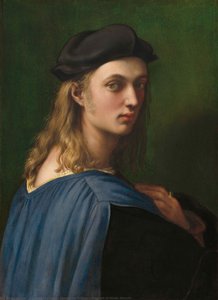 Portrait of Bindo Altoviti - Raphael
There is a gaze in Portrait of Bindo Altoviti by Raphael that follows you—not with judgment, but with understanding . This isn’t merely a portrait; it is a mirror . As one of the most profound pieces within the top 25 artworks in 'National Gallery of Art, Washington', its presence transcends the canvas to capture the very essence of High Renaissance humanism.
Raphael employs a masterful use of chiaroscuro , where dramatic light dances across Altoviti’s features, emerging from a deep, muted green background. The rich textures of the subject's attire and the meticulous detail in his contemplative expression create a sense of profound intellectual depth. Every brushstroke serves to highlight a moment of quiet introspection, making the invisible weight of thought visible. Now, imagine that gaze in your space. Not watching you, but reminding you : you are seen. You are part of the story. To possess such a masterpiece is to invite a timeless connection to the elegance and soul of the 16th century into your own environment.
Little Girl in a Blue Armchair - Mary Stevenson Cassatt
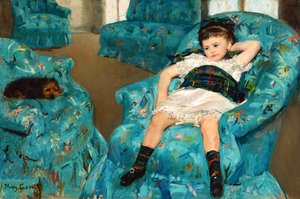 Little Girl in a Blue Armchair - Mary Stevenson Cassatt
A profound stillness resides within Little Girl in a Blue Armchair by Mary Cassatt, where a single moment of childhood repose is frozen in an eternal, cerulean glow. As one of the standout pieces among the top 25 artworks in the National Gallery of Art, Washington, this masterpiece captures the very essence of Impressionist intimacy. The canvas breathes with a cool, tranquil palette; various shades of blue dominate the scene, whispering of quiet domesticity and the soft weight of afternoon shadows. Cassatt’s masterful use of loose, expressive brushwork creates a textured surface where light seems to dance across the upholstery and the sleeping form of a loyal dog.
The painting transcends its era through its emotional depth, offering a sense of safety and innocence that remains deeply resonant today. For the modern collector or interior designer, integrating this work into a contemporary space brings an unparalleled sense of calm and sophisticated charm. It is more than a depiction of a room; it is an invitation to experience the quiet prestige of a life lived in harmony with light and peace.
The Road Bridge at Argenteuil - Claude Monet
 The Road Bridge at Argenteuil - Claude Monet
In The Road Bridge at Argenteuil by Claude Monet, the mastery of light serves as the true protagonist. Rather than mere illumination, Monet captures the shimmering, ephemeral dance of sunlight reflecting off the Seine, using broken brushstrokes to create a luminous atmosphere that feels alive. This command over the play of light and color was revolutionary in 1874, securing this piece's prestigious position among the top 25 artworks in 'National Gallery of Art, Washington' . The way the warm, sun-drenched hues interact with the cool shadows of the bridge creates a sense of depth that transcends the flat canvas.
For the discerning decorator or collector, a high-quality oil reproduction of this masterpiece offers more than just historical value; it brings a sophisticated layer of texture and radiance to a contemporary space. The visible impasto and vibrant tonal range of a hand-painted version can transform a corporate lobby or a private residence, adding an unmistakable sense of luxury and movement that digital prints simply cannot replicate.
Saltimbanques (The Family of Saltimbanques) - Pablo Picasso
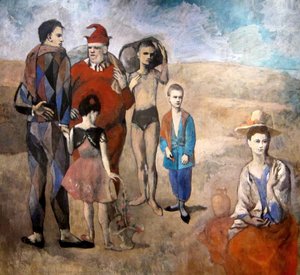 Saltimbanques (The Family of Saltimbanques) - Pablo Picasso
What if I told you that Saltimbanques (The Family of Saltimbanques) by Pablo Picasso was born from a moment of profound transition—a stroke of emotional defiance against the melancholic shadows of his Blue Period? This masterpiece stands as a cornerstone in the top 25 artworks in 'National Gallery of Art, Washington' because it captures the exact heartbeat where sorrow meets hope. As Picasso moved into his Rose Period, the canvas erupted with a warmer palette of ochre, dusty pink, and muted gold, reflecting the vibrant yet weary lives of circus performers.
The composition is a mesmerizing dance of fragmented forms and flattened perspectives, hinting at the revolutionary Cubism to come. There is a quiet prestige in the way the figures cluster against a desolate landscape, embodying both isolation and a shared, theatrical camaraderie. At ArtsDot.com, we believe such transformative energy should not be confined to museum walls. Imagine this iconic interplay of light and geometry as the focal point of your professional suite or private sanctuary; it is more than decor—it is a profound statement of resilience and artistic evolution for any refined space.
Watson and the Shark - John Singleton Copley
 Watson and the Shark - John Singleton Copley
In Watson and the Shark by John Singleton Copley, the viewer is immediately gripped by the raw, visceral terror etched into the faces of those caught in the maritime chaos. The painting captures a harrowing moment of human vulnerability, where the desperate reach of a young cabin boy meets the looming, predatory shadow beneath the turbulent waves. As one of the top 25 artworks in 'National Gallery of Art, Washington' , this masterpiece utilizes dramatic chiaroscuro and a palette of deep oceanic blues and earthy browns to pull you into the heart of Havana Harbor.
The composition is a masterclass in tension; strong diagonal lines and the spray of white foam create an unsettling sense of movement that mirrors the struggle for survival. Beyond its historical significance, the painting serves as a universal mirror of human resilience against the overwhelming forces of nature. Integrating such a powerful, high-drama piece into a curated space can transform a room into a site of profound reflection, inviting guests to contemplate the delicate balance between life and fate through its rich textures and cinematic light.
Farmhouse in Provence - vincent willem van gogh
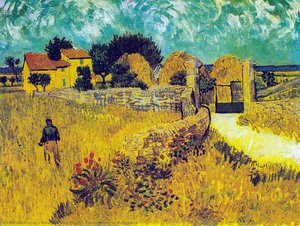 Farmhouse in Provence - vincent willem van gogh
In Farmhouse in Provence by Vincent van Gogh, the composition achieves a profound structural harmony through a masterful use of diagonal thrust. A winding path and stone walls guide the viewer’s eye across golden wheat fields toward a solitary farmhouse, creating a balanced movement that anchors the landscape. This rhythmic arrangement of organic shapes—from the textured hay bales to the swirling, turbulent sky—establishes a sense of timeless perfection that secures its place among the top 25 artworks in 'National Gallery of Art, Washington' .
The painting’s internal equilibrium offers a striking parallel to modern minimalist design; the way Van Gogh utilizes bold, singular color blocks and clear directional lines provides a grounding element for clean, contemporary aesthetics. The heavy impasto technique adds a tactile, three-dimensional depth, where vibrant yellows and deep blues collide with emotional intensity. As you observe this Post-Impressionist masterpiece, the interplay of light and shadow evokes a sensory journey through the French countryside, blending the tranquility of rural life with the restless energy of the artist's soul.
Laocoön - El Greco
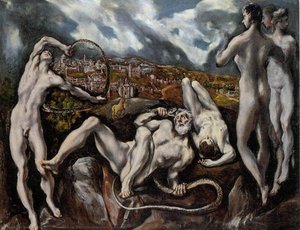 Laocoön - El Greco
In El Greco’s Laocoön , light does not merely illuminate the canvas; it acts as a visceral, emotional language. As you stand before this masterpiece within the National Gallery of Art, Washington, you witness a scene where the artist has composed light like a dramatic crescendo in a symphony. It is not just illumination—it is an invention of tension and spiritual struggle.
The painting captures the harrowing mythological agony of Laocoön, utilizing a palette of earthy ochres, deep browns, and somber greys that clash against a turbulent, storm-swept sky. El Greco employs a masterful chiaroscuro , where sharp highlights strike the strained musculature of the figures, pulling them out of the shadows of despair. Through thick, expressive impasto brushstrokes, the texture of the skin and the winding serpents becomes almost tactile, embodying the very essence of Mannerist movement. This work stands as a cornerstone of the collection because it transcends mere depiction; it invites you to feel the weight of mortality and the chaos of temptation. To bring this piece into your space is to invite a portal of profound, historical drama into your home.
The human condition - René Magritte
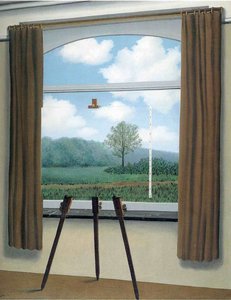 The human condition - René Magritte
In The Human Condition by René Magritte, the boundary between the seen and the imagined dissolves into a profound, silent paradox. As one of the most significant pieces within the top 25 artworks in 'National Gallery of Art, Washington', this 1933 masterpiece stands immortalized for its ability to challenge the very nature of perception. The painting presents an enigmatic arched window where a meticulously rendered landscape—complete with rolling hills and a solitary tree—appears to exist both inside and outside the frame.
The palette is a sophisticated blend of muted earth tones, soft greens, and atmospheric blues that breathe a quiet, contemplative life into the room's interior. Magritte’s masterful use of light and shadow creates a dreamlike texture, where the placement of empty easels invites us to question if we are observing reality or merely a clever representation of it. For the modern collector, this work offers more than just visual intrigue; its intellectual depth and serene composition provide a sophisticated focal point, bringing a sense of philosophical wonder and calm elegance to any contemporary space.
River Landscape - Annibale Carracci
 River Landscape - Annibale Carracci
In the River Landscape by Annibale Carracci, we encounter a moment of profound stillness that transcends the centuries. As you wander through the National Gallery of Art, Washington, this masterpiece emerges not merely as a depiction of nature, but as an invitation to inner peace. Painted in 1589, it captures a lush, verdant world where a winding river flows with effortless grace, reflecting the soft, diffused light of an overcast sky.
Carracci masterfully blends Florentine precision with Venetian atmospheric depth, creating a scene where the textured bark of ancient trees and the shimmering water surface feel almost tactile. The composition, anchored by an imposing tree, draws your gaze toward distant, hazy mountains, evoking a sense of the infinite. Small figures paddling along the riverbank remind us of the gentle harmony between humanity and the earth. To possess such a vision is to transform your space into a sanctuary of contemplation, surrounding yourself with the enduring vitality and serene beauty of the natural world.
The Virgin Adoring the Child - Sandro Botticelli
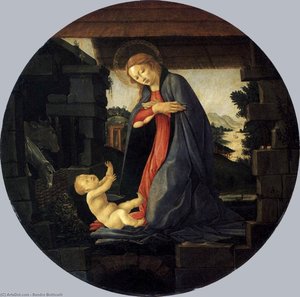 The Virgin Adoring the Child - Sandro Botticelli
Sandro Botticelli’s The Virgin Adoring the Child stands as a profound pillar within the top 25 artworks in the National Gallery of Art, Washington, representing the pinnacle of Florentine Renaissance tenderness. This masterpiece transcends simple religious iconography, offering a timeless meditation on maternal devotion that remains deeply resonant in our modern era. Through his exquisite command of tempera, Botticelli achieves a porcelain-like glow on the Christ Child’s skin, contrasted against the heavy, tactile drapery of the Virgin’s robes. The composition, structured with a stable pyramidal form, directs the viewer toward an intimate, sacred sanctuary of light and shadow.
Beyond its technical brilliance, the painting serves as a window into the spiritual depth of the 15th century, where every subtle botanical detail symbolizes purity and protection. For the professional decorator or collector, the essence of this work offers a sense of profound stillness and commanding elegance. Integrating the soft, luminous palette of such a Renaissance master can anchor a sophisticated corporate space or luxury hotel suite, creating a timeless conversation between historical grandeur and contemporary interior design.
Venus in Front of the Mirror - Titian Ramsay Peale II
 Venus in Front of the Mirror - Titian Ramsay Peale II
To encounter Venus in Front of the Mirror by Titian Ramsay Peale II is to witness a profound intersection of mythological grandeur and technical mastery, a piece that commands its position among the top 25 artworks in the National Gallery of Art, Washington. This breathtaking composition captures the Roman goddess of love amidst a sea of sumptuous crimson and gold drapery, her serene gaze inviting a deep, contemplative dialogue with the viewer. Through the expert use of chiaroscuro , Peale sculpts light and shadow to breathe life into the delicate forms of Venus and her attendant cherubs, creating a palpable sense of depth that transcends the canvas.
The painting’s rich, warm palette and the symbolic interplay of the mirror and golden comb offer a timeless study of beauty and self-awareness. For the discerning collector or designer, such a work represents the pinnacle of refined aesthetics; its ability to anchor a space with historical weight and luminous texture makes it an enduring icon of luxury and classical elegance.
Reverse side of the portrait of Ginevra de' Benci - Leonardo da Vinci
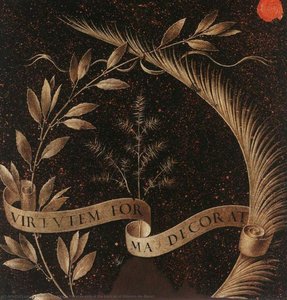 Reverse side of the portrait of Ginevra de' Benci - Leonardo da Vinci
The Reverse side of the portrait of Ginevra de' Benci by Leonardo da Vinci exists as a whispered secret from the Renaissance, a monochrome enigma where light and shadow dance in silent contemplation. As one of the most profound pieces within the top 25 artworks in 'National Gallery of Art, Washington', it transcends mere illustration to become a masterclass in symbolic depth. The drypoint etching technique breathes life into delicate, velvety lines, creating a textured landscape of botanical motifs and heraldic banners that seem to pulse with ancient wisdom.
The composition centers on the Latin motto “Virtut Vitem For Ma Decorat” , surrounded by intricate foliage that evokes a sense of organic growth and enduring virtue. This work is immortalized not for its likeness, but for its intellectual soul—a fusion of science, philosophy, and art. In a modern professional setting, the piece’s sophisticated palette of sepia, beige, and earth tones offers an unparalleled sense of historical gravity and calm, providing a focal point of quiet prestige that inspires deep thought and architectural elegance.
The Repentant Magdalen - Georges de la Tour
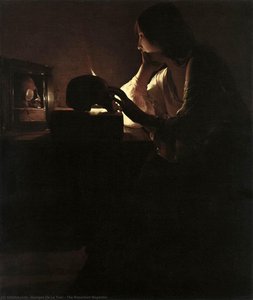 The Repentant Magdalen - Georges de la Tour
What story does the flickering, solitary light tell in The Repentant Magdalen by Georges de La Tour? Within this masterpiece, part of the top 25 artworks in the National Gallery of Art, Washington, we encounter the profound quietude of the French Baroque. Emerging from an era defined by the Counter-Reformation, De La Tour breaks away from flamboyant theatricality to embrace a meditative stillness. Through his mastery of tenebrism, he uses stark contrasts between deep shadows and pools of intense illumination to guide our eyes toward the Magdalene’s moment of spiritual grace.
The painting’s atmospheric setting—a candlelit interior where darkness dominates the canvas—offers more than just historical insight; it provides a sensory escape. For those seeking to curate a sense of history and emotional depth in modern home decor, this work evokes a timeless sanctuary of contemplation. The subtle textures of the table and the soft glow on the figure create a palpable sense of presence, making it an essential highlight for any collection focused on the transformative power of light and shadow.
Sir Brian Tuke - Hans Holbein the Younger
 Sir Brian Tuke - Hans Holbein the Younger
In the presence of Hans Holbein the Younger’s 1527 masterpiece, Sir Brian Tuke , one does not merely view a portrait; one encounters the very gravity of the Tudor court. As a cornerstone among the top 25 artworks in the National Gallery of Art, Washington, this oil on panel serves as a profound study of power and intellect. Holbein, the Northern Renaissance master of realism, captures Tuke—secretary to Henry VIII—with an unflinching precision that breathes life into every fiber of his fur-trimmed black robe.
The composition is rich with silent storytelling: the weight of the book and the crispness of the paper in Tuke's hands signal a man defined by administrative authority and humanist scholarship. There is a palpable tension in his stern expression, set against a subtle, architectural background that provides a sense of enduring permanence. Owning a piece of this caliber isn’t a purchase; it is an inheritance of a lineage of taste. At ArtsDot.com, we bring this museum-grade legacy to your professional spaces, allowing the meticulous textures and historical depth of Holbein’s mastery to reside on your walls.
Oysters - Édouard Manet
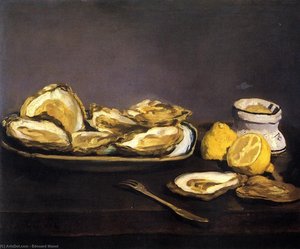 Oysters - Édouard Manet
In Oysters by Édouard Manet, the viewer is invited into a moment of quiet, sensory indulgence that transcends the simple arrangement of food. There is an intimate, almost tactile presence in the way the glistening, pearlescent surfaces of the shells catch the diffused light, paired with the vibrant, acidic brightness of sliced lemons. This masterpiece from the top 25 artworks in 'National Gallery of Art, Washington' captures more than just a still life; it captures the profound beauty found in the ephemeral textures of everyday existence.
Manet’s masterful use of light and shadow creates a rhythmic balance that evokes a sense of calm and groundedness. The cool tones of the seafood against the warm citrus accents offer a visual feast that can transform any personal sanctuary into a space for deep reflection and stillness. As a cornerstone of Realism, this work serves as a universal mirror of life's simple pleasures, making it an essential selection for those looking to bring the prestige and tranquil atmosphere of the National Gallery into their own professional or private environments.
Italian Comedians (detail) - Jean-Antoine Watteau
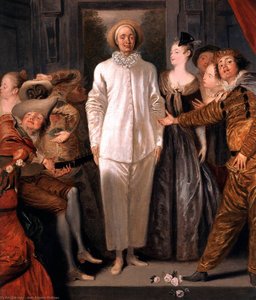 Italian Comedians (detail) - Jean-Antoine Watteau
To gaze upon the Italian Comedians (detail) by Jean-Antoine Watteau is to step into a world of whispered elegance and theatrical grace. This exquisite detail captures the very essence of the Rococo movement, where the heavy drama of the Baroque era dissolved into soft, luminous textures and pastel harmonies. Watteau’s brushwork here does not merely depict figures; it breathes life into a fleeting moment of aristocratic leisure, using translucent glazes to create an ethereal, dreamlike atmosphere that feels both intimate and monumental.
Its inclusion in the top 25 artworks in the National Gallery of Art, Washington, is a testament to how Watteau redefined beauty through the fête galante —transforming theatrical archetypes into symbols of psychological depth. At ArtsDot.com, we believe such mastery should not be confined to museum walls. Imagine this delicate interplay of light and silk as a centerpiece in your own professional suite or private study. By bringing a high-quality oil reproduction of this masterpiece into your space, you transform a mere room into a curated sanctuary of historical prestige and refined taste.
Nativity - Duccio di Buoninsegna
 Nativity - Duccio di Buoninsegna
In Duccio di Buoninsegna’s Nativity , light does not merely illuminate the scene; it acts as a divine messenger, composing a silent sonata of grace across the panel. As you stand before this 1308 masterpiece within the National Gallery of Art, Washington, you witness the precise moment where the rigid Byzantine tradition begins to breathe with human warmth. The artist has meticulously crafted a language of light that spills over the reclining Virgin Mary and the infant Jesus, pulling the viewer into a rustic, sacred intimacy.
The palette is a rich tapestry of deep blues and vibrant reds, contrasted against the earthy ochres of the cave. Every brushstroke in this tempera work serves a narrative purpose: the soft glow on the ox and donkey, the celestial guidance of the star, and the delicate textures of drapery all invite profound contemplation. This piece earns its place among the top 25 artworks in the collection because it does not just reflect historical significance—it invents an emotional atmosphere that remains as luminous today as it was in the Trecento.
Self Portrait (8) - Paul Cézanne
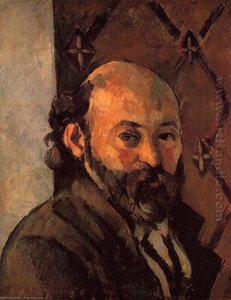 Self Portrait (8) - Paul Cézanne
There’s a gaze in Self Portrait (8) by Paul Cézanne that follows you—not with judgment, but with understanding . In this profound piece from the Chester Dale Collection, we encounter the artist not as a distant figure of history, but as a presence that feels startlingly immediate. Painted in 1880, the work captures Cézanne in a suit and tie, his head turned slightly away, eyes fixed on something unseen beyond the frame. This isn’t just a portrait; it’s a mirror .
As you stand before one of the top 25 artworks in the National Gallery of Art, Washington, you can see the early architecture of modernism emerging through his exploratory brushstrokes and structured planes of color. The patterned wall behind him adds a rhythmic depth that pulls you into his contemplative world. Now, imagine that gaze in your own space. Not watching you, but reminding you : you are seen. You are part of the story. To possess such a piece is to invite the very foundation of Cubism and the soul of Post-Impressionism into your daily life.
La mousme - vincent willem van gogh
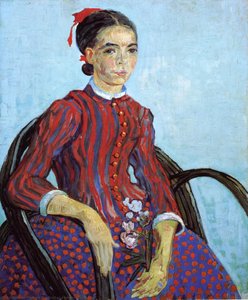 La mousme - vincent willem van gogh
Vincent van Gogh’s La Mousmé is a breathtaking masterclass in emotional resonance and color theory, standing as a cornerstone among the top 25 artworks in the National Gallery of Art, Washington. Painted during his transformative period in Arles in 1888, this work captures a profound sense of human presence through the striking use of complementary colors. The vibrant, fiery reds of the subject's hair and dress collide with the serene, ethereal blue of the background, creating a visual tension that is both arresting and deeply moving.
The painting’s influence extends far beyond the museum walls; its bold, post-impressionist aesthetic—characterized by thick, expressive brushstrokes and flattened perspectives inspired by Japanese Ukiyo-e prints—continues to inspire modern design sensibilities. For today's decorators and collectors, the piece offers a timeless template for injecting energy and warmth into a space. Whether through its symbolic use of light or its intense chromatic depth, La Mousmé remains an essential study in how art can transform a simple portrait into an enduring emotional experience.
Napoleon in his Study - Jacques-Louis David
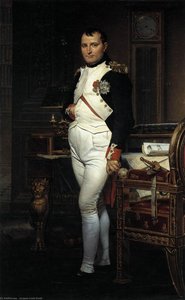 Napoleon in his Study - Jacques-Louis David
In the prestigious lineup of the top 25 artworks in 'National Gallery of Art, Washington' , Jacques-Louis David’s Napoleon in his Study stands as a monumental pillar of Neoclassical mastery. This 1812 masterpiece transcends simple portraiture, offering a profound window into the psychological weight of leadership. Rather than depicting a conqueror on a battlefield, David captures a moment of quiet, heavy contemplation, where the glow of candlelight dances across scattered legal texts and the resolute figure of Napoleon himself.
The painting’s placement in this elite collection is earned through its incredible symbolic depth; the prominent clock serves as a rhythmic reminder of the relentless passage of time and the urgency of historical duty. For the modern collector or decorator, the work provides an unparalleled sense of prestige and intellectual gravity . Its structured composition and rich, somber textures offer a timeless conversation between historical grandeur and contemporary sophisticated interiors, reminding us that true power often resides in moments of silent, focused reflection.
Home Sweet Home - Winslow Homer
 Home Sweet Home - Winslow Homer
In the prestigious lineup of the top 25 artworks in 'National Gallery of Art, Washington', Winslow Homer’s Home Sweet Home (1863) stands as a profound psychological anchor. More than a mere landscape, this oil masterpiece captures the heavy, atmospheric tension of the American Civil War era. Through his masterful use of light and shadow, Homer depicts a solitary soldier by a campfire, creating a visual metaphor for the universal human yearning for domestic sanctuary amidst external chaos.
The painting’s placement among the gallery's finest is earned through its raw emotional depth and technical precision. The contrast between the bleak, coastal winter landscape and the flickering warmth of the hearth evokes a sense of resilience that remains deeply relatable today. For the modern collector or interior designer, the essence of this work offers a timeless way to introduce themes of stability and quiet strength into a curated space. It serves as a poignant reminder that even in our most turbulent moments, the search for connection and peace remains an enduring part of the human experience.
Woman Holding a Balance - Johannes Vermeer
 Woman Holding a Balance - Johannes Vermeer
In the quietude of a sun-drenched Dutch interior, time seems to suspend itself, inviting a profound meditation on balance and virtue. This stillness is perfectly embodied in Woman Holding a Balance by Johannes Vermeer, a cornerstone of the National Gallery of Art, Washington’s collection. As you stand before this masterpiece, the luminous chiaroscuro technique draws you into a private moment of domestic grace. The soft, diffused light from an unseen window washes over the woman's blue attire and white veil, illuminating the delicate scales she holds with such careful precision.
Vermeer’s masterful brushwork captures the subtle textures of pearls and fabric, creating a scene where material wealth meets spiritual equilibrium. The painting is a triumph of the Dutch Golden Age, blending the era's fascination with scientific observation and moral symbolism. Beyond its historical significance, this work remains an essential part of the top 25 artworks in the National Gallery because of its extraordinary emotional resonance. It serves as a timeless reminder of how art can transform a space into a sanctuary of peace and contemplation.
Madonna and Child (The Large Cowper Madonna) - Raphael
 Madonna and Child (The Large Cowper Madonna) - Raphael
To stand before Raphael’s Madonna and Child (The Large Cowper Madonna) is to witness the very moment the High Renaissance achieved perfect equilibrium. This masterpiece does not merely depict a religious scene; it orchestrates a symphony of geometric harmony and divine tenderness. Through a masterful use of pyramidal composition and soft chiaroscuro , Raphael breathes life into the figures, creating a sense of volume and warmth that feels remarkably present even centuries later. The gentle interplay of light upon the Virgin’s serene face and the tender connection between mother and child redefine the boundaries of emotional depth in Western art.
As one of the top 25 artworks in the National Gallery of Art, Washington, this painting serves as a cornerstone of artistic excellence. At ArtsDot.com, we believe such profound beauty should not be confined to museum halls. We bring this same sense of classical prestige into your professional and private environments through our high-quality oil reproductions. Whether you are furnishing a corporate suite or a personal sanctuary, integrating Raphael’s timeless grace allows you to transform any wall into a sophisticated statement of culture and enduring elegance.
The Strollers (study for 'Luncheon on the Grass' - Claude Monet
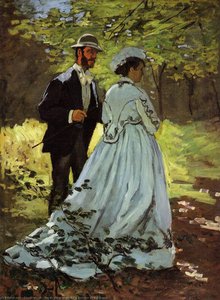 The Strollers (study for 'Luncheon on the Grass' - Claude Monet
In the quietude of The Strollers , Claude Monet captures more than a mere woodland walk; he distills the very essence of atmospheric nostalgia. As a pivotal study for his monumental Luncheon on the Grass , this 1865 masterpiece serves as a profound meditation on the fleeting nature of light and human connection. The painting presents a man and woman amidst dappled shadows, where the soft, diffused sunlight filtering through the canopy creates a sensory experience that feels both intimate and eternal.
This work holds a unique position among the top 25 artworks in National Gallery of Art, Washington because it documents the precise moment Impressionism began to break from academic rigidity. Monet’s loose, suggestive brushwork and focus on ephemeral color palettes resonate deeply with modern aesthetic trends that prioritize mood and organic texture over hyper-realism. In today's curated spaces, The Strollers remains a vital cultural touchstone, reminding viewers of the beauty found in transient moments and the enduring power of nature’s subtle, shifting light.
Conclusion
As the light fades on our virtual tour of the National Gallery of Art, we are left with more than just a memory of pigment and canvas; we carry with us the enduring pulse of human emotion captured by the masters. These twenty-five works are not merely static relics of a bygone era held within the halls of Washington, D.C., but living presences that continue to breathe life into our modern world. They possess a unique ability to transcend time, shaping the atmosphere of our most intimate spaces and serving as silent, profound companions to our daily lives.
The beauty of these masterpieces lies in their capacity to be reborn. At ArtsDot.com , we believe that the soul of a great painting should not be confined to a single museum gallery. Our skilled artists work with meticulous devotion to honor the original's texture, light, and spirit, transforming these historic treasures into hand-painted reproductions that bring the majesty of the Chester Dale Collection into your own home or professional space. Whether it is the structural brilliance of Cézanne or the vibrant energy of Matisse, each stroke we apply is a tribute to the timeless connection between the artist's vision and the viewer's heart.
We invite you to continue this journey of discovery and bring a piece of art history into your surroundings by exploring our full collection . Let these enduring legacies of light and color inspire your next space, serving as a permanent reminder of the beauty that persists through the ages.