The Invisible Pillar: Defining Authenticity and Provenance in the Modern Market
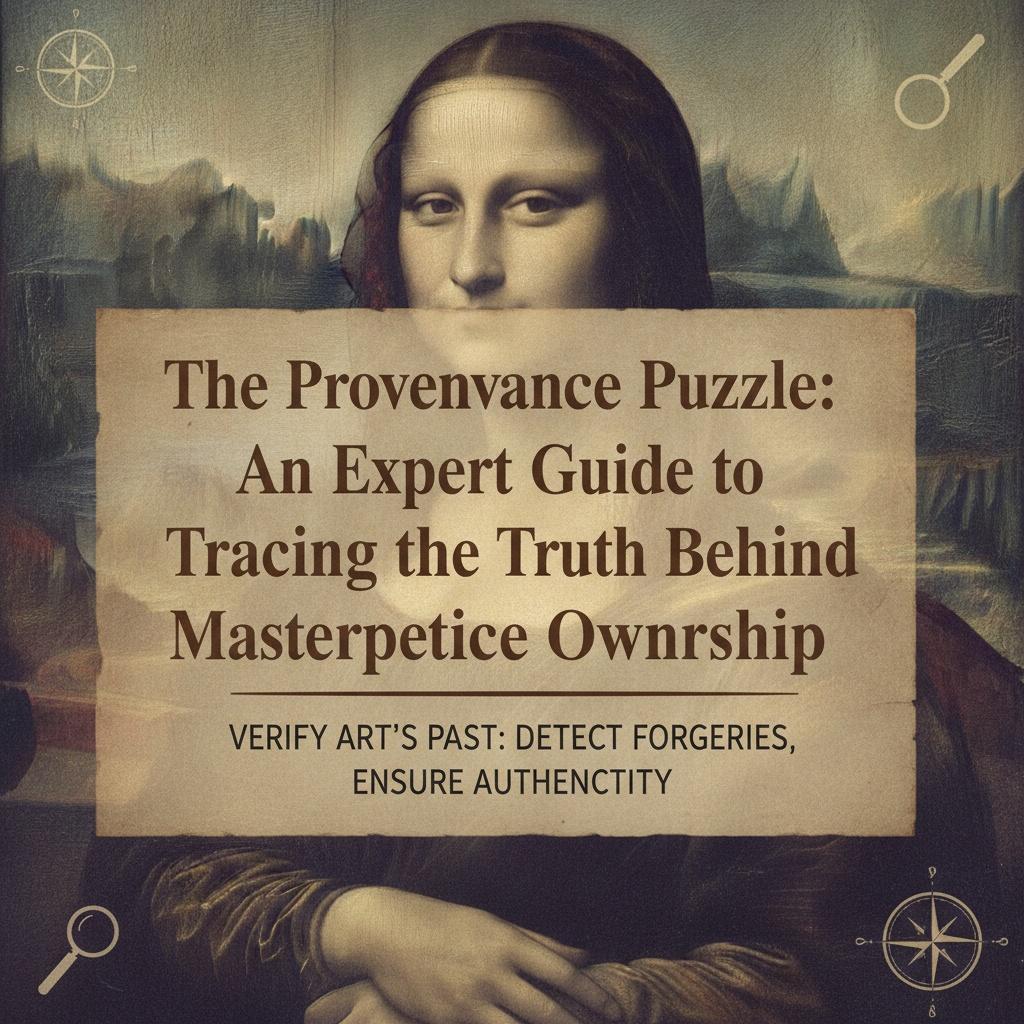
 The Provenance Puzzle: How Experts Trace the History and Authenticity of Masterpieces
The Foundation of Trust: Defining Authenticity and Provenance in the Art Market In the rarefied atmosphere of high-stakes art acquisition, the distinction between a priceless masterpiece and a clever imitation rests upon a single, invisible pillar: t...
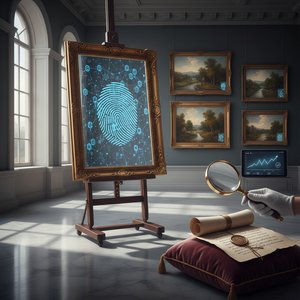
In the high-stakes arena of fine art acquisition, where a single canvas can command the price of a skyscraper, the distinction between a priceless masterpiece and a clever imitation rests upon a single, invisible pillar: truth. To the discerning collector, an artwork is far more than a mere arrangement of pigment on canvas; it is a vessel of historical significance, a tangible link to a specific moment in human creativity. Authenticity, therefore, is not merely a label but a rigorous verification of identity. It is the profound process of confirming that a work is indeed the product of the hand, mind, and era it claims to represent. This certainty provides the essential bedrock upon which the entire global art market is built, ensuring that the immense capital and cultural passion invested in these objects are anchored in reality.
Closely intertwined with this concept of authenticity is provenance, a term derived from the French
provenir, meaning to come forth. Provenance serves as the chronological biography of an object, tracing its journey through time from its original creation to its current location. It encompasses the sequence of ownership, custody, and exhibition history that defines a painting's life. For the professional collector or procurement manager, a robust provenance acts as a chain of custody, providing circumstantial evidence that supports the work's legitimacy. Without this documented lineage, even the most visually stunning painting remains a mystery, vulnerable to questions of origin and legal validity.
The Art of Connoisseurship: Decoding Style, Technique, and the Expert Eye
 Authenticity in art
Authenticity in art is manifested in the different ways that a work of art, or an artistic performance, can be considered authentic. The initial distinction is between nominal authenticity and expressive authenticity. In the first sense, nominal auth...
Before the advent of modern laboratory science, the primary defense against forgery was connoisseurship—the highly refined, subjective discipline of the expert eye. This practice relies on an intimate, almost intuitive familiarity with an artist's unique visual language. A true connoisseur does not merely look at a painting; they read it, identifying the subtle nuances of brushwork, the specific way light interacts with glaze, and the characteristic temperament of the artist’s hand. It is a discipline rooted in deep study, where the expert can distinguish between the confident, sweeping strokes of a master and the hesitant, mimetic traces of a student or a forger.
This method of authentication, while remarkably accurate, is inherently vulnerable to the most audacious deceptions. History is replete with examples of works designed specifically to bypass the connoisseur's gaze, such as Michelangelo’s early
Sleeping Eros, which was deliberately aged to appear as an ancient classical sculpture. The challenge for the modern expert lies in navigating this tension between tradition and deception. While the subjective eye remains vital for recognizing expressive authenticity—the way a work captures the artist's original intent—it must now be integrated into a broader, more multifaceted approach to verification that accounts for the increasing sophistication of contemporary forgery.
Tracing the Chain of Custody: Documentation, Exhibition History, and Ownership
 Provenance
Provenance (from French provenir 'to come from/forth') is the chronology of the ownership, custody or location of a historical object. The term was originally mostly used in relation to works of art, but is now used in similar senses in a wide range ...
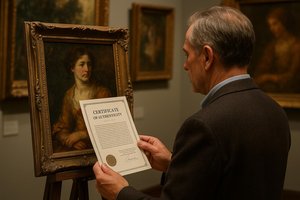
Establishing provenance is essentially a matter of meticulous documentation. The pursuit of truth in art requires an exhaustive search through archives, auction catalogs, exhibition records, and private letters to reconstruct the movement of a work. Every time a painting is featured in a museum retrospective or listed in a prestigious collection's inventory, a new link is forged in its historical chain. These records provide the contextual evidence necessary to support the work's original production and subsequent discovery, establishing a traceable path that minimizes the shadows of doubt.
A clear, unbroken chain of custody is the ultimate safeguard for any serious acquisition. This includes not only the names of previous owners but also the physical locations where the art has been stored or displayed. In an era where the transparency of the art market is under constant scrutiny, the ability to present a verifiable history of ownership is what transforms a beautiful object into a legitimate investment. For the collector, this documentation serves as a historical passport, validating that the piece has not only been preserved but has also maintained its legal and moral integrity throughout its existence.
Scientific Forensics: How Technology Unmasks Forgeries and Verifies Materials
 Deciphering Authenticity: A Comprehensive Guide to Art Verification & Provenance Research
The Evolving Landscape of Art Authentication: Historical Context & Modern Challenges For centuries, the question of authenticity has haunted the art world. It’s a narrative woven into the very fabric of artistic creation—from Renaissance workshops me...
While the expert eye provides the initial layer of scrutiny, we now stand at a fascinating intersection where tradition meets technology. The modern landscape of art authentication is increasingly augmented by scientific analysis, which can uncover truths hidden beneath layers of varnish or within the very chemical composition of the paint. Techniques such as X-ray fluorescence, infrared reflectography, and carbon dating allow researchers to peer through time, revealing underdrawings, pentimenti (the artist's changes during the process), and the age of the materials used.
These scientific advancements are crucial in identifying the subtle deceptions employed by modern forgers who use period-accurate pigments to mimic historical practices. However, even the most advanced laboratory techniques are not entirely foolproof. The challenge for the forensic expert is not just identifying what
is authentic, but also understanding how a work has been altered or restored over time. A single layer of non-original varnish or an aggressive cleaning can obscure the original character of a masterpiece, making the marriage of scientific data and historical context indispensable for true verification.
The Ethical Landscape: Navigating Looted Art, Restitution, and Legal Validity
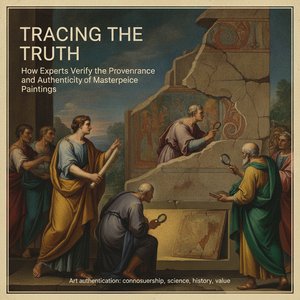 Tracing the Truth: How Experts Verify the Provenance and Authenticity of Masterpiece Paintings
The Foundation of Trust: Defining Authenticity and Provenance in the Art Market In the high-stakes arena of fine art acquisition, the distinction between a priceless masterpiece and a clever imitation rests upon a single, invisible pillar: truth. To ...
In recent decades, the study of provenance has taken on a profound ethical dimension. The importance of tracing ownership has moved beyond mere authenticity to encompass the moral and legal validity of a work's history. For museums and the international art trade, establishing a clean chain of custody is now paramount due to the increasing scrutiny regarding looted art. This is particularly critical for works that changed hands in Nazi-controlled Europe during World War II, as well as antiquities from regions experiencing conflict, such as Iraq and Syria.
The rise of global awareness regarding the illegal export of cultural heritage has forced a re-evaluation of how collections are built and maintained. Collectors must now be vigilant not only against forgeries but also against works with "tainted" histories. The process of provenance research now includes investigating whether an object was illegally exported or stolen, ensuring that the acquisition of beauty does not come at the cost of cultural theft. This heightened sense of responsibility ensures that the art market remains a space of stewardship rather than exploitation.
Securing the Legacy: Best Practices for Collectors in Verifying New Acquisitions
For the serious collector, navigating the provenance puzzle requires a disciplined and multi-layered approach. The foundation of any successful acquisition should be a rigorous review of all available documentation. Never rely solely on a single source or a verbal assurance; instead, seek out primary documents such as original bills of sale, exhibition labels, and inclusion in
catalogue raisonnés. A robust provenance acts as the ultimate insurance policy for your collection, protecting both its financial value and its historical significance.
Ultimately, the goal of every collector should be to act as a temporary custodian of human creativity. By prioritizing transparency, embracing scientific verification, and respecting the ethical complexities of art history, you ensure that your collection is not just a display of wealth, but a verified legacy of truth. Whether you are acquiring a contemporary masterpiece or a rediscovered classic, the pursuit of provenance is the pursuit of the very soul of the artwork itself.
About ArtsDot.com
ArtsDot.com is a global leader in providing high-quality, hand-painted reproductions and museum-grade prints. Since 2004, we have been dedicated to making fine art accessible to collectors worldwide, offering everything from custom photo-to-oil transformations to large-scale architectural murals. Our mission is to preserve the beauty of human creativity through meticulous craftsmanship and expert curation.