The Historical Context: Grünewald’s Germany & the Late Medieval World
 Wikipedia: Matthias Grünewald
Matthias Grünewald (c. 1470 – 31 August 1528; also known as Mathis Gothart Nithart) was a German Renaissance painter of religious works who ignored Renaissance classicism to continue the style of late medieval Central European art into the 16th centu...
To truly appreciate Matthias Grünewald, one must first understand the world he inhabited – a Germany teetering on the cusp of immense change in the early 16th century. This wasn't the Italy of burgeoning humanism and classical revival; it was a land steeped in late medieval piety, anxieties surrounding death and disease, and a fervent belief in the power of religious imagery to directly impact salvation. The Protestant Reformation loomed large, casting a shadow over established artistic conventions. Grünewald’s art wasn't born from a desire to emulate antiquity, but rather from a deeply felt need to express the raw, visceral realities of faith within this turbulent context. The Holy Roman Empire was fragmented, societal structures were rigid, and outbreaks of plague – particularly ergotism, known as St. Anthony’s Fire – ravaged communities. This pervasive sense of suffering profoundly shaped Grünewald's artistic vision, leading him to reject the idealized forms favored by Italian Renaissance masters in favor of a more emotionally charged and often unsettling aesthetic.
The Isenheim Altarpiece: A Masterpiece Born of Suffering
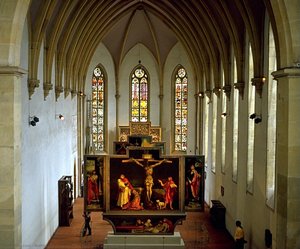
The Isenheim Altarpiece is an altarpiece sculpted and painted by, respectively, the Germans Nikolaus Hagenauer and Matthias Grünewald in 1512–1516. It is on display at the Unterlinden Museum at Colmar, Alsace, in France. It is Grünewald's largest wor...
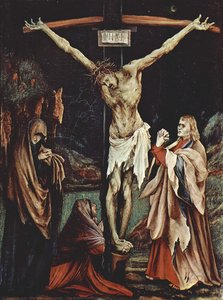
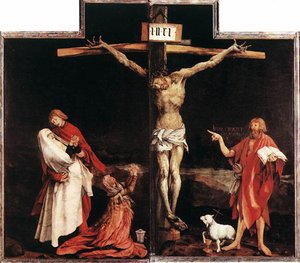
It is impossible to discuss Matthias Grünewwald without centering on his magnum opus: the Isenheim Altarpiece, created between 1512 and 1516 for the Monastery of St. Anthony in Issenheim, Alsace. Commissioned by the Antonine monks—renowned for their care of plague victims—the altarpiece wasn’t intended as a general devotional piece but as a direct source of solace and hope for those afflicted with the agonizing symptoms of ergotism. The work is remarkable not only for its artistic brilliance but also for its profound empathy. The multi-paneled structure, designed to be opened and closed depending on the liturgical season, unfolds like a narrative of suffering, redemption, and ultimate renewal. When closed, the central panel depicts a harrowing Crucifixion scene—a vision of Christ’s agony so realistic it was said to mirror the very sores and afflictions plaguing the monastery's patients. The opening of the wings reveals further scenes – the Annunciation, Nativity, Angelic Concert, Resurrection – offering a progression from despair to hope, culminating in the promise of salvation.
Anatomy of Emotion: Grünewwald’s Radical Realism and Expressionism
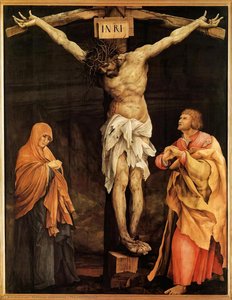
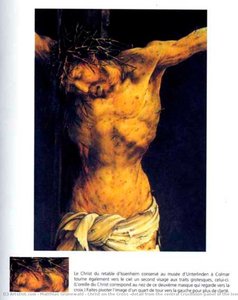 Christ on the Cross (detail from the central Crucifixion panel of the Isenheim Altarpiece)
Discover Matthias Grünewald's powerful 1515 depiction of Christ on the Cross, blending realism and expressionism. A profound, emotionally charged masterpiece perfect for art collectors and religious art enthusiasts.
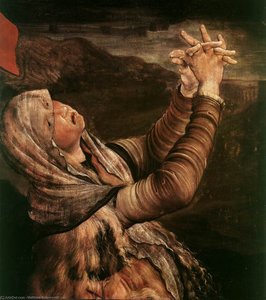
Grünewald's artistic style stands apart. While his contemporaries sought harmony and idealized beauty, he embraced distortion and exaggeration as tools for conveying profound emotional truth. His figures are not classically proportioned; they are often elongated, contorted, and rendered with a startling degree of realism—a realism that doesn’t shy away from the grotesque or unsettling. Christ on the Cross, in particular, exemplifies this approach. The body is emaciated, riddled with wounds, and twisted in agony. The skin appears translucent, revealing the underlying musculature and bone structure. This isn't a sanitized depiction of suffering; it’s a brutal, unflinching portrayal of physical torment. However, Grünewald doesn’t simply revel in morbidity. He uses these distortions to amplify the emotional impact of the scene, drawing the viewer into Christ’s pain and fostering a sense of shared humanity. The intensity is further heightened by his masterful use of color—dark, somber tones punctuated by flashes of vibrant red and gold.
Symbolism and Iconography in the Isenheim Altarpiece – Decoding a Vision
The Isenheim Altarpiece is densely packed with symbolism, each element carefully chosen to resonate with the intended audience. Saint Sebastian, depicted alongside Christ on the closed wings, was invoked as a protector against plague, his body pierced by arrows representing the suffering endured by those afflicted with disease. Saint Anthony the Great, patron saint of ergotism sufferers, remains stoic amidst demonic torment, symbolizing resilience and spiritual fortitude. The Nativity scene, often overlooked, is particularly poignant. It’s not a traditional depiction of idyllic motherhood; instead, it portrays Mary in a humble setting, surrounded by angels whose faces are almost mask-like, reflecting the anxieties and uncertainties of the time. The inclusion of John the Baptist, anachronistically present at the Crucifixion, points to the prophetic nature of Christ’s sacrifice. Even the landscape itself is imbued with meaning—the barren trees and rocky terrain symbolizing the spiritual wasteland from which redemption emerges. The entire altarpiece functions as a complex visual allegory, offering layers of interpretation for those seeking solace and understanding.
Grünewald’s Legacy: Challenging Renaissance Classicism & Influencing Future Artists
For centuries, Grünewald remained largely obscure, his works often misattributed to other artists—most notably Albrecht Dürer. It wasn't until the 19th century that scholars began to recognize his unique genius and establish him as a pivotal figure in Northern Renaissance art. His rejection of classical ideals – favoring instead emotional intensity and expressive distortion – paved the way for later artistic movements, including Expressionism. Artists like Ernst Ludwig Kirchner and Emil Nolde drew inspiration from Grünewald’s unflinching portrayal of human suffering and his willingness to challenge conventional aesthetic norms. Grünewald's influence extends beyond painting; his dramatic compositions and symbolic use of color have resonated with artists across various disciplines, including literature and music. He stands as a testament to the power of art to confront difficult truths and offer profound spiritual insight.
Collecting Grünewald Today: Appreciation, Rarity & Investment
Acquiring a work by Matthias Grünewald is an exceedingly rare opportunity. Only ten paintings—and approximately thirty-five drawings—survive, making his works among the most coveted treasures in the art world. The Isenheim Altarpiece remains permanently housed at the Musée d'Unterlinden in Colmar, France, but smaller panels and drawings occasionally appear on the market. The value of a Grünewald painting is determined by its provenance, condition, and subject matter, with works directly related to the Isenheim Altarpiece commanding particularly high prices. Beyond financial considerations, owning a piece by Grünewald represents an investment in art history—a connection to a master who dared to confront the darkest aspects of human existence and offer a vision of hope amidst despair. ArtsDot.com offers museum-quality reproductions of Grünewald’s masterpieces, allowing collectors and enthusiasts alike to experience the power and beauty of his work within their own homes. Explore our collection today and discover the enduring legacy of this remarkable artist.