
The Genesis of Regionalism: A Response to Modernity and Crisis
 Echoes of Place: Regionalism & American Identity in Interwar Art
The Rise of Regionalism: A Response to Modernity & Crisis Wikipedia: Regionalism (art) American Regionalism is an American realist modern art movement that included paintings, murals, lithographs, and illustrations depicting realistic scenes of rural...
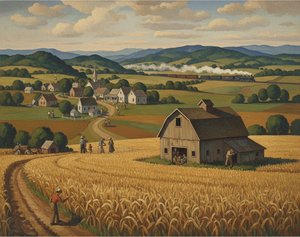
To understand the emergence of American Regionalism, one must first look toward the turbulent landscape of the early twentieth century. As the world stood on the precipice of profound change, the art galleries of Europe were erupting with the radical energies of Cubism, Surrealism, and Futurism. These avant-garde movements, while intellectually stimulating, often presented a fragmented and abstract reality that felt increasingly detached from the lived experiences of the American public. Across the Atlantic, a seismic shift was occurring; the rapid industrialization and urbanization of the United and the looming shadow of the Great Depression created a collective yearning for something more grounded, more tangible, and more intimately connected to the soil.
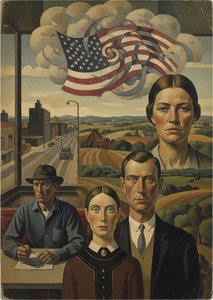
Regionalism arose not merely as an aesthetic preference but as a deliberate, soulful reaction against this perceived cosmopolitan detachment. It was a movement born from crisis and a profound need for stability. While European modernism sought to dismantle traditional notions of representation, American Regionalists looked inward, toward the heartland. They sought to reaffirm the beauty of the familiar, finding inspiration in the rhythmic cycles of rural life and the quiet dignity of small-town existence. This was an era where art began to function as a mirror for national identity, attempting to capture the essence of a nation grappling with economic hardship and social upheaval by celebrating the enduring values found within its own borders.
Grant Wood and the Midwestern Aesthetic: From Iowa to Iconography
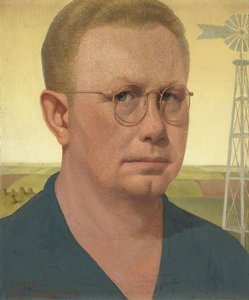 Grant Wood
Early Life and Career Grant DeVolson Wood, an American painter, was born on February 13, 1891, in rural Iowa. His life changed dramatically after the death of his father in 1901, when his mother relocated the family to Cedar Rapids. Wood began his ar...
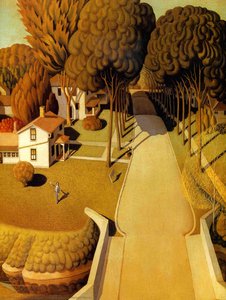
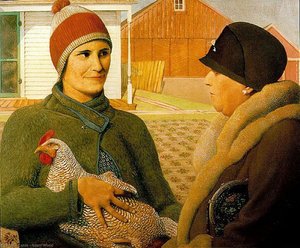
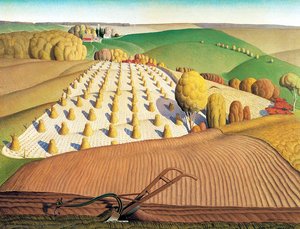
At the very epicenter of this movement stood Grant DeVolson Wood, an artist whose life and work were inextricably woven into the fabric of the American Midwest. Born in rural Iowa in 1891, Wood’s artistic sensibilities were shaped by the landscapes he traversed and the traditions he inherited. His journey was one of remarkable synthesis; while his roots were firmly planted in the fertile soil of Iowa, his technical prowess was deeply influenced by the meticulous clarity of the 15th-century Flemish master, Jan van Eyck. This unique combination allowed Wood to approach American subject matter with a European level of craftsmanship, imbuing ordinary Midwestern scenes with a luminous, almost sacred quality.
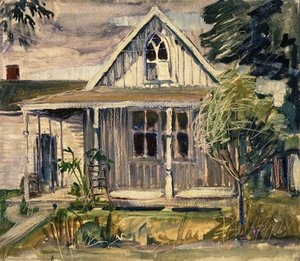
Wood’s aesthetic was far from a simple rejection of modernism; rather, it was a sophisticated filtering of global technique through the lens of local experience. His work often featured the rolling hills, weathered farmhouses, and stoic inhabitants of the Midwest, rendered with a precision that demanded attention to detail. Whether capturing the serene elegance in works like Portrait of Nan or exploring the architectural charm of Carpenter Gothic structures, Wood possessed an uncanny ability to transform the mundane into the monumental. Through his leadership in the Stone City Art Colony, he inspired a generation to find profound meaning within their own landscapes, effectively creating a visual language for the American heartland that remains unsurpassed.
American Gothic: Decoding the Symbolism of a National Masterpiece
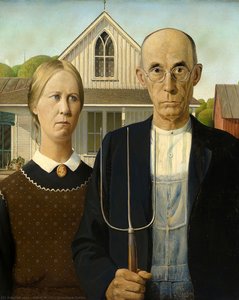 American Gothic
A Quintessential American Vision Grant Wood’s 1930 masterpiece, *American Gothic*, transcends its status as a painting; it is a cultural touchstone. More than just a portrait of rural life, this work encapsulates the anxieties and enduring values of ...
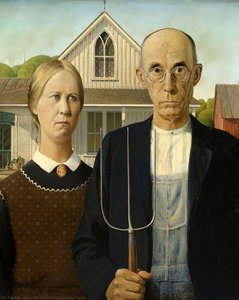
No single work encapsulates the spirit, the tension, and the enduring mystery of Regionalism quite like 1930’s American Gothic. It is a painting that transcends the boundaries of art history to become a cultural touchstone, a piece of iconography that resonates as deeply today as it did during the depths of the Great Depression. At first glance, the scene appears deceptively simple: a farmer and his daughter—often mistakenly identified as his wife—stand resolutely before a distinctive Carpenter Gothic farmhouse. Yet, beneath this stoic surface lies a complex tapestry of symbolism that speaks to the anxieties and the resilience of a nation.
The composition itself is a masterclass in tension and balance. The verticality of the pitchfork and the sharp gables of the house create a sense of rigid morality and steadfastness, while the weathered textures of the wood and clothing evoke a sense of historical endurance. The figures themselves, with their unyielding gazors, embody the grit and determination required to survive an era of profound economic uncertainty. Some critics have viewed the work as a tribute to traditional American values, while others find a subtle, haunting irony in its stiff formality. Regardless of interpretation, the painting’s power lies in its ability to evoke a sense of place so potent that it has become synonymous with the very concept of American identity.
The Intersection of Art and Literature: Local Color and Regional Identity
American literary regionalism, often used interchangeably with the term "local color", is a style or genre of writing in the United States that gained popularity in the mid-to-late 19th century and early 20th century. In this style of writing, which ...
The movement known as Regionalism was not confined to the canvas; it found a powerful, echoing resonance in the literary traditions of the time. Often referred to as "local color" writing, this literary style flourished alongside the painters, sharing a common devotion to the specificities of place. Much like the Regionalist painters, writers of this era focused on the unique dialects, customs, and histories of particular regions, particularly those that were rural or provincial. This was an art of fidelity—a commitment to describing the world with an accuracy that honored the nuances of local life.
This literary movement was deeply influenced by both 19th-century realism and Romanticism, striving to maintain a truthful description of the landscape while infusing the narrative with the charm of unfamiliar customs and people. By emphasizing the "local," these authors helped preserve regional identities that were being threatened by the homogenizing forces of industrialization. The synergy between the visual arts and literature created a holistic cultural movement; where the painter captured the light on an Iowa cornfield, the poet captured the cadence of the farmer's speech. Together, they constructed a multifaceted portrait of a nation looking inward to find its true self.
Preserving the Heartland: The Enduring Legacy of American Realism
 American Realism's Defining Works: 10 Masterpieces for Your Home
Introduction Imagine stepping back in time to a nation grappling with rapid industrialization, urbanization, and social change. This was America in the late 19th and early 20th centuries – a period of immense upheaval and profound questioning. The pr...
As we look back upon the era of American Regionalism, we see more than just a period of art history; we see a profound testament to the power of observation and the importance of cultural memory. The movement provided a much-needed anchor during a time of global instability, offering a sense of continuity and pride through the celebration of the everyday. The works of Grant Wood and his contemporaries continue to captivate modern audiences because they touch upon universal themes: the relationship between humanity and the land, the dignity of labor, and the search for identity within one's community.
Today, the legacy of this movement lives on in our continued appreciation for the beauty found in the unvarnished truth. The meticulous techniques developed by these artists—the emphasis on texture, light, and form—continue to inspire collectors and enthusiasts alike. For those seeking to bring this sense of historical gravity and quiet beauty into their own spaces, the preservation of these masterpieces is essential. Whether through the study of museum archives or the acquisition of a high-quality oil reproduction, we ensure that the spirit of the American Heartland remains vibrant, reminding us that even in the most humble landscapes, there exists an extraordinary depth of soul.
At ArtsDot.com, we are dedicated to preserving this legacy by making the world's most significant masterpieces accessible to all. Our collection features hand-painted oil reproductions, meticulously crafted by skilled artists on 100% cotton canvas. Each piece is a labor of passion, designed to capture the authentic brushstrokes and tonal depth of the original works. From the iconic textures of American Gothic to the delicate light of the Old Masters, we invite you to bring the history of art into your home through our museum-grade reproductions.