The Great Transition: Moving Beyond the Fleeting Moment
 Beyond the Brush: How Post-Impressionism Recharged Modern Art with Bold Color and Raw Emotion
The Impressionist Breakup: Why Light Wasn't Enough Anymore Beyond Light & Color: Impressionism vs. Post-Impressionism for the Discerning Collector The Dawn of Impressionism: Capturing Fleeting Moments Impressionism, a revolutionary art movement born ...
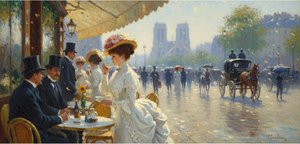
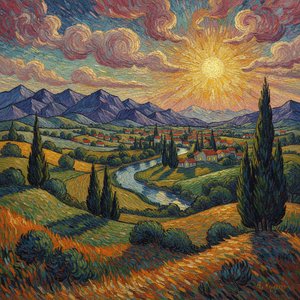
To understand the seismic shift that redefined the visual landscape of the late nineteenth century, one must first look at the shimmering, sun-drenched rebellion known as Impressionism. In the mid-1800s, a group of courageous rebels in France sought to dismantle the rigid, somlamber constraints of academic realism, turning their gaze toward the ephemeral beauty of the present moment. Masters like Claude Monet and Pierre-Auguste Renoir were masters of the optical moment, capturing the way light dances across a river's surface or shimmers through a summer breeze before it inevitably changes. Their canvases became windows into a world transformed by light, where colors dance and vibrate with an ethereal quality. However, as beautiful and luminous as these works were, they eventually hit a creative ceiling. While the Impressionists succeeded in recording the momentary sensation of a single sunbeam, their canvases often lacked a sense of structural permanence and emotional weight. There was a perceived incompleteness to the movement—a feeling that by chasing only the fleeting moment, the deeper, more lasting essence of reality was being left behind. This tension between the transient nature of light and the human desire for enduring form became the catalyst for the much more intense, visceral era of Post-Impressionism.
A Revolution of Color: The Pursuit of Emotional Depth and Subjectivity
 The Revolution of Color and Emotion: A Definitive Exploration of Post-Impressionism
The Impressionist Foundation: When Light Was No Longer Enough Capturing the Soul: The Most Emotionally Moving Impressionist and Post-Impressionist Masterpieces The Luminous Revolution: How Impressionism Redefined the Art of Seeing Impressionistic Lan...
As the movement evolved, artists began to move beyond mere representation toward a deeper understanding of artistic expression. This was no longer just about how light hits an object, but about how color can convey the soul. In this era, color became a tool for subjectivity rather than just naturalism. We see this burgeoning spirit in works such as Théo van Rysselberghe’s
Olive Trees near Nice, where the artist uses bold brushstrokes and vibrant colors to create a meditation on light, form, and the emotional resonance of nature. The Post-Impressionists deliberately distorted and exaggerated forms, prioritizing emotional impact over photographic accuracy. This shift allowed for a more profound exploration of the artist's inner world. For the discerning collector, this era offers a palette that is both intellectually stimulating and visually arresting. At ArtsDot.com, we honor this tradition of color by ensuring our handmade oil reproductions are painted with a deeper tonal range than mere prints, utilizing 100% cotton canvas to capture the true vibrancy that these masters intended.
The Science of Sight: Neo-Impressionism and the Precision of Pointillism
 Neo-Impressionism
Neo-Impressionism is a term coined by French art critic Félix Fénéon in 1886 to describe an art movement founded by Georges Seurat. Seurat's most renowned masterpiece, A Sunday Afternoon on the Island of La Grande Jatte, marked the beginning of this ...
While some artists sought raw emotion, others sought a scientific basis for beauty. This led to the birth of Neo-Impressionism, a term coined by the critic Félix Fénéon in 1886 to describe the movement founded by Georges Seurat. Seurat’s most renowned masterpiece,
A Sunday Afternoon on the Island of La Grande Jatte, marked the beginning of this disciplined approach. The technique of Pointillism—or Divisionism—involved painting tiny dabs of primary colors close to each other to intensify the viewer's perception through a process of optical mixing. By applying small strokes of pure pigment side-by-side, the artists allowed the viewer’s eye to blend them, creating a greater apparent luminosity than could be achieved by mixing paints on a palette. This was an attempt to derive a harmonious vision from modern science and optical theory. It was a meticulous, almost architectural way of building light, proving that even the most scientific approach could result in profound aesthetic beauty.
Architects of Form: Cézanne and the Structural Foundation of Modernity
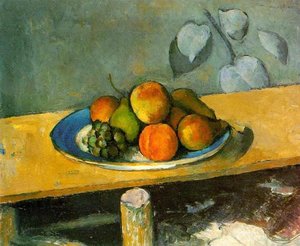 Peaches, Pears and Grapes
The Painting "Cezanne's Peaches, Pears and Grapes " is a captivating still life that exemplifies the artist's unique approach to color and composition. Painted in 1879, this oil on canvas work measures 57 x 44 cm and is a quintessential representatio...
If the Impressionists were the masters of the fleeting, Paul Cézanne was the architect of the enduring. He sought to make of Impressionism something solid and durable, like the art of the museums. Cézanne’s work represents a pivotal study in form and perception, fundamentally altering artistic thought by focusing on the underlying geometric structures of the natural world. In his captivating still lifes, such as
Peaches, Pears and Grapes, we see a unique approach to composition where every element is carefully arranged to create balance and weight. His meticulous attention to detail and exploration of light and shadow laid the essential groundwork for modern art, including Cubism. To possess a Cézanne-inspired piece is to invite structural elegance into a space. For those looking to customize their collection, our artists can even "remix" history, applying Cézanne’s structured, painterly approach to contemporary subjects or personal photographs through our professional digital mockup service.
The Expressive Soul: Van Gogh, Gauguin, and the Power of Symbolism
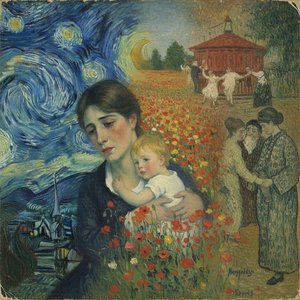 Capturing the Soul: The Most Emotionally Moving Impressionist and Post-Impressionist Masterpieces
The Luminous Revolution: How Impressionism Redefined the Art of Seeing Impressionistic Landscapes: 10 Masterpieces That Changed Art & Decor Introduction To gaze upon these ten canvases is to step directly into a world transformed by light, color, and...
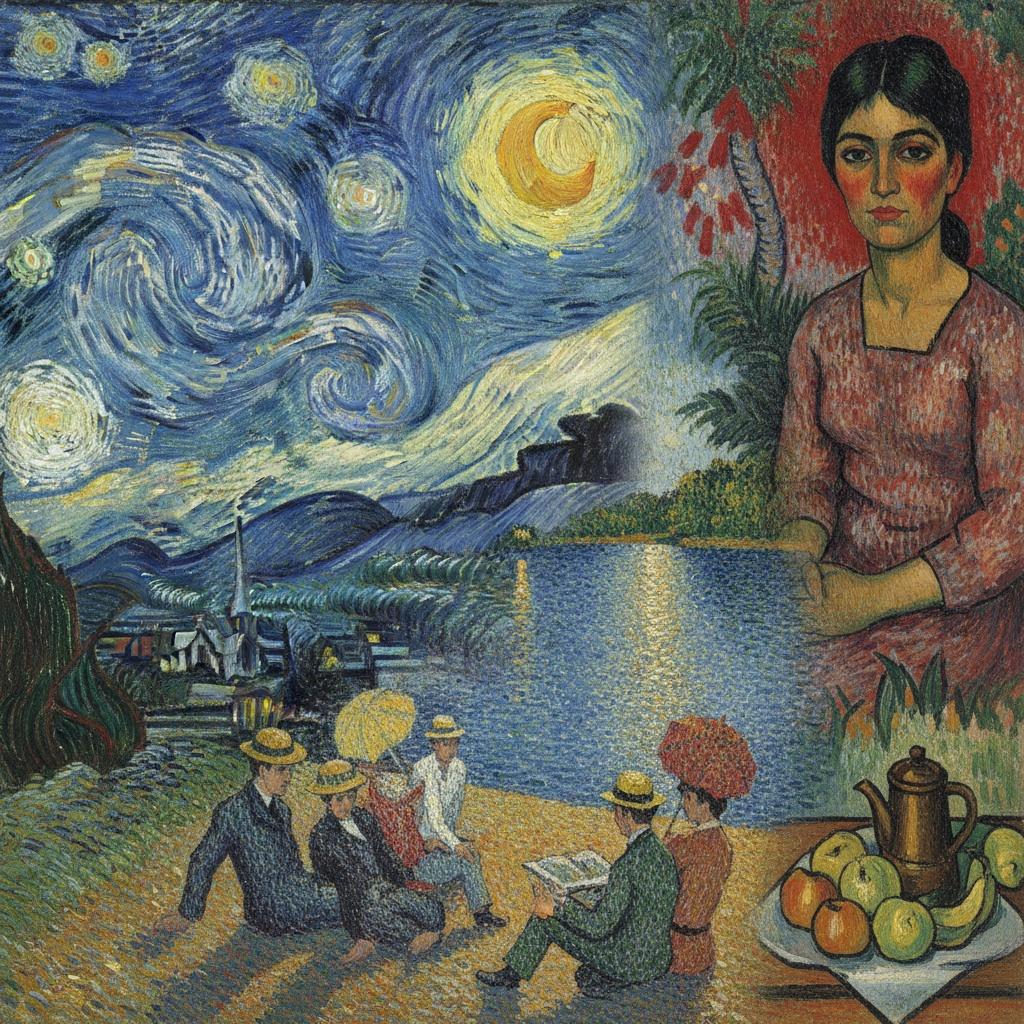
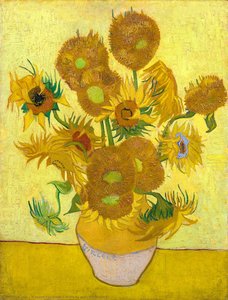
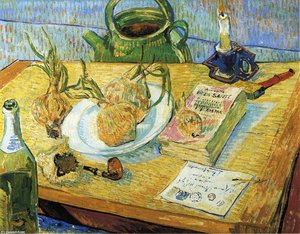
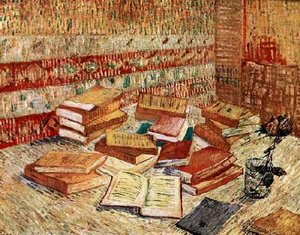
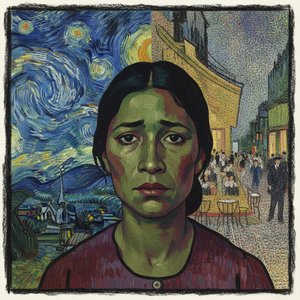
Perhaps the most recognizable legacy of Post-Impressionism lies in the raw, emotive power of artists like Vincent van Gogh and Paul Gauguin. These painters moved far beyond the surface of reality to capture the very essence of human experience. Van Gogh’s work, characterized by thick, swirling impasto and an intense, personal energy, offers a poignant glimpse into a troubled yet brilliant soul. His brushstrokes are not merely marks on canvas; they are traces of movement and emotion. Similarly, Gauguin utilized bold, flat areas of color and symbolic imagery to explore spiritual and primitive themes. This era taught us that art could be a language of symbols and deep-seated feelings. When we recreate these masterpieces, our artists hold degrees from prestigious Fine Arts academies and specialize in these specific genres. We use flexible gesso to prevent cracking and specific oils to ensure that the thick, visible brushstrokes—the very soul of Van Gogh’s style—remain vibrant and textured for generations.
Curating the Legacy: Bringing Post-Impressionist Mastery to Your Collection
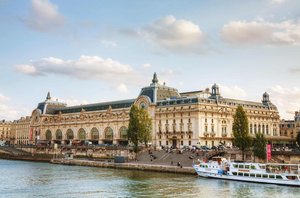 Musée d'Orsay
A Sanctuary of Light: Unveiling the Musée d'Orsay Nestled along the banks of the Seine in the heart of Paris, the Musée d’Orsay is far more than a mere repository for historical artifacts; it is an immersive journey through time and artistic revoluti...
Bringing the bold world of Post-Impressionism into your home is an investment in cultural heritage. Whether you are drawn to the scientific precision of Seurat or the emotional depth of Van Gogh, our mission at ArtsDot.com is to provide museum-grade reproductions that stand as true tributes to these masters. We offer a seamless, six-step process designed for the serious enthusiast: from your initial order and digital mockup approval to the meticulous hand-painting on cotton canvas by our skilled artists. You will receive a pre-ship photo for your final approval, ensuring every stroke meets your standards before we package your work in reinforced, double-walled boxes for global delivery via DHL or FedEx.
Beyond standard reproductions, we invite you to explore the boundaries of art history through our custom services. You may commission a "Period Shift," transforming a modern portrait into a masterpiece in the style of a Post-Impressionist legend, or use our AI tool to reimagine your personal photos through a Cubist lens. From large-format murals for architectural spaces to multi-panel group sets for grand staircases, we provide the tools to curate a collection that is uniquely yours. We invite you to browse our curated selection of the world's most famous paintings and begin your journey into the profound beauty of the Post-Impressionist revolution.