

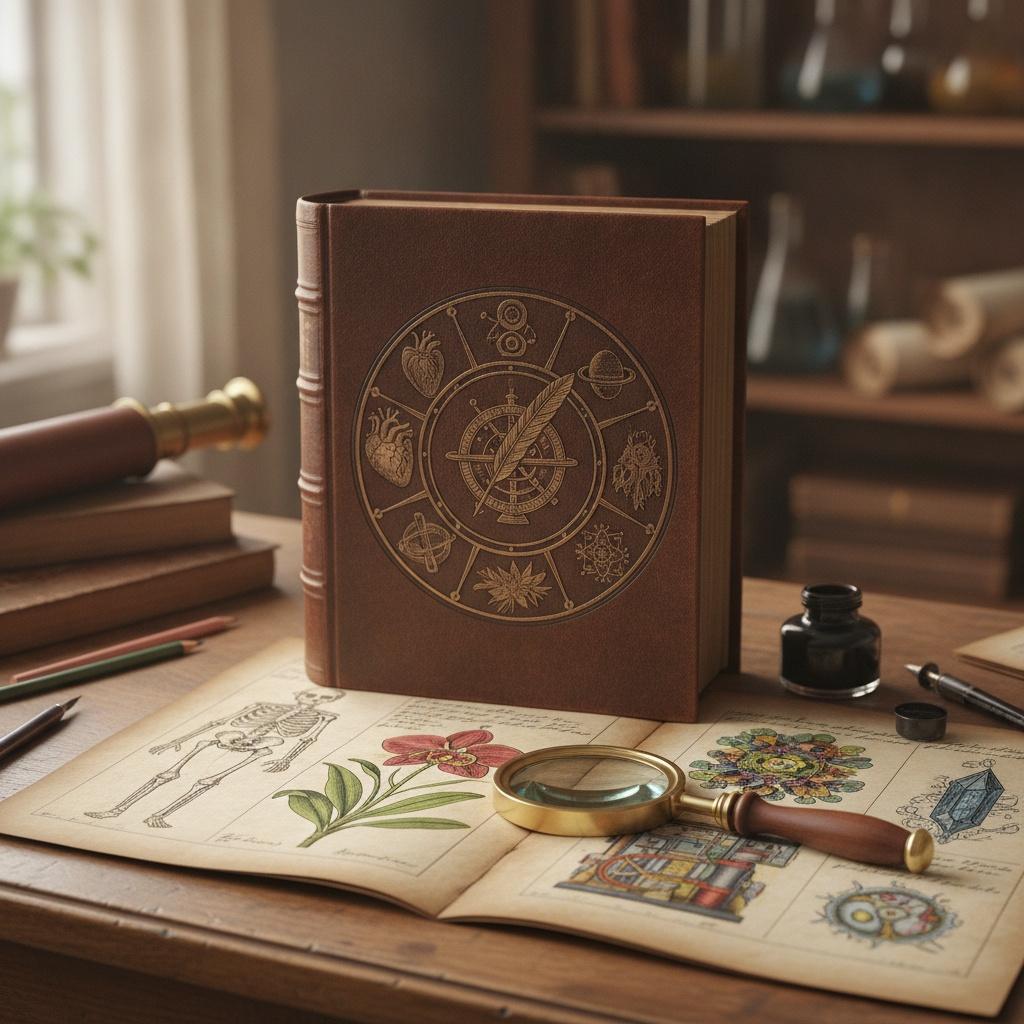
The Roots of Observation: From Ancient Herbals to the Renaissance
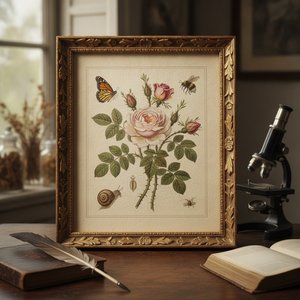 The Delicate Beauty of Botanical Realism: Capturing Nature's True Essence through the Lens of Art History
The Roots of Observation: From Ancient Herbals to Scientific Precision The Flourishing Canvas: A Historical Journey Through Botanical Illustration From Herbals to Healing: The Earliest Roots of Botanical Depiction Wikipedia: Botanical illustration Bo...
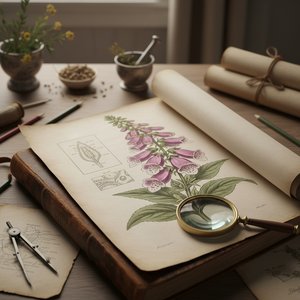
To wander through the annals of art history is to witness a profound, ancient dialogue between humanity and the verdant world. Long before the advent of the camera lens or the sophisticated microscope, our understanding of the plant kingdom was inextricably linked to the artist's hand. The earliest glimpses of this relationship are not found in sterile textbooks but are etched into the very fabric of human civilization, adorning the walls of ancient tombs and temples. In these primordial stages, botanical depictions served less as precise scientific records and as symbolic elements within a broader cosmological framework, capturing the essence of life through stylized forms.
As centuries progressed, the necessity for more functional knowledge birthed the era of the medicinal herbal. During the medieval period, monasteries became the vital centers for preserving botanical wisdom. Within these cloistered gardens, monks cultivated plants not merely for sustenance but for their healing properties. Their illustrated compendiums, known as herbals, were essential resources for survival. While works like the Pseudo-Apuleius Herbarius often prioritized symbolic meaning over strict realism, they laid the groundwork for a growing desire to document the natural world with greater fidelity. This evolution reached a pivotal moment in the 6th century with manuscripts such as the Vienna Dioscurides, which, despite the limitations of early observation, signaled a shift toward a more systematic approach to documenting nature's bounty.
The Renaissance breathed new life into this pursuit, transforming natural history from a branch of divinity into a respected pillar of academic inquiry. As the study of nature revived, it became a bridge between the humanities and the analytical study of natural philosophy. This era saw the birth of a more rigorous observational method, where the artist's eye began to align with the naturalist's curiosity, setting the stage for a period where beauty and truth would become inseparable.
The Golden Age of Botanical Realism: Masters of Meticulous Detail
 johann simon von kerner
Johann Simon von Kerner: A Pioneer of Botanical Illustration Born in Kirchheim bei Teck, Germany, in 1755, Johann Simon von Kerner’s life was inextricably linked to the burgeoning world of botany and scientific illustration. His legacy rests primaril...
As the thirst for scientific discovery intensified during the 18th and 19th centuries, a new breed of artist emerged—those who could marry the precision of a scientist with the soul of a poet. This was the era of botanical realism, where the goal was no longer mere symbolism but an exacting, almost obsessive, dedication to capturing the form, color, and intricate details of every species. The works produced during this period stand as monumental achievements in both science and art, serving as visual encyclopedias for a world expanding through exploration.
One cannot discuss this golden age without acknowledging the profound contributions of figures like Johann Simon von Kerner. Born in Germany in 1755, Kerner’s life was inextricably linked to the burgeoning world of botany. His magnum opus, the twelve-volume Hortus Sempervirens, remains a testament to his meticulous observation and artistic skill. Through his work, the complexity of European plants was brought within reach of a wider audience, transforming scientific data into an accessible, breathtakingly beautiful visual guide. Similarly, the 18th-century works of Johann Wilhelm Weinmann, particularly his ambitious Phytanthoza iconographia, redefined the boundaries of the genre, cementing his legacy as a pioneer who used the brush to document the very essence of plant life.
Moving into the 19th century, the technical mastery reached even greater heights. The works of Robert Havell Jr., such as his exquisite study of Lilium candidum, offer a captivating glimpse into a world where scientific accuracy and understated beauty exist in perfect harmony. In these illustrations, every petal, stem, and vein is rendered with such precision that the subject seems to vibrate with life on the flat surface of the page. This period represented the zenith of botanical artistry, where the artist's dedication to truth created a lasting legacy of elegance that continues to inspire collectors and historians alike.
The Intersection of Science and Aesthetics: Natural History as Fine Art
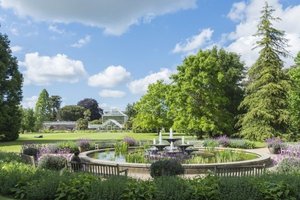 Cambridge University Botanic Garden
A Living Chronicle of Botanical Artistry Nestled within the historic heart of Cambridge, the Cambridge University Botanic Garden serves as much more than a mere horticultural display; it is a living, breathing masterpiece where scientific inquiry mee...
Scientific illustration occupies a unique space in the art world, existing at the precise intersection where rigorous scientific inquiry meets profound aesthetic grace. In the realm of natural history, the observer does not merely record; they interpret. A naturalist or natural historian seeks to understand organisms within their natural environments, and in doing so, they often uncover a level of complexity that is inherently artistic. This discipline encompasses much more than biological research; it is an exploration of the patterns, textures, and rhythms found within the living world.
This intersection is perhaps most beautifully realized in historic institutions like the Cambridge University Botanic Garden. Established in 1762, this sanctuary serves as a living chronicle of botanical artistry. To walk through its paths is to trace the footsteps of intellectual giants like Charles Darwin, whose formative ideas were nurtured amidst these verdant expanses. The garden is designed with a deliberate, systematic arrangement that mirrors the phylogenetic organization of life itself, yet it achieves a romantic, landscape-like beauty. It is a place where the boundaries between the laboratory and the gallery dissolve, proving that scientific order can produce profound aesthetic wonder.
Similarly, the Museo Botanico in Florence stands as a testament to how scientific curiosity has long been supported by artistic patronage. Founded by Cosimo I de’ Medici, this garden reflects the Renaissance passion for knowledge and beauty. Such spaces demonstrate that the study of nature is never purely clinical; it is an intimate dialogue between the observer and the earth, where every bloom acts as a brushstroke in a centuries-old portrait of the natural world's enduring majesty.
Techniques of Truth: The Mastery of Watercolor, Ink, and Precision
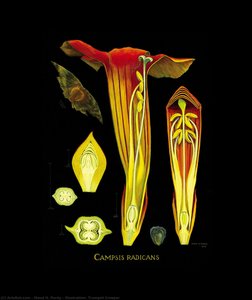 Illustration: Trumpet Creeper
Exquisite 1932 botanical illustration by Maud H. Purdy: 'Trumpet Creeper'. Detailed watercolor study of a *Campis radicans* plant, showcasing scientific precision & natural beauty.
The brilliance of scientific illustration lies not only in the subject matter but in the technical mastery required to render it. To achieve the level of detail necessary for scientific documentation, artists had to employ a sophisticated array of techniques that could suggest three-dimensionality, texture, and subtle color gradations on a two-dimensional plane. The choice of medium was critical, as each offered different possibilities for capturing the nuances of nature.
Watercolor and ink were the primary tools of this trade. Artists like Robert Havell Jr. utilized fine, precise lines to define the delicate forms of petals and leaves, employing hatching and cross-hatching techniques to suggest subtle shading. This allowed for a remarkable illusion of depth, where the smooth surfaces of a lily petal could contrast beautifully with the textured, veined appearance of its leaves. The use of ink provided the necessary structural clarity, while watercolors or gouache allowed for a restrained yet effective color palette, often prioritizing naturalistic tones over dramatic expression.
In other instances, the medium shifted to capture different botanical qualities. The 1932 watercolor study of the 'Trumpet Creeper' by Maud H. Purdy showcases how detailed watercolor can highlight both scientific precision and natural beauty through delicate washes and sharp details. Even in the 18th century, artists like Jacopo Ligozzi utilized muted tones and meticulous detail to create works that are as much about texture as they are about form. This technical rigor ensured that the illustrations were not merely beautiful, but functionally accurate, providing a reliable visual record that could withstand the scrutiny of scientific study.
The Living Legacy: Scientific Illustration in Modern Collections
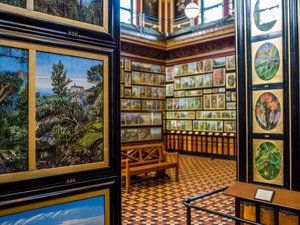 Marianne North Gallery
A Victorian World Captured in Bloom: The Marianne North Gallery Stepping into the Marianne North Gallery at Kew Gardens is akin to entering a forgotten world—a vibrant, immersive cabinet of curiosities brought to life through the meticulous brushstro...
Today, the legacy of scientific illustration continues to flourish, transcending its original purpose as a tool for documentation to become a cherished genre of fine art. While modern technology has provided us with high-resolution photography, the hand-painted botanical illustration retains a "soul" that a camera cannot replicate. The visible brushstrokes, the depth of tonal range in oil or watercolor, and the artist's ability to emphasize specific diagnostic features all contribute to an enduring appeal that resonates with contemporary collectors.
For the modern enthusiast, these works offer a window into a period of intense human curiosity and discovery. They serve as much more than mere decor; they are historical artifacts that connect us to the great naturalists and artists of the past. Whether it is a large-scale oil reproduction of a 19th-century masterpiece or a delicate print, these images bring a sense of intellectual depth and natural elegance to any space.
At ArtsDot.com, we celebrate this enduring beauty by offering museum-quality reproductions that honor the masters of scientific illustration. Our artists, holding degrees from prestigious academies, specialize in recreating the precise textures and vibrant colors of these historical works on 100% cotton canvas. Whether you seek a hand-painted oil reproduction that captures the impasto of a master or a high-quality Giclée print for your collection, we provide a bridge to the past. We invite you to explore our vast library of masterpieces and bring the timeless elegance of botanical realism into your own home.