From Organic Whimsy to Structured Splendor: The Birth of the Art Deco Aesthetic
 Art Deco
Art Deco, short for the French Arts décoratifs (lit. 'Decorative Arts'), is a style of visual arts, architecture, and product design that first appeared in Paris in the 1910s just before World War I and flourished internationally during the 1920s to ...
To understand the shimmering allure of the early twentieth century, one must look toward Paris, where the seeds of a revolution in taste were sown. As the world transitioned into modernity, the soft, swirling whimsy of
Art Nouveau—with its organic vines and asymmetrical flowers—began to yield to something more resolute and disciplined. The Art Deco movement, emerging in the 1910s and flourishing through the 1930s, was a deliberate response to an age of unprecedented technological progress and social liberation. It sought strength in the structured, the rhythmic, and the geometric. This era, epitomized by the landmark
1925 International Exposition of Modern Decorative and Industrial Arts, celebrated a new visual manifesto: one that embraced the clarity of the machine age while infusing it with a decadent, human warmth. It was a period where rare materials like ebony and ivory met the industrial promise of chrome and stainless steel, creating a timeless language of luxury.
Romain de Tirtoff: The High Priest of Art Deco Glamour
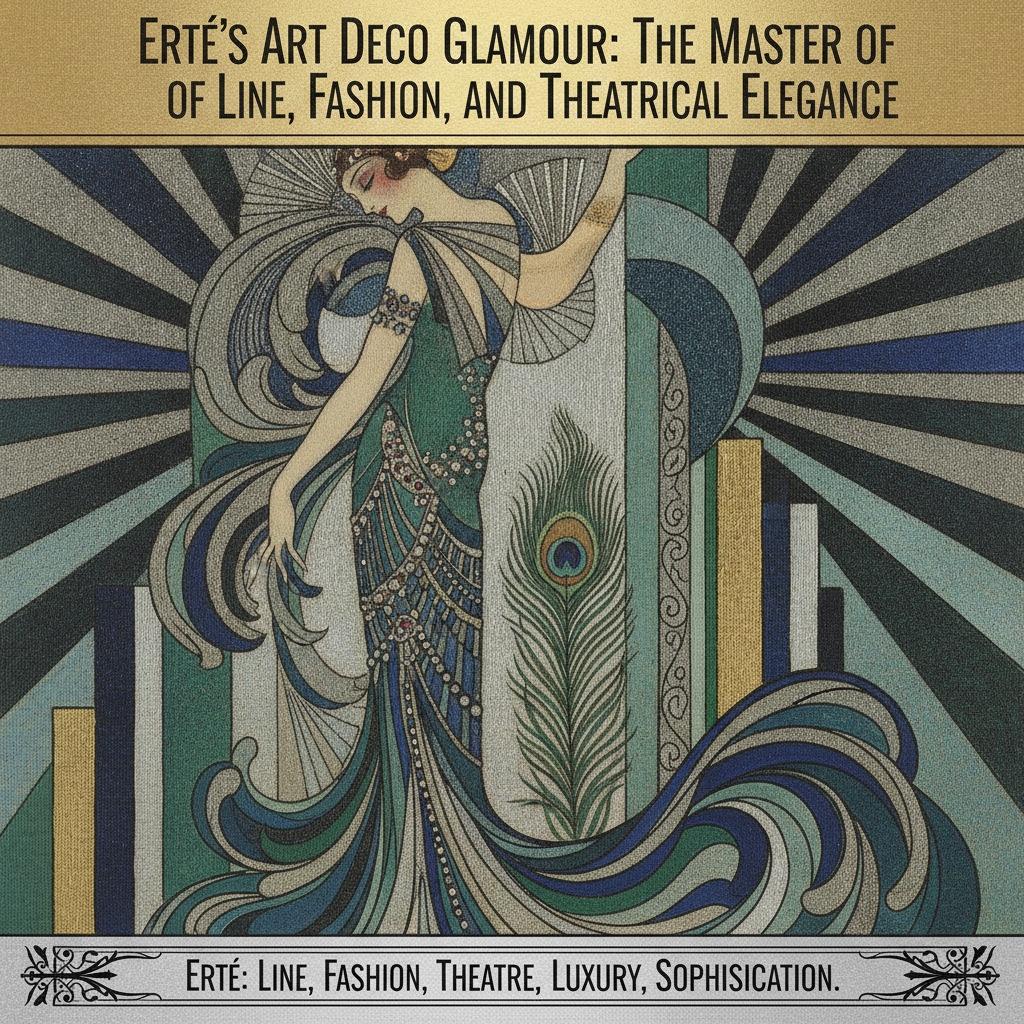
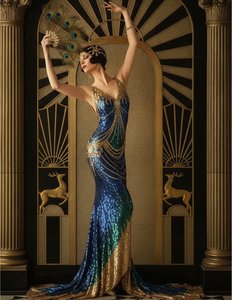 The Elegance of Erté: Capturing the Timeless Glamour and Sophistication of Art Deco Style
The Architect of Glamour: Introducing the Visionary World of Erté To step into the world of Romain de Tirtoff, known universally as Erté, is to surrender oneself to a dream of perpetual elegance. He was not merely an illustrator; he was the high prie...
To step into the world of Romain de Tirtoff, known universally as
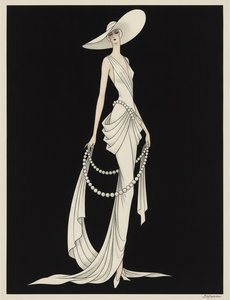
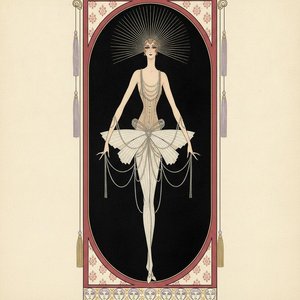
Erté, is to surrender oneself to a dream of perpetual elegance. He was far more than a mere illustrator; he was the high priest of the Art Deco movement, a visionary who breathed life into the rhythmic pulse of the 1920s and 30s. His work does not simply depict fashion; it orchestrates a symphony of movement, where every silken drape and feathered ornament tells a story of unparalleled sophistication. For those of us who find solace in the refined beauty of the past, Erté offers a sanctuary of grace, a place where the frantic pace of modernity is replaced by the deliberate, poised cadence of an era defined by luxury. He possessed a rare ability to capture the ephemeral essence of beauty—the way light dances upon a sequin or the fluid motion of a dancer mid-turn—and crystallize it into a permanent, iconic form.
A Symphony in Silhouette: The Art of Fashion Illustration and Movement
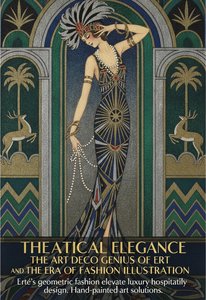 Theatrical Elegance: The Art Deco Genius of Erté and the Era of Fashion Illustration
The Genesis of Art Deco: From Parisian Expositions to Global Modernity Art Deco in Paris The Art Deco movement of architecture and design appeared in Paris in about 1910–12, and continued until the beginning of World War II in 1939. It took its name ...
Erté did not merely illustrate fashion; he
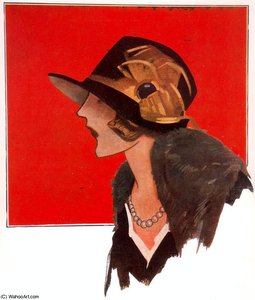
choreographed it. His vision was a departure from the organic, swirling whimsy of his predecessors, replacing it with a structured, rhythmic elegance that mirrored the burgeoning industrial sophistication of the early twentieth century. Through his eyes, the modern woman became an icon of streamlined strength, draped in fabrics that seemed to possess both the weight of silk and the lightness of air. His illustrations served as a visual vocabulary for a generation seeking to break free from Victorian constraints, embracing instead a stylized reality where luxury was measured in the precision of a curve and the brilliance of a jewel-toned palette. Every silhouette he rendered told a story of unbridled opulence, turning the page of a magazine into a window onto a much more glamorous existence.
The Mathematical Soul: Exploring Line, Symmetry, and Geometric Precision
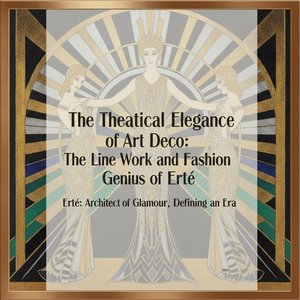 The Theatrical Elegance of Art Deco: The Line Work and Fashion Genius of Erté
The Architect of Glamour: Defining the Art Deco Aesthetic through Erté's Vision To step into the world of Romain de Tirtoff, known universally as Erté , is to surrender to a realm where geometry meets grace and where every silhouette tells a story of...
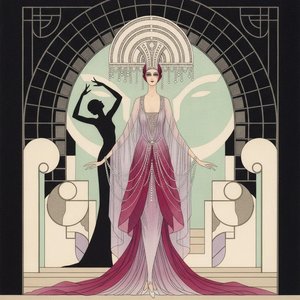
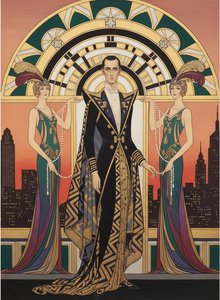
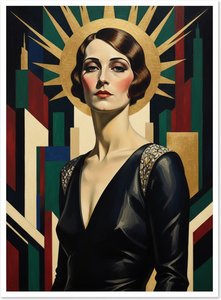
The true genius of Erté lies in his mastery of the line—a singular, commanding element that dictates the movement of his compositions. In his hands, the line is never merely a boundary; it is a rhythmic pulse. There is an almost architectural approach to the human form in his work, utilizing elongated limbs and exaggerated proportions to create a sense of otherworldly height. This linear precision creates a breathtaking tension between the rigid geometry of the background and the fluid, serpentine grace of the figures themselves. His compositions often feature a profound adherence to the principles of Art Deco: a marriage of organic fluidity and rigorous geometric structure. By framing his ethereal subjects with architectural motifs—sunbursts, stepped pyramids, and stylized floral patterns—he grounded the dreamlike subject matter in a sense of monumental permanence and mathematical beauty.
An Enduring Legacy of Opulence: How Erté Shaped the Modern Visual Identity
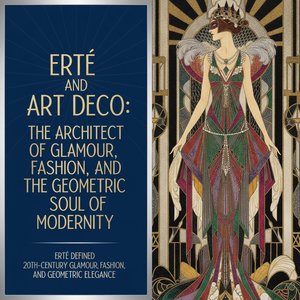 Erté and Art Deco: The Architect of Glamour, Fashion, and the Geometric Soul of Modernity
The Genesis of Art Deco: From Parisian Expositions to Global Modernity Art Deco in Paris The Art Deco movement of architecture and design appeared in Paris in about 1910–12, and continued until the beginning of World War II in 1939. It took its name ...
The influence of Erté transcended the boundaries of paper and ink, spilling into the very fabric of global culture. From the stage of the
Folies Bergère to the most prestigious fashion houses of Paris, his hand guided the aesthetic evolution of an entire generation. He captured the zeitgeist of a period that synthesized the bold colors of Fauvism with the geometric rigor of Cubism, while simultaneously embracing the exoticized motifs of ancient Egypt, Japan, and the Maya. To study his oeuvre is to witness the birth of a modern myth, where the human figure becomes an exquisite vessel for geometric perfection and ornamental splendor. Even today, the echoes of his elegance remain, reminding us of a time when art and life were inextricably entwined in a pursuit of pure, unadulterated glamour.
This exploration of Art Deco mastery is presented as part of our ongoing dedication to art history excellence at ArtsDot.com.