The Eternal Madonna: An Introduction to Marian Iconography
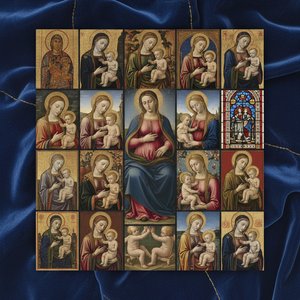
To gaze upon the image of the Virgin Mary is to engage with one of the most profound and enduring visual languages in human history. For centuries, the figure of the Madonna has served as a vessel for the highest aspirations of the human spirit, embodying themes of purity, maternal tenderness, and divine intercession. This iconography is not merely a collection of religious portraits; it is a complex tapestry of theological meaning woven through layers of pigment and light. From the rigid, gold-leafed solemnity of Byzantine icons to the soft, breathing humanity of the High Renaissance, the evolution of Marian art reflects our changing relationship with the sacred. Each brushstroke in these masterpieces seeks to bridge the gap between the earthly and the divine, inviting the viewer into a contemplative space where the boundaries of time and mortality seem to dissolve.
The power of this imagery lies in its ability to evoke immediate emotional resonance. Whether through the sorrowful gaze of a Mater Dolorosa or the serene joy of a Madonna and Child, these works function as windows into a realm of grace. As we trace the lineage of these depictions, we do not just observe changes in artistic technique; we witness the unfolding of a cultural consciousness that seeks to find the face of the infinite within the familiar contours of a mother’s love.
Renaissance Harmony: Raphael and the Geometry of Peace
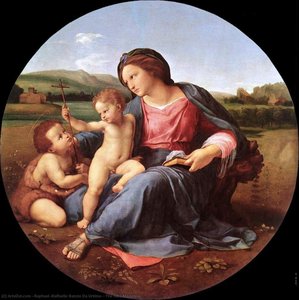
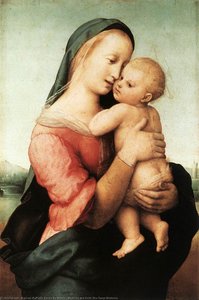
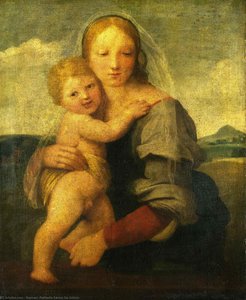
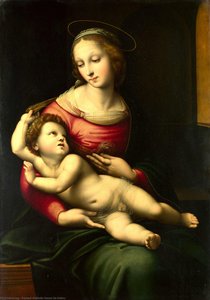
As the Renaissance dawned, the stiff hierarchies of medieval art gave way to a new era of naturalism and mathematical grace. No artist captured this transition with more profound elegance than Raphael. In his celebrated works, such as The Small Cowper Madonna, we encounter a vision of divinity that is grounded in the terrestrial beauty of our world. Raphael’s genius lay in his ability to utilize composition as a tool for spiritual stability. His use of symmetrical arrangements and pyramidal structures creates a sense of equilibrium that mirrors the perceived order of the cosmos.
In these compositions, the Virgin Mary often sits at the very heart of a balanced universe. The gentle lines of her drapery and the soft, rhythmic curves of the Christ child’s form are not merely aesthetic choices; they are intentional echoes of divine harmony. By employing soft colors and a delicate handling of light, Raphael removes the harshness of reality, replacing it quite literally with a sense of peace. To study a Raphael Madonna is to experience a moment of stillness, where the geometry of the painting provides a sanctuary for the wandering mind, anchoring the viewer in a state of quieted devotion.
Devotional Radiance: The Mastery of Light in Renaissance Oil Painting
The transition from tempera to oil painting revolutionized the way artists approached the concept of sanctity. This technological shift allowed masters like Bartolomeo Montagna to explore the subtle nuances of light and shadow, imbuing their 1490s masterpieces with a newfound depth and vitality. The medium of oil, with its slow drying time and translucent glazes, enabled a level of detail that could mimic the very texture of skin, silk, and celestial glow. In these works, light is no longer just an external force illuminating a scene; it becomes a character in itself, a manifestation of lux nova—the new light of divine revelation.
In the hands of a master, the interplay of light across the Virgin’s countenance can suggest a profound interiority. We see the way light catches the edge of a veil or settles softly upon the cheek of the infant, creating a tactile reality that makes the sacred feel accessible. This mastery of tonal range allows for a deeper emotional engagement; the shadows are not merely dark spaces but are filled with mystery and the weight of divine purpose. It is through this careful manipulation of luminosity that the oil medium truly achieved its ability to transform a flat canvas into a breathing, radiant icon of devotion.
Symbolism and Sanctity: Decoding the Sacred Elements of the Madonna and Child
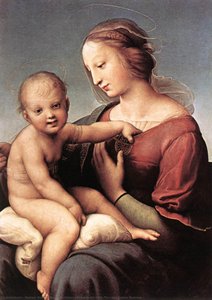
Every element within a classical Marian painting serves as a silent syllable in a larger theological poem. To the untrained eye, a piece of fruit or a specific flower may seem like mere decoration, but to the art historian, they are profound symbols of destiny and redemption. A pomegranate, for instance, often appears in the hands of the Christ child, its many seeds representing the unity of the Church and the promise of resurrection through sacrifice. Similarly, the presence of lilies signifies purity, while a sprig of violets may allude to the humility of Mary.
The interaction between the Mother and Child also carries heavy symbolic weight. A tender touch or a protective embrace is not just an expression of maternal instinct; it is a foreshadowing of the Passion. The way the infant looks toward the viewer, or perhaps toward a distant horizon, can signal his awareness of his future sacrifice. By decoding these visual metaphors, we move beyond a superficial appreciation of beauty and enter into a deeper dialogue with the artist’s intent, uncovering a hidden language of faith that has whispered to generations of believers across the centuries.
From Byzantine Icons to Baroque Emotion: The Evolution of Divine Expression
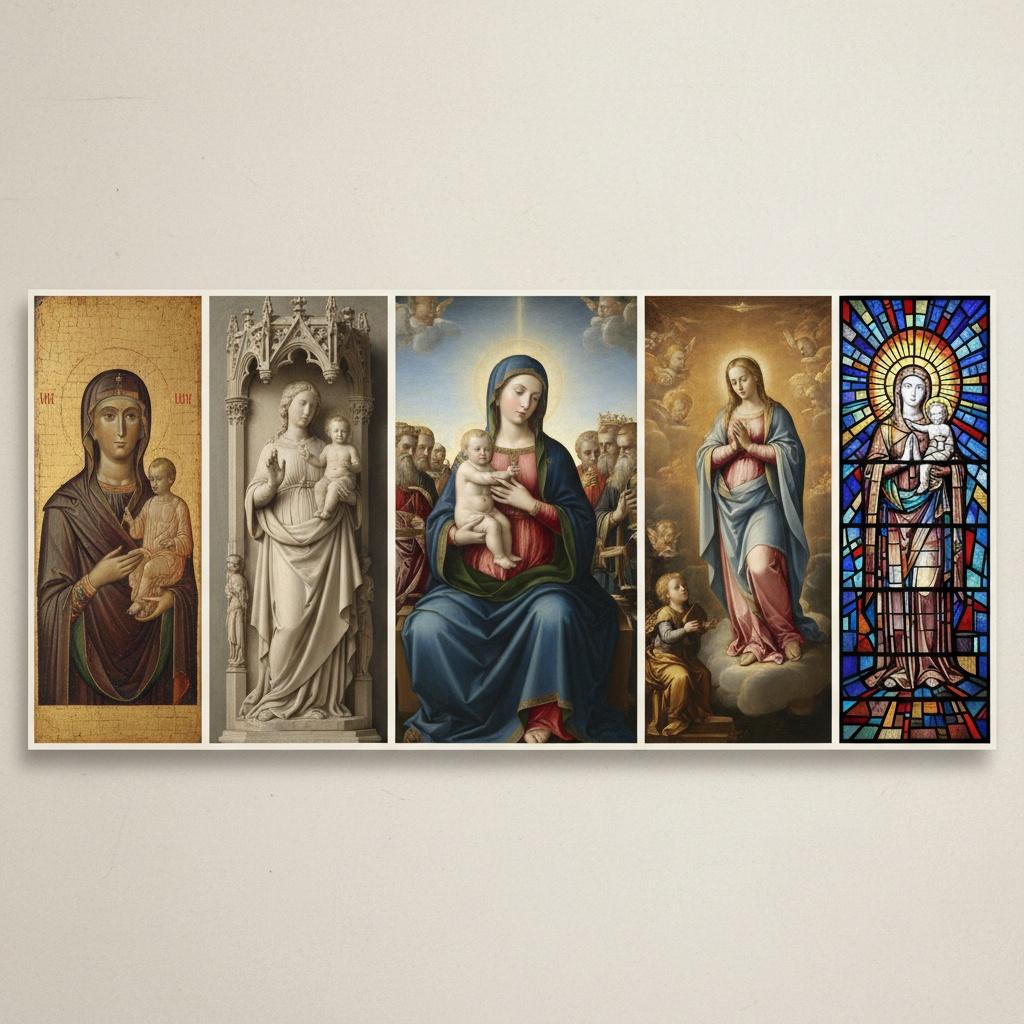
The trajectory of Marian art is one of increasing emotional complexity. In the early Byzantine tradition, the focus was on the eternal and unchanging; the figures were stylized, frontal, and set against gold backgrounds that stripped away all earthly context to emphasize a timeless, heavenly realm. These icons were not meant to be "realistic" in the modern sense, but rather to serve as spiritual conduits, their very flatness emphasizing their existence outside of human time.
As we move through the centuries toward the Baroque, this emotional distance begins to collapse. The art becomes more theatrical, more visceral, and intensely human. The serene stability of the Renaissance gives way to dramatic chiaroscuro and swirling movement. In the Baroque era, we see the Virgin Mary experiencing the full spectrum of human emotion—from the ecstatic heights of mystical union to the profound, agonizing grief of the Pietà. This evolution represents a shift in the viewer's experience: from observing a distant, holy icon to witnessing a deeply personal, emotional encounter with the divine within the context of human suffering and triumph.
Bringing History Home: Preserving Sacred Artistry in Modern Interiors
In our fast-paced, digital age, there remains a profound longing for the permanence and soulfulness found in the Old Masters. The presence of classical imagery in a contemporary home offers more than mere decoration; it provides an anchor of cultural continuity and aesthetic depth. Integrating these timeless themes into modern architecture—whether through large-scale murals that evoke the grandeur of a cathedral ceiling or carefully curated oil reproductions—allows us to surround ourselves with the echoes of human greatness.
At ArtsDot.com, we believe that fine art should be accessible to all who seek its beauty. Our mission is to preserve the legacy of these masters by creating exquisite, hand-painted reproductions on 100% cotton canvas. Each piece is a labor of passion, executed by artists trained in the rigorous traditions of the academies. Whether you are looking to transform a personal milestone into a masterpiece through our custom portrait services or wish to reimagine history with our AI-assisted tools, we provide the bridge between the storied past and your modern sanctuary. We invite you to explore our vast library and bring the enduring grace of art history into your own living space.