The Architecture of Perception: Utilizing Large-Format Art to Expand Grand Atriums
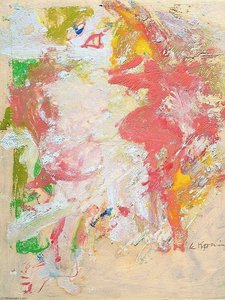 Woman Red Hair, Large Mouth, Large Foot
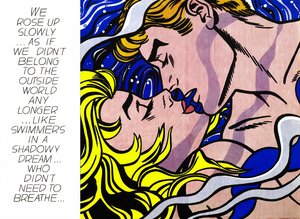
Influenced by action painting and featuring a striking red-haired woman with oversized features against a vibrant yellow and pink background.
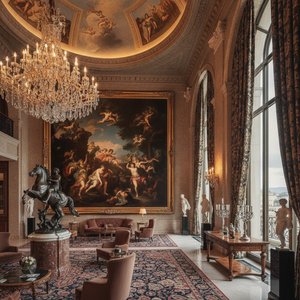
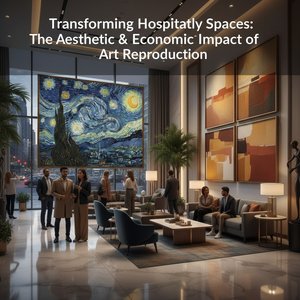
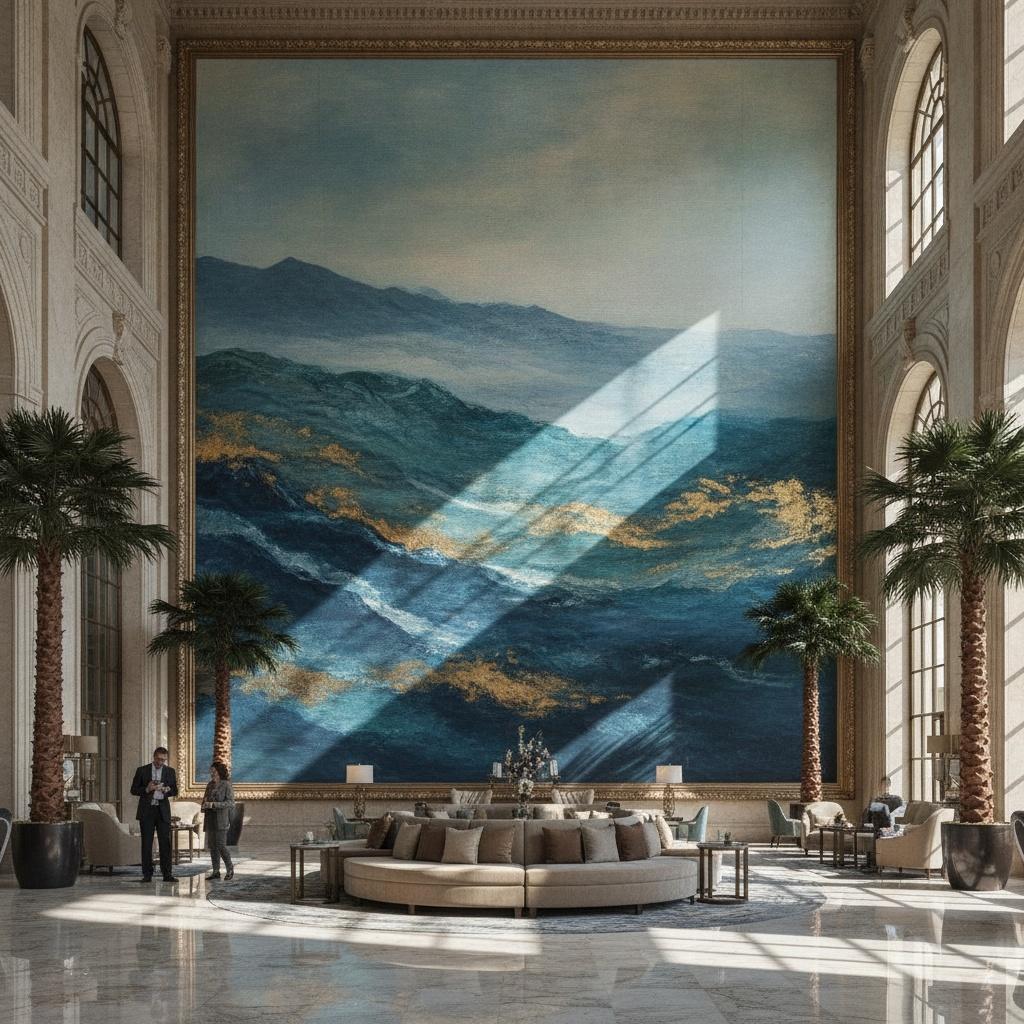
In the high-stakes arena of luxury hospitality design, the physical constraints of an urban footprint often stand in direct opposition to the brand’s promise of boundless escape. For the discerning hotel designer, a grand atrium or a soaring lobby is not merely a transitional corridor; it is a stage for architectural storytelling. When faced with the challenge of monumental volumes, the strategic integration of large-format art serves as a profound tool for manipulating perception. A singular, expansive canvas does more than occupy a wall; it acts as a structural element that redefines the room's geometry. By introducing a focal point of significant scale, the designer can anchor the vastness of an atrium, preventing the eye from wandering aimlessly and instead directing it toward a curated horizon.
The true mastery lies in using art to dissolve the hard edges of modern construction. A well-placed, large-scale masterpiece creates a visual weight that balances heavy architectural features like marble columns or steel beams. This is not merely about decoration but about the intentional use of scale to create an illusion of infinite expansion. When a painting possesses enough presence to command a massive wall, it effectively pushes the boundaries of the room outward, tricking the eye into perceiving a depth that the physical architecture may not actually provide. In this way, art becomes a silent architect, capable of transforming even the most dense urban environments into seemingly limitless sanctuaries.
Atmospheric Depth: Leveraging Romanticism and Impressionism to Erase Physical Boundaries
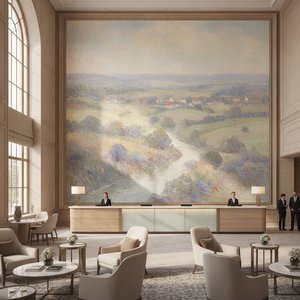 Impressionist Landscapes for Large-Scale Hospitality Decor: A Professional Guide to Light, Color, and Texture
The Aesthetic Impact of Impressionism: Enhancing Hospitality Ambience through Light and Atmosphere Capturing Ephemeral Light: Plein Air Painting from Impressionism to Today The Genesis of 'En Plein Air': From Studio Tradition to Landscape Portraiture...
To truly erase the boundaries of a room, one must look toward the historical mastery of light and atmosphere found within the Romantic and Impressionist movements. The technique of en plein air painting—the practice of capturing the ephemeral qualities of the outdoors—offers a sophisticated toolkit for the modern designer. When we introduce works that prioritize the sensation of being present within a scene, such as the sun-drenched landscapes of Monet or the atmospheric studies of Renoir, we are introducing movement and vitality into a static environment. These works do not merely document topography; they capture the very essence of light, allowing a physical lobby to feel breathing and alive.
Consider the profound impact of atmospheric perspective, a technique perfected by masters like Sir Augustus Wall Callcott. Through subtle tonal gradations and the creation of a soft, misty haze, these artists achieved an incredible illusion of depth. In a grand dining hall or a luxury lounge, integrating such works allows for a transition into a curated reality. The use of receding landscapes—where distant mountains or river estuaries fade into a soft blue—invites the viewer to wander mentally beyond the walls. By utilizing the textured, layered brushwork characteristic of Post-Impressionism, as seen in the vibrant, tropical vistas of Paul Gauguin, a designer can introduce a tactile richness that softens modern minimalism, replacing rigid geometry with the lush, emotive textures of the natural world.
The Psychology of Scale: Curating Emotional Resonance in High-Traffic Hospitality Spaces
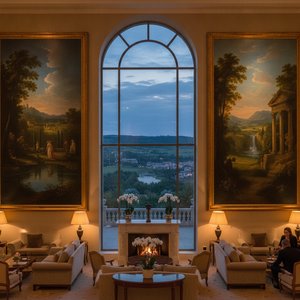 Curating Atmosphere: A Professional Guide to Selecting Romantic Landscape Paintings for Large-Scale Hospitality Interiors
The Psychology of Romanticism: Utilizing Landscape Art to Define Hospitality Ambience In the high-stakes arena of hospitality design, the atmosphere of a lobby or lounge is not merely a backdrop; it is a silent communicator of brand identity and emot...
In the luxury sector, atmosphere is a silent communicator of brand identity and emotional promise. A guest entering a premier hotel seeks an escape from the mundane; they are looking for a transition into a space that feels both exclusive and profound. The psychology of scale plays a vital role in this emotional journey. Large-format art can evoke the sublime—a sense of awe and humbling vastness—which is essential for establishing a sense of prestige. When a landscape features sweeping vistas or the powerful, rugged terrain of the Alps, it taps into a universal language of serenity and wonder, instantly lowering the guest's heart rate and fostering a state of contemplative peace.
However, scale must be balanced with intimacy to avoid overwhelming the visitor. The challenge for the designer is to use large-scale works to define the "mood" of specific zones. In high-traffic areas like lobbies, art should provide a sense of grandeur and stability, whereas in more secluded lounges, the focus might shift toward the delicate, shimmering light of an Impressionist garden. By selecting artworks that feature soft transitions and natural light, designers can prescribe a state of calm, using the subtle interplay of shadow to create an immediate emotional bond between the visitor and the architectural space. This careful curation ensures that the art does not just decorate the room but actively shapes the psychological experience of every guest.
Technical Precision in Procurement: Selecting Masterpiece Reproductions for Large-Scale Installations
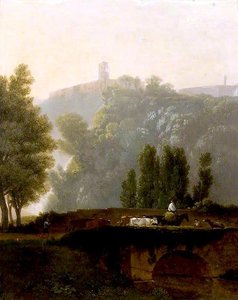 Landscape and Figures
A Tranquil Vision of Rural England: Sir Augustus Wall Callcott’s “The Entrance to the Pool of London” Sir Augustus Wall Callcott's "The Entrance to the Pool of London," painted in 1816, stands as a quintessential example of Romantic landscape paintin...
For the procurement professional managing large-scale hospitality projects, the challenge of scale is both a technical and an aesthetic hurdle. Selecting art that can withstand the visual demands of a grand installation requires a deep understanding of medium and quality. It is essential to distinguish between mere prints and true handmade oil reproductions. While a Giclée print offers accuracy, it lacks the "soul" provided by the physical impasto and visible brushstrokes of an oil painting on cotton canvas. For high-end interiors, the deeper tonal range and tactile depth of a hand-painted work are indispensable for creating the necessary impact in large formats.
Furthermore, the technical execution of the installation must consider the long-term integrity of the collection. When commissioning large-scale works, professionals should look for pieces that utilize high-quality materials, such as flexible gesso to prevent cracking and specialized oils to ensure color longevity. The ability to customize these works—perhaps by requesting a "period shift" or adjusting the color palette to match a specific interior scheme—allows for a level of bespoke design that is unattainable with mass-produced decor. Whether utilizing multi-panel layouts to span wide staircases or commissioning massive canvas rolls for ceiling frescoes, the focus must always remain on authenticity, craftsmanship, and the seamless integration of art into the architectural fabric.
Beyond the Frame: Integrating Multi-Panel Compositions and Murals into Modern Hotel Design
The modern trend in luxury interiors is moving toward a more integrated, immersive approach to art, where the distinction between the wall and the artwork begins to blur. This is most effectively achieved through multi-panel compositions and large-format murals. The use of "split" paintings—where a single masterpiece is elegantly distributed across three, four, or even five panels—is an exceptional solution for wide walls or grand staircases. This technique provides a contemporary, rhythmic aesthetic that maintains the cohesive flow of the original image while adding a modern architectural edge to the installation.
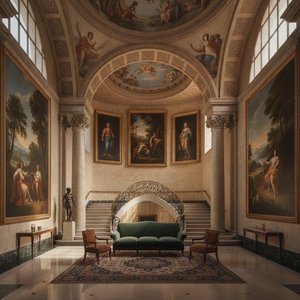
For truly transformative spaces, the frontier lies in bespoke murals and ceiling frescoes. These works, painted on massive canvas rolls, allow designers to recreate historical grandeur, such as the intricate beauty of Renaissance ceilings, within a contemporary hotel setting. This level of customization enables the creation of an environment that is entirely unique to the property, far removed from the generic aesthetics of standard hospitality decor. By treating the entire surface of a room as a canvas, the designer can create a fully immersive world, where every corner of the space contributes to a singular, breathtaking narrative of luxury and artful sophistication.
Discover the Art of Excellence with ArtsDot.com
At ArtsDot.com, we specialize in bringing this level of artistic grandeur to the world's most prestigious interiors. As a global leader in fine art reproductions, we provide hotel designers and collectors with access to a library of over 465,000 paintings, ranging from the Old Masters to contemporary Impressionism. Our master artists create 100% hand-painted oil reproductions on premium cotton canvas, ensuring that every brushstroke contributes to the depth and prestige of your project. From bespoke multi-panel installations to custom photo-to-masterpiece commissions, our professional services are designed to meet the rigorous demands of large-scale hospitality design. We offer a full-service experience, including digital mockups for seamless integration, professional framing, and reliable global logistics via DHL and FedEx. Elevate your next architectural project with the timeless authority of ArtsDot.