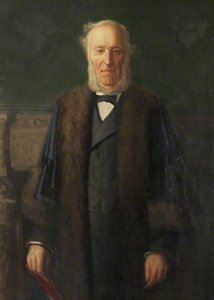
The Ethereal Vision of William Norris Simms
In the shifting light of the early twentieth century, few artists captured the delicate tension between tradition and modernity as poignantly as William Norris Simms. A figure who navigated the complex currents of the British art landscape, Simms possessed a rare ability to marry the rigorous academic foundations of the Victorian era with the fleeting, sensory explorations of Impressionism. His work serves as a bridge between two worlds, where the structured beauty of classical form meets the evocative, psychological depths of Symbolism. To look upon a Simms landscape is not merely to observe a scene of nature, but to enter a space where light and shadow whisper of deeper, often unseen, emotional truths.
Born in London in 1885, Simms’s journey was shaped by the prestigious halls of the Slade School of Fine Art. It was here that he underwent a transformative education under the watchful eyes of masters such as Henry Tonks and Frederic Leighton. This period of intense study provided him with an indispensable toolkit; from Leighton, he inherited a profound respect for idealized form and the power of narrative composition, while Tonks instilled in him a disciplined eye for anatomical and structural precision. This academic rigor ensured that even when his brushwork became loose and atmospheric, there remained an underlying strength and intentionality to every figure and landscape he rendered.
A Symphony of Light and Symbolism
As the influence of the French Impressionists began to permeate the British consciousness, Simms found himself drawn to the radical possibilities of plein air painting. He moved away from the studio-bound constraints of his predecessors, seeking instead to capture the ephemeral qualities of the natural world. His fascination with the works of Claude Monet and Pierre-Auguste Renoir led him to experiment with tonal modulation and a palette that favored the soft, muted hues of twilight and dawn. In masterpieces such as “The Shepherdess,” one can witness his mastery of atmospheric perspective, where the rugged terrain of Dartmoor is softened by a hazy, dreamlike glow, prioritizing the sensation of light over the starkness of detail.
Yet, Simms was far more than a mere chronicler of optical phenomena. Beneath the shimmering surfaces of his landscapes lies a profound symbolic resonance. He utilized the natural world as a vessel for psychological exploration, imbuing rural scenes with a sense of quiet contemplation and even melancholy. His compositions often feature figures engaged in solitary or reflective activities, acting as anchors within the vast, swirling textures of the landscape. This intersection of Impressionistic technique and Symbolist intent allowed him to create works that resonate on both a sensory and an intellectual level, inviting the viewer to look past the surface and contemplate the transient nature of existence.
Legacy and Artistic Significance
Though his name may not carry the same immediate recognition as contemporaries like Walter Sickert, the historical significance of William Norris Simms lies in his role as a stylistic mediator. He represented a generation of British artists who refused to abandon the lessons of the past while eagerly embracing the innovations of the future. His ability to weave together the following elements defines his enduring contribution to art:
- Academic Precision: A foundation in classical form and narrative storytelling derived from his time at the Slade School.
- Impressionistic Sensibility: An obsession with capturing the fleeting effects of light, color, and atmosphere through outdoor painting.
- Symbolic Depth: The use of landscape as a medium for expressing complex psychological states and Victorian sensibilities.
- Textural Mastery: A unique approach to paint application that creates layered, evocative surfaces.
Ultimately, the oeuvre of William Norris Simms remains a testament to the beauty of nuance. His life, spanning from 1885 to 1948, mirrored a period of immense change in the art world, and his paintings remain vibrant windows into that era of transition. Through his evocative landscapes, he continues to remind us that art is at its most powerful when it captures both the visible splendor of the world and the invisible movements of the human soul.