
- Startseite

- Auf Leinwand drucken lassen
- Abū Al-Thanā’ Shihāb Ad-Dīn Sayyid Maḥmūd Ibn ‘Abd Allāh Al-Ḥusaynī Al-Ālūsī Al-Baghdādī
 Vorschau anzeigen
 Versenden
 Teilen
 Details anzeigen

 Herunterladen
 Ähnliche Objekte
 Röntgenaufnahme
 Diashow
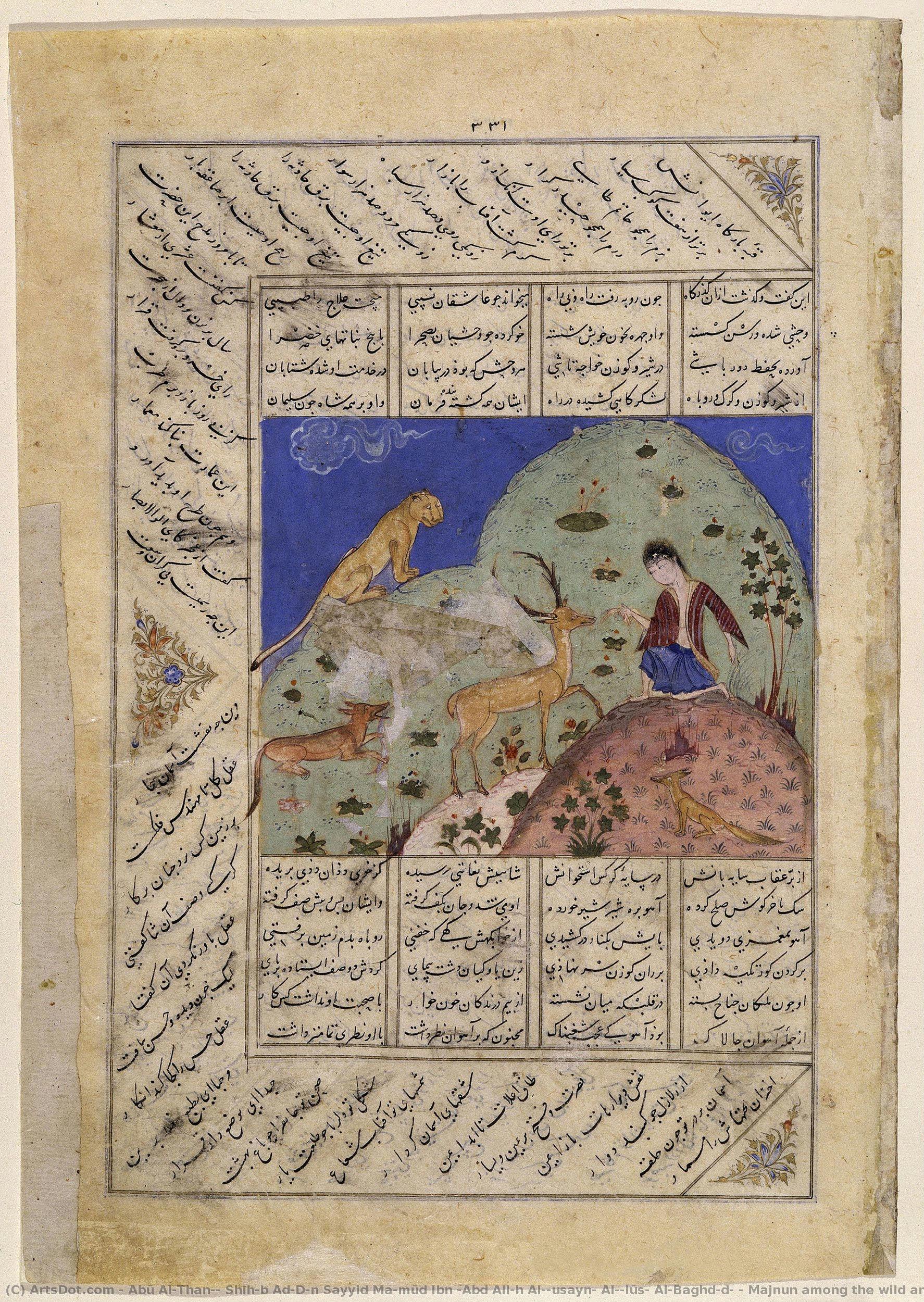
Majnun among the wild animals
 Manuscript
- Persian Miniature
 1420
1420- Late Medieval
 20.0 x 29.0 cm
 Pergamonmuseum
 Weiterlesen
Giclée / Kunstdruck
Giclée- oder Leinwanddruck in Museumsqualität mit schneller Produktion und flexiblen Veredelungsoptionen. ( Handgemalte Reproduktion bestellen Bild kaufen)




P118B $10

P118H $10

P118W $10

P438Z $10

P508JH $12

P508YH $12

P805H $10

P805Z $10

P919BZ $10

P919G $10

P919XJ $10

P959ZH $10

P968JZ $12

W106C $8

W218G $10

W218JH $8

W218Y $10

W307PJ $10

W316G $10

W316PJ $8

W316Y $10

W398PJ $8

W4111J $10

W500HY $15

W500JH $15

W692G $12

W849H $8

W940BG $15

W953PJ $8




Wählen Sie aus unseren vordefinierten Formaten, die den ursprünglichen Proportionen des Kunstwerks entsprechen.

Sie können Ihre eigenen Maße eingeben, um ein bestimmtes Format oder einen speziellen Platz einzupassen. Wenn das von Ihnen gewählte Format nicht den Proportionen des Originalbildes entspricht, werden wir das Kunstwerk entweder beschneiden oder das Bild mit einem gespiegelten oder einfarbigen Rand erweitern. Ein digitaler Entwurf wird Ihnen zur Genehmigung zugesandt, bevor die Produktion beginnt.
Bitte beachten Sie, dass die Vorschau auf dem Bildschirm nicht den tatsächlichen Zuschnitt oder die Erweiterung widerspiegelt. Nur der Entwurf zeigt die endgültige Komposition präzise an.
Obwohl Sondermaße verfügbar sind, empfehlen wir die Auswahl eines Maßes aus der vordefinierten Liste, um die ursprünglichen Proportionen zu bewahren.
Weltweiter Versand () innerhalb von 2 Wochen statt der üblichen 4/5 Wochen. (1 September)

Kostenloser weltweiter Expressversand

Hochwertige Leinenleinwand

Umfassender Versicherungsschutz beim Versand

Zollgebühren-Rückerstattungsgarantie

Garantie für exakte Farbtreue

60 Tage Rückgaberecht (nur bei Mängeln)

100% Geld-zurück-Garantie

Mengenrabatt verfügbar
 Die Glasoption ist nur für Größen unter 110 cm verfügbar.

Majnun among the wild animals
Giclée / Kunstdruck
Format der Reproduktion
-


Gesamtpreis
$ 62
Ähnliche Kunstwerke
Über den Künstler
The Luminary of Baghdad: Abū al-Thanā’ Shihāb ad-Dīn Sayyid Maḥmūd ibn ‘Abd Allāh al-Ḥusaynī al-Ālūsī
Abū al-Thanā’ Shihāb ad-Dīn Sayyid Maḥmūd ibn ‘Abd Allāh al-Ḥusaynī al-Ālūsī, often simply known as Al-Allusi, stands as a towering figure in 19th-century Islamic scholarship. Born in Baghdad on December 10, 1802, into a family of considerable religious standing, his life unfolded against the backdrop of a declining Ottoman Empire and burgeoning intellectual currents. Al-Allusi wasn’t merely an academic; he was a *mufti* – a legal expert empowered to deliver rulings on Islamic law – deeply involved in the socio-political fabric of his time. His lineage connected him to the esteemed ‘Alid family, descendants of Prophet Muhammad, lending further weight to his authority and influence within the Sunni Muslim community. He passed away on July 29th, 1854, leaving behind a legacy that continues to resonate through Islamic thought.A Life Dedicated to Interpretation: The Genesis of *Rūḥ al-Ma‘ānī*
Al-Allusi’s most enduring contribution is undoubtedly his monumental commentary on the Qur'an, titled *Rūḥ al-Ma‘ānī fī tafsīr al-Qur’ān al-‘aẓīm wa-al-sab‘ al-mathānī* – “The Spirit of the Meaning in Commentary upon the Mighty Qur’ān and the Seven Oft-Repeated Verses.” This work, spanning approximately thirty volumes, is a testament to his profound knowledge of Islamic theology, jurisprudence, Arabic language, literature, and history. It wasn't simply an exegesis; it was a comprehensive exploration of the Qur'anic text, drawing upon a vast array of sources and perspectives. Al-Allusi’s approach was characterized by its meticulous detail, intellectual honesty, and willingness to engage with diverse interpretations. He didn’t shy away from acknowledging differing viewpoints, often presenting them before offering his own reasoned analysis. The sheer scale of *Rūḥ al-Ma‘ānī* reflects a lifetime devoted to understanding the divine word, making it one of the largest and most respected tafsirs in existence.Intellectual Influences and Scholarly Positioning
Al-Allusi’s intellectual formation was deeply rooted in the traditions of Sunni Islam, particularly the Hanafi school of jurisprudence. However, he wasn't confined by rigid adherence to a single school of thought. He demonstrated a remarkable openness to other perspectives, including those from the Shafi'i school and even elements of Sufism. This eclecticism is evident in *Rūḥ al-Ma‘ānī*, where he frequently references scholars from various backgrounds. His connection to the Naqshbandi *tariqa* (Sufi order) further broadened his intellectual horizons, imbuing his work with a mystical sensibility and an appreciation for the inner dimensions of faith. He engaged with contemporary debates within Islamic scholarship, navigating complex theological issues with nuance and sophistication. He corresponded with figures like Sayyid Kāẓim Rashtī, a prominent Shaykhī leader, demonstrating his willingness to engage in dialogue even with those holding differing beliefs.Historical Significance and Enduring Legacy
Al-Allusi’s significance extends beyond the realm of purely theological scholarship. He lived during a period of significant upheaval, witnessing the decline of traditional power structures and the rise of new intellectual forces. His commentary on the Qur'an served not only as an interpretation of scripture but also as a reflection of the challenges facing the Muslim world at the time. His willingness to engage with diverse perspectives and his emphasis on reasoned analysis made him a respected figure among both scholars and laypeople. *Rūḥ al-Ma‘ānī* continues to be studied today, serving as a valuable resource for understanding the Qur'an and Islamic thought. His work has been reprinted numerous times, ensuring its accessibility to future generations of scholars. Furthermore, his engagement with contemporary issues, such as the Bābī movement, provides insights into the intellectual landscape of 19th-century Iraq.Beyond *Rūḥ al-Ma‘ānī*: A Broader Intellectual Contribution
While *Rūḥ al-Ma‘ānī* remains his most celebrated work, Al-Allusi’s contributions extended beyond Qur'anic exegesis. He was a prolific writer on various Islamic topics, including jurisprudence, theology, and Arabic grammar. His writings demonstrate a deep understanding of classical Islamic texts and a commitment to preserving the intellectual heritage of Islam. He also engaged in practical religious leadership as a *mufti*, providing guidance and rulings on matters of law for his community. He was known for his fairness, integrity, and dedication to upholding justice. The fact that he held the position of mufti while simultaneously producing such a monumental scholarly work speaks volumes about his intellectual capacity and unwavering commitment to both theory and practice. His legacy is one of profound scholarship, intellectual openness, and dedicated service to the Muslim community.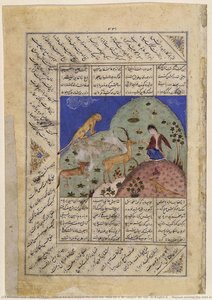
Kurzinfos
- Artistic Movement Or Style: Islamic scholarship
- Date Of Birth: December 10, 1802
- Date Of Death: July 29, 1854
- Full Name: Abū Al-Thanā’ Shihāb Ad-Dīn Sayyid Maḥmūd Ibn ‘Abd Allāh Al-Ḥusaynī Al-Ālūsī Al-Baghdādī
- Nationality: Iraqi
- Notable Artworks: ["Ruh al-Ma'ani"]
- Place Of Birth: Baghdad, Iraq
Ähnliche Artikel
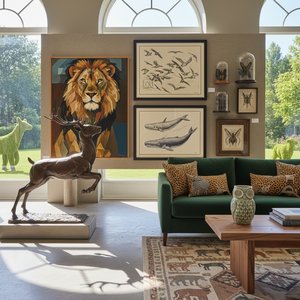
Animalia: Die bleibende Präsenz von Tieren in Kunst und Innenarchitektur
Entdecken Sie die faszinierende Welt der Animalia! Von historischen Tierdarstellungen bis zur modernen Innenarchitektur – wir bieten Expertise, hochwertige Reproduktionen & Kunstberatung.
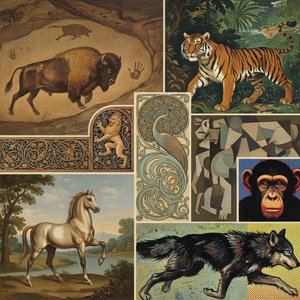
Beastly Brushstrokes: A Historical Journey Through Animal Painting & Aesthetic Movements
Explore the rich history of animal painting across cultures & movements. Discover iconic artists, symbolism, collecting trends & expert art consultation at ArtsDot.com.
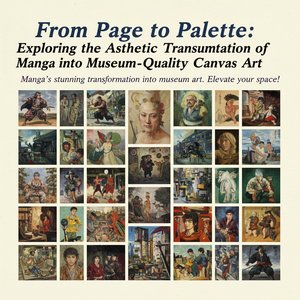
Von Seite zur Leinwand: Die ästhetische Transmutation von Manga in museale Kunstwerke
Entdecken Sie die faszinierende Welt der Manga-Kunst! Hochwertige Reproduktionen, individuelle Auftragsarbeiten & Expertenberatung bei ArtsDot.com – für Sammler und Kunstliebhaber.
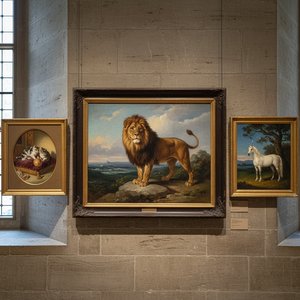
Jacques-Laurent Agasse: Pioneering Animalier Painting & Romantic Naturalism
Explore the captivating animal paintings of Jacques-Laurent Agasse (1767-1849). Discover his pioneering realism, Romantic influences & legacy in 19th-century art. Learn about this Swiss master's techniques and impact on wildlife art.
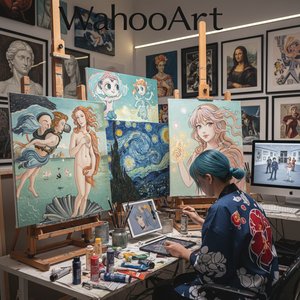
Der Aufstieg der Anime-Ästhetik: Reproduktionen & Individualisierung zeitgenössischer Kunst
Entdecken Sie die faszinierende Welt der Anime-Ästhetik! Hochwertige Reproduktionen & personalisierte Kunstwerke von – für Fans und Sammler.

