 Vorschau anzeigen
 Versenden
 Teilen
 Details anzeigen

 Herunterladen
 Ähnliche Objekte
 Röntgenaufnahme
 Diashow
 Stats
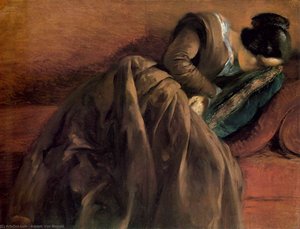
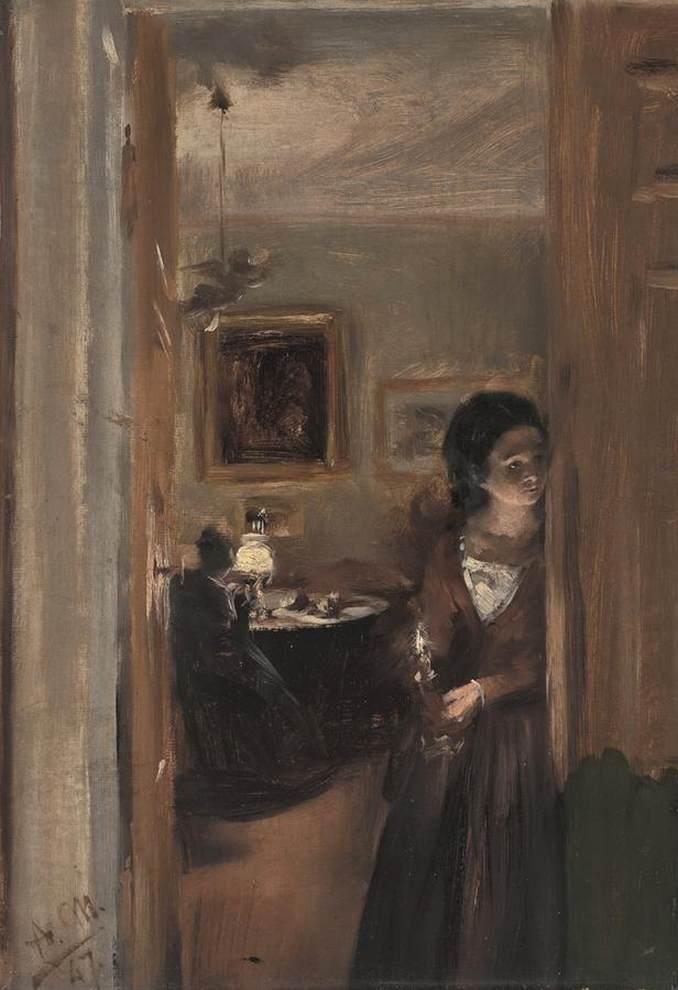
StatsLiving Room with the Artist's Sister
 Oil On Canvas
- WallArt
- German Realism
 1847
1847 46.0 x 32.0 cm
 Neue Pinakothek
 Weiterlesen
Handgefertigte Ölreproduktion
Handgemaltes Ölgemälde auf Leinwand in Ihrer Wunschgröße und mit Rahmen, auf Bestellung von unseren Künstlern angefertigt. ( Switch to Print Switch to Digital Image)




P118B $10

P118H $10

P118W $10

P438Z $10

P508JH $12

P508YH $12

P805H $10

P805Z $10

P919BZ $10

P919G $10

P919XJ $10

P959ZH $10

P968JZ $12

W106C $8

W218G $10

W218JH $8

W218Y $10

W307PJ $10

W316G $10

W316PJ $8

W316Y $10

W398PJ $8

W4111J $10

W500HY $15

W500JH $15

W692G $12

W849H $8

W940BG $15

W953PJ $8




Wählen Sie aus unseren vordefinierten Formaten, die den ursprünglichen Proportionen des Kunstwerks entsprechen.

Sie können Ihre eigenen Maße eingeben, um einen bestimmten Rahmen oder Platz auszufüllen. Wenn die gewählte Größe nicht den Proportionen des Originalbildes entspricht, werden wir das Kunstwerk entweder beschneiden oder das Gemälde durch zusätzliche, handgemalte Elemente erweitern. Ein digitales Mockup wird Ihnen zur Genehmigung zugesandt, bevor die Produktion beginnt.
Bitte beachten Sie, dass die Bildschirmvorschau nicht die tatsächliche Beschneidung oder Erweiterung widerspiegelt. Nur das Mockup zeigt die endgültige Komposition exakt an.
Obwohl Sondermaße verfügbar sind, empfehlen wir, eine Größe aus der vordefinierten Liste zu wählen, um die ursprünglichen Proportionen beizubehalten.
Nach der Bestellung wird das ArtsDot.com-Team dem Kunden Anweisungen per E-Mail zusenden und eine Mockup-Vorschau bereitstellen.
Weltweiter Versand () in nur 3 bis 4 Wochen statt der üblichen 5 Wochen. (8 September). Keine Kompromisse bei der Qualität.

Kostenloser weltweiter Expressversand

Hochwertige Leinenleinwand

Umfassender Versicherungsschutz beim Versand

Zollgebühren-Rückerstattungsgarantie

Garantie für exakte Farbtreue

100-Tage-Rückgaberecht (nur bei Mängeln)

100% Geld-zurück-Garantie

Mengenrabatt verfügbar
 Die Glasoption ist nur für Größen unter 110 cm verfügbar.

Living Room with the Artist's Sister
Art der Reproduktion
Format der Reproduktion
-


Gesamtpreis
$ 263
A Window into Domesticity: Adolph von Menzel’s “Living Room with the Artist’s Sister”
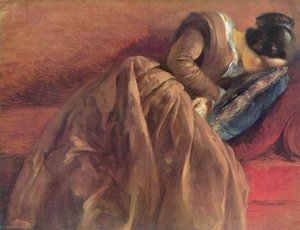
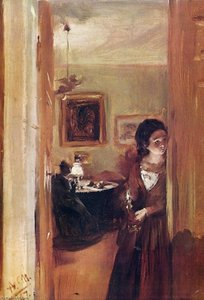
Adolph von Menzel's "Living Room with the Artist’s Sister," painted in 1847, isn’t merely a depiction of a domestic scene; it’s a meticulously observed study of quietude, familial connection, and the subtle complexities of Prussian life. The painting immediately draws the eye to Emilie Menzel, the artist's sister, positioned within a modestly furnished room – a space that feels both familiar and subtly melancholic. Menzel, rendered in a restrained palette of earthy browns, greys, and muted greens, stands partially turned away from the viewer, her posture suggesting contemplation or perhaps a gentle weariness. This deliberate ambiguity is central to the painting’s power; we are invited not as passive observers but as participants in a shared moment of observation. The room itself—a dining table laden with simple tableware, two chairs arranged around it, and a vase holding flowers – speaks volumes about the everyday rhythms of life within a bourgeois household. It's a scene stripped of grandiosity, prioritizing intimacy over ostentation, reflecting a shift in artistic focus during Menzel’s career away from overtly historical or theatrical subjects.Realism Rooted in Observation
Menzel’s approach to painting was profoundly shaped by his early apprenticeship in his father’s lithography workshop. This experience instilled within him an unparalleled eye for detail and a mastery of capturing the nuances of texture, light, and shadow – skills that are strikingly evident in “Living Room with the Artist’s Sister.” The artist's meticulous attention to the worn fabrics of the furniture, the delicate arrangement of flowers, and the subtle play of light on surfaces demonstrates a commitment to realism that went far beyond mere representation. He wasn’t simply copying what he saw; he was dissecting it, analyzing its components, and reconstructing it on canvas with an almost scientific precision. This dedication to observation is further emphasized by Menzel's use of *alla prima* painting—working directly onto the canvas without extensive underpainting—allowing for a spontaneity and immediacy that contrasts beautifully with the carefully controlled composition. The brushstrokes themselves are visible, adding a tactile quality to the scene and reinforcing the sense that we’re witnessing a genuine moment captured in time.A Glimpse into Prussian Society
Painted during a period of significant social and political change in Prussia, “Living Room with the Artist’s Sister” offers a poignant window into the realities of middle-class life. The painting subtly reflects the values and priorities of the era – a focus on family, domesticity, and the quiet pleasures of everyday existence. However, beneath this veneer of tranquility lies an undercurrent of melancholy. Emilie's averted gaze suggests a certain isolation or perhaps a longing for something beyond the confines of her home. Menzel’s own life was marked by both professional success and personal struggles, and it is possible that he imbued the painting with his own sense of introspection and quiet sadness. Furthermore, the painting aligns with the broader artistic trends of the time—a move away from idealized representations of history and towards a more grounded, realistic portrayal of contemporary life.Symbolism and Emotional Resonance
While seemingly straightforward in its subject matter, “Living Room with the Artist’s Sister” is rich in symbolic detail. The simple arrangement of objects – the table setting, the vase of flowers – can be interpreted as metaphors for domestic harmony and connection. The muted color palette contributes to the painting's overall mood of quiet contemplation, while Emilie’s posture invites us to project our own emotions onto her figure. It is a portrait not just of a woman, but of an entire social stratum, capturing a fleeting moment of human experience that resonates with universal themes of family, solitude, and the passage of time. The painting's enduring appeal lies in its ability to evoke a sense of nostalgia for a bygone era while simultaneously offering a timeless reflection on the complexities of human relationships.Bringing Menzel’s Vision Home
ArtsDot offers meticulously crafted hand-painted reproductions of Adolph von Menzel’s “Living Room with the Artist’s Sister,” allowing you to experience the depth and nuance of this remarkable painting in your own home. Our artists replicate Menzel's signature style—his meticulous attention to detail, his masterful use of light and shadow, and his profound understanding of human emotion—with unparalleled skill. Whether you are an art collector, an interior designer seeking a touch of timeless elegance, or simply someone who appreciates the beauty of classic art, a ArtsDot reproduction of “Living Room with the Artist’s Sister” is sure to be a treasured addition to your collection. Explore our range of sizes and framing options today and bring this evocative masterpiece into your world.Ähnliche Kunstwerke

Über den Künstler
Ein Leben voller künstlerischer Exzellenz (1815–1905)
Adolph Friedrich Erdmann von Menzel, ein deutscher Realist, hinterließ mit seinen Zeichnungen, Radierungen und Gemälden einen bleibenden Eindruck in der Kunstwelt. Geboren am 8. Dezember 1815 in Breslau, Schlesien (heute Wrocław, Polen), war Menzels Leben ein Beweis für seine Hingabe, die Essenz der Realität durch seine Kunst einzufangen.Frühes Leben und Ausbildung
Menzels Vater, ein Lithograph, beabsichtigte zunächst, dass sein Sohn Professor werden sollte. Adolphs Leidenschaft für die Kunst setzte sich jedoch durch, was zu einem kurzen Studium an der Berliner Akademie der Künste im Jahr 1833 führte. Anschließend machte er sich selbstständig und verbesserte seine Fähigkeiten durch unermüdliches Üben.Künstlerische Leistungen
- Die Eisenhütte (1872–1875): Ein Meisterwerk, das Menzels scharfe Beobachtungsgabe und handwerkliches Können demonstriert.
- Der Marktplatz in Verona: Ein Beweis für seine Fähigkeit, die Atmosphäre des täglichen Lebens einzufangen.
- Die Kanzelpredigt in der Pfarrkirche zu Innsbruck (1857): Ein beeindruckendes Beispiel für Menzels Meisterschaft, das in der Sammlung Hugo Fischer (Bühl, Deutschland) zu finden ist.
Einfluss und Bedeutung
Menzels Ruf wuchs posthum vor allem durch seine grafischen Arbeiten und informellen Gemälde. Sein Einfluss reichte über Deutschland hinaus; Edgar Degas bewunderte und kopierte seine Werke und nannte ihn den "größten lebenden Meister". Menzels Verbindung zur französischen und englischen Kunst zeigt sich in seinen Genreszenen, wie Das Französische Fenster und Der Palastgarten von Prinz Albert.Vermächtnis und Rezeption
Adolph von Menzel gilt als einer der bedeutendsten deutschen Maler des 19. Jahrhunderts. Seine Werke spiegeln die gesellschaftlichen und industriellen Veränderungen seiner Zeit wider und bieten einen einzigartigen Einblick in das Leben im Deutschland des 19. Jahrhunderts. Er beeinflusste nachfolgende Generationen von Künstlern und seine Arbeiten werden bis heute für ihre Detailgenauigkeit, ihren Realismus und ihre emotionale Tiefe geschätzt. Seine Fähigkeit, sowohl monumentale historische Szenen als auch intime Alltagsmomente mit gleicher Meisterschaft darzustellen, macht ihn zu einer Schlüsselfigur der realistischen Kunstbewegung.
Adolph von Menzel
1815 - 1905 , Polen
Kurzinfos
- Beeinflusste Künstler: ['Edgar Degas']
- Bemerkenswerte Werke:
- Eisenwalzwerk (1872-1875)
- Marktplatz in Verona
- Deutsche Kanzelpredigt in Innsbruck
- Geburtsdatum: 8. Dezember 1815
- Geburtsort: Breslau, Polen
- Künstlerische Richtung: Realismus
- Nationalität: Deutsch
- Sterbedatum: 9. Februar 1905
- Vollständiger Name: Adolph Friedrich Erdmann von Menzel
- Von Künstlern Beeinflusst: ['Caspar David Friedrich']
Ähnliche Artikel
Adolph von Menzel: Preußischer Realismus und die malerische Chronik einer Epoche
Entdecken Sie Adolph von Menzels Meisterwerke des Preußischen Realismus! Erfahren Sie mehr über seine Historienmalerei, soziale Kommentare und seinen Einfluss auf die deutsche Kunstgeschichte. Jetzt lesen!

Öl auf Leinwand: Eine historische und technische Erkundung eines zeitlosen künstlerischen Mediums
Entdecken Sie die faszinierende Welt der Ölmalerei! Von historischen Techniken bis zur modernen Anwendung – wir bieten Expertenwissen, Restaurierungstipps und hochwertige Reproduktionen. Jetzt informieren!

The Interior Gaze: Exploring Representations of Domestic Space in Art History
Explore the fascinating history of domestic interiors in art! From Dutch Masters to Impressionism, discover how artists captured home life & social meaning. Expert analysis and insights at ArtsDot.
Intimate Interiors: Domestic Life & Artistic Representation from Renaissance to Impressionism
Explore the evolution of domestic life in Western art from the Renaissance to Impressionism. Discover symbolism, realism & artistic techniques shaping intimate interior scenes. Learn more with ArtsDot.

Romantic Realism's Finest: 10 Masterpieces for Your Home | ArtsDot
Explore 10 defining masterpieces of Romantic Realism! Discover Courbet, Millet & Daumier's powerful paintings—capturing emotion and social realities. Find museum-quality reproductions for your home at ArtsDot.com.