

 Vorschau anzeigen
 Versenden
 Teilen
 Details anzeigen

 Herunterladen
 Ähnliche Objekte
 Röntgenaufnahme
 Diashow
 Statistiken
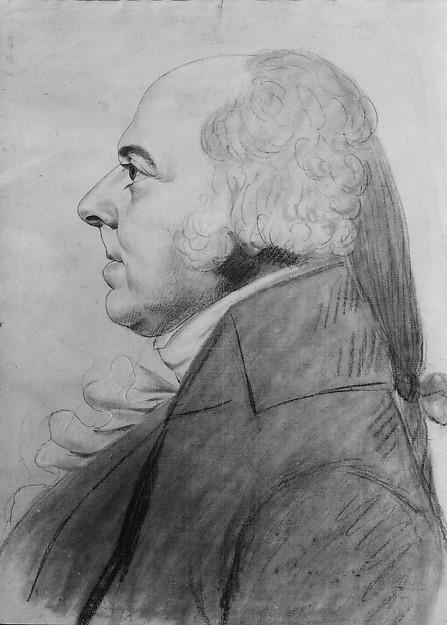
John Adams
 1801
1801 55.0 x 38.0 cm
 Weiterlesen
Erwerben Sie ein hochauflösendes, optimiertes digitales Bild, das der Online-Vorschau weit überlegen ist.
Jede Datei wird von unseren hauseigenen Spezialisten mit modernsten Werkzeugen und fachmännischer manueller Retusche sorgfältig vorbereitet. Wir stellen sicher, dass jedes Bild eine außergewöhnliche Klarheit, präzise Farbgenauigkeit und feinste Details aufweist.
Die endgültige Datei wird innerhalb von 72 Stunden per E-Mail zugestellt und ist für den sofortigen Einsatz in professionellen, redaktionellen und Druckumgebungen optimiert. Es handelt sich um dieselbe Qualität, der führende Designstudios, Verlage und Galerien vertrauen.
Digitales Bild
Laden Sie eine hochauflösende Datei für die persönliche Präsentation, den Druck und kreative Projekte herunter. ( Zu Druck wechseln Handgemalte Reproduktion bestellen)
In jeder Bestellung digitaler Bilder enthalten
Professionelle digitale Bereitstellung, garantiert
Wenn Sie sich für ArtsDot.com entscheiden, erhalten Sie nicht nur ein Bild – Sie erhalten ein professionell aufbereitetes digitales Kunstwerk, das mit höchster Präzision erstellt und durch eine Zufriedenheitsgarantie abgesichert wird. Hier ist alles, was automatisch mit Ihrer Bestellung geliefert wird:

Schnelle E-Mail-Zustellung
Ihre hochauflösende digitale Bilddatei wird Ihnen innerhalb von 72 Stunden nach der Bestellung per E-Mail zugestellt – bereit zur sofortigen Verwendung.

KI-optimierte digitale Datei
Ihre Kunstwerke werden professionell mithilfe fortschrittlicher KI-Tools und manueller Bearbeitung optimiert, um maximale Detailtreue, Klarheit und Farbgenauigkeit zu gewährleisten.

Lebenslanger kostenloser Neudruckservice
Datei versehentlich gelöscht oder verloren? Keine Sorge – wir senden sie Ihnen jederzeit kostenlos erneut zu.

Keine Einfuhrgebühren – jemals
Genießen Sie Ihr Kunstwerk sofort ohne Zollgebühren, Einfuhrabgaben oder Versandkosten – digitale Downloads sind immer steuerfrei.

Garantierte Farbtreue
Wir garantieren, dass Ihr digitales Bild mithilfe professioneller Werkzeuge und Farbmanagement die Originalfarben so präzise wie möglich wiedergibt.

100-Tage-Zufriedenheitsgarantie
Wenn Sie mit Ihrem digitalen Bild nicht zufrieden sind, werden wir es überarbeiten oder 100% innerhalb von 100 Tagen erstatten – ohne Wenn und Aber.

100% Geld-zurück-Garantie
Nicht zufrieden? Erhalten Sie innerhalb von 100 Tagen nach Erhalt Ihrer digitalen Datei eine vollständige Rückerstattung – ohne Wenn und Aber.

Rabatte bei Großbestellungen
3 Bilder kaufen, 10% sparen – 5 Bilder kaufen, 15% sparen – Ab 10 Bildern 20% sparen. Ideal für kreative Projekte, Galerien und Agenturen.
Ähnliche Kunstwerke





Biografie des Künstlers
Charles Balthazar Julien Févret de Saint-Mémin: A Pioneer of American Portraiture
Born in France during a period of immense upheaval – the throes of the French Revolution – Charles Balthazar Julien Févret de Saint-Mémin’s life was one of constant movement and adaptation. Initially destined for military service, his family's circumstances led them to Switzerland before ultimately settling in New York City in 1793. This relocation marked a pivotal shift; instead of pursuing a career on the battlefield, Saint-Mémin found himself immersed in the burgeoning American landscape, quickly establishing himself as a remarkably skilled portraitist and, later, a respected museum director. His journey represents more than just an individual’s story; it embodies the artistic exchange between Europe and America during a transformative era.
Saint-Mémin's early training in France provided him with a solid foundation in classical art principles. However, his time in New York exposed him to a distinctly American sensibility – a growing desire for self-representation and a fascination with the nation’s founding figures. He quickly recognized an opportunity: the nascent United States desperately needed portraits that captured the personalities and gravitas of its leaders and prominent citizens. He embraced this demand, becoming one of the first artists to establish a professional portrait practice in the young republic.
The Physiognotrace Technique and Early Portraits
Saint-Mémin’s artistic approach was profoundly influenced by the invention of the physiognotrace, a device created by Gilles-Louis Chretien in 1786. This ingenious instrument mechanically reproduced an outline of a sitter's profile, capturing subtle nuances of expression with remarkable accuracy. Saint-Mémin quickly mastered this technique, utilizing it to create remarkably lifelike portraits that went beyond mere likenesses; they conveyed the inner character and spirit of his subjects. His early works, including those of Alexander Macomb and John Marshall, demonstrate a keen eye for detail and an ability to translate fleeting expressions onto paper.
Crucially, Saint-Mémin didn’t simply replicate what he saw with the physiognotrace. He meticulously refined the mechanical outline with watercolor, adding delicate shading and subtle touches that brought his subjects to life. This combination of technological innovation and artistic skill set him apart from many of his contemporaries, establishing a distinctive style characterized by its precision and emotional depth.
Portraits of Washington, Jefferson, and Beyond
Saint-Mémin’s most celebrated portraits undoubtedly include those of George Washington and Thomas Jefferson. These works are not merely representations of the nation's leaders; they are carefully constructed narratives that embody their respective virtues and legacies. Washington’s portrait, for instance, exudes a sense of dignified authority, while Jefferson’s captures an air of intellectual curiosity and quiet contemplation. He also produced portraits of numerous other influential figures – including members of Congress, prominent merchants, and even Native American leaders – offering a fascinating glimpse into the social and political landscape of early America.
His work with Plains Indian delegations in Washington D.C., commissioned by President Jefferson, is particularly noteworthy. These portraits weren’t simply commissions; they were attempts to document and understand these indigenous communities, reflecting both the era's complex relationship with Native Americans and Saint-Mémin’s own artistic ambition.
Return to France and Legacy
After nearly two decades in America, Saint-Mémin returned to France in 1814. He dedicated the remainder of his life to serving as director of the Musée des Beaux-Arts de Dijon, a role that allowed him to share his artistic knowledge and passion for art with a new generation. He died in Dijon in 1852, leaving behind a significant body of work that profoundly influenced the development of portraiture in America.
Saint-Mémin’s legacy extends beyond his individual portraits. He played a crucial role in establishing the tradition of life drawing and portrait painting in the United States, paving the way for future generations of American artists. His innovative use of the physiognotrace technique, combined with his meticulous attention to detail and his ability to capture the essence of his subjects, cemented his place as one of the most important figures in early American art history. His work serves as a testament to the dynamic exchange between Europe and America during a period of profound social, political, and artistic transformation.
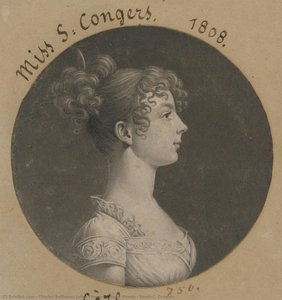
charles balthazar julien févret de saint mémin
1770 - 1852
Kurzinfos
- Artistic Movement Or Style: Neoclassical Portraiture
- Artists Or Movements Influenced By This Artist: ['American Portraiture']
- Artists Who Influenced This Artist: ['Gilles-Louis Chretien']
- Date Of Birth: 1770
- Date Of Death: 1852
- Full Name: Charles Balthazar Julien Févret de Saint-Mémin
- Nationality: French
- Notable Artworks:
- Washington Portrait
- Jefferson Portrait
- Osage Warrior
- Place Of Birth: France