

 Vorschau anzeigen
 Versenden
 Teilen
 Details anzeigen

 Herunterladen
 Ähnliche Objekte
 Röntgenaufnahme
 Diashow
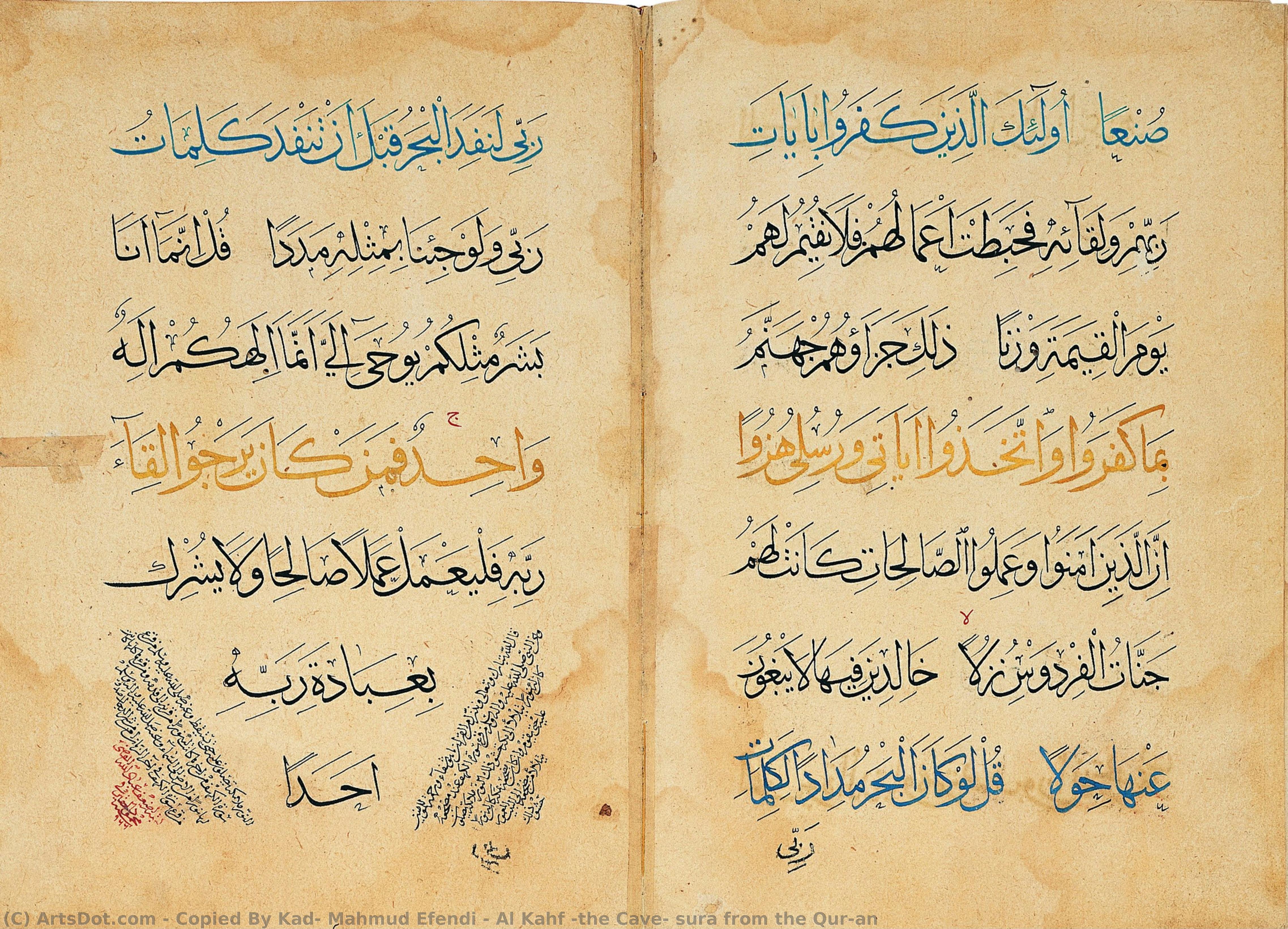
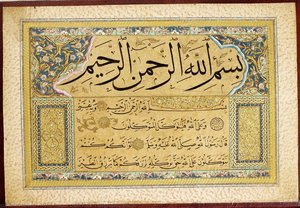
Al Kahf (the Cave) sura from the Qur’an
 Manuscript
- Islamic Calligraphy
 1559
1559- Early Modern
 19.0 x 28.0 cm
 Sakıp Sabancı Müzesi
 Weiterlesen
Handgefertigte Ölreproduktion
Handgemaltes Ölgemälde auf Leinwand in Ihrer Wunschgröße und mit Rahmen, auf Bestellung von unseren Künstlern angefertigt. ( Druck bestellen Bild kaufen)




P118B $10

P118H $10

P118W $10

P438Z $10

P508JH $12

P508YH $12

P805H $10

P805Z $10

P919BZ $10

P919G $10

P919XJ $10

P959ZH $10

P968JZ $12

W106C $8

W218G $10

W218JH $8

W218Y $10

W307PJ $10

W316G $10

W316PJ $8

W316Y $10

W398PJ $8

W4111J $10

W500HY $15

W500JH $15

W692G $12

W849H $8

W940BG $15

W953PJ $8




Wählen Sie aus unseren vordefinierten Formaten, die den ursprünglichen Proportionen des Kunstwerks entsprechen.

Sie können Ihre eigenen Maße eingeben, um einen bestimmten Rahmen oder Platz auszufüllen. Wenn die gewählte Größe nicht den Proportionen des Originalbildes entspricht, werden wir das Kunstwerk entweder beschneiden oder das Gemälde durch zusätzliche, handgemalte Elemente erweitern. Ein digitales Mockup wird Ihnen zur Genehmigung zugesandt, bevor die Produktion beginnt.
Bitte beachten Sie, dass die Bildschirmvorschau nicht die tatsächliche Beschneidung oder Erweiterung widerspiegelt. Nur das Mockup zeigt die endgültige Komposition exakt an.
Obwohl Sondermaße verfügbar sind, empfehlen wir, eine Größe aus der vordefinierten Liste zu wählen, um die ursprünglichen Proportionen beizubehalten.
Nach der Bestellung wird das ArtsDot.com-Team dem Kunden Anweisungen per E-Mail zusenden und eine Mockup-Vorschau bereitstellen.
Weltweiter Versand () in nur 3 bis 4 Wochen statt der üblichen 5 Wochen. (30 August). Keine Kompromisse bei der Qualität.

Kostenloser weltweiter Expressversand

Hochwertige Leinenleinwand

Umfassender Versicherungsschutz beim Versand

Zollgebühren-Rückerstattungsgarantie

Garantie für exakte Farbtreue

60 Tage Rückgaberecht (nur bei Mängeln)

100% Geld-zurück-Garantie

Mengenrabatt verfügbar
 Die Glasoption ist nur für Größen unter 110 cm verfügbar.

Al Kahf (the Cave) sura from the Qur’an
Art der Reproduktion
Format der Reproduktion
-


Gesamtpreis
$ 263
A Divine Script: The Radiance of Al Kahf
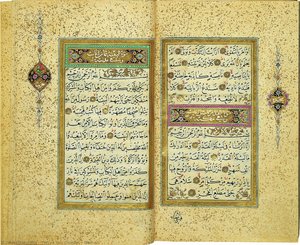
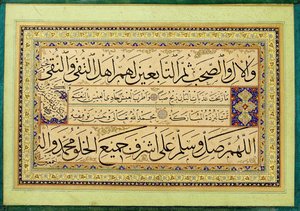
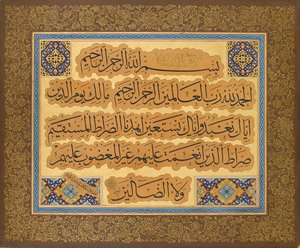
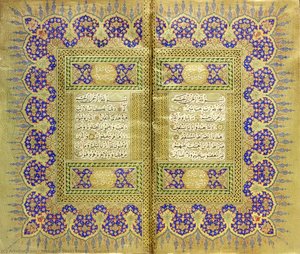
In the quiet presence of the Al Kahf (the Cave) sura from the Qur’an, one does not merely observe a manuscript; one enters a meditative dialogue with history. Created in 1559 by the master calligrapher Kadı Mahmud Efently, this exquisite page serves as a breathtaking window into the golden age of Ottoman artistry. The parchment, aged to a warm, pale yellowish-brown, carries the weight of centuries, providing a soulful backdrop for the dense, rhythmic dance of Arabic script. As the eye wanders across the surface, it encounters a masterful interplay of thuluth calligraphy, where every stroke is an act of devotion, and intricate floral motifs that bloom in delicate red and brown inks. This is not just a religious text; it is a visual symphony of faith and precision.
The technique employed by Kadı Mahmud Efendi reveals a level of discipline that borders on the miraculous. Each letter is meticulously hand-lettered, demonstrating a profound command over the flow and weight of the ink. The composition is defined by a structured elegance, where vertical and horizontal lines create a sacred geometry that guides the viewer through the divine word. Interspersed within the text are stylized botanical elements—tiny, intricate flowers and geometric patterns that break the density of the script with moments of organic grace. These decorative flourishes, rendered with such fine detail, suggest a world where the earthly beauty of nature is inextricably linked to the spiritual truths contained within the verses.
The Legacy of Ottoman Mastery
To hold a reproduction of this work is to touch the legacy of the 16th-century Ottoman Empire, a period defined by unparalleled cultural refinement. Kadı Mahmud Efendi was more than a mere copyist; he was an illuminator and a preserver of sacred tradition. His work embodies the concept of adab—the refined etiquette and spiritual discipline required to transcribe the divine. The subtle use of red and brown pigments, likely applied with brushes of incredible fineness, creates a texture that feels both ancient and alive. For the collector or the interior designer, this piece offers more than just decoration; it provides an anchor of historical significance and a profound sense of tranquility.
The emotional impact of the Al Kahf sura lies in its ability to command stillness. The lack of harsh shadows and the even, diffuse lighting inherent in the manuscript's design invite a contemplative state of mind. Whether displayed in a private library, a sophisticated study, or as a focal point in a curated gallery space, this artwork radiates an aura of reverence. It is a piece that speaks to the soul, offering a timeless connection to the artistry of the past and the enduring power of the written word. For those seeking to infuse their surroundings with depth, history, and a sense of the sublime, this masterpiece stands as an incomparable inspiration.
Ähnliche Kunstwerke
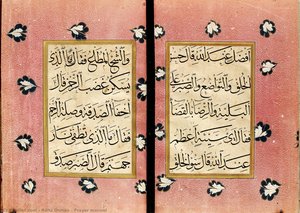
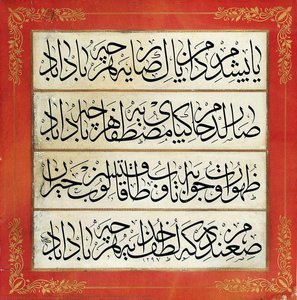
Über den Künstler
A Legacy Etched in Gold: The Art of Kadı Mahmud Efendi
Kadı Mahmud Efendi stands as a pivotal figure in the rich tradition of Ottoman calligraphy, though biographical details surrounding his life remain elusive. He flourished during the 16th century – specifically around 1559 – a period marked by the height of Ottoman power and artistic refinement under Sultan Suleiman the Magnificent and his successors. While concrete dates for his birth and death are not widely documented, his enduring legacy is powerfully present in the exquisite Qur’an pages he produced, testaments to a mastery of *thuluth* script and an unparalleled dedication to Islamic art. He wasn't merely a copyist; Kadı Mahmud Efendi was an illuminator, a designer, and a preserver of sacred texts, embodying the Ottoman reverence for the written word as a divine act.The Art of Replication and Refinement
Kadı Mahmud Efendi’s known work centers around his meticulous copying of the Qur’an. This practice wasn't simply duplication; it was considered an intensely spiritual undertaking, demanding absolute precision and devotion. The Ottoman Empire placed immense value on beautifully rendered copies of the holy book, commissioning them for mosques, libraries, and royal collections. His 1559 Qur’an page is a prime example of this dedication. It showcases not only technical brilliance in calligraphy but also an extraordinary sense of artistic composition. The intricate floral motifs surrounding the text are not mere decoration; they serve to enhance the sacredness of the verses, creating a harmonious visual experience that draws the viewer into contemplation. The use of gold leaf is particularly striking, lending a luminous quality to the page and symbolizing the divine nature of the scripture. He worked within established calligraphic traditions, but his skill lay in elevating those traditions through exceptional execution and an acute aesthetic sensibility.Influences and the Ottoman Calligraphic Tradition
Kadı Mahmud Efendi operated within a well-defined artistic ecosystem deeply rooted in Islamic history. The foundations of Ottoman calligraphy were laid by earlier masters from Persia and other regions, who brought with them centuries of expertise in *naskh*, *thuluth*, *ta’liq*, and other scripts. The Ottomans then developed their own distinct style, characterized by a monumental scale, bold forms, and elaborate ornamentation. Key influences on Kadı Mahmud Efendi would have included the works of Ibn Sina (Avicenna), whose treatises on aesthetics informed calligraphic principles, and the earlier Ottoman masters like Şeyh Hamdullah, considered the founder of the Ottoman calligraphy school. The emphasis on geometric harmony, proportional balance, and rhythmic repetition – hallmarks of Islamic art in general – are clearly evident in his work. He was part of a lineage of scribes who saw themselves as continuing a sacred tradition, striving to achieve perfection in their rendering of God’s word.A Lasting Impact on Ottoman Art
Although details about Kadı Mahmud Efendi's life remain scarce, the impact of his artistry is undeniable. His Qur’an pages represent the pinnacle of Ottoman manuscript illumination and calligraphy. They are not merely beautiful objects; they are powerful symbols of faith, artistic skill, and cultural identity. His work exemplifies the Ottoman synthesis of Persian calligraphic traditions with a uniquely Turkish aesthetic sensibility. The meticulous attention to detail, the harmonious balance between text and ornamentation, and the use of luxurious materials all reflect the high standards of Ottoman craftsmanship. His legacy continues to inspire contemporary artists and scholars interested in Islamic art and calligraphy.Preserving a Sacred Heritage
Today, Kadı Mahmud Efendi’s work is preserved in museum collections worldwide, offering glimpses into the artistic splendor of the Ottoman Empire. The Sakıp Sabancı Museum holds examples of his artistry, allowing viewers to appreciate the intricate beauty of his Qur’an pages firsthand. The study of his calligraphy provides valuable insights into the techniques, materials, and aesthetic principles employed by Ottoman scribes. More importantly, it reminds us of the profound reverence for the written word that characterized Islamic culture and the enduring power of art to express spiritual beliefs. His work stands as a testament to the belief that beauty itself can be an act of worship, a tangible expression of devotion to God.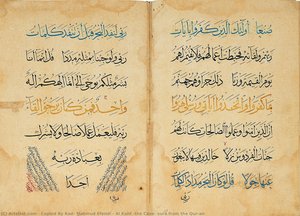
Kurzinfos
- Artistic Movement Or Style: Islamic calligraphy
- Date Of Death: Living
- Full Name: Kadı Mahmud Efendi
- Notable Artworks: ['Al Kahf (the Cave) sura']
Ähnliche Artikel
Meisterwerke des Hochmittelalters: 10 Kunstwerke für Ihr Zuhause | ArtsDot
Entdecken Sie die 10 bedeutendsten Meisterwerke des Hochmittelalters! Erfahren Sie Geschichten von Romanik, Gotik & berühmten Künstlern. Finden Sie hochwertige Reproduktionen für Ihr Zuhause auf ArtsDot.com.
Spätmittelalterliche Meisterwerke: 10 Kunstwerke für Ihr Zuhause | ArtsDot
Entdecken Sie die 10 bedeutendsten Meisterwerke des Spätmittelalters! Erfahren Sie die Geschichten hinter Jan van Eyck, Rogier van der Weyden & mehr. Hochwertige Kunst Reproduktionen für Ihr Zuhause – jetzt auf ArtsDot.com!
Illuminating Faith & Power: A Journey Through Medieval Art (c. 500 – c. 1500)
Explore the rich history of Medieval Art (c. 500 – c. 1500) with ArtsDot. Discover Byzantine mosaics, Gothic cathedrals & Renaissance masterpieces. Expert insights & museum-quality reproductions.
Frühmittelalterliche Meisterwerke: 10 Kunstschätze für Ihr Zuhause | ArtsDot
Entdecken Sie die 10 bedeutendsten Meisterwerke des Frühmittelalters! Von karolingischer Buchmalerei bis ottonischen Goldschmiedekunstwerken – erleben Sie Kunstgeschichte hautnah. Hochwertige Reproduktionen & Inspiration für Ihr Zuhause auf ArtsDot.com.
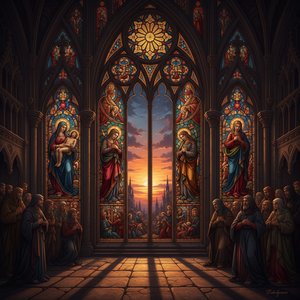
The Radiant Dusk of Medieval Vision: Exploring Late Gothic Art's Synthesis of Faith, Form & Emotionality (c. 1300-1500)
Explore the exquisite beauty & spiritual depth of Late Gothic art (c. 1300-1500). Discover key artists, symbolism, and its lasting influence on the Renaissance. Expert insights at ArtsDot.

