 Vorschau anzeigen
 Versenden
 Teilen
 Details anzeigen

 Herunterladen
 Ähnliche Objekte
 Röntgenaufnahme
 Diashow
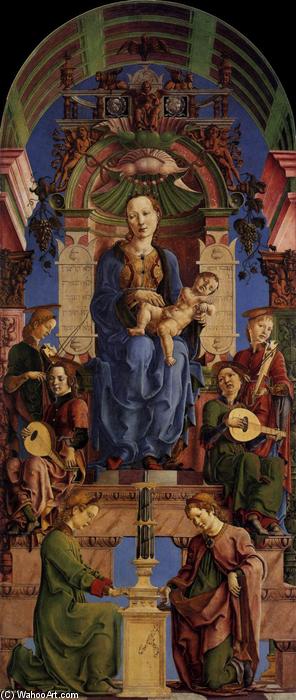
Madonna with the Child Enthroned (panel from the Roverella Polyptych)
 Oil On Panel
- Early Renaissance
 1474
1474 239.0 x 102.0 cm
 National Gallery
 Weiterlesen
Handgefertigte Ölreproduktion
Handgemaltes Ölgemälde auf Leinwand in Ihrer Wunschgröße und mit Rahmen, auf Bestellung von unseren Künstlern angefertigt. ( Druck bestellen Bild kaufen)




P118B $10

P118H $10

P118W $10

P438Z $10

P508JH $12

P508YH $12

P805H $10

P805Z $10

P919BZ $10

P919G $10

P919XJ $10

P959ZH $10

P968JZ $12

W106C $8

W218G $10

W218JH $8

W218Y $10

W307PJ $10

W316G $10

W316PJ $8

W316Y $10

W398PJ $8

W4111J $10

W500HY $15

W500JH $15

W692G $12

W849H $8

W940BG $15

W953PJ $8




Wählen Sie aus unseren vordefinierten Formaten, die den ursprünglichen Proportionen des Kunstwerks entsprechen.

Sie können Ihre eigenen Maße eingeben, um einen bestimmten Rahmen oder Platz auszufüllen. Wenn die gewählte Größe nicht den Proportionen des Originalbildes entspricht, werden wir das Kunstwerk entweder beschneiden oder das Gemälde durch zusätzliche, handgemalte Elemente erweitern. Ein digitales Mockup wird Ihnen zur Genehmigung zugesandt, bevor die Produktion beginnt.
Bitte beachten Sie, dass die Bildschirmvorschau nicht die tatsächliche Beschneidung oder Erweiterung widerspiegelt. Nur das Mockup zeigt die endgültige Komposition exakt an.
Obwohl Sondermaße verfügbar sind, empfehlen wir, eine Größe aus der vordefinierten Liste zu wählen, um die ursprünglichen Proportionen beizubehalten.
Nach der Bestellung wird das ArtsDot.com-Team dem Kunden Anweisungen per E-Mail zusenden und eine Mockup-Vorschau bereitstellen.
Weltweiter Versand () in nur 3 bis 4 Wochen statt der üblichen 5 Wochen. (23 August). Keine Kompromisse bei der Qualität.

Kostenloser weltweiter Expressversand

Hochwertige Leinenleinwand

Umfassender Versicherungsschutz beim Versand

Zollgebühren-Rückerstattungsgarantie

Garantie für exakte Farbtreue

60 Tage Rückgaberecht (nur bei Mängeln)

100% Geld-zurück-Garantie

Mengenrabatt verfügbar
 Die Glasoption ist nur für Größen unter 110 cm verfügbar.

Madonna with the Child Enthroned (panel from the Roverella Polyptych)
Art der Reproduktion
Format der Reproduktion
-


Gesamtpreis
$ 263
Beschreibung des Kunstwerks
The Enigmatic Beauty of Cosmè Tura’s “Madonna with the Child Enthroned”
Cosmè Tura's "Madonna with the Child Enthroned," a panel from the magnificent Roverella Polyptych, is not merely a religious depiction; it’s a vibrant window into the burgeoning artistic landscape of 15th-century Ferrara. Painted in 1474, this work transcends simple iconography to become a testament to Tura's unique vision – a synthesis of Tuscan elegance, Paduan dynamism, and the nascent spirit of the Italian Renaissance. The painting immediately captivates with its rich palette dominated by deep blues and shimmering golds, creating an atmosphere both serene and profoundly opulent. The composition itself is remarkably complex, layering figures within a meticulously constructed architectural setting that draws the eye into a world of divine grace.
Tura’s genius lies in his masterful manipulation of perspective and form. Unlike the increasingly rigid adherence to linear perspective favored by some of his contemporaries, Tura employs a more fluid, almost calligraphic approach. Lines flow and curve with an organic quality, lending the scene a sense of movement and vitality. The throne itself is not simply a static platform but appears to be sculpted from luminous marble, its intricate details hinting at classical influences while retaining a distinctly Italian sensibility. The figures are rendered with a remarkable attention to detail – the folds of Mary’s robe, the delicate features of Christ, even the subtle textures of the angels' garments—all contribute to an overwhelming sense of realism and immediacy.
A Ferrarese Visionary: Context and Influences
Born in Ferrara around 1430 into a shoemaker’s family, Cosmè Tura’s rise to prominence is a remarkable story of artistic transformation. While the precise details of his early training remain somewhat shrouded in mystery – speculation points to an apprenticeship with Galasso Galassi, a shadowy figure linked to Piero della Francesca – it was his time in Padua that truly ignited his creative fire. The bustling workshop of Francesco Squarcione, a pivotal center for Renaissance innovation, exposed Tura to the revolutionary techniques of linear perspective and the study of classical antiquity. This exposure, combined with influences from Flemish artists who had settled in Ferrara, shaped Tura’s distinctive style – characterized by its rich color palettes, dynamic compositions, and a masterful use of detail.
Crucially, Tura's work reflects the artistic patronage of the Este family, Dukes of Ferrara. The Roverella Polyptych was commissioned by Lorenzo Roverella, bishop of Ferrara and physician to Pope Julius V, demonstrating the significant role art played in asserting social status and religious authority within the city. The polyptych itself – originally a monumental altarpiece – served as a powerful statement of faith and family prestige, intended to adorn the church of San Giorgio fuori le Mura and proclaim the Roverella’s piety.
Symbolism and Narrative Depth
Beyond its aesthetic beauty, “Madonna with the Child Enthroned” is rich in symbolic meaning. The throne itself represents Mary's divine authority and her role as Queen of Heaven. The surrounding angels, playing musical instruments, evoke a sense of celestial harmony and celebration. The presence of the clock on the wall subtly introduces an element of temporal awareness, reminding viewers of the fleeting nature of earthly life and the eternal promise of salvation. The inclusion of figures like St George and Niccolò Roverella further enriches the narrative, connecting the sacred with the secular realm.
The use of color is particularly significant. The dominant blue symbolizes Mary’s purity and divinity, while the gold accents represent her royal status and the wealth of heaven. The carefully orchestrated interplay of light and shadow creates a dramatic effect, drawing attention to key figures and enhancing the overall sense of grandeur. Even seemingly minor details – such as the intricate patterns on the angels' robes or the delicate folds of Mary’s garment—contribute to the painting’s complex visual vocabulary.
A Timeless Masterpiece: Reproduction Possibilities
ArtsDot is proud to offer meticulously hand-painted reproductions of Cosmè Tura’s “Madonna with the Child Enthroned.” Our artists recreate the original's vibrant colors, intricate details, and dynamic composition with unparalleled skill. Whether you seek a stunning addition to your home or office, or are an art collector seeking a faithful representation of this Renaissance masterpiece, our reproductions provide an authentic and captivating experience. Each reproduction is created on high-quality canvas using archival pigments, ensuring that it will retain its beauty and vibrancy for generations to come. Explore the available sizes and options today and bring the enigmatic beauty of Tura’s “Madonna with the Child Enthroned” into your world.
Ähnliche Kunstwerke
Über den Künstler
Cosmè Tura: Ein Begründer der Ferrareser Schule
- Geboren: um 1430 in Ferrera, Italien
- Gestorben: 1495
- Bekannt für: Frührenaissance-Maler und Gründer der Ferrareser Schule
Frühes Leben und Ausbildung
- Cosmè Tura wurde um 1430 in Ferrara, Italien, als Sohn eines Schuhmachers geboren. Einzelheiten über seine frühen Jahre sind spärlich dokumentiert.
- Seine künstlerische Ausbildung ist schlecht dokumentiert, aber es wird vermutet, dass er von Künstlern wie Fra Angelico, Piero della Francesca und Andrea Mantegna beeinflusst wurde.
- Es gibt Spekulationen, dass er möglicherweise unter Galasso Galassi in die Lehre ging, einem etwas rätselhaften Künstler, der mit Piero della Francesca in Verbindung steht.
- Von 1452 bis 1456 ist Turas Anwesenheit in Ferrara nicht dokumentiert, was einige Historiker glauben lässt, dass er reiste, möglicherweise nach Venedig oder Padua.
- Ein möglicher Aufenthalt in Padua brachte ihn mit der Werkstatt von Francesco Squarcione in Kontakt, einem bedeutenden Zentrum für Renaissance-Kunst, und Künstlern wie Carlo Crivelli, Michael Pacher und Andrea Mantegna. Diese Begegnung beeinflusste wahrscheinlich seinen Stil.
Künstlerischer Stil und Einflüsse
- Turans künstlerischer Stil zeichnet sich durch klare und scharfe Linien, dekorative Üppigkeit und Anspielungen auf die klassische Antike aus.
- Er war einer der ersten, der Ölfarben einsetzte und sie geschickt verwendete, um verschiedene Texturen in seinen Werken darzustellen.
- Einflüsse sind die toskanischen Innovationen, die Donatello nach Padua brachte, was sich in seiner Verwendung von linearer Perspektive und starken Formen zeigt.
- Sein Stil spiegelt auch den Einfluss flämischer Künstler wider, die in Ferrara tätig waren.
Hauptwerke und Errungenschaften
- Tura arbeitete umfangreich für die Familie Este, die Herzöge von Ferrara, und schuf Dekorationen für Turniere, entwarf Möbel und trug zur Mode bei.
- Bemerkenswerte Werke sind die Fresken im Palazzo Schifanoia in Ferrara, die allegorische Szenen darstellen.
- Er malte Porträts, religiöse Panels (wie "St. Antonius von Padua beim Lesen") und andere Kunstwerke, die seinen einzigartigen Stil zeigen.
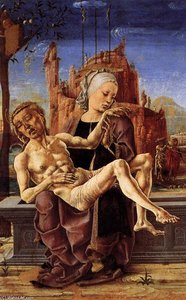
- Seine “Pietà” ist ein bemerkenswertes Beispiel für spätgotische Kunst mit Renaissance-Einflüssen.
Historische Bedeutung
- Cosmè Tura gilt als einer der wichtigsten Künstler der Frührenaissance, insbesondere in Norditalien.
- Er gründete und leitete die Ferrareser Schule, die spätere Künstler wie Giovanni Andrea Ghirardoni beeinflusste.
- Seine innovative Verwendung von Ölfarben und sein unverwechselbarer Stil trugen wesentlich zur Entwicklung der italienischen Kunst bei.
- Turans Vermächtnis wird in Werken bewahrt, die in Museen wie dem Museo di Ferrara ausgestellt sind.
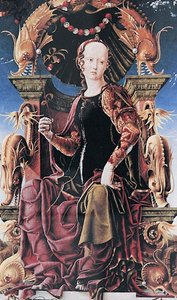
Cosmè Tura
1430 - 1495 , Italien
Kurzinfos
- Beeinflusste Künstler:
- Fra Angelico
- Piero della Francesca
- Andrea Mantegna
- Bemerkenswerte Werke:
- St. Antonius von Padua
- Pietà
- Fresken im Palazzo Schifanoia
- Geburtsdatum: ca. 1430
- Geburtsort: Ferrara, Italien
- Künstlerische Richtung: Frührenaissance
- Nationalität: Italienisch
- Sterbedatum: 1495
- Vollständiger Name: Cosmè Tura
- Von Künstlern Beeinflusst: ['Francesco Squarcione']
Ähnliche Artikel
Cosmè Tura: Die Wiederentdeckung eines Ferrara-Meisters und sein unverwechselbarer Stil
Entdecken Sie Cosmè Tura, einen Pionier der Renaissance in Ferrara! Erfahren Sie mehr über seinen einzigartigen Stil, bedeutende Werke und sein künstlerisches Vermächtnis. Expertenanalyse & detaillierte Informationen.
Raphael: Die 25 Meisterwerke des Renaissance-Genies – Kunst für Ihr Zuhause
Entdecken Sie die 25 schönsten Meisterwerke von Raphael! Tauchen Sie ein in die Welt der Renaissance-Kunst, erfahren Sie faszinierende Geschichten und lassen Sie sich von den Farben und Kompositionen inspirieren. Hochwertige Reproduktionen auf ArtsDot.com.
Fra Angelico: Die 25 Meisterwerke des italienischen Frührenaissance-Malers | ArtsDot
Entdecken Sie die 25 schönsten Meisterwerke von Fra Angelico! Erleben Sie religiöse Kunst der italienischen Renaissance, himmlische Fresken & Panelgemälde. Finden Sie hochwertige Kunstdrucke und Reproduktionen für Ihr Zuhause auf ArtsDot.com.
Jacob Henricus Maris: Meister des niederländischen Stimmungsrealismus und der intimen Landschaft
Entdecken Sie das Werk von Jacob Henricus Maris, einem Meister des niederländischen Stimmungsrealismus! Erfahren Sie mehr über seine Landschaftsmalerei, Einflüsse und berühmte Gemälde. Jetzt lesen & inspirieren lassen!
Die 25 Meisterwerke der Uffizien: Kunstgeschichte für Ihr Zuhause | ArtsDot
Entdecken Sie die 25 berühmtesten Meisterwerke der Uffizien, Florenz! Von Botticelli bis Leonardo da Vinci – Kunstgeschichte erleben. Hochwertige Reproduktionen & Inspiration für Ihr Zuhause auf ArtsDot.com.