 Vorschau anzeigen
 Versenden
 Teilen
 Details anzeigen

 Herunterladen
 Ähnliche Objekte
 Röntgenaufnahme
 Diashow
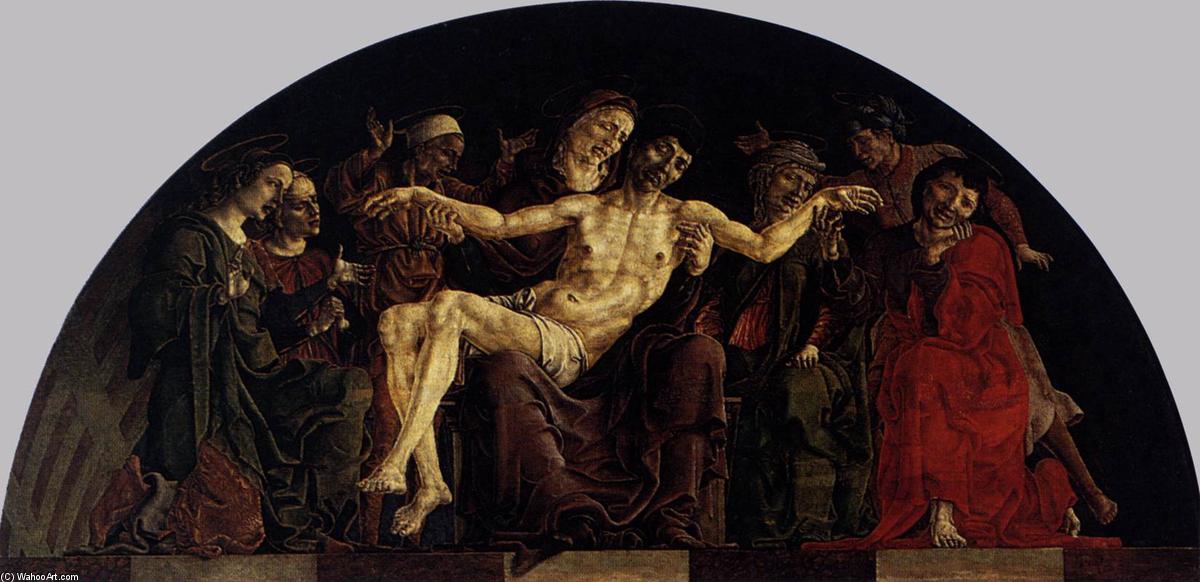
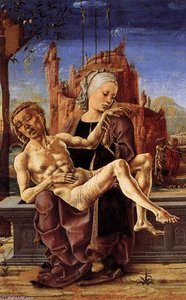
Pietà (panel from the Roverella Polyptych)
 Oil
Oil- WallArt
- Late Gothic Renaissance
 1474
1474 132.0 x 267.0 cm
 Louvre
 Weiterlesen
Handgefertigte Ölreproduktion
Handgemaltes Ölgemälde auf Leinwand in Ihrer Wunschgröße und mit Rahmen, auf Bestellung von unseren Künstlern angefertigt. ( Druck bestellen Bild kaufen)




P118B $10

P118H $10

P118W $10

P438Z $10

P508JH $12

P508YH $12

P805H $10

P805Z $10

P919BZ $10

P919G $10

P919XJ $10

P959ZH $10

P968JZ $12

W106C $8

W218G $10

W218JH $8

W218Y $10

W307PJ $10

W316G $10

W316PJ $8

W316Y $10

W398PJ $8

W4111J $10

W500HY $15

W500JH $15

W692G $12

W849H $8

W940BG $15

W953PJ $8




Wählen Sie aus unseren vordefinierten Formaten, die den ursprünglichen Proportionen des Kunstwerks entsprechen.

Sie können Ihre eigenen Maße eingeben, um einen bestimmten Rahmen oder Platz auszufüllen. Wenn die gewählte Größe nicht den Proportionen des Originalbildes entspricht, werden wir das Kunstwerk entweder beschneiden oder das Gemälde durch zusätzliche, handgemalte Elemente erweitern. Ein digitales Mockup wird Ihnen zur Genehmigung zugesandt, bevor die Produktion beginnt.
Bitte beachten Sie, dass die Bildschirmvorschau nicht die tatsächliche Beschneidung oder Erweiterung widerspiegelt. Nur das Mockup zeigt die endgültige Komposition exakt an.
Obwohl Sondermaße verfügbar sind, empfehlen wir, eine Größe aus der vordefinierten Liste zu wählen, um die ursprünglichen Proportionen beizubehalten.
Nach der Bestellung wird das ArtsDot.com-Team dem Kunden Anweisungen per E-Mail zusenden und eine Mockup-Vorschau bereitstellen.
Weltweiter Versand () in nur 3 bis 4 Wochen statt der üblichen 5 Wochen. (21 August). Keine Kompromisse bei der Qualität.

Kostenloser weltweiter Expressversand

Hochwertige Leinenleinwand

Umfassender Versicherungsschutz beim Versand

Zollgebühren-Rückerstattungsgarantie

Garantie für exakte Farbtreue

60 Tage Rückgaberecht (nur bei Mängeln)

100% Geld-zurück-Garantie

Mengenrabatt verfügbar
 Die Glasoption ist nur für Größen unter 110 cm verfügbar.

Pietà (panel from the Roverella Polyptych)
Art der Reproduktion
Format der Reproduktion
-


Gesamtpreis
$ 263
Beschreibung des Kunstwerks
The Pietà by Cosmè Tura: A Window into Late Gothic Devotion
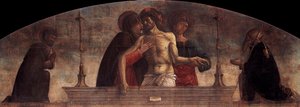
Cosmè Tura’s “Pietà,” part of the magnificent Roverella Polyptych, is more than just a depiction of sorrow; it's a profound meditation on faith, loss, and the enduring power of maternal love. Created in 1474 during the vibrant artistic milieu of Ferrara, Italy – a city then at the heart of the burgeoning Renaissance – this panel offers a captivating glimpse into the sensibilities of the late Gothic period while simultaneously foreshadowing the stylistic innovations to come. Housed now within the esteemed Musée du Louvre in Paris, the “Pietà” remains a testament to Tura’s skill and his ability to imbue religious imagery with an intensely human quality.
The painting immediately draws the viewer into its dramatic space. Measuring 132 x 267 cm, it's a substantial work, commanding attention through its scale and meticulous detail. Executed in oil on panel – a relatively new technique at the time – Tura masterfully utilizes light and shadow to sculpt the figures and create a palpable sense of depth. The dark background, punctuated by strategically placed highlights, directs our gaze directly to Christ’s lifeless body and his grieving mother. This masterful use of chiaroscuro wasn't merely aesthetic; it served to heighten the emotional intensity of the scene, mirroring the spiritual weight of the subject matter.
A Study in Late Gothic Style
Tura’s “Pietà” is firmly rooted in the traditions of late Gothic art, yet it possesses a unique character that distinguishes it from its contemporaries. The composition adheres to the established conventions of the Pietà motif – the Virgin Mary cradling the dead Christ – but Tura infuses it with a remarkable degree of naturalism and emotional complexity. Notice the careful rendering of Christ’s anatomy, reflecting an awareness of human form honed through observation and study. The drapery is richly detailed, suggesting both the weight of grief and the luxurious fabrics associated with royalty and piety. The clothing worn by Mary is equally impressive, featuring intricate patterns and rich colors that speak to her elevated status as the Mother of God.
Furthermore, Tura’s use of perspective, though not fully developed in the manner of later Renaissance masters, demonstrates a growing understanding of spatial relationships. The figures are arranged within a shallow space, creating a sense of immediacy and drawing the viewer into the scene. The attendants surrounding the pair – likely representing John the Evangelist and other mourners – contribute to the overall feeling of communal grief and reverence.
Symbolism and Emotional Resonance
Beyond its technical brilliance, the “Pietà” is laden with symbolic meaning. The image itself—the Virgin Mary mourning over her son’s body—is a potent symbol of compassion, sacrifice, and redemption. Christ's limp form represents his suffering and death on the cross, while Mary’s sorrow embodies humanity’s grief at the loss of its savior. The overall mood is one of profound sadness, yet there’s also an undercurrent of hope – the promise of resurrection and eternal life.
Tura's choice to depict Christ in such a vulnerable state—bare-torsoed and lifeless—is particularly striking. It emphasizes his humanity and invites viewers to connect with him on a deeply personal level. The Virgin Mary’s expression is one of overwhelming sorrow, yet her face retains a trace of dignity and acceptance. Her gaze is fixed upon her son, suggesting a profound love that transcends even death.
Owning a Piece of History
Handmade oil paintings reproductions of Cosmè Tura's “Pietà” are now available through ArtsDot.com, offering art lovers the opportunity to bring this masterpiece into their homes or offices. These meticulously crafted reproductions capture not only the visual details of the original but also its emotional power and historical significance. Consider how this evocative image could enrich your interior space, serving as a constant reminder of faith, compassion, and the enduring beauty of human connection. For further information on the Musée du Louvre and related resources, please visit ArtsDot.com.
Ähnliche Kunstwerke
Über den Künstler
Cosmè Tura: Ein Begründer der Ferrareser Schule
- Geboren: um 1430 in Ferrera, Italien
- Gestorben: 1495
- Bekannt für: Frührenaissance-Maler und Gründer der Ferrareser Schule
Frühes Leben und Ausbildung
- Cosmè Tura wurde um 1430 in Ferrara, Italien, als Sohn eines Schuhmachers geboren. Einzelheiten über seine frühen Jahre sind spärlich dokumentiert.
- Seine künstlerische Ausbildung ist schlecht dokumentiert, aber es wird vermutet, dass er von Künstlern wie Fra Angelico, Piero della Francesca und Andrea Mantegna beeinflusst wurde.
- Es gibt Spekulationen, dass er möglicherweise unter Galasso Galassi in die Lehre ging, einem etwas rätselhaften Künstler, der mit Piero della Francesca in Verbindung steht.
- Von 1452 bis 1456 ist Turas Anwesenheit in Ferrara nicht dokumentiert, was einige Historiker glauben lässt, dass er reiste, möglicherweise nach Venedig oder Padua.
- Ein möglicher Aufenthalt in Padua brachte ihn mit der Werkstatt von Francesco Squarcione in Kontakt, einem bedeutenden Zentrum für Renaissance-Kunst, und Künstlern wie Carlo Crivelli, Michael Pacher und Andrea Mantegna. Diese Begegnung beeinflusste wahrscheinlich seinen Stil.
Künstlerischer Stil und Einflüsse
- Turans künstlerischer Stil zeichnet sich durch klare und scharfe Linien, dekorative Üppigkeit und Anspielungen auf die klassische Antike aus.
- Er war einer der ersten, der Ölfarben einsetzte und sie geschickt verwendete, um verschiedene Texturen in seinen Werken darzustellen.
- Einflüsse sind die toskanischen Innovationen, die Donatello nach Padua brachte, was sich in seiner Verwendung von linearer Perspektive und starken Formen zeigt.
- Sein Stil spiegelt auch den Einfluss flämischer Künstler wider, die in Ferrara tätig waren.
Hauptwerke und Errungenschaften
- Tura arbeitete umfangreich für die Familie Este, die Herzöge von Ferrara, und schuf Dekorationen für Turniere, entwarf Möbel und trug zur Mode bei.
- Bemerkenswerte Werke sind die Fresken im Palazzo Schifanoia in Ferrara, die allegorische Szenen darstellen.
- Er malte Porträts, religiöse Panels (wie "St. Antonius von Padua beim Lesen") und andere Kunstwerke, die seinen einzigartigen Stil zeigen.
- Seine “Pietà” ist ein bemerkenswertes Beispiel für spätgotische Kunst mit Renaissance-Einflüssen.
Historische Bedeutung
- Cosmè Tura gilt als einer der wichtigsten Künstler der Frührenaissance, insbesondere in Norditalien.
- Er gründete und leitete die Ferrareser Schule, die spätere Künstler wie Giovanni Andrea Ghirardoni beeinflusste.
- Seine innovative Verwendung von Ölfarben und sein unverwechselbarer Stil trugen wesentlich zur Entwicklung der italienischen Kunst bei.
- Turans Vermächtnis wird in Werken bewahrt, die in Museen wie dem Museo di Ferrara ausgestellt sind.
Cosmè Tura
1430 - 1495 , Italien
Kurzinfos
- Beeinflusste Künstler:
- Fra Angelico
- Piero della Francesca
- Andrea Mantegna
- Bemerkenswerte Werke:
- St. Antonius von Padua
- Pietà
- Fresken im Palazzo Schifanoia
- Geburtsdatum: ca. 1430
- Geburtsort: Ferrara, Italien
- Künstlerische Richtung: Frührenaissance
- Nationalität: Italienisch
- Sterbedatum: 1495
- Vollständiger Name: Cosmè Tura
- Von Künstlern Beeinflusst: ['Francesco Squarcione']
Ähnliche Artikel
Cosmè Tura: Die Wiederentdeckung eines Ferrara-Meisters und sein unverwechselbarer Stil
Entdecken Sie Cosmè Tura, einen Pionier der Renaissance in Ferrara! Erfahren Sie mehr über seinen einzigartigen Stil, bedeutende Werke und sein künstlerisches Vermächtnis. Expertenanalyse & detaillierte Informationen.
Fra Angelico: Die 25 Meisterwerke des italienischen Frührenaissance-Malers | ArtsDot
Entdecken Sie die 25 schönsten Meisterwerke von Fra Angelico! Erleben Sie religiöse Kunst der italienischen Renaissance, himmlische Fresken & Panelgemälde. Finden Sie hochwertige Kunstdrucke und Reproduktionen für Ihr Zuhause auf ArtsDot.com.
The Radiant Dusk of Medieval Vision: Exploring Late Gothic Art's Synthesis of Faith, Form & Emotionality (c. 1300-1500)
Explore the exquisite beauty & spiritual depth of Late Gothic art (c. 1300-1500). Discover key artists, symbolism, and its lasting influence on the Renaissance. Expert insights at ArtsDot.
The Shadow of Faith: Exploring Gothic Art's Spiritual Intensity & Architectural Innovation
Explore the spiritual intensity & architectural innovation of Gothic art! Discover the symbolism behind cathedrals, stained glass & master artists like Giotto and Monet. A deep dive into medieval history & artistic expression.
Beyond Borders: The Spiritual & Stylistic Innovations of International Gothic Art
Explore the exquisite beauty & spiritual depth of International Gothic art. Discover key artists like Simone Martini & Pol de Limbourg, its origins, symbolism, and lasting influence on European painting. Expert insights at ArtsDot.