 Vorschau anzeigen
 Versenden
 Teilen
 Details anzeigen

 Herunterladen
 Ähnliche Objekte
 Röntgenaufnahme
 Diashow
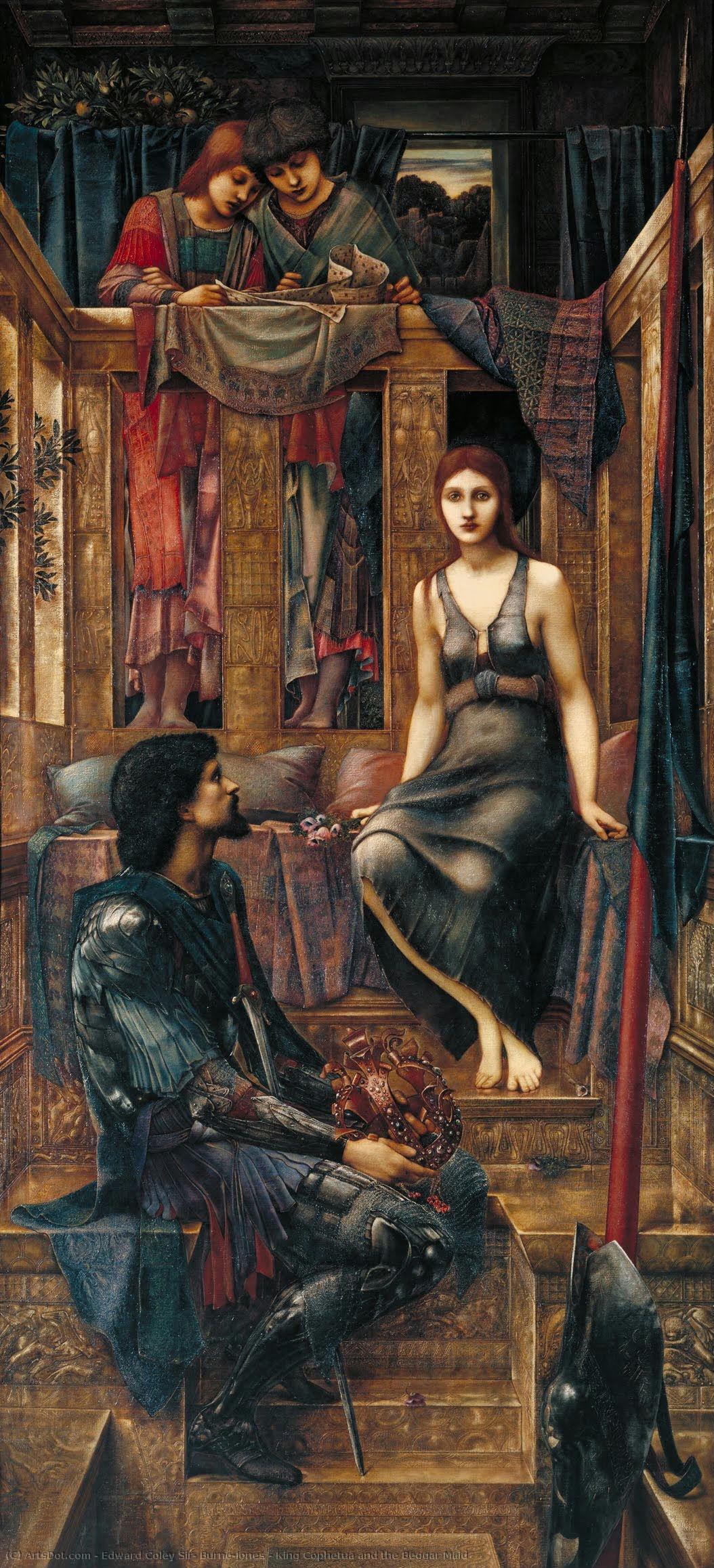
King Cophetua and the Beggar Maid
 Oil On Canvas
- WallArt
- Pre-Raphaelite Brotherhood
 1884
1884- 19th Century
 135.0 x 293.0 cm
 Tate Britain
 Weiterlesen
Handgefertigte Ölreproduktion
Handgemaltes Ölgemälde auf Leinwand in Ihrer Wunschgröße und mit Rahmen, auf Bestellung von unseren Künstlern angefertigt. ( Druck bestellen Bild kaufen)




P118B $10

P118H $10

P118W $10

P438Z $10

P508JH $12

P508YH $12

P805H $10

P805Z $10

P919BZ $10

P919G $10

P919XJ $10

P959ZH $10

P968JZ $12

W106C $8

W218G $10

W218JH $8

W218Y $10

W307PJ $10

W316G $10

W316PJ $8

W316Y $10

W398PJ $8

W4111J $10

W500HY $15

W500JH $15

W692G $12

W849H $8

W940BG $15

W953PJ $8




Wählen Sie aus unseren vordefinierten Formaten, die den ursprünglichen Proportionen des Kunstwerks entsprechen.

Sie können Ihre eigenen Maße eingeben, um einen bestimmten Rahmen oder Platz auszufüllen. Wenn die gewählte Größe nicht den Proportionen des Originalbildes entspricht, werden wir das Kunstwerk entweder beschneiden oder das Gemälde durch zusätzliche, handgemalte Elemente erweitern. Ein digitales Mockup wird Ihnen zur Genehmigung zugesandt, bevor die Produktion beginnt.
Bitte beachten Sie, dass die Bildschirmvorschau nicht die tatsächliche Beschneidung oder Erweiterung widerspiegelt. Nur das Mockup zeigt die endgültige Komposition exakt an.
Obwohl Sondermaße verfügbar sind, empfehlen wir, eine Größe aus der vordefinierten Liste zu wählen, um die ursprünglichen Proportionen beizubehalten.
Nach der Bestellung wird das ArtsDot.com-Team dem Kunden Anweisungen per E-Mail zusenden und eine Mockup-Vorschau bereitstellen.
Weltweiter Versand () in nur 3 bis 4 Wochen statt der üblichen 5 Wochen. (21 August). Keine Kompromisse bei der Qualität.

Kostenloser weltweiter Expressversand

Hochwertige Leinenleinwand

Umfassender Versicherungsschutz beim Versand

Zollgebühren-Rückerstattungsgarantie

Garantie für exakte Farbtreue

60 Tage Rückgaberecht (nur bei Mängeln)

100% Geld-zurück-Garantie

Mengenrabatt verfügbar
 Die Glasoption ist nur für Größen unter 110 cm verfügbar.

King Cophetua and the Beggar Maid
Art der Reproduktion
Format der Reproduktion
-


Gesamtpreis
$ 263
Beschreibung des Kunstwerks
A Vision of Transcendent Love
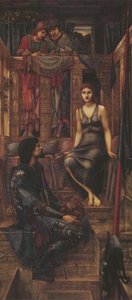
In the grand tapestry of the Pre-Raphaelite movement, few works capture the ethereal intersection of myth and human emotion as profoundly as Edward Coley Burne-Jones’s "King Cophetua and the Beggar Maid." Completed in 1884, this masterpiece serves as a visual symphony, translating the poetic soul of Alfred Tennyson into a tangible, breathtaking reality. The painting does not merely depict a meeting between two individuals; it captures a moment of cosmic realignment where the rigid hierarchies of the Victorian era dissolve under the weight of genuine spiritual connection. As the eye wanders through the scene, one is immediately struck by the deliberate juxtaposition of the regal and the destitute, a narrative choice that elevates the work from a simple historical tableau to a timeless meditation on the transformative power of love.
The composition invites the viewer into an intimate, almost sacred space. At its heart lies the encounter between the powerful King Cophetua and the humble beggar woman, a pairing that defies the social stratifications of their time. Burne-Jones utilizes the setting—a room rich with the textures of antiquity—to ground this mythical event in a sense of palpable reality. The presence of onlookers, subtle details like the delicate placement of birds, and the atmospheric arrangement of furniture all serve to frame the central protagonists, creating a sense of a world caught in a breathless pause. For the discerning collector or interior designer, this piece offers more than just aesthetic beauty; it provides a focal point of profound narrative depth that can anchor a room with both grandeur and intimacy.
Technical Mastery and Aesthetic Splendor
To behold this work is to witness the technical brilliance of a master who could weave light and color into a dreamlike state. Burne-Jones employed oil on canvas with a meticulousness that honors the medieval traditions he so admired, yet he infused the piece with a luminous quality that hints at the burgeoning Impressionistic influences of his era. The artist’s palette is a sophisticated study in contrast; rich golds, deep crimsons, and regal blues define the opulent surroundings of the court, while more muted, earthy tones are used to reflect the simplicity and hardship of the beggar woman's life. This careful manipulation of pigment does more than just describe clothing or setting—it communicates the emotional weight of the characters' respective worlds.
The texture of the painting is equally captivating, with layered brushwork that creates a sense of tactile richness. One can almost feel the heavy weight of the royal drapery and the coarse simplicity of the maiden’s garments. This attention to detail ensures that every inch of the canvas contributes to the overall atmosphere of enchantment. For those seeking to incorporate high-quality reproductions into a curated space, the visual complexity of this piece offers endless layers of discovery. It is an artwork that rewards prolonged contemplation, making it an ideal selection for those who value art that speaks to both the intellect and the senses.
A Legacy of Symbolism and Soul
Beyond its surface beauty, "King Cophetua and the Beggar Maid" is steeped in a symbolic language that resonates with the anxieties and ideals of the late 19th century. During a period marked by rapid industrialization and shifting social mores, Burne-Jones looked backward to the legends of Camelot and the romanticism of the past to find a sense of moral clarity. The painting acts as a rejection of superficial status, suggesting that true nobility is found in the spirit rather than in one's station. This theme of transcending boundaries makes the work eternally relevant, offering a sense of hope and spiritual continuity that transcends its historical origins.
Integrating a reproduction of this magnitude into a modern interior allows for a dialogue between history and contemporary design. It brings an element of storytelling into the home, transforming a living space into a gallery of thought and emotion. Whether placed in a formal study or as a centerpiece in a grand hall, Burne-Jones’s vision remains an enduring testament to the idea that beauty, much like love, has the power to bridge even the widest of divides.
Ähnliche Kunstwerke
Über den Künstler
Frühes Leben und Ausbildung
Edward Coley Burne-Jones, ein renommierter britischer Künstler und Designer, wurde am 28. August 1833 in Birmingham, im Vereinigten Königreich, geboren. Sein frühes Leben war geprägt vom Tod seiner Mutter, Elizabeth Coley Jones, sechs Tage nach seiner Geburt. Er wurde von seinem Vater, Edward Richard Jones, und der Familienvermieterin Ann Sampson aufgezogen. Burne-Jones besuchte ab 1844 die King Edward VI Grammar School und studierte später von 1848 bis 1852 an der Birmingham School of Art.Akademische Laufbahn und die Brotherhood
Burne-Jones widmete sich am Exeter College in Oxford der Theologie, wo er William Morris begegnete. Gemeinsam mit einer Gruppe von Freunden aus Birmingham, dem sogenannten "Birmingham Set", gründeten sie eine intime Gesellschaft namens "die Brotherhood". Diese Zeit war geprägt vom Einfluss John Russkins und Tennysons auf ihre Arbeit sowie Besuchen von Kirchen und der Verehrung des Mittelalters.Künstlerische Karriere und bemerkenswerte Werke
Burne-Jones' künstlerische Karriere blühte in verschiedenen Medien, darunter Malerei, Glasmalerei und dekorative Kunst, auf. Seine frühen Gemälde waren vom Stil Dante Gabriel Rossettis beeinflusst, doch er entwickelte bald seinen eigenen einzigartigen Stil. Zu seinen bemerkenswertesten Werken zählen:- The Beguiling of Merlin, das 1877 in der Grosvenor Gallery ausgestellt wurde und seinen Aufstieg zum Star der Ästhetischen Bewegung markierte.
- Glasmalereien in verschiedenen Kirchen, wie z.B. St. Philip's Cathedral in Birmingham und Holy Trinity Church in Sloane Square, Chelsea.
- Zusammenarbeiten mit William Morris an dekorativen Kunstwerken, einschließlich Designs für Morris, Marshall, Faulkner & Co.
Persönliches Leben und späte Jahre
Burne-Jones heiratete 1860 Georgiana "Georgie" Macdonald, mit der er drei Kinder hatte. Seine späteren Jahre waren von einer leidenschaftlichen Affäre mit seiner griechischen Modellin Maria Zambaco geprägt, die in ihrem Selbstmordversuch endete. Trotzdem blieb Burne-Jones bis zu seinem Tod am 17. Juni 1898 bei seiner Frau.Vermächtnis und Einfluss
Edward Coley Burne-Jones' Beiträge zur Präraffaelitenbewegung und seine innovativen Glasmalereien haben einen bleibenden Eindruck in der britischen Kunst hinterlassen. Sein Einfluss ist in verschiedenen Bereichen der dekorativen Kunst sichtbar, von Keramikfliesen bis hin zu Schmuck.- Erkunden Sie weitere Werke von Burne-Jones auf ArtsDot.com.
- Entdecken Sie die British Council Collection, mit bemerkenswerten Künstlern, in den Kunstsammlungen von ArtsDot.
Referenzen:
- wikipedia: edward burne-jones
- Wabot Kunstassistent von ArtsDot für Einblicke in Kunst und Künstler.
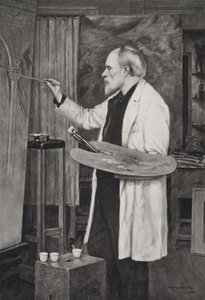
Edward Coley Burne-Jones
1833 - 1898 , Vereinigtes Königreich
Kurzinfos
- Beeinflusste Künstler/Bewegungen:
- Dekorative Kunst
- Keramikfliesen, Schmuck
- Bemerkenswerte Werke:
- The Beguiling of Merlin
- Drei weibliche Figuren
- Fides
- Einflussreiche Künstler:
- Dante Gabriel Rossetti
- John Ruskin
- Tennyson
- Geburtsdatum: 28. August 1833
- Geburtsort: Birmingham, Vereinigtes Königreich
- Künstlerische Bewegung: Präraffaeliten, Ästhetizismus
- Nationalität: Britisch
- Todatum: 17. Juni 1898
- Vollständiger Name: Edward Coley Burne-Jones
Ähnliche Artikel
Dante Gabriel Rossetti: Die 25 Meisterwerke des Präraffelitismus | ArtsDot
Entdecken Sie die 25 schönsten Gemälde von Dante Gabriel Rossetti! Tauchen Sie ein in die Welt der Präraffeliten, symbolistischer Kunst & viktorianischer Romantik. Hochwertige Reproduktionen für Ihr Zuhause – jetzt bei ArtsDot.com!
Edward Burne-Jones: Eine präraphaelitische Vision von Mythos, Symbolik und ästhetischem Idealismus
Entdecken Sie das faszinierende Werk von Edward Burne-Jones und die präraphaelitische Bewegung! Analysen, Hintergrundinformationen & hochwertige Reproduktionen bei ArtsDot.
The Pre-Raphaelite Brotherhood: A Rebellion of Beauty & Medieval Revival
Explore the captivating world of the Pre-Raphaelite Brotherhood! Discover their rebellion against academic art, iconic masterpieces, and lasting influence on Victorian aesthetics. Learn about Rossetti, Burne-Jones & more.
Sir John Everett Millais: Präraffaelitische Revolution und viktorianische Erzählkunst
Entdecken Sie das Leben und Werk von Sir John Everett Millais, einem Pionier der Präraffaeliten! Detaillierte Analysen seiner Gemälde, Einblicke in die viktorianische Kunstszene und seine bleibende Bedeutung. Jetzt lesen!

The Verdant Gaze: Victorian Naturalism & the Aesthetic Revolution in Art
Explore the captivating world of Victorian Naturalism & the Pre-Raphaelite movement! Discover Rossetti, Burne-Jones & more iconic artists. Expert analysis & high-quality reproductions at ArtsDot.